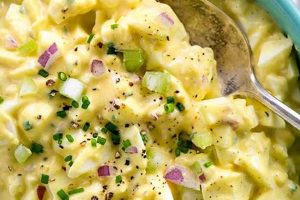
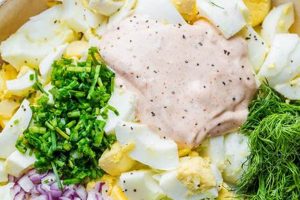
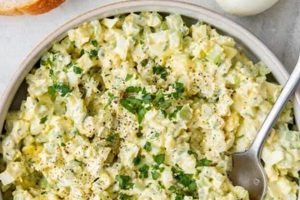
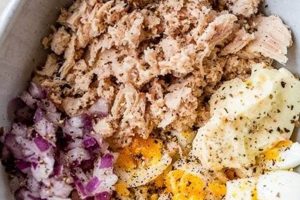
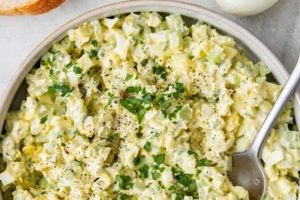
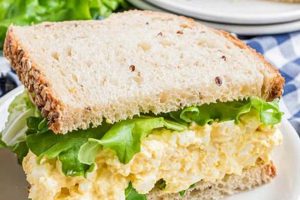
A combination of chopped hard-boiled eggs, mayonnaise, and seasonings, this dish often includes celery, onion, and mustard for added flavor and texture. The addition of fresh dill introduces a bright, slightly tangy, and herbaceous element that complements the richness of the eggs and mayonnaise. Variations can include different types of mayonnaise, additions like relish or paprika, and adjustments to the ingredient ratios to suit individual preferences.
This simple dish offers a versatile and protein-rich meal option. Its adaptability makes it suitable for sandwiches, wraps, salads, or as a standalone snack. Historically, egg salad emerged as a popular dish with the increasing availability of refrigeration and commercially produced mayonnaise. The inclusion of fresh herbs like dill elevates the flavor profile, providing a refreshing twist on a classic. Its affordability and ease of preparation contribute to its enduring popularity.
Further exploration will cover variations in preparation methods, ingredient selection, and serving suggestions, offering a deeper understanding of this culinary staple.
Tips for Crafting Exceptional Egg Salad with Dill
Achieving optimal flavor and texture in egg salad with dill requires attention to detail. These tips offer guidance for elevating this classic dish.
Tip 1: Perfect Hard-Boiled Eggs: Achieving properly cooked yolks is crucial. Avoid overcooking, which can result in dry, chalky yolks and a greenish ring around the yolk. A gentle simmer followed by an ice bath ensures even cooking and easy peeling.
Tip 2: Fresh Dill: Dried dill lacks the vibrant flavor of fresh dill. Finely chop fresh dill just before incorporating it to maximize its aromatic contribution.
Tip 3: Mayonnaise Selection: The quality of mayonnaise significantly impacts the final product. Consider using a higher-quality mayonnaise or even making it from scratch for superior flavor and texture.
Tip 4: Ingredient Ratios: Balancing the ratio of eggs to mayonnaise is key. Too much mayonnaise can result in a watery salad, while too little can create a dry, crumbly texture. Adjust according to preference.
Tip 5: Complementary Ingredients: Enhance the flavor profile with finely diced red onion or shallots, celery, or capers. A touch of Dijon mustard can add depth and complexity.
Tip 6: Seasoning: Salt and freshly ground black pepper are essential. Consider a pinch of paprika or cayenne pepper for a subtle heat.
Tip 7: Chilling Time: Allow the egg salad to chill for at least 30 minutes before serving. This allows the flavors to meld and the salad to firm up, enhancing the overall experience.
By following these guidelines, one can create an egg salad with dill that is both flavorful and visually appealing, demonstrating culinary expertise and respect for quality ingredients.
These insights contribute to a comprehensive understanding of egg salad preparation, leading to a more satisfying culinary outcome.
1. Fresh Dill

Fresh dill stands as a defining characteristic of this particular egg salad variation. Its inclusion elevates the dish beyond the standard, introducing a distinct aromatic and flavor profile. The herb’s delicate, feathery fronds offer a refreshing counterpoint to the richness of the mayonnaise and eggs. Utilizing fresh dill, as opposed to dried, is paramount. Fresh dill provides a vibrant, herbaceous character that dried dill often lacks, potentially resulting in a muted or even slightly bitter taste. This distinction significantly impacts the overall sensory experience. For example, a summer picnic featuring egg salad sandwiches benefits greatly from the bright, lively taste of fresh dill, enhancing the enjoyment of the meal.
The volatile oils within fresh dill contribute to its distinctive aroma and taste. These oils dissipate quickly upon drying, highlighting the importance of using fresh herbs whenever possible. Incorporating fresh dill into the egg salad requires a nuanced approach. Over-chopping can bruise the delicate leaves and release excessive oils, leading to a less desirable flavor. A gentle chop, just before incorporating the dill into the mixture, preserves its aromatic qualities and ensures even distribution throughout the salad. This practice demonstrates an understanding of how to maximize the herb’s potential. Consider an egg salad served on crusty bread alongside a crisp green salad. The fresh dill in the egg salad complements the other elements on the plate, creating a cohesive and flavorful meal.
The judicious use of fresh dill underscores the importance of ingredient selection in achieving culinary excellence. This seemingly simple choice profoundly affects the overall quality of the dish. Challenges arise when fresh dill is unavailable. While substitutions exist, none can fully replicate its unique contribution. Therefore, planning and prioritizing the use of fresh dill are crucial for realizing the full potential of this egg salad variation. Ultimately, the emphasis on fresh dill contributes to a more complex and satisfying culinary outcome.
2. Hard-boiled Eggs
Hard-boiled eggs constitute the foundational ingredient in egg salad, providing substance, texture, and a mild, subtly savory flavor. Their preparation and handling significantly influence the final quality of the dish. Understanding the nuances of cooking and processing hard-boiled eggs is crucial for achieving optimal results in an egg salad recipe with dill.
- Cooking Method
Proper cooking yields firm yet tender whites and fully cooked, creamy yolks, devoid of any green discoloration from overcooking. Various methods exist, including steaming, baking, and simmering. Each technique offers distinct advantages and challenges in achieving the desired consistency. Simmering, a common approach, requires careful timing and temperature control to avoid overcooking. An ice bath immediately after cooking halts the cooking process and aids in peeling.
- Peeling Process
Efficient and clean removal of the eggshell is essential for both aesthetic presentation and ease of chopping. Factors such as egg freshness and cooking method can influence peeling ease. Older eggs typically peel more easily. Cracking the shells gently and peeling under cold running water can simplify the process and minimize egg white damage. Thorough removal of shell fragments is critical for a pleasant textural experience.
- Chopping Technique
The size and uniformity of the chopped eggs affect both the texture and visual appeal of the salad. Options range from coarsely chopped pieces for a more rustic texture to finely diced pieces for a smoother, more refined consistency. A consistent chop ensures even distribution of egg throughout the salad and contributes to a visually harmonious presentation.
- Yolk Integration
Proper integration of the yolks into the mayonnaise-based dressing prevents dryness and maximizes flavor distribution. Some recipes recommend mashing the yolks before combining them with other ingredients, creating a richer, creamier base for the dressing. This step also aids in emulsifying the dressing, resulting in a more cohesive texture.
The careful execution of these steps, from initial cooking to final incorporation into the salad, demonstrates an understanding of the critical role hard-boiled eggs play in the success of an egg salad recipe with dill. Mastery of these techniques elevates the dish beyond a simple combination of ingredients into a carefully crafted culinary creation.
3. Mayonnaise
Mayonnaise serves as the emulsifying and textural foundation of egg salad with dill, binding the ingredients and contributing a characteristic richness and creaminess. The quality and type of mayonnaise significantly influence the overall flavor profile and sensory experience. A higher fat content mayonnaise yields a richer, more luxurious texture, while lower fat options result in a lighter, potentially less flavorful outcome. For instance, using a homemade mayonnaise with fresh lemon juice and high-quality oil elevates the egg salad, introducing a depth of flavor absent in commercially produced alternatives. Conversely, a low-fat mayonnaise may create a thinner, less satisfying consistency.
The interplay between mayonnaise and dill within the egg salad context is crucial. The richness of the mayonnaise provides a backdrop against which the bright, herbaceous notes of the dill can shine. This balance of flavors prevents the dill from becoming overpowering and ensures a harmonious blend of tastes. Furthermore, the mayonnaise helps to distribute the dill evenly throughout the salad, maximizing its impact. Consider the difference between a salad made with a bland, generic mayonnaise and one made with a robust, flavorful mayonnaise. The latter allows the dill to express its full potential, contributing to a more complex and nuanced flavor profile.
Understanding the crucial role of mayonnaise in egg salad with dill allows for informed culinary decisions. Choosing the appropriate mayonnaise, whether homemade or store-bought, requires careful consideration of the desired flavor and textural outcome. This awareness empowers individuals to craft an egg salad tailored to specific preferences, elevating the dish from a simple staple to a culinary expression. Challenges may arise when dietary restrictions limit mayonnaise options. Exploring alternatives, such as Greek yogurt or avocado-based spreads, requires careful consideration of their impact on the final product, as these substitutions can significantly alter the texture and flavor profile of the classic egg salad with dill.
4. Seasoning

Seasoning plays a critical role in the overall success of an egg salad recipe with dill. It elevates the inherent flavors of the core ingredients, creating a balanced and nuanced taste experience. The interplay between salt, pepper, and other potential additions significantly impacts the final product. Salt, in particular, enhances the savory notes of the eggs and mayonnaise, while freshly ground black pepper provides a subtle bite and complexity. The absence of proper seasoning can result in a bland, uninspired dish, regardless of the quality of the other components. Consider, for example, an egg salad crafted with fresh dill and high-quality mayonnaise but lacking salt. The potential brightness of the dill and richness of the mayonnaise remain subdued, failing to reach their full potential.
Beyond basic salt and pepper, other seasonings can further enhance an egg salad with dill. A touch of Dijon mustard adds a tangy complexity, while a pinch of paprika or cayenne pepper introduces a subtle warmth. The judicious use of garlic powder or onion powder can subtly amplify the savory notes. However, restraint is essential; excessive or inappropriate seasoning can easily overpower the delicate flavors of the dill and eggs. Imagine adding an excessive amount of smoked paprika to the egg salad. The smoky flavor might dominate, obscuring the fresh, herbaceous notes of the dill and reducing the overall complexity of the dish.
Careful consideration of seasoning choices demonstrates an understanding of flavor balance and the importance of each ingredient’s contribution. The goal is to enhance, not mask, the core flavors of the egg salad. This understanding translates to a more refined and satisfying culinary experience. Challenges arise when attempting to cater to diverse palates and dietary restrictions. Offering seasonings on the side empowers individuals to customize their egg salad according to personal preferences, ensuring a positive experience for all. Ultimately, mastering the art of seasoning within the context of an egg salad recipe with dill elevates the dish from simple fare to a carefully crafted culinary creation.
5. Texture
Texture plays a crucial role in the overall enjoyment of egg salad with dill, impacting the sensory experience beyond mere flavor. The interplay of varying textures creates a dynamic and engaging mouthfeel, elevating the dish from simple to sophisticated. Understanding the factors that contribute to texture allows for deliberate manipulation and customization, catering to individual preferences.
- Egg Chopping Technique
The size of the chopped egg pieces significantly influences the perceived texture. Coarsely chopped eggs create a chunky, rustic feel, providing a more substantial bite. Finely chopped eggs, conversely, offer a smoother, more delicate texture. The choice depends on personal preference and the desired outcome. A uniform chop, regardless of size, ensures consistency throughout the salad.
- Additional Ingredients
Incorporating ingredients like celery, red onion, or capers introduces textural contrast. The crispness of celery provides a refreshing counterpoint to the creamy eggs and mayonnaise. Finely diced red onion adds a subtle crunch, while capers offer a briny burst and a slightly firmer texture. These additions create a more dynamic and engaging mouthfeel.
- Dill Integration
The texture of dill, while subtle, contributes to the overall sensory experience. Finely chopped dill integrates seamlessly, providing a gentle herbaceous note without a pronounced textural impact. Larger pieces of dill, however, can create pockets of intense flavor and a slightly more fibrous texture. The choice depends on the desired level of dill prominence.
- Mayonnaise Consistency
The type and quantity of mayonnaise used significantly impact the final texture. A richer, thicker mayonnaise creates a denser, creamier salad, while a lighter mayonnaise results in a looser, more delicate texture. The balance between mayonnaise and other ingredients is crucial for achieving the desired consistency. Too much mayonnaise can result in a watery salad, while too little can create a dry, crumbly texture.
The careful consideration of these textural elements elevates egg salad with dill from a simple combination of ingredients to a thoughtfully constructed dish that engages all the senses. Balancing the textures of the eggs, additional ingredients, dill, and mayonnaise allows for a customized culinary experience tailored to individual preferences. This understanding of texture’s importance underscores the complexity and nuance achievable within a seemingly simple dish.
Frequently Asked Questions
This section addresses common inquiries regarding egg salad preparation, focusing specifically on variations incorporating fresh dill.
Question 1: How long can egg salad with dill be stored safely?
Refrigeration at or below 40F (4C) is crucial. Consume within three to five days for optimal quality and safety. Storage beyond this timeframe increases the risk of bacterial growth.
Question 2: Can dried dill be substituted for fresh dill?
While dried dill can be used in a pinch, it lacks the vibrant flavor and aroma of fresh dill. If using dried dill, reduce the quantity to approximately one-third the amount of fresh dill called for in the recipe. Rehydrating dried dill in warm water prior to use can improve its texture and flavor.
Question 3: How can one prevent watery egg salad?
Excess moisture often results from over-chopping the eggs or incorporating excessive mayonnaise. Employing a gentle chopping technique and carefully measuring the mayonnaise can mitigate this issue. Thoroughly draining the chopped eggs before combining them with other ingredients also helps to reduce excess moisture.
Question 4: What are suitable alternatives to mayonnaise in egg salad with dill?
Greek yogurt, avocado, or hummus can serve as alternatives to mayonnaise. These options offer varying textures and flavor profiles, impacting the final dish’s characteristics. Consider the impact on overall flavor and adjust seasonings accordingly.
Question 5: Can other herbs be used in conjunction with dill?
Parsley, chives, or tarragon can complement dill. Exercise restraint when combining herbs, ensuring that the dill remains the dominant flavor. The goal is to enhance, not overpower, the characteristic dill profile.
Question 6: How can one achieve perfectly cooked hard-boiled eggs for egg salad?
A gentle simmer, rather than a rolling boil, promotes even cooking and prevents overcooked yolks. An ice bath immediately after cooking halts the cooking process and facilitates peeling. Avoid excessively fresh eggs, as they tend to be more difficult to peel. Eggs approximately one week old are ideal for hard-boiling.
Careful consideration of these frequently asked questions ensures successful preparation and enjoyment of egg salad with dill.
This concludes the FAQ section. The following sections will delve further into specific recipe variations and serving suggestions.
Conclusion
Exploration of egg salad recipes incorporating dill reveals the dish’s versatility and potential for culinary refinement. Emphasis on fresh dill, proper egg preparation, thoughtful mayonnaise selection, balanced seasoning, and textural awareness contributes significantly to the final product. Ingredient quality and careful technique elevate this seemingly simple dish beyond basic fare.
Culinary exploration extends beyond established recipes. Experimentation with ingredient variations, flavor combinations, and presentation styles offers opportunities for personal expression and discovery within the culinary arts. Egg salad with dill serves as a canvas for creativity, inviting further exploration and refinement within the realm of classic comfort food.