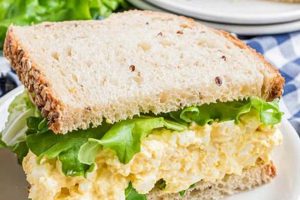
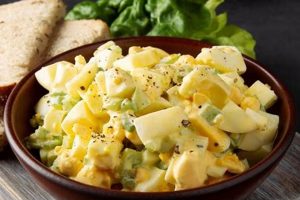
A healthier twist on a classic dish involves combining cooked eggs, typically hard-boiled, with a creamy yogurt base instead of the traditional mayonnaise. This variation often incorporates additional ingredients like chopped vegetables (celery, onion, red onion), herbs (dill, chives), and spices (mustard powder, paprika) to enhance flavor and texture. A typical preparation method involves mashing or chopping the eggs, then blending them with the yogurt and other chosen components.
Substituting yogurt for mayonnaise offers a significant reduction in fat and calories while maintaining a creamy consistency. This makes it a more nutritious option for those seeking lighter meal choices. Furthermore, yogurt contributes a tangy flavor profile that complements the richness of the eggs. This culinary adaptation likely emerged as health-conscious cooking gained prominence, offering a satisfying yet less calorie-dense alternative to traditional recipes.
Further exploration of this topic will delve into specific recipe variations, nutritional comparisons, and practical tips for creating the perfect yogurt-based egg salad. Discussions will also encompass the versatility of this dish, including its suitability for sandwiches, wraps, salads, and as a standalone appetizer.
Tips for Creating Exceptional Yogurt-Based Egg Salad
This section provides practical guidance for optimizing the preparation and flavor profile of egg salad made with yogurt.
Tip 1: Egg Cooking Technique: Achieving perfectly cooked eggs is crucial. Overcooked yolks can result in a dry, crumbly texture. A recommended method involves placing eggs in a saucepan, covering them with cold water, bringing the water to a rolling boil, then removing from heat and letting them sit, covered, for 10-12 minutes, depending on size. Immediately transferring the eggs to an ice bath stops the cooking process and facilitates easy peeling.
Tip 2: Yogurt Selection: Greek yogurt provides a thicker, creamier consistency compared to regular yogurt. Plain, unflavored yogurt is recommended as a base, allowing for greater control over seasoning and flavor customization. Full-fat Greek yogurt offers the closest approximation to the richness of mayonnaise.
Tip 3: Enhancing Flavor: Fresh herbs, such as dill, chives, or parsley, elevate the flavor profile. Incorporating finely diced celery or red onion adds textural complexity. Spices like mustard powder, paprika, or a dash of cayenne pepper can provide depth and complexity.
Tip 4: Balancing Tanginess: The tanginess of yogurt can be balanced with a touch of sweetness. A small amount of honey or maple syrup can be incorporated to achieve the desired flavor equilibrium.
Tip 5: Ingredient Ratios: The ratio of yogurt to eggs influences the final consistency. A general guideline suggests using approximately cup of yogurt per 2 large eggs. This ratio can be adjusted based on personal preference.
Tip 6: Chilling and Serving: Allowing the prepared egg salad to chill in the refrigerator for at least 30 minutes allows the flavors to meld and enhances the overall experience. Serve chilled on bread, crackers, lettuce wraps, or as a salad topping.
By following these tips, one can create a nutritious and flavorful egg salad that offers a delightful alternative to traditional mayonnaise-based recipes.
The following section will offer concluding remarks and summarize the advantages of incorporating yogurt into this classic dish.
1. Hard-boiled Eggs
Hard-boiled eggs constitute the foundational ingredient in yogurt-based egg salad. The quality and preparation of these eggs directly impact the final dish’s overall taste and texture. Properly cooked yolks possess a firm yet creamy consistency, contributing richness and binding the other ingredients. Overcooked yolks, conversely, become dry and crumbly, resulting in a less desirable texture and diminished flavor. The act of hard-boiling eggs transforms their protein structure, making them suitable for mashing or chopping and incorporation into the salad.
Consider two scenarios: one using perfectly cooked, bright yellow yolks and another using overcooked, pale, and crumbly yolks. The first yields a smooth, creamy egg salad with a vibrant flavor profile. The second results in a dry, chalky salad lacking the desired richness and mouthfeel. This difference underscores the importance of correctly preparing hard-boiled eggs as a prerequisite for a successful yogurt-based egg salad. Practical applications of this understanding include carefully timing the boiling process and using an ice bath to halt cooking promptly, preventing overcooked yolks.
Mastering the art of hard-boiling eggs is paramount to achieving a superior yogurt-based egg salad. Challenges such as achieving the ideal yolk consistency and preventing the greenish ring that can form around the yolk during prolonged cooking are easily overcome with proper techniques. This foundational element influences not only the flavor and texture but also the overall aesthetic appeal of the final dish, highlighting its significance within the broader context of creating a delectable and nutritious meal.
2. Plain Yogurt
Plain yogurt serves as the crucial binding agent and flavor base in yogurt-based egg salad, replacing traditional mayonnaise. Its inclusion contributes significantly to the recipe’s nutritional profile and overall sensory experience. Understanding the nuances of plain yogurt selection and its impact on the final dish is essential for optimizing both health benefits and palatability.
- Fat Content and Texture
The fat content of plain yogurt directly influences the egg salad’s creaminess and mouthfeel. Non-fat yogurt produces a lighter, less rich result, while full-fat Greek yogurt offers a texture more closely resembling traditional mayonnaise-based versions. Choosing the appropriate fat content depends on individual dietary preferences and desired textural outcomes.
- Tang and Acidity
Plain yogurt’s inherent tang provides a distinctive flavor profile that complements the richness of the eggs. This acidity can be balanced with other ingredients, such as a touch of honey or maple syrup, to achieve the desired flavor complexity. The level of tanginess varies between yogurt types; Greek yogurt typically possesses a more pronounced tang compared to regular yogurt.
- Nutritional Value
Substituting plain yogurt for mayonnaise significantly reduces the overall fat and calorie content of the egg salad. Yogurt also contributes beneficial probiotics and protein. These nutritional advantages make yogurt-based egg salad a healthier alternative, aligning with dietary goals focused on reduced calorie intake and increased protein consumption.
- Versatility and Customization
Plain yogurt’s neutral flavor profile provides a versatile canvas for customization. It readily absorbs the flavors of added ingredients, such as herbs, spices, and vegetables, allowing for a wide range of flavor combinations. This adaptability allows for personalized recipes catering to individual taste preferences.
The careful selection of plain yogurt, considering its fat content, tanginess, and nutritional value, directly impacts the final quality and character of the yogurt-based egg salad. Understanding these facets allows for informed decisions regarding ingredient choices and recipe customization, ultimately leading to a more satisfying and healthful culinary experience.
3. Fresh Herbs

Fresh herbs play a pivotal role in elevating yogurt-based egg salad from simple to exceptional. Their inclusion introduces aromatic complexity, balancing the richness of the eggs and the tang of the yogurt. This synergistic interplay of flavors transforms the dish into a more nuanced and satisfying culinary experience. Specific herbs, such as dill, chives, parsley, and tarragon, each contribute unique characteristics. Dill, with its slightly anise-like flavor, adds a refreshing brightness. Chives offer a subtle oniony note, while parsley provides a clean, herbaceous taste. Tarragon, with its distinctive licorice-like aroma, introduces a sophisticated complexity.
Consider a comparison: one egg salad made with plain yogurt and another incorporating freshly chopped dill and chives. The latter exhibits a heightened flavor profile, moving beyond the basic egg and yogurt combination. The fresh herbs introduce a vibrant, aromatic dimension that elevates the overall sensory experience. This example illustrates the practical significance of understanding how fresh herbs contribute to the final dish. Incorporating a blend of herbs allows for further customization and complexity, catering to individual preferences and creating signature flavor profiles. Furthermore, the visual appeal of the egg salad is enhanced by the vibrant green hues of the incorporated herbs.
Strategic herb selection and proper integration are essential for maximizing their impact. Delicate herbs like dill and chives are best added just before serving to preserve their fresh flavor and vibrant color. More robust herbs like parsley can be incorporated earlier in the preparation process. Overuse of herbs can overpower the delicate balance of flavors, highlighting the importance of measured incorporation. Fresh herbs contribute not only to flavor enhancement but also to the overall aesthetic and sensory appeal of yogurt-based egg salad, underscoring their crucial role in crafting a truly exceptional dish. Successfully integrating fresh herbs allows for a greater depth of flavor, transforming a simple recipe into a culinary delight.
4. Seasoning Adjustments
Seasoning adjustments are essential for maximizing the flavor potential of yogurt-based egg salad. The inherent tanginess of yogurt, combined with the richness of eggs, creates a foundation that requires careful balancing. Consider the interplay of salt, pepper, and acidity. Salt enhances the inherent flavors of the ingredients, while pepper adds a subtle layer of complexity. Acidity, often introduced through lemon juice or vinegar, brightens the overall flavor profile and cuts through the richness of the eggs and yogurt. The absence of proper seasoning can result in a bland or unbalanced final product, highlighting the crucial role of these adjustments.
A practical example illustrates this concept. Imagine two versions of yogurt-based egg salad: one seasoned simply with salt and pepper, and another incorporating a touch of Dijon mustard and a squeeze of lemon juice. The latter exhibits a more dynamic flavor profile, with the mustard adding a subtle sharpness and the lemon juice providing a refreshing counterpoint to the richness. This difference underscores the impact of nuanced seasoning choices. Further exploration of seasoning options might include incorporating spices like paprika or cayenne pepper for depth, or adding a touch of sweetness with honey or maple syrup to balance the tanginess of the yogurt. Such adjustments cater to individual palates and elevate the egg salad beyond a basic combination of ingredients.
Mastering seasoning adjustments empowers culinary creativity and ensures a well-balanced, flavorful egg salad. Challenges lie in finding the optimal balance of salt, acidity, and other seasonings. Over-seasoning can easily mask the delicate flavors of the core ingredients, while under-seasoning results in a bland and uninspiring dish. The practical application of this understanding involves tasting and adjusting seasonings incrementally throughout the preparation process. This iterative approach allows for precise control over the final flavor profile, ultimately transforming a simple yogurt-based egg salad into a culinary masterpiece. These nuanced adjustments demonstrate the importance of seasoning as a critical element in achieving a harmonious and delightful flavor experience.
5. Texture Variations
Texture variations significantly influence the sensory experience of consuming yogurt-based egg salad. The interplay of creamy yogurt and egg pieces creates a textural foundation that can be manipulated to achieve a spectrum of consistencies, from smooth and homogenous to chunky and textured. This manipulation is primarily achieved through the method of egg preparation, specifically how the cooked eggs are processed before incorporation into the yogurt base. Coarsely chopping hard-boiled eggs results in a more textured egg salad, providing distinct pieces of egg within each bite. Conversely, mashing the eggs thoroughly yields a smoother, creamier consistency, where the egg is more fully integrated with the yogurt. The chosen texture influences not only the mouthfeel but also the perceived flavor release, as larger egg pieces offer bursts of concentrated egg flavor, while a smoother texture provides a more uniform flavor distribution.
Consider two contrasting examples: a yogurt-based egg salad with coarsely chopped eggs versus one with finely mashed eggs. The former offers a more substantial, textured bite, with discernible egg pieces providing a distinct textural counterpoint to the creamy yogurt. The latter presents a smoother, more homogenous experience, where the egg and yogurt blend seamlessly. This textural contrast demonstrates the practical implications of egg preparation techniques. Further textural complexity can be introduced through the addition of other ingredients, such as finely diced celery or red onion, which offer contrasting textures and contribute to the overall sensory experience. The choice of yogurt also plays a role; thicker Greek yogurt lends itself to a creamier, more substantial texture compared to thinner varieties.
Understanding the relationship between egg preparation methods and resulting texture allows for deliberate manipulation to achieve the desired outcome. Challenges may arise in achieving a consistent texture throughout the egg salad, particularly when combining different-sized egg pieces. Practical application of this understanding involves careful attention to egg chopping or mashing techniques, ensuring uniformity for a cohesive textural experience. The interplay of textures within yogurt-based egg salad contributes significantly to its overall appeal, impacting not only the mouthfeel but also the perceived flavor and overall enjoyment of the dish. This nuanced approach to texture demonstrates the importance of considering textural variations as an integral component of crafting a well-balanced and satisfying culinary creation.
6. Health Benefits
The health benefits of egg salad are significantly impacted by the choice of ingredients, particularly the substitution of traditional mayonnaise with yogurt. This shift results in a more nutritious profile, offering several advantages over conventional recipes. Exploring these advantages provides a comprehensive understanding of the nutritional implications of choosing a yogurt-based egg salad.
- Reduced Fat and Calorie Content
Replacing mayonnaise with yogurt drastically reduces the overall fat and calorie content of egg salad. Mayonnaise is typically high in saturated fat and calories, contributing significantly to the dish’s overall caloric density. Yogurt, especially low-fat or non-fat varieties, offers a substantially lighter alternative, making the egg salad a more diet-friendly option. This reduction can be significant, potentially lowering the calorie count per serving by a substantial margin, depending on the specific yogurt used. This makes yogurt-based egg salad a more suitable choice for individuals managing weight or adhering to low-fat dietary guidelines.
- Increased Protein Intake
Yogurt contributes a significant amount of protein to the egg salad, further enhancing its nutritional value. Eggs themselves are a good source of protein, and the addition of yogurt boosts the overall protein content per serving. This increased protein intake promotes satiety, helping to regulate appetite and potentially contributing to weight management. Furthermore, protein plays a crucial role in muscle repair and growth, making yogurt-based egg salad a beneficial choice for individuals engaging in regular physical activity.
- Probiotic Benefits
Yogurt, particularly live and active culture varieties, introduces beneficial probiotics to the egg salad. Probiotics are live microorganisms that can contribute to a healthy gut microbiome. A balanced gut microbiome is associated with improved digestion, enhanced immune function, and other potential health benefits. While the specific probiotic content varies depending on the yogurt type, this addition represents a potential nutritional advantage over traditional mayonnaise-based egg salad, which lacks these beneficial bacteria.
- Nutrient Density
Yogurt-based egg salad offers increased nutrient density compared to its mayonnaise-based counterpart. Yogurt contributes essential nutrients such as calcium, vitamin D, and potassium, which are often lacking in traditional egg salad recipes. These nutrients play vital roles in various bodily functions, including bone health, immune function, and electrolyte balance. This increased nutrient density makes yogurt-based egg salad a more nutritionally complete and beneficial meal option.
By substituting yogurt for mayonnaise, egg salad transforms into a nutritionally advantageous dish offering reduced fat and calories, increased protein and probiotic intake, and enhanced nutrient density. These benefits collectively contribute to a healthier meal option that aligns with dietary goals focused on weight management, improved gut health, and increased nutrient intake. Choosing a yogurt-based egg salad represents a simple yet effective way to enhance the nutritional value of a classic dish.
Frequently Asked Questions
This section addresses common inquiries regarding the preparation and consumption of yogurt-based egg salad.
Question 1: What type of yogurt is best suited for egg salad?
Greek yogurt is generally preferred due to its thicker consistency and higher protein content, resulting in a creamier, more substantial egg salad. Plain, unflavored varieties allow for greater control over seasoning and flavor customization.
Question 2: How can the tanginess of yogurt be balanced in egg salad?
A small amount of honey or maple syrup can be incorporated to mitigate excessive tanginess. Alternatively, the addition of finely diced sweet vegetables, such as red onion or bell pepper, can provide a balancing sweetness.
Question 3: What are optimal storage practices for yogurt-based egg salad?
Refrigeration in an airtight container is essential. For optimal food safety and quality, consumption within three to five days is recommended.
Question 4: Can yogurt-based egg salad be frozen?
Freezing is not recommended. The yogurt’s texture can be negatively affected by freezing and thawing, resulting in a watery consistency upon thawing.
Question 5: How can one prevent watery egg salad when using yogurt?
Utilizing Greek yogurt, due to its lower water content, minimizes the risk of a watery consistency. Thoroughly draining the cooked eggs before chopping or mashing also helps prevent excess moisture.
Question 6: What are suitable alternatives to traditional bread for serving egg salad?
Lettuce wraps, bell pepper halves, or cucumber slices offer low-carbohydrate alternatives to bread or crackers. The egg salad can also be served as a topping for mixed greens or incorporated into a larger salad composition.
Addressing these common inquiries provides a comprehensive understanding of the preparation, storage, and consumption of yogurt-based egg salad. This information empowers informed choices and facilitates successful culinary outcomes.
The following section will provide a concluding summary of the key benefits and advantages of incorporating yogurt into egg salad recipes.
Conclusion
Exploration of egg salad recipes incorporating yogurt reveals a nutritionally advantageous and versatile alternative to traditional mayonnaise-based preparations. Key benefits include reduced fat and calorie content, increased protein intake, potential probiotic advantages, and enhanced nutrient density. Yogurt’s inherent tang complements the richness of eggs, while its adaptable nature allows for diverse flavor customizations through the incorporation of herbs, spices, and vegetables. Texture variations, achievable through egg preparation methods, further expand the culinary possibilities. Addressing practical considerations, such as yogurt selection, seasoning adjustments, and optimal storage practices, ensures successful culinary outcomes.
Culinary adaptations, driven by health-conscious trends, continuously reshape traditional recipes. Egg salad’s evolution through yogurt incorporation exemplifies this transformative process, offering a healthier and equally satisfying rendition of a classic dish. Continued exploration of ingredient substitutions and flavor combinations within familiar culinary frameworks promises further advancements in nutritionally balanced and palate-pleasing cuisine.