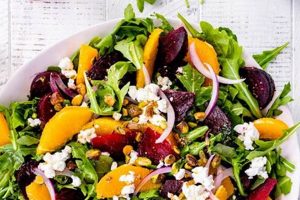
A refreshing summer dish typically combines cubed watermelon, crumbled feta cheese, and thinly sliced red onion. Other common additions include fresh mint or basil, a simple vinaigrette, and sometimes olives or cucumber. Variations might substitute different cheeses, such as goat cheese, or incorporate grains like quinoa for a more substantial meal.
This dish offers a compelling contrast of sweet and salty flavors, complemented by the creamy texture of the cheese and the crispness of the melon and onion. The inherent simplicity allows for quick preparation, making it ideal for warm-weather gatherings. Furthermore, the readily available ingredients and adaptable nature of the dish contribute to its popularity. The combination of watermelon and feta likely originated in Mediterranean cuisine, where similar flavor profiles are common.
The following sections will explore specific ingredient selections, preparation techniques, and variations to customize this versatile dish, offering guidance for both novice and experienced cooks.
Tips for a Perfect Watermelon Feta Salad
Optimal preparation techniques and ingredient choices elevate this simple dish from pleasant to extraordinary. Attention to detail ensures a balanced flavor profile and appealing presentation.
Tip 1: Watermelon Selection: Opt for a ripe, seedless watermelon with a deep red color and a firm texture. Avoid melons with soft spots or a dull appearance.
Tip 2: Cheese Considerations: Authentic Greek feta, stored in brine, offers the best flavor. Crumbling the feta rather than slicing ensures even distribution throughout the salad. Consider milder alternatives like goat cheese for a less salty option.
Tip 3: Enhancing the Vinaigrette: A simple vinaigrette of olive oil, red wine vinegar, salt, and pepper provides a classic accompaniment. Experiment with additions like lemon zest, a touch of honey, or a pinch of red pepper flakes for nuanced flavor profiles.
Tip 4: Herb Integration: Fresh mint and basil complement the sweetness of the watermelon and the saltiness of the feta. Chiffonade the herbs for optimal visual appeal and even distribution of flavor.
Tip 5: Onion Preparation: Thinly slicing red onion minimizes its pungency. Soaking the slices in ice water for a few minutes further mellows the flavor and adds a crisp texture.
Tip 6: Timing is Key: Assemble the salad shortly before serving to prevent the watermelon from releasing excess moisture and the herbs from wilting. This preserves the salad’s fresh, vibrant character.
Tip 7: Enhancing Visual Appeal: Consider adding edible flowers or a sprinkle of toasted sesame seeds for a touch of elegance.
Careful consideration of these elements ensures a balanced and refreshing culinary experience. Following these guidelines allows one to create a dish that showcases the complementary flavors and textures of the ingredients.
By focusing on these details, a simple combination of ingredients transforms into a memorable dish. The following section provides concluding remarks and encourages further exploration of variations.
1. Fresh, Ripe Watermelon

Fresh, ripe watermelon forms the foundation of a successful watermelon feta salad recipe. Its sweetness and juiciness provide a refreshing counterpoint to the salty feta and other savory components. A less-than-ripe melon lacks the necessary sweetness, resulting in a bland and unbalanced dish. Conversely, an overripe melon can be mealy and excessively watery, compromising the salad’s texture and diluting the flavors. Consider a scenario where an unripe watermelon is used the lack of sweetness would necessitate additional ingredients, like honey or sugar, to compensate, potentially altering the intended flavor profile. Alternatively, an overripe melon might lead to a soggy salad, detracting from the overall dining experience.
The quality of the watermelon directly impacts the final dish. Its high water content contributes to the refreshing nature of the salad, particularly appealing during warm weather. The subtle sweetness enhances the savory notes of the feta and any added herbs or spices. A ripe watermelon, bursting with flavor, requires minimal additions, allowing its inherent qualities to shine through. For instance, a perfectly ripe watermelon paired with high-quality feta and a simple vinaigrette creates a harmonious balance, showcasing the natural flavors of each ingredient. However, using a bland watermelon might necessitate a heavier hand with seasonings or other additions, potentially masking the delicate interplay of flavors.
Selecting a ripe watermelon is paramount for a successful outcome. Visual cues, such as a deep, even color and a symmetrical shape, indicate ripeness. A hollow sound when the melon is thumped further suggests maturity. These indicators, coupled with an understanding of seasonal availability, contribute to choosing the optimal fruit. Challenges arise when out-of-season watermelons are used, as these often lack flavor and texture. Therefore, prioritizing a ripe, in-season watermelon ensures the salad’s success and elevates the overall culinary experience.
2. High-Quality Feta Cheese
The choice of feta significantly influences the overall success of a watermelon feta salad. High-quality feta contributes a crucial salty, tangy element, balancing the sweetness of the watermelon and creating a complex flavor profile. Inferior feta can detract from the dish, introducing unwanted bitterness or a crumbly, dry texture that clashes with the other ingredients.
- Authenticity and Origin:
True feta, traditionally made from sheep’s milk or a blend of sheep and goat’s milk, offers a distinct flavor profile characterized by a tangy, slightly salty taste and a creamy texture. Feta produced outside designated regions or from cow’s milk may lack these characteristics, resulting in a less authentic and potentially less flavorful salad. Authentic Greek feta, often stored in brine, typically delivers the desired complexity.
- Texture and Crumble:
The texture of feta should be firm yet creamy, allowing it to crumble easily without becoming excessively dry or powdery. This optimal texture contributes to even distribution throughout the salad and ensures a pleasant mouthfeel. A feta that is too hard or crumbles unevenly can disrupt the balance of textures in the salad.
- Salt Content and Brine:
Feta stored in brine retains moisture and maintains a balanced salt level. Rinsing the feta before adding it to the salad helps control the saltiness of the final dish. Feta packaged without brine can become dry and excessively salty, potentially overpowering the other flavors. Proper handling ensures the desired salt level.
- Flavor Profile and Freshness:
Fresh, high-quality feta exhibits a clean, tangy flavor with a pleasant salty finish. Avoid feta with a sour or overly pungent aroma, as this indicates potential spoilage or inferior quality. Freshness is paramount for a well-balanced salad. The delicate balance of sweet and salty flavors can be easily disrupted by stale or low-quality feta.
Careful selection of feta is essential for a successful watermelon feta salad. High-quality feta provides the necessary salty and tangy notes, enhancing the sweetness of the watermelon and creating a harmonious blend of flavors and textures. Compromising on the quality of the feta can negatively impact the overall dish, underscoring the importance of choosing wisely. Subtle differences in feta varieties contribute distinct nuances to the final dish, emphasizing the importance of selecting the right feta for a balanced and flavorful salad.
3. Balanced Vinaigrette

A balanced vinaigrette is crucial to a successful watermelon feta salad. It provides a necessary acidic counterpoint to the sweetness of the watermelon and the saltiness of the feta, creating a harmonious flavor profile. An overly acidic vinaigrette can overpower the delicate flavors of the watermelon and feta, while a bland dressing fails to provide the necessary contrast. The vinaigrette acts as a unifying element, tying together the disparate ingredients and enhancing their individual characteristics. For example, a vinaigrette made with a high-quality extra virgin olive oil, a bright but not overpowering vinegar like white wine or champagne vinegar, and a touch of sweetness from honey or maple syrup complements the watermelon and feta without masking their flavors. Conversely, a vinaigrette relying on a low-quality oil or an overly acidic vinegar can negatively impact the overall taste.
The balance within the vinaigrette itself is also crucial. The ratio of oil to acid significantly affects the final taste. A typical ratio is three parts oil to one part vinegar, but this can be adjusted to personal preference. The emulsification process, which involves whisking the oil and vinegar together until they combine, creates a smooth and creamy texture that coats the ingredients evenly. A poorly emulsified vinaigrette separates quickly, resulting in an uneven distribution of flavor and a less appealing mouthfeel. Furthermore, additional ingredients, such as Dijon mustard, honey, or herbs, can add complexity and depth to the vinaigrette, further enhancing the overall flavor profile of the salad. However, these additions must be used judiciously to maintain balance and avoid overpowering the core ingredients.
Achieving a harmonious balance in a vinaigrette is essential for elevating a watermelon feta salad from simple to exceptional. The vinaigrette should complement and enhance the existing flavors, not compete with them. Careful consideration of the acid, oil, and additional ingredients ensures a cohesive and flavorful dish. Challenges arise when the vinaigrette is overly acidic, excessively oily, or lacks complexity. Overcoming these challenges involves understanding the interplay of ingredients and adjusting the proportions accordingly. This nuanced approach ultimately transforms a basic watermelon feta salad into a sophisticated and refreshing culinary experience.
4. Complementary Herbs

The strategic use of herbs elevates the watermelon feta salad from simple to sophisticated. Fresh herbs introduce aromatic complexity, balancing the sweetness of the watermelon and the saltiness of the feta. Careful selection and proper handling of these herbs are essential for maximizing their impact and ensuring a well-balanced, refreshing dish.
- Mint:
Mint, with its bright, cooling flavor, offers a refreshing counterpoint to the sweetness of the watermelon. Its inherent sweetness complements the feta without clashing. Different mint varieties, such as spearmint or peppermint, offer nuanced flavor profiles, allowing for customization. Overuse, however, can overwhelm the delicate balance of the salad. For example, a few finely chopped spearmint leaves enhance the salad’s refreshing quality, while a large quantity might dominate the other flavors.
- Basil:
Basil contributes a subtle peppery, anise-like flavor that complements both the watermelon and feta. Its slightly sweet and savory notes harmonize with the existing flavors, adding depth. Similar to mint, moderation is key; too much basil can overpower the other ingredients. Consider a classic Genovese basil for a traditional flavor profile or explore other varieties like Thai basil for a unique twist. The choice of basil can subtly influence the overall taste, making experimentation worthwhile.
- Other Herbs:
While mint and basil are classic choices, other herbs can add intriguing dimensions. Tarragon, with its subtle licorice flavor, offers an unexpected yet complementary element. Dill, with its slightly tangy and grassy notes, can provide a refreshing contrast. Experimentation with different herbs allows for personalized flavor profiles. However, careful consideration of flavor pairings is essential to avoid clashes or imbalances. For instance, rosemary, with its strong, piney flavor, might overpower the delicate sweetness of the watermelon.
- Herb Preparation and Incorporation:
Proper handling of herbs is crucial. Gentle washing and thorough drying prevent wilting and ensure optimal flavor. Chopping or tearing the herbs releases their aromatic oils and maximizes their impact. Adding the herbs just before serving preserves their freshness and prevents them from becoming bruised or discolored. For example, gently tearing basil leaves instead of chopping them prevents oxidation and preserves their vibrant green color, enhancing the visual appeal of the salad.
The considered use of herbs significantly enhances the complexity and balance of a watermelon feta salad. The interplay of herbal notes with the sweetness of the watermelon and the saltiness of the feta creates a multi-layered sensory experience. Understanding the individual characteristics of different herbs and employing appropriate preparation techniques allows for a truly customized and elevated culinary creation. Overlooking the importance of herbs can result in a less dynamic and flavorful dish, underscoring their essential role in a successful watermelon feta salad.
5. Precise Preparation
Precise preparation is paramount in achieving a successful watermelon feta salad recipe. While seemingly simple, this dish relies on careful attention to detail to ensure the optimal balance of flavors, textures, and visual appeal. The following facets highlight the importance of precision in creating a harmonious and refreshing culinary experience.
- Watermelon Handling:
The manner in which the watermelon is handled significantly impacts the final result. Uniformly sized cubes ensure even distribution of flavor and contribute to a visually appealing presentation. Improper cutting can lead to uneven pieces, some too large and some too small, resulting in an inconsistent texture and potentially uneven flavor distribution. For instance, large chunks of watermelon may overwhelm the other ingredients in a single bite, while smaller pieces might become lost. Precise cubing, typically around one-inch cubes, allows for a balanced integration of watermelon with the other components.
- Feta Treatment:
Crumbling feta cheese, rather than slicing or dicing, allows for even distribution throughout the salad and ensures each bite incorporates the salty, tangy flavor. Overly large pieces of feta can create pockets of intense saltiness, disrupting the balance of flavors. Conversely, excessively small crumbles might disappear within the salad, diminishing their impact. The size of the feta crumbles influences the overall texture and flavor distribution. Crumbling by hand, rather than using a pre-crumbled product, often provides more control over the size and texture.
- Ingredient Incorporation:
The order and manner in which ingredients are incorporated affect the final outcome. Adding delicate herbs just before serving prevents wilting and preserves their fresh flavor. Combining the watermelon and feta too far in advance can lead to excess moisture release from the watermelon, diluting the flavors and creating a soggy salad. Similarly, pre-dressing the salad too early can cause the watermelon to become waterlogged. Strategic layering and timing ensure optimal freshness and flavor.
- Visual Presentation:
While flavor is paramount, visual presentation enhances the dining experience. Arranging the ingredients thoughtfully, rather than simply tossing them together, creates a more appealing and appetizing dish. Consider the placement of herbs, the distribution of feta, and the overall balance of colors and textures. A well-plated salad is more inviting and suggests attention to detail, further enhancing enjoyment. Visual appeal stimulates appetite and contributes to a more satisfying culinary experience.
Precise preparation is integral to a successful watermelon feta salad recipe. Attention to seemingly minor details, such as uniform watermelon cubes, crumbled feta, strategic ingredient incorporation, and thoughtful plating, significantly impacts the final dish. These precise steps ensure a harmonious blend of flavors, textures, and visual appeal, elevating the simple combination of ingredients into a refreshing and satisfying culinary experience. Overlooking these details can result in a less balanced and enjoyable salad, emphasizing the importance of precision in achieving the desired outcome.
Frequently Asked Questions
This section addresses common inquiries regarding watermelon feta salad preparation and variations, offering practical solutions and clarifying potential uncertainties.
Question 1: Can other cheeses be substituted for feta?
While feta provides the classic salty, tangy counterpoint to watermelon, other cheeses offer viable alternatives. Goat cheese, with its creamy texture and subtle tang, presents a milder option. Ricotta salata, a firmer, saltier cheese, provides a more robust flavor. Consider haloumi for a grilling option, offering a warm, salty contrast to the cool watermelon.
Question 2: How can excess moisture in the salad be prevented?
Watermelon’s high water content can lead to a soggy salad if not addressed. Salting the watermelon cubes and allowing them to drain for a short period before combining with other ingredients helps reduce excess moisture. Adding the dressing immediately before serving also minimizes the risk of a watery salad. Thoroughly drying all ingredients, including herbs, further contributes to preventing excess moisture.
Question 3: What are suitable additions to enhance flavor complexity?
Various ingredients can enhance the flavor profile. Toasted nuts, such as pine nuts or slivered almonds, provide a crunchy texture and nutty flavor. Olives, Kalamata or green, introduce a briny, salty element. A sprinkle of red pepper flakes adds a touch of heat. Consider incorporating thinly sliced cucumbers or a handful of fresh berries for added freshness and contrasting flavors.
Question 4: Can this salad be prepared in advance?
While best served immediately, components can be prepared in advance. Store cubed watermelon, crumbled feta, and other additions separately and combine shortly before serving. Prepare the vinaigrette in advance and store it separately. This approach preserves the freshness and prevents the salad from becoming watery.
Question 5: How can the salad be adapted for different dietary needs?
Adapting the salad for various dietary requirements is straightforward. Omit the feta for a vegan version or substitute a vegan feta alternative. Adjust the vinaigrette by using maple syrup or agave nectar instead of honey for a vegan option. Ensure all added ingredients align with specific dietary restrictions.
Question 6: What are the best storage practices for leftover salad?
While consuming the salad immediately is ideal, leftovers can be stored. Place any remaining salad in an airtight container and refrigerate for up to two days. However, the texture and flavor may change slightly due to the watermelon releasing moisture. Consume leftovers as quickly as possible for optimal quality.
Understanding these common concerns allows for a more informed approach to watermelon feta salad preparation. These insights contribute to a successful and enjoyable culinary experience, maximizing the potential of this refreshing and versatile dish.
The following section explores variations and provides specific recipe examples for customizing this dish to individual preferences.
Watermelon Feta Salad Recipe
This exploration of watermelon feta salad recipes has highlighted the essential elements contributing to its refreshing appeal. From the selection of a perfectly ripe watermelon and high-quality feta to the careful balance of the vinaigrette and the judicious use of herbs, each component plays a crucial role in the final dish. Precise preparation techniques, including uniform cutting and proper ingredient incorporation, further elevate this seemingly simple salad to a sophisticated culinary experience. Addressing common concerns regarding ingredient substitutions, moisture control, and flavor enhancements provides a comprehensive understanding of the recipe’s versatility and adaptability.
The enduring popularity of watermelon feta salad recipes speaks to the harmonious balance of sweet, salty, and herbaceous flavors. Continued experimentation with variations, incorporating diverse ingredients and flavor profiles, promises further evolution and enjoyment of this classic dish. An understanding of the foundational principles outlined herein empowers culinary exploration and ensures a consistently satisfying and refreshing result.