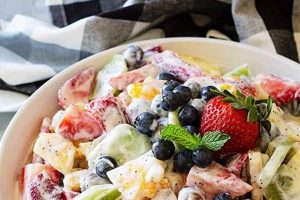
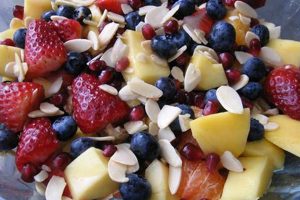
Combining the freshness of leafy greens and other vegetables with the sweetness of fruits and the satisfying crunch of nuts offers a versatile culinary experience. Arugula with sliced pears, candied walnuts, and gorgonzola cheese exemplifies this blend of flavors and textures, creating a dish suitable as a light meal or a sophisticated side. Variations are numerous, encompassing diverse ingredients such as spinach, berries, almonds, pecans, and various cheeses.
These combinations provide not only a delightful sensory experience but also a wealth of nutritional benefits. Fruits and nuts contribute essential vitamins, minerals, antioxidants, and healthy fats. The incorporation of fresh produce increases dietary fiber intake, promoting digestive health. Historically, the combination of fruits, nuts, and greens can be traced back to various culinary traditions, reflecting an intuitive understanding of balanced nutrition and seasonal eating.
Further exploration will delve into specific recipe examples, highlighting ingredient selection, preparation techniques, and complementary dressings. Nutritional information and potential health advantages will also be discussed in detail.
Tips for Creating Delicious Fruit and Nut Salads
Successful preparation involves careful consideration of ingredient pairings, textures, and complementary flavors. The following tips offer guidance for crafting exceptional salads.
Tip 1: Balance Sweetness and Acidity: Pair sweet fruits like berries or mangoes with tart fruits such as grapefruit or green apples. A squeeze of lemon or lime juice in the dressing further enhances this balance.
Tip 2: Consider Textural Variety: Combine soft fruits with crisp vegetables and crunchy nuts. Roasted nuts offer an intensified flavor and added crunch.
Tip 3: Choose Complementary Cheeses: Soft cheeses like goat cheese or feta pair well with stone fruits and berries. Harder cheeses like Parmesan or Pecorino Romano complement apples and pears.
Tip 4: Select Fresh, High-Quality Ingredients: Opt for seasonal fruits and vegetables for optimal flavor and nutritional value. Store nuts properly to maintain their freshness and prevent rancidity.
Tip 5: Experiment with Dressings: Light vinaigrettes, honey-based dressings, or even a simple balsamic glaze can enhance the flavors of the salad. Avoid heavy, creamy dressings that can mask the delicate flavors of the fruits and nuts.
Tip 6: Prepare Ingredients Properly: Wash and dry all produce thoroughly. Toast or roast nuts to enhance their flavor. Cut fruits and vegetables into bite-sized pieces for easy enjoyment.
Tip 7: Don’t Overcrowd the Salad: Allow each ingredient to shine by avoiding overcrowding. A balanced mix of greens, fruits, nuts, and cheese creates a more appealing and enjoyable salad.
By following these guidelines, one can elevate simple ingredients into a complex and satisfying culinary experience. Proper preparation and thoughtful ingredient selection result in a dish that is both nutritious and delicious.
The following section will explore specific recipe combinations, incorporating these tips to inspire culinary creativity and demonstrate the versatility of fruit and nut salads.
1. Ingredient Pairing

Ingredient pairing forms the cornerstone of successful fruit and nut salads. Careful selection and combination of components contribute significantly to the overall flavor profile, nutritional balance, and textural complexity. Compatibility among ingredients elevates a simple mix of produce and nuts into a cohesive and satisfying culinary creation. For instance, the sweetness of berries harmonizes with the peppery bite of arugula, while the richness of goat cheese complements the subtle sweetness of roasted pecans. Disregarding ingredient pairing can lead to disjointed flavors and textures, diminishing the overall enjoyment of the salad.
Specific examples further illustrate the importance of ingredient pairing. Pairing apples with walnuts and blue cheese creates a classic combination, balancing the sweetness of the apple with the earthy notes of the cheese and the crunch of the walnuts. Similarly, a combination of grilled peaches, prosciutto, and toasted almonds offers a savory and sweet contrast with varying textures. These examples demonstrate the power of thoughtful ingredient selection in enhancing the sensory experience. A well-paired salad offers not just sustenance but also a multi-layered culinary experience.
Understanding the principles of ingredient pairing empowers culinary creativity and ensures a harmonious blend of flavors and textures. Effective pairing maximizes the potential of individual ingredients, transforming them into a cohesive and delightful whole. This knowledge is crucial for crafting exceptional fruit and nut salads, demonstrating the profound impact of ingredient selection on the overall dining experience.
2. Textural Contrast
Textural contrast significantly contributes to the sensory appeal of salads incorporating fruit and nuts. A combination of crisp, crunchy, soft, and chewy elements elevates these salads beyond basic nutrition, offering a more engaging and satisfying culinary experience. Understanding and utilizing textural variety is key to crafting a successful and enjoyable salad.
- Leafy Greens as a Foundation
Leafy greens provide the foundational textural element, often offering a slightly bitter and crisp counterpoint to the other ingredients. Spinach, for example, contributes a smooth, almost silky texture, while kale offers a heartier, more robust chew. The choice of greens influences the overall textural profile of the salad.
- The Role of Crunchy Elements
Nuts introduce a crucial element of crunch. Toasted almonds provide a satisfying snap, while walnuts offer a firmer, more substantial bite. Seeds, such as sunflower or pumpkin seeds, can also contribute to this textural dimension. This crunch contrasts with the softer elements, creating a dynamic interplay.
- Soft Fruits and Their Contribution
Soft fruits like berries and grapes introduce a juicy burst and a textural counterpoint to the crunch of nuts and the crispness of greens. Sliced stone fruits, such as peaches or plums, provide a delicate tenderness. These softer textures add depth and complexity to the overall sensory experience.
- Additional Textural Considerations
Other ingredients can further enhance textural contrast. Crumbled cheese adds a creamy element, while dried fruits, such as cranberries or apricots, offer a chewy texture. Even the choice of dressing can influence the textural experience, with a light vinaigrette providing a subtle contrast to a thicker, creamier dressing. Consider these additions to elevate textural complexity.
The interplay of these textural elements transforms a simple salad into a multi-dimensional culinary experience. The strategic combination of crisp greens, crunchy nuts, soft fruits, and potentially other textural components creates a balanced and satisfying dish that engages the palate on multiple levels. Understanding the importance of textural contrast allows for a more thoughtful and creative approach to salad preparation.
3. Flavor Balance

Flavor balance is paramount in crafting successful salads with fruit and nuts. A harmonious blend of sweet, savory, tart, and acidic notes elevates these salads from simple mixtures to complex culinary creations. Achieving this balance requires careful consideration of ingredient pairings and the interplay of contrasting flavors. A well-balanced salad engages the palate on multiple levels, offering a more nuanced and satisfying dining experience.
- Sweetness from Fruit
Fruits contribute the primary element of sweetness. The natural sugars in fruits like berries, apples, and pears provide a foundational sweetness that interacts with other flavor components. The intensity of sweetness varies depending on the fruit chosen; ripe mangoes offer a rich, tropical sweetness, while tart raspberries provide a more subtle sweetness balanced by acidity.
- Acidity as a Counterpoint
Acidity acts as a counterpoint to sweetness, preventing the salad from becoming cloying. Citrus fruits, such as oranges and grapefruits, offer a refreshing burst of acidity. Vinegars, like balsamic or apple cider vinegar, incorporated into the dressing, provide a tartness that cuts through the sweetness of the fruit and adds depth of flavor. Lemon juice can also be used to brighten the overall flavor profile.
- Savory Notes from Nuts and Cheese
Nuts and cheese contribute savory notes that complement the sweet and acidic elements. Nuts, particularly toasted varieties, offer a depth of flavor that balances the sweetness of the fruit. Cheese, especially sharper varieties like feta or gorgonzola, adds a salty, sometimes pungent element that further enhances the complexity of the salad. These savory notes prevent the salad from tasting one-dimensional.
- Bitterness from Greens and Herbs
Leafy greens and herbs introduce an element of bitterness that rounds out the flavor profile. Arugula, for instance, provides a peppery bitterness that contrasts with the sweetness of fruit. Herbs like mint or basil add a refreshing, slightly bitter note that complements the other ingredients. These bitter notes contribute to a more balanced and complex flavor experience.
The interplay of these flavor components creates a dynamic and satisfying culinary experience. A well-balanced fruit and nut salad is not merely a sum of its parts but a harmonious blend of contrasting flavors that complement and enhance one another. Understanding these flavor dynamics allows for a more intentional and sophisticated approach to salad creation, resulting in dishes that are both nutritious and deeply flavorful.
4. Nutritional Value
Nutritional value represents a significant benefit derived from incorporating fruits and nuts into salads. These ingredients contribute essential vitamins, minerals, healthy fats, and antioxidants, enhancing the overall dietary profile. Understanding the specific nutritional contributions of these components allows for informed choices that maximize health benefits.
- Vitamins and Minerals
Fruits and nuts offer a rich array of vitamins and minerals crucial for various bodily functions. Berries provide Vitamin C, an antioxidant supporting immune function. Apples offer fiber and Vitamin K. Almonds are a source of Vitamin E and magnesium. These micronutrients contribute to overall health and well-being. The variety inherent in these salads allows for a diverse intake of essential vitamins and minerals.
- Healthy Fats
Nuts are a significant source of healthy fats, including monounsaturated and polyunsaturated fats. These fats contribute to cardiovascular health and help regulate cholesterol levels. Walnuts, for example, are rich in omega-3 fatty acids, known for their anti-inflammatory properties. Incorporating a variety of nuts into salads ensures a balanced intake of these beneficial fats.
- Antioxidants
Both fruits and nuts contain antioxidants, compounds that protect cells from damage caused by free radicals. Antioxidants contribute to overall health and may play a role in reducing the risk of chronic diseases. Berries, particularly blueberries and strawberries, are known for their high antioxidant content. Nuts like pecans and almonds also provide significant antioxidant benefits.
- Fiber Content
Fruits, nuts, and leafy greens contribute to dietary fiber intake. Fiber aids digestion, promotes satiety, and helps regulate blood sugar levels. Apples, pears, and berries are good sources of fiber. Almonds and other nuts also provide a substantial amount of fiber. Adequate fiber intake is essential for maintaining digestive health and overall well-being.
The combined nutritional contributions of fruits, nuts, and leafy greens create a synergistic effect, maximizing the health benefits of these salads. Consuming these nutrient-rich ingredients regularly contributes to a balanced and healthful diet, supporting overall well-being and potentially reducing the risk of chronic diseases. The versatility of these salads allows for customization based on individual dietary needs and preferences, further enhancing their nutritional value.
5. Presentation
Presentation significantly influences the perceived appeal and enjoyment of salads incorporating fruit and nuts. Visual appeal enhances the dining experience, stimulating appetite and increasing perceived value. Careful arrangement and attention to color, texture, and height transform a simple salad into a visually captivating dish. A thoughtfully presented salad suggests care and attention to detail, elevating the perception of both the dish and the dining occasion. This visual aspect plays a crucial role in the overall enjoyment of the culinary experience.
Consider the impact of a salad composed of vibrant green spinach, ruby red strawberries, and contrasting toasted almonds. The visual appeal immediately engages the diner, creating anticipation and enhancing the perceived freshness and flavor. Conversely, a haphazardly tossed salad, even with the same high-quality ingredients, may appear less appealing and diminish the overall dining experience. Strategic placement of ingredients, considering color and texture variations, maximizes visual impact. The height of the salad also contributes to its presentation; a slightly elevated arrangement adds a sense of elegance and sophistication.
Practical applications of presentation principles enhance the appeal of fruit and nut salads in various settings. In a restaurant context, thoughtful plating elevates the perceived value of the dish. For home cooks, attention to presentation enhances the enjoyment of everyday meals. Even in casual settings, simple techniques like arranging ingredients in a visually appealing manner can significantly impact the dining experience. Understanding the importance of presentation enables the creation of salads that are not only nutritious and flavorful but also visually captivating, maximizing enjoyment and appreciation.
Frequently Asked Questions
This section addresses common inquiries regarding salads featuring fruit and nuts, offering practical guidance and clarifying potential uncertainties.
Question 1: How can one prevent fruit from browning in a salad?
Tossing cut fruit with a small amount of lemon or lime juice inhibits enzymatic browning, preserving its fresh appearance.
Question 2: What are optimal nut storage methods to maintain freshness?
Storing nuts in airtight containers in a cool, dark, and dry environment, such as a pantry or refrigerator, maximizes shelf life and prevents rancidity.
Question 3: Can these salads be prepared in advance?
While greens and fruits are best combined shortly before serving, components like roasted nuts and dressings can be prepared in advance. Store these elements separately and combine just prior to consumption.
Question 4: What dressings complement fruit and nut salads best?
Light vinaigrettes, such as lemon or balsamic, generally complement these salads well. Honey or maple syrup can be added for a touch of sweetness. Avoid heavy, creamy dressings that may mask delicate flavors.
Question 5: How can one ensure balanced nutrition in these salads?
Incorporating a variety of fruits, nuts, and leafy greens ensures a broader spectrum of vitamins, minerals, and healthy fats. Adding lean protein, such as grilled chicken or fish, further enhances nutritional value.
Question 6: Are there specific nut and fruit combinations recommended for optimal flavor?
Classic combinations include apples with walnuts and blue cheese, pears with pecans and gorgonzola, and berries with almonds and feta. Experimentation with different combinations often yields delightful results, guided by personal preference.
Addressing these common questions provides practical knowledge for successful preparation and enjoyment. Thoughtful consideration of these points ensures optimal flavor, texture, and nutritional value.
The following section will offer specific recipe examples, demonstrating the practical application of the information provided.
Conclusion
Exploration of salad recipes incorporating fruit and nuts reveals the potential for culinary creativity and nutritional balance. Careful selection of ingredients, considering flavor profiles, textural contrasts, and nutritional contributions, yields dishes that satisfy both palate and dietary requirements. Emphasis on presentation further elevates the dining experience, transforming simple ingredients into visually appealing and flavorful meals.
The versatility inherent in these recipes encourages exploration and adaptation to individual preferences and dietary needs. Continued experimentation with diverse fruits, nuts, greens, and complementary ingredients offers opportunities to discover novel flavor combinations and maximize health benefits. This approach promotes a deeper appreciation for the culinary potential of fresh, wholesome ingredients and their contribution to a balanced and enjoyable diet.