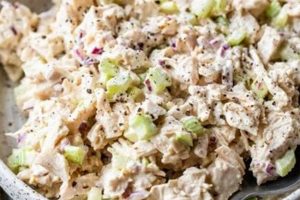
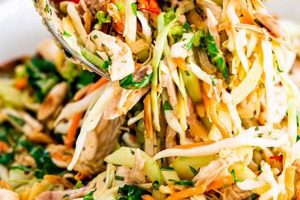
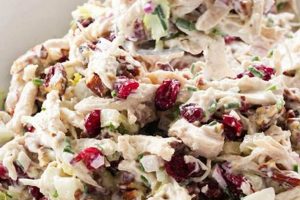
A fusion dish blends the creamy texture of traditional chicken salad with vibrant, savory Mexican flavors. Typically, this involves incorporating ingredients like shredded chicken, mayonnaise, and celery with elements such as jalapenos, cilantro, lime juice, corn, black beans, and spices like cumin or chili powder. Variations might include using avocado, queso fresco, or incorporating a chipotle-lime dressing. A simple example could be a mixture of cooked chicken, mayonnaise, diced celery, chopped cilantro, jalapenos, cumin, and lime juice.
This culinary crossover offers a refreshing twist on a classic comfort food. The incorporation of Mexican ingredients introduces a complex flavor profile, balancing the richness of the mayonnaise with the brightness of citrus and the heat of chiles. This adaptability allows for diverse presentations, from a light lunch served in lettuce cups or on crisp tostadas to a heartier meal enjoyed as a filling for tacos or burritos. The relative ease of preparation and the availability of ingredients further contribute to its appeal.
The following sections will explore specific variations of this versatile dish, offering detailed ingredient lists, step-by-step instructions, and serving suggestions. Nutritional information and tips for ingredient substitutions will also be provided to cater to various dietary needs and preferences.
Tips for a Flavorful Mexican-Inspired Chicken Salad
Optimizing the balance of flavors and textures is key to a successful fusion dish. The following tips offer guidance on ingredient selection and preparation techniques for creating a delicious and authentic experience.
Tip 1: Chicken Selection: Rotisserie chicken offers convenience, but poaching or grilling chicken breasts allows for greater control over seasoning and moisture content. Shredding the chicken ensures even distribution throughout the salad.
Tip 2: Balancing Flavors: Lime juice provides essential acidity to counterbalance the richness of mayonnaise. Fresh cilantro adds a bright, herbaceous note. Adjust the amount of jalapeno or other chiles to achieve the desired level of heat.
Tip 3: Texture Considerations: Diced celery and red onion offer a satisfying crunch. Incorporating ingredients like black beans or corn adds heartiness and textural variety. Avocado provides creaminess but should be added just before serving to prevent browning.
Tip 4: Seasoning: Ground cumin and chili powder offer authentic Mexican flavors. Experiment with other spices like smoked paprika or oregano to further enhance the complexity of the dish. Seasoning the chicken during cooking enhances its flavor.
Tip 5: Mayonnaise Alternatives: Greek yogurt or a combination of Greek yogurt and mayonnaise can be used for a lighter, tangier alternative. Avocado mayonnaise offers a richer, creamier option.
Tip 6: Serving Suggestions: Traditional accompaniments include tostada shells, tortilla chips, or lettuce cups. The salad can also be used as a filling for tacos, burritos, or quesadillas.
Tip 7: Freshness: For optimal flavor and food safety, prepare the salad as close to serving time as possible. Store any leftovers in an airtight container in the refrigerator for up to three days.
By following these guidelines, one can achieve a harmonious blend of flavors and textures, resulting in a truly satisfying culinary creation. The combination of fresh ingredients and balanced seasoning elevates this dish beyond a simple salad, offering a versatile and flavorful meal option.
The following section provides a detailed recipe incorporating these tips, allowing for practical application and a personalized culinary experience.
1. Chicken

Chicken serves as the foundational ingredient in a chicken salad, including Mexican-inspired variations. Its neutral flavor profile provides a canvas for the incorporation of diverse spices and other ingredients, making it a versatile protein source adaptable to various culinary traditions. The quality and preparation of the chicken significantly influence the overall taste and texture of the final dish.
- Type of Chicken
Different cuts of chicken offer varying textures and flavor profiles. While boneless, skinless breasts are commonly used for their leanness and ease of preparation, shredded rotisserie chicken provides a convenient and flavorful option. Dark meat, such as thighs or drumsticks, offers a richer flavor and increased moisture content, potentially impacting the final salad’s texture and richness. The chosen cut influences the overall taste and mouthfeel of the dish.
- Cooking Methods
The method employed for cooking the chicken directly impacts its flavor and texture. Poaching yields a moist and tender result, ideal for shredding. Grilling imparts a smoky char, adding depth of flavor. Baking or roasting offer a balance of moisture and flavor development. The selected cooking method plays a crucial role in the final flavor profile and texture of the chicken salad.
- Seasoning
Seasoning the chicken during the cooking process enhances its inherent flavor and complements the other ingredients in the salad. Incorporating spices relevant to the Mexican theme, such as cumin, chili powder, or smoked paprika, infuses the chicken with authentic flavors that permeate the entire dish. Pre-seasoning significantly impacts the overall flavor profile of the final product.
- Handling and Storage
Proper handling and storage of cooked chicken are essential for food safety. Cooling the chicken promptly and storing it correctly in the refrigerator prevents bacterial growth and ensures the salad remains safe for consumption. Adhering to food safety guidelines preserves the quality and safety of the final dish.
Careful consideration of these aspects of chicken selection and preparation ensures a flavorful and texturally pleasing Mexican chicken salad. The interplay between the chicken and the other components, including spices, vegetables, and dressing, ultimately determines the success of the dish. Optimizing each element contributes to a well-balanced and satisfying culinary experience.
2. Mexican Spices

Mexican spices form the cornerstone of a chicken salad’s Mexican-inspired identity, differentiating it from traditional variations. The careful selection and balance of these spices are essential for achieving an authentic flavor profile, transforming a simple chicken salad into a vibrant and complex culinary experience. Their aromatic and flavorful contributions elevate the dish beyond basic ingredients, adding depth and complexity.
- Chili Powder
Chili powder contributes a warm, earthy heat and vibrant red color. A blend of dried chiles, cumin, oregano, and other spices, it provides a foundational flavor base in many Mexican dishes. In chicken salad, chili powder adds a subtle heat and depth, complementing the other ingredients. The specific blend used can influence the overall heat level and flavor profile.
- Cumin
Cumin offers a distinctive warm, earthy aroma and flavor. Essential in Mexican cuisine, cumin adds a savory depth to the chicken salad. Its distinctive character complements the other spices, creating a balanced and complex flavor profile. The amount of cumin used can significantly influence the overall taste.
- Smoked Paprika
Smoked paprika introduces a smoky depth and rich red hue. Derived from smoked and dried pimientos, it offers a unique flavor dimension. In chicken salad, smoked paprika adds a subtle smoky complexity, enhancing the overall flavor profile. It complements the other spices without overpowering the dish.
- Oregano
Oregano contributes a slightly bitter, earthy flavor with floral notes. A staple in Mexican cuisine, oregano adds a subtle herbal complexity to the chicken salad. It complements the other spices, creating a well-rounded flavor profile. The type of oregano used (Mexican or Mediterranean) can subtly influence the final taste.
The interplay of these spices creates a complex and balanced flavor profile characteristic of Mexican cuisine. Their combined effect transforms the chicken salad, imbuing it with an authentic taste that complements the other ingredients. The careful selection and proportioning of these spices are essential for achieving the desired flavor outcome, balancing heat, earthiness, and aromatic complexity. This nuanced approach elevates the dish, creating a more sophisticated and satisfying culinary experience.
3. Fresh Cilantro

Fresh cilantro plays a crucial role in establishing the authentic flavor profile of a Mexican-inspired chicken salad. Its bright, citrusy, and slightly peppery notes contrast with the richness of the mayonnaise and the spices, adding a refreshing layer of complexity. Understanding cilantro’s properties and its interaction with other ingredients is essential for achieving a well-balanced and flavorful dish.
- Flavor Profile
Cilantro’s distinctive flavor profile is characterized by a combination of citrusy, herbaceous, and slightly peppery notes. This complex flavor profile complements the other ingredients in a Mexican chicken salad, balancing the richness of the mayonnaise and the warmth of the spices. The intensity of cilantro’s flavor can vary depending on its freshness and growing conditions.
- Cultural Significance
Cilantro is a staple herb in Mexican cuisine, frequently used in salsas, guacamole, and various other dishes. Its inclusion in a chicken salad reinforces the Mexican-inspired theme, adding an element of authenticity. The prevalence of cilantro in Mexican cuisine underscores its importance in achieving a genuine flavor profile.
- Balancing Flavors
Cilantro’s brightness helps to cut through the richness of the mayonnaise and the heat of the spices, creating a balanced and refreshing flavor profile. This balancing effect is crucial for preventing the salad from becoming overly heavy or spicy. The quantity of cilantro used can be adjusted to achieve the desired level of brightness.
- Aromatic Contribution
Cilantro’s distinctive aroma further enhances the sensory experience of the dish. Its fresh, herbaceous scent complements the other aromatic components of the salad, creating a more complex and appealing olfactory profile. The aroma of cilantro is released most intensely when the leaves are chopped or torn.
The inclusion of fresh cilantro is integral to achieving an authentic and flavorful Mexican chicken salad. Its distinct flavor profile, cultural significance, and ability to balance other ingredients contribute to a more complex and satisfying culinary experience. The careful integration of cilantro with other key components, such as spices and lime juice, ensures a harmonious blend of flavors, creating a dish that truly captures the essence of Mexican-inspired cuisine.
4. Lime Juice
Lime juice is an essential component of a Mexican-inspired chicken salad, providing acidity that balances the richness of the mayonnaise and other ingredients. Its bright, citrusy flavor enhances the overall flavor profile, contributing to a more complex and refreshing taste experience. Beyond its flavor contribution, lime juice also offers functional benefits that enhance the quality and preservation of the salad.
- Flavor Enhancement
Lime juice introduces a distinct tartness that complements the savory elements of the chicken and spices. This acidity brightens the overall flavor profile, preventing the salad from becoming overly rich or heavy. The balance achieved by incorporating lime juice is crucial for a palatable and refreshing final product. The amount of lime juice can be adjusted to suit individual preferences, balancing the desired level of tartness with the other flavor components.
- Balancing Richness
Mayonnaise-based salads often benefit from an acidic element to cut through the richness of the fat. Lime juice effectively fulfills this role, counterbalancing the creamy texture and flavor of the mayonnaise. This balancing act is particularly important in a Mexican-inspired chicken salad, where the richness of the mayonnaise can be further amplified by the addition of ingredients like avocado. Lime juice ensures the final product remains light and refreshing, preventing an overly heavy or greasy mouthfeel.
- Preservative Properties
The acidic nature of lime juice acts as a natural preservative, inhibiting bacterial growth and extending the shelf life of the chicken salad. This antimicrobial property is beneficial for food safety, particularly in salads containing perishable ingredients like chicken and mayonnaise. While refrigeration remains essential, the addition of lime juice contributes to maintaining the salad’s freshness and quality for a longer period.
- Authenticity of Flavor
Lime is a prevalent ingredient in Mexican cuisine, frequently used in marinades, salsas, and various other dishes. Incorporating lime juice into a chicken salad reinforces its Mexican-inspired identity, adding an element of authenticity to the flavor profile. This aligns with the broader culinary context, enhancing the overall dining experience and creating a more cohesive and recognizable flavor profile.
The integration of lime juice into a Mexican chicken salad extends beyond mere flavor enhancement. Its contribution to balancing richness, preserving freshness, and reinforcing authenticity underscores its integral role in creating a successful and flavorful dish. The interplay between lime juice and the other components, such as spices, herbs, and vegetables, ultimately defines the character and quality of the final product, showcasing a harmonious fusion of flavors and textures.
5. Jalapeos

Jalapeos contribute a crucial element of heat and flavor to Mexican-inspired chicken salad, directly influencing its authenticity and overall sensory experience. Their presence extends beyond mere spiciness, introducing a complex flavor profile that interacts dynamically with other ingredients. The strategic use of jalapeos allows for a tailored level of heat, catering to individual preferences while maintaining the dish’s cultural integrity. For example, incorporating pickled jalapeos offers a tangy complexity alongside the heat, while fresh jalapeos provide a crisper texture and a more immediate, vibrant spice. Understanding the nuances of jalapeo selection and preparation is essential for achieving the desired balance of flavors.
The level of heat in jalapeos can vary based on factors like ripeness and growing conditions. Typically, removing the seeds and membranes reduces the intensity of the heat, offering a milder flavor profile suitable for a wider range of palates. Conversely, incorporating the seeds and membranes intensifies the spiciness, catering to those who prefer a bolder heat. Practical applications include finely dicing jalapeos for even distribution throughout the salad, or incorporating thin slices for a more pronounced textural presence. Balancing the heat contributed by jalapeos with the other ingredients, such as lime juice and cilantro, is essential for a harmonious flavor profile. Overpowering heat can detract from the overall balance, while insufficient heat can result in a bland or underwhelming dish.
Jalapeos represent a defining characteristic of Mexican cuisine, and their inclusion in a chicken salad reinforces its Mexican-inspired identity. This ingredient acts as a bridge between the familiar comfort of chicken salad and the vibrant flavors of Mexican culinary tradition. The controlled introduction of heat through jalapeos provides depth and complexity, elevating the dish beyond a simple salad. Careful consideration of jalapeo preparation and its interaction with other ingredients ensures a balanced and flavorful final product, demonstrating a nuanced understanding of Mexican-inspired flavor profiles.
6. Avocado/Black Beans

Avocado and black beans represent key ingredients frequently incorporated into Mexican-inspired chicken salad, contributing both flavor and textural depth. Their presence enhances the dish’s authenticity while offering nutritional benefits and complementing the other core components. Understanding their individual roles and combined impact is crucial for a well-rounded and flavorful culinary experience.
- Avocado: Creaminess and Flavor
Avocado contributes a rich, creamy texture that contrasts with the other ingredients, providing a luxurious mouthfeel. Its subtle, buttery flavor complements the chicken and spices without overpowering the overall flavor profile. Furthermore, avocado offers healthy fats and essential nutrients. However, its tendency to oxidize necessitates careful handling and timely incorporation to prevent browning. Dicing or mashing the avocado just before adding it to the salad helps maintain its vibrant green color and optimal flavor.
- Black Beans: Heartiness and Texture
Black beans introduce a hearty element and a slightly firm texture that contrasts with the creaminess of the avocado and mayonnaise. Their mild, earthy flavor complements the spices, adding depth without dominating the palate. Black beans also provide a source of protein and fiber, enhancing the nutritional value of the salad. Rinsing canned black beans removes excess sodium and starch, ensuring a cleaner flavor and preventing a gummy texture.
- Combined Impact: Balance and Complexity
The combined use of avocado and black beans introduces a balance of textures and flavors, enhancing the complexity of the chicken salad. The creaminess of the avocado contrasts with the firmness of the black beans, creating a more dynamic and satisfying mouthfeel. Their respective flavors complement each other and harmonize with the other ingredients, resulting in a well-rounded and flavorful dish.
- Cultural Relevance: Authenticity and Tradition
Both avocado and black beans are staples in Mexican cuisine, frequently appearing in various dishes from guacamole to burritos. Their inclusion in a chicken salad reinforces its Mexican-inspired identity, lending authenticity and connecting the dish to broader culinary traditions. This resonates with consumers seeking familiar and culturally relevant flavor profiles.
The strategic inclusion of avocado and black beans elevates the Mexican chicken salad beyond a simple combination of ingredients. Their individual contributions and combined impact enhance the flavor, texture, and nutritional value while reinforcing the dish’s cultural relevance. The interplay of these elements with the other componentsthe chicken, spices, cilantro, and lime juicecreates a cohesive and satisfying culinary experience, showcasing a thoughtful approach to flavor and texture.
7. Tortilla Chips/Tostadas
Tortilla chips and tostadas provide a crucial textural and functional element in a Mexican-inspired chicken salad, serving as both a vessel and a complement to the other ingredients. Their presence elevates the dish beyond a simple salad, offering a more engaging and authentic culinary experience. The choice between tortilla chips and tostadas influences the presentation and consumption of the salad, impacting both the visual appeal and the overall dining experience.
- Textural Contrast
The crispy texture of tortilla chips and tostadas contrasts with the creamy, softer consistency of the chicken salad, creating a dynamic interplay of textures. This contrast enhances the sensory experience, making each bite more engaging. The crispness also provides a structural counterpoint, preventing the salad from becoming overly homogenous in texture.
- Functional Role: Vessel and Accompaniment
Tortilla chips can be used to scoop the chicken salad, offering a convenient and interactive way to enjoy the dish. Tostadas, being larger and flatter, serve as a base or platform for the salad, creating a more composed presentation. Both options enhance the dining experience, offering different levels of formality and interactivity.
- Flavor Enhancement: Corn and Salt
The inherent corn flavor of tortilla chips and tostadas complements the other ingredients in the salad, adding a subtle sweetness and earthiness. The salt present on most commercially available chips and tostadas enhances the overall flavor profile and balances the other components. This subtle flavor contribution integrates seamlessly with the Mexican-inspired theme.
- Visual Appeal and Presentation
The use of tortilla chips or tostadas enhances the visual appeal of the dish, creating a more attractive and appetizing presentation. Tostadas offer a more formal and structured presentation, while tortilla chips provide a more casual and interactive experience. The visual presentation plays a significant role in the overall dining experience, influencing perception and enjoyment.
The incorporation of tortilla chips or tostadas into a Mexican-inspired chicken salad elevates the dish beyond its basic components. Their contribution to texture, functionality, flavor, and presentation enhances the overall dining experience, aligning with the authentic flavors and cultural context of Mexican cuisine. The choice between these two options offers flexibility in presentation and consumption, allowing for customization based on individual preference and the desired level of formality.
Frequently Asked Questions
This section addresses common inquiries regarding Mexican-inspired chicken salad, providing concise and informative responses to clarify potential uncertainties and enhance understanding of this culinary creation.
Question 1: What is the primary distinction between traditional chicken salad and a Mexican-inspired version?
The core difference lies in the flavor profile. Traditional chicken salad typically relies on mayonnaise, celery, and onion. Mexican-inspired variations incorporate ingredients like cilantro, lime juice, jalapeos, and spices such as cumin and chili powder, resulting in a distinctly different flavor experience.
Question 2: Can the heat level be adjusted to accommodate different palates?
The level of spiciness can be easily modified. Removing the seeds and membranes from jalapeos reduces their heat. Alternatively, using milder peppers like poblanos offers a less intense spice. Conversely, incorporating additional jalapeos, including their seeds and membranes, or using hotter peppers like serranos or habaneros increases the spiciness.
Question 3: What are suitable alternatives to mayonnaise for those seeking a lighter option?
Greek yogurt or a combination of Greek yogurt and mayonnaise offer a lighter, tangier alternative. Avocado mayonnaise provides a richer, creamier option with a distinct flavor profile. Pureed avocado can also be used to add creaminess while reducing the amount of mayonnaise required.
Question 4: How long can Mexican chicken salad be safely stored in the refrigerator?
Properly stored in an airtight container, it should be consumed within three to four days to ensure optimal quality and safety.
Question 5: Beyond traditional bread or crackers, what are some creative serving suggestions?
Consider serving the salad in lettuce cups, on tostadas, or as a filling for tacos, burritos, or quesadillas. It can also be served atop a bed of mixed greens or alongside grilled vegetables for a more substantial meal.
Question 6: Can canned ingredients be used, or are fresh ingredients essential?
While fresh ingredients generally offer optimal flavor, canned ingredients such as black beans and corn can be used as convenient substitutes. Ensure canned ingredients are thoroughly rinsed to remove excess sodium and starch.
Understanding these common inquiries allows for a greater appreciation of the versatility and adaptability of Mexican-inspired chicken salad. The ability to adjust ingredients and tailor the dish to individual preferences makes it a suitable option for a variety of occasions and palates.
For those seeking a more in-depth exploration of ingredient selection, preparation techniques, and nutritional information, the following section provides a comprehensive guide.
Chicken Salad Mexican Recipe
This exploration of Mexican-inspired chicken salad has highlighted the key elements that distinguish it from traditional variations. The fusion of core ingredientschicken, mayonnaise, and spiceswith distinctly Mexican components like cilantro, lime juice, jalapeos, and optional additions such as avocado and black beans, creates a vibrant and flavorful culinary experience. The strategic balance of these components is crucial, ensuring a harmonious interplay of textures and tastes. The adaptability of this dish, accommodating various spice preferences and dietary needs through ingredient substitutions and serving variations, further underscores its versatility. From the careful selection of spices to the choice between tortilla chips and tostadas for serving, each element contributes to the dish’s overall authenticity and appeal.
The enduring popularity of chicken salad, coupled with the growing appreciation for Mexican cuisine, suggests continued evolution and innovation within this culinary fusion. Exploration of regional variations and personalized adaptations promises further development of this versatile dish, offering a canvas for culinary creativity and a platform for exploring the rich tapestry of Mexican-inspired flavors.