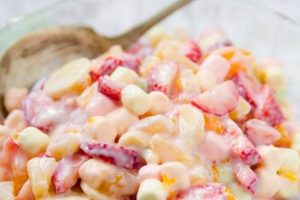
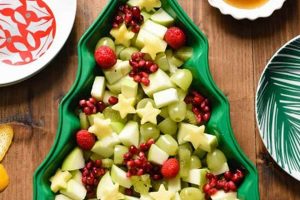
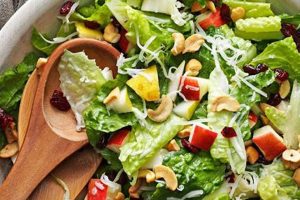
Festive fruit salads incorporating seasonal produce like berries and watermelon are a common dish for Independence Day celebrations in the United States. These refreshing and colorful combinations often feature red, white, and blue color schemes to align with the holiday’s patriotic theme. Examples include salads with blueberries and strawberries providing red and blue hues, while bananas, pineapple, or coconut flakes contribute white elements. Star-shaped cookie cutters can be used to enhance the visual presentation.
Such dishes offer a light and healthy alternative to heavier desserts typically served during summer gatherings. The abundance of fresh produce available in early July allows for a wide variety of flavor combinations, catering to diverse palates. Beyond their culinary appeal, these salads hold symbolic value, representing the abundance and vibrancy of the summer season and the festive spirit of Independence Day. Historically, fruit salads have been a popular dish for celebrations due to their ease of preparation and their ability to serve large groups.
The following sections will explore specific recipe ideas, including variations for different dietary needs and preferences, tips for presentation and serving, and suggestions for incorporating seasonal ingredients to create the perfect patriotic centerpiece for any Fourth of July gathering.
Tips for Creating Festive Fruit Salads
Careful planning and execution can elevate a simple fruit salad into a memorable centerpiece for Independence Day celebrations. Consider these tips to ensure optimal flavor, presentation, and enjoyment.
Tip 1: Select Peak-Season Produce: Flavor is paramount. Choosing fruits at their peak ripeness guarantees optimal sweetness and juiciness. Locally sourced produce often offers the best flavor and supports regional agriculture.
Tip 2: Embrace Color Coordination: Utilize the red, white, and blue theme to create a visually appealing presentation. Strawberries, blueberries, and raspberries provide vibrant reds and blues, while bananas, pineapple chunks, or starfruit offer white and yellow accents.
Tip 3: Balance Sweetness and Tartness: Combine fruits with varying levels of sweetness and acidity to create a complex and balanced flavor profile. Consider incorporating tart fruits like kiwi or green apple alongside sweeter options like watermelon or grapes.
Tip 4: Prepare Ingredients in Advance: Washing, chopping, and storing fruits separately ahead of time streamlines assembly and prevents last-minute rushing. This also allows flavors to meld and develop depth.
Tip 5: Enhance Visual Appeal: Consider using star-shaped cookie cutters on larger fruit pieces like watermelon or cantaloupe. Arrange the salad in a visually appealing pattern or use a decorative serving bowl to enhance the presentation.
Tip 6: Prevent Browning: To prevent oxidation and maintain the vibrant colors of cut fruits, a light coating of lemon juice can be applied. This preserves freshness and prevents discoloration.
Tip 7: Consider Adding Texture: To add textural variety, consider incorporating elements like toasted nuts, shredded coconut, or edible flowers. These additions provide contrasting textures and visual interest.
By focusing on these tips, one can create a fruit salad that is both delicious and visually appealing, ensuring a memorable culinary experience for any Independence Day celebration.
Following these guidelines contributes to a successful and enjoyable holiday gathering, highlighting the fresh flavors of summer and the spirit of the occasion.
1. Fresh, Seasonal Ingredients

The emphasis on fresh, seasonal ingredients is integral to the success of Independence Day fruit salads. Utilizing produce at its peak ripeness guarantees optimal flavor and sweetness, crucial for a dish reliant on the natural flavors of its components. July’s abundance of berries, melons, and other summer fruits provides a diverse palette for creating vibrant and flavorful combinations. For example, incorporating locally sourced strawberries and blueberries offers a burst of sweetness balanced by a subtle tartness unattainable with out-of-season or imported varieties. The availability of ripe watermelon and cantaloupe allows for refreshing additions that contribute to the salad’s hydrating qualities, particularly important during hot summer weather.
This focus on seasonality extends beyond flavor to encompass broader considerations such as supporting local agriculture and reducing environmental impact. Choosing locally grown produce often means shorter transportation distances, minimizing the carbon footprint associated with food miles. Furthermore, seasonal fruits require fewer resources to cultivate, aligning with sustainable agricultural practices. Opting for ingredients like freshly picked raspberries or blackberries from a nearby farm not only enhances the salad’s flavor profile but also connects the culinary experience to the local community and the rhythms of nature. The choice of seasonal ingredients can even influence recipe development; for example, an abundance of ripe peaches might inspire a grilled peach and berry salad variation.
Ultimately, prioritizing fresh, seasonal ingredients elevates Independence Day fruit salads from simple dishes to celebrations of summer’s bounty. This approach contributes not only to enhanced flavor and nutritional value but also to a more sustainable and locally conscious culinary experience. The emphasis on seasonality highlights the interconnectedness between food, community, and the natural world, enriching the significance of this celebratory dish. Challenges may include regional variations in produce availability, requiring flexibility in recipe adaptation. However, embracing these variations allows for unique and regionally specific expressions of the traditional Independence Day fruit salad.
2. Patriotic Color Schemes
The visual presentation of a Fourth of July fruit salad often incorporates patriotic color schemes, reflecting the colors of the American flag. This symbolic representation enhances the festive nature of the dish, aligning it with the celebratory spirit of Independence Day. Careful selection and arrangement of fruits based on their natural hues create a visually appealing and thematically appropriate centerpiece for holiday gatherings.
- Red
Red fruits symbolize courage and valor. Strawberries, raspberries, cherries, and watermelon provide vibrant red hues. Sliced strawberries arranged in a circular pattern or watermelon cut into star shapes contribute to the visual appeal while reinforcing the patriotic theme. The intensity of the red color can vary based on the specific fruit chosen and its ripeness.
- White
White represents purity and innocence. Options such as bananas, peeled apples, or starfruit offer stark white contrast. Sliced bananas can be dipped in lemon juice to prevent browning and maintain their pristine appearance. The placement of white fruits within the salad can be strategically used to create visual balance and contrast against the more vibrant colors.
- Blue
Blue signifies vigilance, perseverance, and justice. Blueberries are the most common choice, offering a deep blue hue and a sweet-tart flavor that complements other fruits. Their small size allows for versatile placement within the salad, either scattered throughout or grouped to create a concentrated area of blue. Other less common options, like purple grapes or blackberries, can contribute darker blueish tones.
- Arrangement and Presentation
The arrangement of the red, white, and blue fruits within the salad is crucial. A layered approach, alternating colors, can create a striking visual effect. Alternatively, a segmented arrangement, with distinct sections of each color, can evoke the stripes of the flag. Using cookie cutters to create star shapes from larger fruits further reinforces the patriotic theme. Clear glass bowls allow the vibrant colors to shine through, enhancing the presentation.
The strategic incorporation of red, white, and blue fruits transforms a simple fruit salad into a festive centerpiece befitting Independence Day celebrations. This visual representation of national colors reinforces the symbolic meaning of the holiday, creating a culinary experience that is both aesthetically pleasing and culturally relevant. Careful consideration of color balance, arrangement, and complementary flavors ensures that the fruit salad contributes to the overall festive atmosphere.
3. Balanced Flavor Profiles
A successful Fourth of July fruit salad transcends mere visual appeal; a harmonious balance of flavors is essential for a truly enjoyable culinary experience. Careful consideration of sweetness, tartness, and other flavor dimensions elevates the dish from a simple assortment of fruits to a complex and refreshing culinary creation. Balancing flavor profiles ensures that no single flavor dominates, allowing the individual characteristics of each fruit to shine while contributing to a cohesive whole.
- Sweetness and Acidity
The interplay of sweetness and acidity forms the foundation of a well-balanced fruit salad. Excessively sweet combinations can become cloying, while overly tart profiles lack broad appeal. Balancing these elements requires strategic selection and proportioning of ingredients. For example, the sweetness of ripe watermelon can be tempered by the tartness of blueberries or raspberries. Incorporating a squeeze of lime juice or a sprinkle of citric acid can further enhance the acidic notes, preventing the salad from becoming overly sweet. This balance ensures a refreshing and palate-cleansing experience.
- Textural Variation
Texture plays a significant role in flavor perception. A combination of textures adds complexity and interest to the fruit salad. The soft, juicy texture of berries can be contrasted with the crispness of apples or the firmness of grapes. Incorporating elements like toasted nuts or coconut flakes provides additional textural contrast and introduces complementary flavors. This interplay of textures enhances the overall sensory experience, making each bite more engaging.
- Aromatic Complexity
Aromatic notes contribute significantly to flavor perception. Incorporating fruits with distinct aromas, such as pineapple or cantaloupe, adds depth and complexity to the overall flavor profile. Fresh herbs like mint or basil can further enhance the aromatic dimension, providing a refreshing counterpoint to the sweetness of the fruits. These aromatic nuances elevate the sensory experience beyond simple sweetness and tartness.
- Flavor Enhancements
While the natural flavors of fresh fruit should be the primary focus, subtle flavor enhancements can elevate the overall profile. A light drizzle of honey or agave nectar can add a touch of sweetness without overpowering the natural fruit sugars. A sprinkle of cinnamon or a hint of ginger can introduce warm, spicy notes that complement certain fruits like apples or peaches. These additions should be used judiciously to avoid masking the natural flavors of the fruit.
Achieving a balanced flavor profile in a Fourth of July fruit salad requires thoughtful consideration of the interplay between sweetness, acidity, texture, and aroma. By carefully selecting and combining ingredients, focusing on seasonal produce, and employing subtle flavor enhancements, one can create a dish that is not only visually appealing but also offers a complex and satisfying culinary experience that embodies the festive spirit of Independence Day.
4. Creative Presentation Techniques

Presentation elevates a Fourth of July fruit salad from a simple dish to a centerpiece, enhancing the celebratory dining experience. Creative presentation techniques amplify visual appeal, reflecting the festive occasion and showcasing the vibrant colors and textures of fresh, seasonal ingredients. Strategic arrangement and attention to detail transform the salad into a culinary expression of the holiday spirit.
- Utilizing Shapes and Cutouts
Employing cookie cutters to create star shapes from fruits like watermelon, pineapple, or cantaloupe reinforces the patriotic theme. These cutouts can be arranged strategically within the salad or used as garnishes. Alternatively, melon ballers can create uniform spheres, adding a touch of elegance and facilitating even distribution of different fruits. Such techniques enhance visual interest and create a sense of occasion.
- Layered and Segmented Arrangements
Layering fruits in a clear glass bowl or trifle dish creates a visually striking presentation, showcasing the variety of colors and textures. Alternatively, segmenting the salad into distinct red, white, and blue sections evokes the stripes of the American flag. This approach allows for deliberate color blocking and creates a visually organized presentation, emphasizing the patriotic theme.
- Skewers and Individual Portions
Serving fruit salad on skewers offers an individual portion option that is both convenient and visually appealing. Alternating red, white, and blue fruits on each skewer further emphasizes the patriotic theme. This method also simplifies serving and minimizes mess, making it ideal for outdoor gatherings and picnics. Small, clear cups filled with layered fruit salad offer another individual serving option, suitable for buffets or more formal settings.
- Garnishes and Edible Flowers
Adding edible flowers, fresh mint sprigs, or a sprinkle of shredded coconut elevates the salad’s visual appeal and introduces subtle aromatic notes. These garnishes enhance the sensory experience, adding a touch of elegance and freshness. A dusting of powdered sugar can create a delicate, snowy effect, particularly appealing when contrasted with the vibrant colors of the fruit. Such details contribute to a refined and visually captivating presentation.
Creative presentation techniques enhance the enjoyment of a Fourth of July fruit salad, transforming it into a visually captivating centerpiece that reflects the festive spirit of the occasion. By thoughtfully employing these techniques, one can elevate the dining experience, making the fruit salad a memorable part of the Independence Day celebration. The visual appeal complements the fresh, seasonal flavors, creating a harmonious balance between aesthetics and taste.
5. Safe Food Handling Practices

Safe food handling is crucial when preparing a Fourth of July fruit salad, especially given the typical outdoor setting and warm weather conditions associated with these celebrations. Improper handling can lead to bacterial growth and foodborne illnesses, potentially impacting the health and enjoyment of those consuming the salad. Several key practices minimize these risks and ensure food safety.
Thorough washing of all fruits is paramount. This removes surface contaminants, including bacteria, pesticides, and dirt. Washing should occur even if the fruit will be peeled, as contaminants can transfer from the exterior to the flesh during cutting. Refrigeration is essential for maintaining the quality and safety of prepared fruit salad. Harmful bacteria proliferate rapidly at temperatures between 40F and 140F (4C and 60C), a range often encountered during outdoor summer events. Fruit salad should be kept chilled until serving. Limiting the time the salad sits at room temperature, especially in direct sunlight, minimizes bacterial growth. Using separate cutting boards and utensils for different fruits, especially if some will not be peeled, prevents cross-contamination. For instance, using the same knife to cut a melon and then berries without washing could transfer bacteria from the melon rind to the berries.
Proper hand hygiene, including frequent handwashing with soap and water, is another crucial element of safe food handling. Hands can transfer bacteria to food during preparation and serving. Using clean serving utensils and avoiding direct hand contact with the salad further minimizes contamination risks. Understanding and implementing these practices is essential for ensuring that a Fourth of July fruit salad contributes to a healthy and enjoyable celebration. Neglecting these precautions increases the risk of foodborne illnesses, which can have serious health consequences. Prioritizing food safety protects guests and allows for worry-free enjoyment of the festive occasion.
Frequently Asked Questions
This section addresses common inquiries regarding the preparation and enjoyment of Independence Day fruit salads.
Question 1: How far in advance can a fruit salad be prepared?
Ideally, fruit salad is best assembled no more than 24 hours in advance to maintain optimal freshness and prevent excessive softening or browning. Certain fruits, such as apples and bananas, are particularly susceptible to oxidation and should be added closer to serving time.
Question 2: What methods prevent fruit from browning?
Coating cut fruit with a light layer of lemon or lime juice helps prevent enzymatic browning. Alternatively, using a commercial anti-browning product specifically designed for fresh fruit can maintain color and freshness.
Question 3: Can frozen fruit be used in a Fourth of July fruit salad?
While fresh fruit is preferred for optimal flavor and texture, frozen fruit can be incorporated if thawed completely and drained thoroughly before adding to the salad. Consider using frozen fruits like berries, which hold their shape relatively well upon thawing.
Question 4: What are suitable alternatives to refined sugar for sweetening the salad?
Natural sweeteners like honey, maple syrup, or agave nectar offer healthier alternatives to refined sugar. Fruit juice concentrates can also add sweetness and enhance flavor complexity. The amount used should be adjusted based on the natural sweetness of the chosen fruits.
Question 5: How should leftover fruit salad be stored?
Leftover fruit salad should be stored in an airtight container in the refrigerator for up to three days. However, quality and texture may degrade over time. Consume as soon as possible for optimal enjoyment. Discard any salad showing signs of spoilage, such as mold growth or an off odor.
Question 6: What are some strategies for transporting fruit salad to picnics or potlucks?
Transporting fruit salad requires maintaining a cool temperature to prevent bacterial growth. Insulated containers with ice packs are ideal for this purpose. For individual servings, consider using sealed containers or jars to prevent spills and maintain freshness. If using a large bowl, cover it tightly with plastic wrap or a lid to protect the salad during transport.
Careful preparation and adherence to food safety guidelines ensure a delicious and healthy fruit salad experience. Prioritizing fresh ingredients and employing creative presentation techniques elevates this dish to a fitting centerpiece for Independence Day celebrations.
For further culinary inspiration and detailed recipes tailored to specific dietary needs and preferences, consult the subsequent recipe section. The next section focuses on specific combinations for festive and healthy Independence Day fruit salads.
Conclusion
Fourth of July fruit salad recipes offer a refreshing and symbolic culinary centerpiece for Independence Day celebrations. Emphasis on fresh, seasonal ingredients, balanced flavor profiles, and vibrant color schemes reflecting the American flag ensures both a flavorful and visually appealing dish. Safe food handling practices are paramount for maintaining quality and preventing health risks. Creative presentation techniques further enhance the festive nature of these salads, transforming them into culinary expressions of the holiday spirit.
Beyond their immediate culinary contribution, these recipes represent a connection to seasonal rhythms, local agriculture, and shared cultural traditions. Adaptability to individual preferences and dietary needs ensures broad appeal and continued relevance in evolving culinary landscapes. The exploration of flavor combinations, presentation styles, and food safety considerations encourages mindful engagement with culinary practices and promotes a deeper appreciation for the role of food in cultural celebrations.