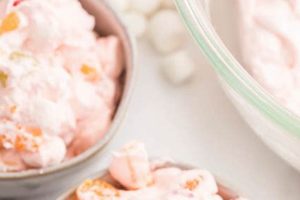
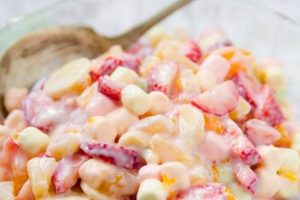
A chilled dessert combines the freshness of a fruit salad with the creamy texture of pudding. This dessert typically involves a base of prepared pudding (vanilla, banana, or coconut are popular choices) mixed with a variety of fresh or canned fruits. A simple example might include vanilla pudding, diced strawberries, bananas, blueberries, and a touch of whipped cream.
This dessert offers a balance of flavor and nutrition, incorporating the vitamins and fiber from fruit with the satisfying richness of pudding. Its customizable nature allows for seasonal variations and adaptation to dietary restrictions. Historically, fruit and milk-based desserts have been enjoyed for centuries, with the modern convenience of prepared pudding mixes simplifying the process. This ease of preparation, coupled with the refreshing and appealing nature of the dish, makes it a popular choice for potlucks, picnics, and everyday enjoyment.
The following sections explore variations on this delightful dessert, from classic combinations to innovative flavor profiles, covering ingredient selection, preparation techniques, and presentation suggestions.
Tips for Creating a Delicious Chilled Fruit and Pudding Dessert
Achieving the perfect balance of flavor and texture in a chilled fruit and pudding dessert requires attention to detail. The following tips offer guidance for optimal results.
Tip 1: Pudding Selection: Opting for a high-quality instant pudding mix or preparing pudding from scratch enhances the overall flavor. Consider complementary flavor pairings, such as vanilla pudding with berries or banana pudding with tropical fruits.
Tip 2: Fruit Preparation: Ripe, but firm, fruit ensures optimal texture and flavor. Peeling and dicing fruit into uniform sizes allows for even distribution throughout the dessert.
Tip 3: Balancing Sweetness: Adjusting the sweetness of the pudding base based on the natural sugar content of the chosen fruits prevents an overly sweet result. A touch of lemon juice can brighten the flavors and balance sweetness.
Tip 4: Enhancing Texture: Incorporating a variety of textures adds complexity. Toasted nuts, shredded coconut, or a crumbled cookie topping provides contrasting crunch. A dollop of whipped cream introduces a light, airy element.
Tip 5: Chilling Time: Allowing the dessert to chill for at least two hours, or preferably overnight, allows the flavors to meld and the pudding to set fully, resulting in a more cohesive and enjoyable experience.
Tip 6: Presentation: Serving the dessert in individual glasses, bowls, or a large trifle dish enhances visual appeal. Garnishing with fresh mint sprigs or a dusting of powdered sugar elevates the presentation further.
Tip 7: Storage: Storing leftovers in an airtight container in the refrigerator maintains freshness for up to three days. Avoid freezing, as this can compromise the texture of the pudding and fruit.
By following these tips, one can create a chilled fruit and pudding dessert that is both visually appealing and delectably satisfying. Attention to ingredient selection, preparation, and presentation ensures a delightful culinary experience.
The concluding section offers further inspiration and encourages culinary exploration of this versatile dessert.
1. Pudding Base
The pudding base forms the foundational element of a fruit salad recipe pudding, influencing texture, flavor, and overall appeal. Selecting an appropriate base complements the chosen fruits and creates a harmonious dessert experience. The following facets explore the nuances of pudding base selection and its impact on the final product.
- Flavor Compatibility:
The pudding base flavor should complement, not overpower, the fruit. Vanilla offers versatility, pairing well with various fruits, from berries to tropical options. Chocolate pudding provides a richer, more decadent base, suitable for fruits like bananas and strawberries. Matching flavor profiles ensures a balanced and enjoyable dessert. For example, a coconut pudding base harmonizes with tropical fruits like mango and pineapple, while a butterscotch pudding might pair well with apples and pears.
- Texture and Consistency:
The pudding’s consistency contributes significantly to the overall mouthfeel. A thicker pudding creates a denser, more substantial dessert, while a thinner pudding allows the fruit to shine. The desired texture influences the choice between instant pudding mixes and homemade custard-based puddings. A firmer pudding provides structural support for heavier fruits, whereas a lighter pudding might be preferable with delicate berries. The consistency also impacts how the dessert holds its shape when served.
- Sweetness Level:
The pudding’s sweetness should balance the natural sugars in the fruit. Adjusting the sweetness of the base, whether through reducing sugar in homemade versions or choosing sugar-free instant options, prevents an overly sweet result. This balance is crucial, particularly when using sweeter fruits like ripe mangoes or bananas. A less sweet pudding base might be preferable with tart fruits like raspberries or cranberries, while a sweeter base can complement less sweet fruits like peaches or plums.
- Dietary Considerations:
Dietary restrictions may influence pudding base selection. Dairy-free, gluten-free, or vegan options cater to specific needs. Substituting almond milk or coconut milk for cow’s milk allows for dairy-free variations. Using cornstarch or arrowroot powder as thickeners can create gluten-free alternatives. These adaptations ensure inclusivity and allow individuals with dietary limitations to enjoy the dessert.
Careful consideration of these facets ensures the pudding base complements the chosen fruit, creating a well-balanced and enjoyable fruit salad recipe pudding. The interplay of flavor, texture, sweetness, and dietary adaptability contributes to the dessert’s overall success. Experimentation with different pudding bases and fruit combinations allows for personalized culinary creations.
2. Fruit Selection
Fruit selection significantly impacts the flavor, texture, and visual appeal of a fruit salad recipe pudding. Careful consideration of fruit characteristics ensures a balanced and enjoyable dessert. The following facets explore the critical role of fruit selection in creating a successful dish.
- Ripeness and Quality:
Ripe, but not overripe, fruit provides optimal flavor and texture. Firm fruit holds its shape better in the pudding, while overripe fruit can become mushy and contribute to an undesirable texture. Selecting high-quality fruit, free from bruises or blemishes, ensures a visually appealing and flavorful dessert. For instance, firm berries hold their shape well, while slightly underripe bananas offer a pleasant sweetness without becoming overly soft.
- Flavor Profiles and Combinations:
Balancing sweet, tart, and tangy flavors creates a complex and enjoyable taste experience. Combining fruits with complementary flavor profiles enhances the overall taste. For example, pairing sweet strawberries with tart raspberries or tangy kiwi with sweet mango creates a balanced flavor profile. Consider the pudding base flavor when selecting fruits; a vanilla base allows for a wider range of fruit combinations, while a chocolate base pairs well with specific fruits like bananas and berries.
- Color and Visual Appeal:
A visually appealing dessert enhances the dining experience. Incorporating a variety of colors adds vibrancy and interest. Contrasting colors, such as red strawberries, green kiwi, and orange segments, create a visually striking presentation. The arrangement of fruit within the pudding also contributes to its visual appeal. Layering fruit in a clear glass dish, for example, showcases the colors and textures effectively.
- Seasonal Availability and Variety:
Utilizing seasonal fruits maximizes flavor and freshness. Seasonal fruits are often at their peak ripeness and offer the best flavor. Incorporating a variety of textures, from the soft flesh of a peach to the crisp bite of an apple, adds complexity. Seasonal variations also allow for culinary exploration and creativity throughout the year, taking advantage of the unique flavors each season offers.
Strategic fruit selection elevates the fruit salad recipe pudding from a simple dessert to a culinary creation. By balancing flavor profiles, textures, colors, and seasonal availability, one can craft a dish that is both visually appealing and delectably satisfying. The interplay of these factors contributes significantly to the overall enjoyment of the dessert.
3. Sweetness Balance
Sweetness balance is a crucial factor in creating a harmonious fruit salad recipe pudding. A well-balanced dessert avoids extremes, allowing the natural flavors of the fruit and the creamy richness of the pudding to shine. Careful consideration of sweetness levels ensures a pleasant and satisfying culinary experience.
- Natural Fruit Sugars:
Fruits possess varying degrees of natural sweetness. Berries, such as raspberries and blueberries, tend to be less sweet than fruits like mangoes or bananas. Accounting for these inherent sweetness levels is crucial when selecting fruit combinations and adjusting the pudding base’s sweetness. Overly sweet combinations can be cloying, while insufficient sweetness can result in a bland dessert.
- Pudding Base Sweetness:
Prepared pudding mixes often contain significant amounts of sugar. Selecting low-sugar options or adjusting the sugar content in homemade pudding recipes allows for greater control over the overall sweetness. The pudding base’s sweetness should complement the fruit, not overpower it. A less sweet pudding base may be preferable with sweeter fruits, while a slightly sweeter base can enhance the flavor of less sweet fruits.
- Balancing Flavors:
Balancing sweetness with other flavor components, such as tartness or acidity, creates a more complex and enjoyable flavor profile. Incorporating tart fruits like raspberries or a squeeze of lemon juice can balance the sweetness of ripe bananas or a sweet pudding base. This interplay of flavors prevents the dessert from being one-dimensionally sweet and adds depth to the taste experience.
- Adjusting Sweetness:
Tasting and adjusting the sweetness level throughout the preparation process is essential. Small adjustments, such as adding a touch of honey or maple syrup, or incorporating a tart element like lemon zest, can fine-tune the overall sweetness. This iterative approach ensures the final product achieves the desired balance and caters to individual preferences.
Achieving sweetness balance in a fruit salad recipe pudding requires careful consideration of the natural sweetness of the chosen fruits, the sweetness level of the pudding base, and the interplay of other flavors. A well-balanced dessert offers a harmonious blend of sweetness and other flavor components, resulting in a more satisfying and enjoyable culinary experience.
4. Textural Contrast

Textural contrast contributes significantly to the enjoyment of a fruit salad recipe pudding. A combination of textures elevates the sensory experience beyond simple sweetness and flavor. The interplay of smooth, creamy pudding with contrasting textures from the fruit and added elements creates a more dynamic and satisfying dessert.
The inherent textures of different fruits already introduce a degree of textural variation. The smooth, yielding texture of a ripe banana contrasts with the slight firmness of berries or the crispness of an apple. Amplifying these inherent textural differences through additions like chopped nuts, crumbled cookies, or toasted coconut flakes enhances the overall sensory experience. A creamy pudding base paired with soft fruits and a crunchy topping offers a multi-faceted textural profile. For example, a vanilla pudding with sliced peaches and a sprinkle of toasted pecans provides a pleasing contrast between creamy, soft, and crunchy. Conversely, a firmer pudding base might be complemented by the addition of softer fruits and a chewy element like dried cranberries.
Understanding the role of textural contrast allows for deliberate manipulation of ingredients to create a more engaging dessert. Consideration of textural variety elevates the fruit salad recipe pudding from a simple combination of ingredients to a more complex and satisfying culinary experience. The strategic incorporation of contrasting textures offers an opportunity to enhance enjoyment and demonstrate culinary expertise.
5. Chilling Time

Chilling time plays a crucial role in the final quality of a fruit salad recipe pudding. Adequate chilling allows flavors to meld, textures to set, and the dessert to reach its optimal temperature for consumption. Understanding the impact of chilling time on various aspects of the pudding ensures a more enjoyable and satisfying culinary experience.
- Flavor Development:
Chilling allows the flavors of the pudding base and the incorporated fruits to meld and harmonize. The absorption of flavors from the pudding into the fruit and vice versa creates a more complex and nuanced flavor profile. This integration of flavors intensifies over time, resulting in a more balanced and cohesive taste experience. A minimum chilling time of two hours is generally recommended, but chilling overnight often yields superior results.
- Texture Optimization:
Chilling firms the pudding base, preventing it from becoming runny or watery, especially when using fresh fruit. This setting process stabilizes the dessert’s structure and ensures a more pleasing texture. The chilling process also allows added textures, such as crunchy toppings, to maintain their crispness and contrast with the creamy pudding base. Sufficient chilling prevents the dessert from becoming overly soft or mushy.
- Temperature Regulation:
Chilling brings the dessert to an ideal serving temperature. A chilled dessert offers a refreshing contrast to warmer ambient temperatures, enhancing its appeal, particularly during warmer months. The cool temperature also amplifies the perception of sweetness and enhances the creamy texture of the pudding base. Serving a chilled dessert provides a more enjoyable sensory experience.
- Presentation Enhancement:
Chilling allows the dessert to set fully, which aids in achieving a clean and visually appealing presentation. A well-chilled pudding holds its shape better, whether served in individual portions or a larger dish. This stability facilitates more elaborate presentation techniques, such as layering or garnishing, further enhancing the visual appeal of the dessert.
The influence of chilling time extends beyond mere temperature reduction; it significantly impacts the flavor development, textural stability, and overall presentation of a fruit salad recipe pudding. Adequate chilling is essential for achieving a harmonious balance of flavors and textures, resulting in a more satisfying and enjoyable culinary experience.
Frequently Asked Questions
This section addresses common inquiries regarding the preparation and enjoyment of chilled fruit and pudding desserts.
Question 1: Can frozen fruit be used in this dessert?
While frozen fruit can be used, thawing and draining excess liquid beforehand is recommended. Frozen fruit tends to release more liquid as it thaws, which can dilute the pudding and compromise the dessert’s overall texture.
Question 2: How long can the dessert be stored in the refrigerator?
Storage in an airtight container for up to three days is generally recommended. Beyond this timeframe, the quality of the fruit and pudding may begin to deteriorate.
Question 3: What are suitable alternatives for those with dairy allergies?
Dairy-free pudding options, such as those made with almond or coconut milk, offer suitable alternatives. Additionally, incorporating fruits with naturally creamy textures, like avocados or bananas, can contribute to a creamier consistency.
Question 4: Can this dessert be frozen?
Freezing is not generally recommended, as the texture of both the pudding and fruit can be negatively affected. Thawing often results in a watery consistency and a loss of structural integrity.
Question 5: How can the sweetness of the dessert be adjusted?
Sweetness can be adjusted by selecting less sweet fruit varieties, reducing the sugar content in homemade pudding, or incorporating a tart element like lemon juice or zest.
Question 6: What are some suitable garnishes?
Fresh mint sprigs, a dusting of powdered sugar, toasted nuts, or a drizzle of honey or chocolate sauce can enhance the presentation and add a touch of elegance.
Addressing these common inquiries provides clarity regarding best practices and encourages culinary experimentation within the realm of chilled fruit and pudding desserts.
The following section offers concluding remarks and suggestions for further exploration.
Fruit Salad Recipe Pudding
This exploration has delved into the multifaceted nature of creating a successful chilled fruit and pudding dessert. Key elements, including pudding base selection, strategic fruit incorporation, sweetness balance, textural contrast, and the importance of chilling time, contribute significantly to the final product. Understanding the interplay of these factors allows for informed decision-making and customization based on individual preferences and dietary considerations. From classic combinations to innovative flavor profiles, the possibilities for variation are extensive.
The simplicity of preparation belies the potential for culinary creativity inherent in this dessert. Exploration of diverse flavor combinations, textural nuances, and presentation techniques offers a continuous opportunity for culinary discovery. This adaptable dessert provides a canvas for culinary expression, limited only by imagination and a desire to explore the harmonious balance of fruit and pudding.