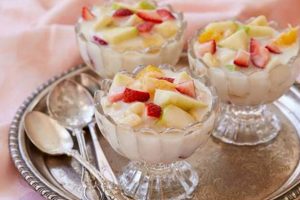
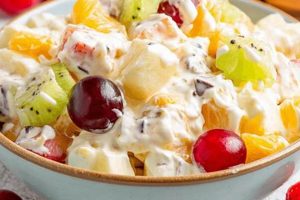
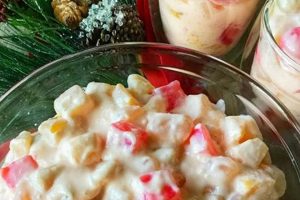
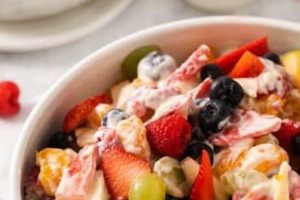
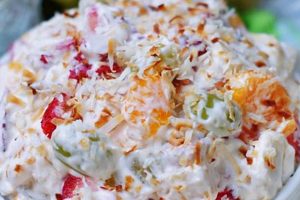
A sweet, creamy dish typically combines cooked elbow macaroni, canned or fresh fruit cocktail, whipped cream, and often mayonnaise or sour cream. Variations can include marshmallows, nuts, or other additions for texture and flavor. This dish provides a contrast in textures, with soft pasta juxtaposed against the firmness of the fruit, all enveloped in a creamy dressing.
This dish offers a nostalgic appeal, frequently appearing at potlucks, picnics, and holiday gatherings, particularly in the mid-20th century. Its affordability and ease of preparation contribute to its enduring popularity. The combination of carbohydrates from the pasta and vitamins from the fruit can also offer a relatively balanced nutritional profile, though the high sugar and fat content should be considered. Its adaptability allows for customization based on dietary needs and preferences, making it a versatile option for diverse groups.
Discussions regarding this classic dish often delve into optimal ingredient ratios, variations on the traditional recipe, and its cultural significance within specific communities. Examining these aspects can provide a deeper understanding of its continued presence in contemporary cuisine.
Tips for a Successful Macaroni Fruit Salad
Achieving optimal flavor and texture requires attention to detail. These tips provide guidance for creating a successful dish.
Tip 1: Cook the pasta al dente. Slightly firm pasta holds its shape better and prevents a mushy texture when combined with the other ingredients. Drain the pasta thoroughly and rinse with cold water to stop the cooking process.
Tip 2: Use high-quality fruit. Canned fruit should be well-drained and rinsed. Fresh fruit should be ripe but firm. Consider the sweetness and acidity levels of different fruits to achieve a balanced flavor profile.
Tip 3: Choose the right dressing. While traditional recipes often employ mayonnaise or sour cream, Greek yogurt or whipped cream can offer a lighter alternative. Adjust sweetness with a touch of honey or powdered sugar.
Tip 4: Balance flavors thoughtfully. Consider the sweetness of the fruit and the richness of the dressing. Tart fruits, such as pineapple or mandarin oranges, can balance the sweetness of the other components. A small amount of citrus zest can also add a bright, refreshing note.
Tip 5: Incorporate textural variety. Toasted nuts, mini marshmallows, or chopped celery offer contrasting textures that enhance the overall sensory experience.
Tip 6: Chill thoroughly before serving. Chilling allows the flavors to meld and enhances the refreshing qualities of the dish. Ideally, chill for at least two hours before serving.
Tip 7: Scale the recipe appropriately. Consider the number of servings needed and adjust ingredient quantities accordingly. Leftovers can be stored in an airtight container in the refrigerator for up to three days.
Following these guidelines can ensure a delightful and well-balanced dish. Careful ingredient selection and attention to detail contribute significantly to the final product.
By understanding the nuances of preparation, one can elevate this classic dish from simple to exceptional.
1. Ingredients

Ingredients form the foundation of a macaroni fruit salad recipe, determining its flavor profile, texture, and overall appeal. Careful selection and balancing of ingredients are crucial for a successful outcome. The following facets explore key ingredient categories and their contributions to the dish.
- Pasta
Elbow macaroni is the traditional choice due to its shape and ability to hold the dressing. Overcooking results in a mushy texture, while undercooking leads to a firm, less desirable consistency. The pasta acts as a neutral base, absorbing the flavors of the other ingredients.
- Fruit
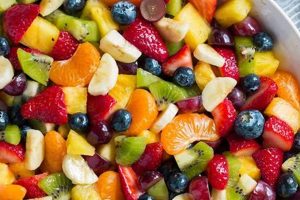
The fruit component provides sweetness, acidity, and visual appeal. Common choices include grapes, apples, oranges, and pineapple. Fresh, frozen, or canned fruits can be utilized, each offering distinct advantages and considerations regarding texture and flavor. The variety of fruits chosen contributes significantly to the overall taste and nutritional value.
- Dressing
The dressing binds the ingredients and adds creaminess and flavor. Traditional dressings often incorporate mayonnaise, sour cream, or whipped cream. The choice of dressing influences the richness and sweetness of the salad. Alternatives like Greek yogurt offer a lighter, tangier option.
- Additions
Optional additions contribute textural complexity and enhance the flavor profile. Nuts, marshmallows, or shredded coconut provide contrasting textures. Spices like cinnamon or nutmeg can add warmth and depth. These additions, while not essential, can elevate the dish and cater to individual preferences.
The interplay of these ingredient categories defines the character of the macaroni fruit salad. Harmonizing flavors, textures, and proportions are essential for creating a palatable and enjoyable dish. Understanding the role of each ingredient allows for informed choices and customized variations.
2. Proportions

Proportions play a critical role in a successful macaroni fruit salad recipe. The balance between pasta, fruit, and dressing dictates the overall texture, flavor, and aesthetic appeal. Careful consideration of these ratios ensures a harmonious blend of ingredients, preventing any single component from overpowering the others. Understanding the interplay of proportions allows for customization and consistent results.
- Pasta to Fruit Ratio
The ratio of pasta to fruit significantly impacts the salad’s perceived sweetness and heartiness. A higher pasta proportion yields a denser, less sweet salad, suitable for those who prefer a milder fruit presence. Conversely, a higher fruit proportion results in a lighter, sweeter dish. A balanced ratio, typically achieved with roughly equal parts cooked pasta and fruit, offers a middle ground.
- Dressing Quantity
The amount of dressing directly affects the salad’s creaminess and overall moisture. Too much dressing can create a soggy, overly rich salad, while too little can result in a dry, less flavorful experience. The ideal dressing quantity coats the ingredients evenly without overwhelming them, allowing the individual flavors to shine through.
- Addition Quantities
Additions, such as nuts, marshmallows, or coconut, while optional, require careful proportioning. Excessive additions can overshadow the primary ingredients, shifting the flavor profile and textural balance. Measured incorporation of these elements enhances the dish without dominating it, adding complexity and interest.
- Scaling Recipes
Adjusting ingredient quantities proportionally when scaling a recipe ensures consistent results regardless of serving size. Doubling or halving a recipe necessitates doubling or halving all ingredients to maintain the intended balance of flavors and textures. Accurate scaling preserves the integrity of the original recipe.
Mastering the proportions of a macaroni fruit salad recipe is essential for achieving the desired outcome. A harmonious balance of ingredients contributes to a well-rounded flavor profile, pleasant texture, and visually appealing presentation. Careful consideration of these ratios allows for both personalized adjustments and replicable results, contributing to a consistently enjoyable culinary experience.
3. Preparation Method
Preparation method significantly influences the final quality of macaroni fruit salad. Specific techniques impact texture, flavor development, and overall presentation. A systematic approach ensures consistent results and maximizes the dish’s potential. Understanding the cause-and-effect relationship between preparation steps and the final product allows for informed adjustments and optimization.
For instance, cooking the pasta al dente is crucial. Overcooked pasta becomes mushy, detracting from the desired textural contrast. Rinsing the cooked pasta with cold water stops the cooking process and helps maintain firmness. Similarly, proper draining of canned fruit prevents excess liquid from diluting the dressing and impacting the salad’s overall consistency. Incorporating the dressing at the right time, typically after the pasta and fruit have cooled, prevents the absorption of excess moisture and preserves the integrity of the individual components. These examples illustrate the practical significance of adhering to established preparation methods.
Furthermore, the order of ingredient incorporation can influence the final outcome. Adding more delicate fruits, such as berries, closer to serving time helps prevent them from becoming crushed or overly softened. Gentle folding techniques minimize damage to the fruit and maintain the salad’s aesthetic appeal. Attention to these seemingly minor details contributes significantly to the overall quality and enjoyment of the dish. Ultimately, a well-executed preparation method ensures a balanced, flavorful, and visually appealing macaroni fruit salad, highlighting the importance of this often-overlooked aspect of the recipe.
4. Serving Suggestions
Serving suggestions enhance the presentation and enjoyment of macaroni fruit salad, elevating it beyond a simple mixture of ingredients. Consideration of serving style, accompanying dishes, and appropriate contexts maximizes the dish’s appeal. These suggestions are integral to the overall recipe experience, influencing perception and enjoyment. For instance, serving the salad in a chilled bowl maintains its refreshing quality, while garnishing with a sprig of mint adds visual appeal and a subtle aromatic note. These details demonstrate an understanding of how presentation enhances the dining experience.
Practical applications of serving suggestions demonstrate their importance. At a potluck, a large, attractively arranged bowl facilitates self-service and encourages guests to partake. For a children’s party, individual portions in colorful cups add a playful touch. In a more formal setting, smaller, elegantly plated servings alongside grilled chicken or fish create a balanced and sophisticated meal. These examples illustrate how adapting serving suggestions to the context elevates the perceived value of the dish.
Effective serving suggestions transform macaroni fruit salad from a basic side dish to a memorable culinary experience. Understanding the nuances of presentation and context allows for customization and impactful delivery. This attention to detail elevates the recipe beyond its functional components and contributes to a more satisfying and enjoyable dining experience overall. Successfully implemented serving suggestions enhance not only the dish itself but also the overall perception of the meal and the occasion.
5. Variations
Variations within macaroni fruit salad recipes demonstrate the dish’s adaptability and versatility. Exploring these variations provides insight into how individual preferences and cultural influences can shape a seemingly simple dish. Understanding these adaptations enhances appreciation for the recipe’s enduring popularity and its capacity for personalization. Examining specific variations illuminates the interplay between core ingredients and creative additions.
- Fruit Selection
Fruit selection offers the most significant avenue for variation. Traditional recipes often incorporate canned fruit cocktail, but fresh, seasonal fruits provide brighter flavors and varying textures. Substituting berries for grapes, or tropical fruits like mango and papaya for apples and oranges, transforms the flavor profile entirely. Regional preferences and seasonal availability influence fruit choices, resulting in diverse interpretations of the dish.
- Dressing Choices
Dressing choices significantly impact the salad’s richness and sweetness. While classic recipes utilize mayonnaise or sour cream, substituting Greek yogurt creates a lighter, tangier alternative. Whipped cream adds airiness and a touch of elegance. Vegan options, such as cashew-based cream, accommodate dietary restrictions while maintaining the creamy texture. These variations reflect evolving culinary trends and health-conscious adaptations.
- Textural Additions
Incorporating textural elements adds complexity and visual interest. Toasted nuts, such as pecans or walnuts, provide a satisfying crunch. Mini marshmallows contribute a soft, sweet element. Shredded coconut introduces a chewy texture and subtle tropical flavor. These additions, while optional, elevate the sensory experience and offer opportunities for personalized customization.
- Sweeteners and Flavor Enhancers
Sweeteners and flavor enhancers further customize the dish. A touch of honey or maple syrup adds natural sweetness. A dash of cinnamon or nutmeg introduces warmth and depth. Citrus zest brightens the flavors and adds a refreshing note. These additions, used judiciously, refine the flavor profile and cater to individual preferences.
These variations demonstrate that the macaroni fruit salad recipe serves as a template for creative expression. Adapting the core ingredients and incorporating personalized additions transforms a classic dish into a reflection of individual tastes and cultural influences. This inherent flexibility ensures the recipe’s continued relevance and appeal across diverse culinary landscapes.
Frequently Asked Questions
This section addresses common inquiries regarding macaroni fruit salad recipes, providing concise and informative responses.
Question 1: What type of pasta is best suited for this dish?
Elbow macaroni is the traditional and recommended choice due to its shape, which holds the dressing well and provides a pleasant mouthfeel. Other small pasta shapes, such as ditalini or shells, can be substituted, but may alter the overall texture and presentation.
Question 2: Can frozen fruit be used?
Frozen fruit can be used, but should be thawed and thoroughly drained before incorporating to prevent excess moisture from affecting the salad’s consistency. Consider the potential for textural changes upon thawing, as some fruits may become softer.
Question 3: How long can the salad be stored?
Macaroni fruit salad can be stored in an airtight container in the refrigerator for up to three days. The quality may degrade over time as the fruit releases moisture and the pasta absorbs the dressing.
Question 4: Can this recipe be adapted for specific dietary needs?
The recipe is adaptable. Vegan variations can utilize plant-based mayonnaise and whipped cream alternatives. Sugar content can be reduced by using less sweet fruits and adjusting the dressing’s sweetness. Gluten-free pasta can be substituted for traditional macaroni.
Question 5: Why does the pasta sometimes become mushy?
Mushy pasta results from overcooking or inadequate draining. Cooking the pasta al dente and rinsing it with cold water after draining helps maintain its firmness and prevents it from absorbing excess moisture from the other ingredients.
Question 6: What are some alternatives to traditional mayonnaise-based dressings?
Alternatives include Greek yogurt, whipped cream, or a combination thereof. These options offer varying levels of richness and tanginess, allowing for customization based on preference. Plant-based alternatives, such as cashew cream, provide a vegan option.
Understanding these common points of inquiry contributes to a more informed approach to preparing and enjoying macaroni fruit salad. Careful consideration of these details enhances the overall culinary experience.
This concludes the frequently asked questions section. Further exploration of recipe variations and serving suggestions can provide additional insights.
Macaroni Fruit Salad Recipe
Exploration of macaroni fruit salad recipes reveals a dish adaptable to diverse tastes and occasions. Careful consideration of ingredient proportions, preparation methods, and serving suggestions elevates this seemingly simple dish. From the selection of pasta and fruit to the choice of dressing and additions, each component contributes to the final product’s overall quality and appeal. Adaptability allows for personalized variations, accommodating dietary restrictions and individual preferences. Understanding the interplay of these elements transforms a basic recipe into a customizable culinary canvas.
Macaroni fruit salad recipes, often associated with nostalgic gatherings and potlucks, represent more than a mere combination of ingredients. They offer a platform for culinary creativity and cultural expression. Continued exploration of variations and thoughtful execution of preparation techniques ensure this classic dish remains a vibrant and adaptable element of culinary tradition, capable of satisfying diverse palates and enriching shared dining experiences.