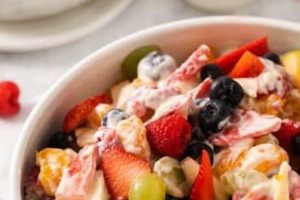
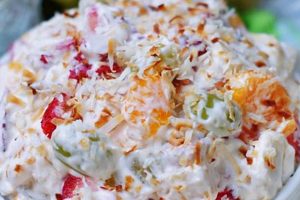
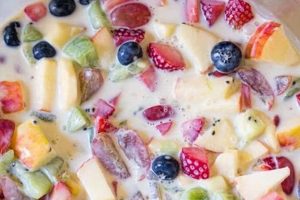
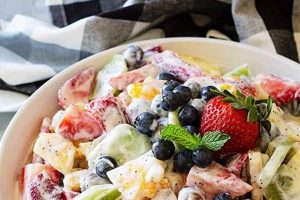
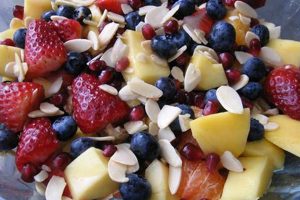
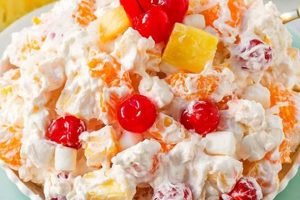
This refreshing dish features a medley of canned or fresh fruits preserved in sweetened condensed milk or cream and often includes other ingredients such as nata de coco, cheese, and kaong. Variations may incorporate unique local fruits, showcasing the rich biodiversity of the Philippines. A classic example combines fruit cocktail, condensed milk, and all-purpose cream.
Beyond its delightful taste, this festive treat embodies Filipino culture and hospitality. Frequently served during special occasions and holidays, it represents a symbol of celebration and togetherness. The adaptability of the recipe, allowing for seasonal fruits and individual preferences, reflects resourcefulness and a welcoming spirit. This culinary tradition holds a special place in Filipino gatherings, bridging generations and strengthening community bonds.
This article will further explore various aspects, including regional variations, ingredient selection, preparation techniques, and tips for achieving the perfect balance of sweetness and texture. It will also delve into the cultural significance and evolution of this beloved dessert.
Tips for Creating a Delicious Fruit Salad
Achieving the perfect balance of flavors and textures in a fruit salad requires attention to detail. The following tips offer guidance for a successful outcome.
Tip 1: Fruit Selection and Freshness: Opt for ripe yet firm fruits. Canned fruits offer convenience but fresh, seasonal produce elevates the flavor profile. Consider a variety of colors and textures for visual appeal and a balanced taste.
Tip 2: Proper Draining: Thoroughly drain canned fruits to prevent excess liquid from diluting the cream or condensed milk, maintaining the desired consistency.
Tip 3: Cream and Sweetener Ratio: Adjust the amount of cream and condensed milk based on the sweetness of the chosen fruits. Taste as you go to achieve the desired level of sweetness without overpowering the natural fruit flavors.
Tip 4: Ingredient Incorporation: Gently fold the ingredients together to prevent crushing delicate fruits. Ensure even distribution of the cream and condensed milk mixture.
Tip 5: Chilling Time: Allow the fruit salad to chill in the refrigerator for at least two hours before serving. Chilling enhances the flavors and allows the ingredients to meld, resulting in a more harmonious taste.
Tip 6: Creative Additions: Enhance the traditional recipe with additions like nata de coco, cheese cubes, or kaong for added texture and flavor complexity.
Tip 7: Presentation: Serve the fruit salad in a chilled bowl or individual glasses. Garnish with a sprig of mint or a sprinkle of cheese for an elegant touch.
By following these tips, one can create a fruit salad that offers a delightful sensory experience, balancing sweetness, texture, and visual appeal. Careful attention to these details ensures a refreshing and memorable dish.
With these preparations complete, the following section will provide a detailed step-by-step guide for creating this classic Filipino dessert.
1. Fresh, Canned, or Dried Fruits

Fruit selection significantly influences the final character of a Filipino fruit salad. Fresh fruits offer vibrant flavors and textures, contributing a refreshing quality. The availability of seasonal produce often dictates choices, with mangoes, pineapples, and bananas being popular additions. Using fresh fruits allows for a brighter, less processed taste. For example, freshly sliced ripe mangoes provide a sweetness and tanginess difficult to replicate with canned alternatives. This choice also aligns with a focus on using readily available, locally sourced ingredients.
Canned fruits provide convenience and year-round availability. Fruit cocktail, peaches, and pineapple tidbits are common canned choices. While these offer a longer shelf life and ease of preparation, they can sometimes have a softer texture and sweeter taste due to the canning process. Draining the syrup thoroughly is crucial to prevent excess sweetness and a watery consistency in the final dish. Canned fruits become especially practical during off-seasons or when specific fruits are not locally accessible. They offer a consistent flavor profile and contribute to the salad’s overall sweetness.
Dried fruits, while less common, can introduce interesting textural and flavor dimensions. Raisins, dried cranberries, or chopped dates can add a chewy element and concentrated sweetness. However, these should be used sparingly to avoid overpowering the other fruit flavors. Rehydrating dried fruits before adding them to the salad can improve their texture and distribute their flavor more evenly. Dried fruits offer a unique twist to the traditional recipe, adding another layer of complexity.
The decision regarding fresh, canned, or dried fruits depends on various factors including availability, budget, and desired taste profile. A combination of fresh and canned fruits is often preferred, balancing freshness with convenience. Understanding the nuances of each option enables informed choices that contribute to a well-balanced and delicious Filipino fruit salad.
2. Creamy, Sweet Base

The creamy, sweet base forms the foundational element of a Pinoy fruit salad, binding the diverse fruits together and contributing significantly to its characteristic flavor profile. This base typically consists of condensed milk, or a combination of condensed milk and all-purpose cream. Condensed milk imparts a rich sweetness and creamy texture, while the addition of all-purpose cream adds a lighter, fluffier dimension. This blend creates a luxurious coating that envelops the fruits, enhancing their individual flavors while contributing a cohesive sweetness to the overall dish. The balance between these two components influences the final richness and sweetness of the salad. For instance, a higher proportion of condensed milk results in a denser, sweeter outcome, while increasing the all-purpose cream creates a lighter, less sweet result.
The choice and ratio of ingredients for the creamy base reflect cultural preferences and regional variations. In some regions, evaporated milk might be used in place of all-purpose cream, resulting in a slightly less rich and tangier flavor profile. The amount of sugar added can also be adjusted based on the sweetness of the chosen fruits and individual preferences. For example, when using sweeter fruits like ripe mangoes or bananas, less added sugar might be necessary. Conversely, tart fruits like green apples or citrus segments might benefit from a sweeter base. These adjustments demonstrate the adaptability of the recipe and its responsiveness to individual tastes and ingredient availability.
Understanding the function and impact of the creamy, sweet base provides essential insights into crafting a successful Pinoy fruit salad. It allows for informed decisions regarding ingredient selection and proportion, ultimately affecting the overall balance of flavors and textures. Achieving the desired balance of sweetness, creaminess, and fruit flavor requires careful consideration of this key component. Mastering this element allows for adaptation and personalization, ensuring a delightful culinary experience that aligns with individual and cultural preferences.
3. Chilled Serving Temperature

The chilled serving temperature is an essential component of the Pinoy fruit salad experience, contributing significantly to its refreshing nature and overall appeal. Chilling not only enhances the sensory experience but also plays a role in food safety and preservation, particularly relevant given the tropical climate of the Philippines.
- Enhanced Sensory Experience
Lower temperatures suppress excessive sweetness, allowing the natural fruit flavors to shine. The coolness provides a refreshing contrast to the often-rich creamy base, creating a more balanced and enjoyable palate sensation. A chilled fruit salad offers a welcome respite from the heat, particularly appreciated in the Philippines’ warm climate. The cool temperature enhances the perception of crispness in firmer fruits and creates a pleasant textural contrast with the softer, creamier elements.
- Food Safety and Preservation
Chilling inhibits bacterial growth, extending the shelf life of the fruit salad, a crucial factor in warmer climates. Maintaining a low temperature, ideally below 40F (4C), slows down the enzymatic processes that contribute to spoilage, preserving the freshness and quality of the ingredients. This practice is particularly important for fruit salads containing dairy products, which are more susceptible to bacterial contamination at higher temperatures. The emphasis on chilling highlights a practical consideration rooted in food safety principles.
- Improved Texture and Cohesion
Chilling allows the flavors of the various fruits and the creamy base to meld together, creating a more harmonious taste profile. The cooler temperature firms up the fruits, particularly softer varieties like bananas or ripe mangoes, improving their texture and preventing them from becoming mushy in the salad. This also contributes to a better overall presentation, maintaining the visual appeal of the individual fruit pieces.
- Cultural Significance
Serving fruit salad chilled aligns with Filipino culinary traditions, reflecting a preference for refreshing dishes in a tropical environment. This practice extends beyond fruit salad, encompassing other popular desserts and beverages. The act of chilling food, often involving shared preparation and anticipation, reinforces the communal aspect of Filipino dining culture. The cool, refreshing nature of the salad enhances the sense of hospitality and enjoyment during gatherings.
The chilled serving temperature elevates the Pinoy fruit salad from a simple dessert to a refreshing culinary experience. It harmonizes flavors, preserves freshness, and embodies cultural practices related to food preparation and enjoyment. This seemingly simple aspect underscores a deeper understanding of the interplay between sensory perception, food safety, and cultural context within the Filipino culinary tradition.
4. Festive Occasions

The Pinoy fruit salad holds a prominent place in Filipino festive occasions, symbolizing abundance, celebration, and shared joy. Its presence on the table signifies a special gathering, marking holidays, birthdays, and other important milestones. This connection between festive occasions and the fruit salad reflects cultural values of hospitality, generosity, and the importance of communal dining.
- Holiday Celebrations
Christmas, New Year’s Eve, and other major holidays frequently feature this colorful dessert. Its vibrant appearance and refreshing taste complement the festive atmosphere, adding a touch of sweetness to the celebration. The tradition of preparing and sharing fruit salad during these times strengthens family bonds and reinforces the communal nature of Filipino holidays. The abundance of ingredients often mirrors the spirit of generosity and sharing prevalent during these special occasions.
- Birthdays and Milestones
Birthdays, anniversaries, graduations, and other significant life events often call for a celebratory fruit salad. It represents a sweet treat shared with loved ones, marking the occasion with a touch of tradition and familial warmth. The adaptability of the recipe allows for personalization, incorporating favorite fruits of the celebrant or reflecting the specific milestone. This customization further strengthens the connection between the dish and the celebratory event.
- Fiestas and Community Gatherings
Local fiestas, religious celebrations, and community gatherings often showcase the Pinoy fruit salad as a symbol of shared identity and collective celebration. Its presence reinforces the spirit of community and strengthens social bonds. The communal preparation and consumption of the salad further enhance the sense of belonging and shared experience. These gatherings demonstrate the role of food in fostering community spirit and cultural identity.
- Everyday Celebrations
Beyond formal occasions, the fruit salad can also brighten everyday moments. A simple family dinner, a weekend gathering, or a casual get-together can be elevated by the presence of this refreshing dish. Its ease of preparation and adaptable nature make it a convenient yet special addition to any meal. This versatility underscores the fruit salad’s ability to bring a touch of celebration to even the most ordinary occasions, reinforcing the Filipino appreciation for simple joys and shared moments.
The Pinoy fruit salad transcends its role as a mere dessert, becoming an integral part of Filipino celebrations. Its presence signifies joy, togetherness, and the importance of shared experiences. This cultural significance elevates the dish, imbuing it with meaning that extends beyond its delicious taste and refreshing qualities. From grand holiday feasts to intimate family gatherings, the Pinoy fruit salad serves as a sweet reminder of the values and traditions that bind Filipino communities together.
5. Regional Variations

Regional variations in the Pinoy fruit salad recipe demonstrate the diverse culinary landscape of the Philippines. Geographic location influences ingredient availability and cultural preferences, resulting in unique interpretations of this classic dish. Exploring these variations provides insight into the adaptability of the recipe and the rich tapestry of Filipino culinary traditions.
- Luzon Island
Luzon, the largest island in the Philippines, often features fruit salads incorporating local specialties such as ripe mangoes, pineapples, and sometimes the addition of macapuno, a unique coconut sport. The use of these ingredients reflects the island’s abundant tropical produce and distinct culinary preferences. The inclusion of macapuno adds a chewy texture and unique flavor, distinguishing Luzon’s version of the fruit salad.
- Visayas Region
The Visayas region, known for its abundant fruit production, often includes seasonal fruits like durian, lanzones, and rambutan in their fruit salad preparations. These unique additions reflect the region’s specific agricultural output and contribute distinctive flavors and aromas to the dish. The inclusion of durian, known for its pungent aroma and creamy texture, creates a particularly unique flavor profile characteristic of Visayan fruit salads.
- Mindanao Island
Mindanao, the southernmost major island, showcases a variety of local fruits like marang and pomelo, often incorporated into fruit salads. These additions reflect the island’s unique biodiversity and contribute to a distinct flavor profile, often incorporating a tangy or citrusy element. The use of these lesser-known fruits distinguishes Mindanao’s version of the fruit salad and showcases the region’s diverse agricultural landscape.
- Role of Preserved Fruits
Across all regions, the use of preserved fruits like nata de coco, kaong, and dried papaya adds a textural dimension and extends the shelf life of the salad. These additions are particularly relevant in areas where access to fresh produce may be limited. Preserved fruits also contribute a unique sweetness and chewiness, enhancing the complexity of the dish. The widespread use of these preserved ingredients demonstrates resourcefulness and adaptability in Filipino cuisine.
These regional variations highlight the adaptable nature of the Pinoy fruit salad recipe, reflecting the diverse culinary traditions across the Philippines. While the core elements of the dish remain consistenta combination of fruits and a sweet, creamy basethe specific ingredients and preparation methods reflect local preferences and resourcefulness. These variations contribute to a richer understanding of Filipino culinary heritage and demonstrate the evolving nature of this beloved dish.
6. Adaptable Ingredients

The adaptability of ingredients is a defining characteristic of the Pinoy fruit salad recipe, reflecting resourcefulness and a responsiveness to seasonal availability. This adaptability allows for variations based on personal preferences, regional produce, and specific occasions. The core concept remains consistent a mixture of fruits in a sweet, creamy base but the specific components can change dramatically. This flexibility distinguishes the Pinoy fruit salad from more rigid recipes, allowing for creative expression and personalization.
This adaptability stems from several factors. Firstly, the recipe doesn’t mandate specific fruit types. While common choices include mangoes, bananas, and pineapples, these can be substituted or augmented with other readily available options. For example, during mango season, ripe mangoes become a prominent ingredient, while during other times of the year, canned fruit cocktail or readily available apples and grapes might take precedence. This flexibility allows individuals to utilize whatever fruits are in season, minimizing cost and maximizing freshness. Secondly, the creamy base, while typically made with condensed milk and/or cream, can also incorporate variations like evaporated milk or even coconut milk in certain regions, reflecting local preferences and ingredient availability. Lastly, additions like nata de coco, cheese, or kaong are not strictly prescribed, further broadening the scope for customization based on texture and flavor preferences.
The practical significance of this adaptability is substantial. It allows the recipe to transcend socioeconomic boundaries, accommodating budgets and resource constraints. A simple fruit salad using readily available canned fruits and basic cream can be just as celebratory as one incorporating premium fresh produce. This inclusivity ensures that the tradition of enjoying fruit salad remains accessible to all, regardless of economic circumstances. Furthermore, this adaptability promotes the utilization of local and seasonal ingredients, supporting local farmers and minimizing environmental impact. By embracing what is readily available, the Pinoy fruit salad embodies a sustainable approach to culinary practices. The adaptable nature of the recipe not only allows for personalized creations but also reflects a pragmatic and culturally relevant approach to food preparation and enjoyment.
7. Filipino Heritage

The Pinoy fruit salad embodies Filipino heritage through its reflection of cultural values, historical influences, and its role in social gatherings. The emphasis on fresh, local ingredients speaks to a historical connection to agriculture and resourcefulness. The sweet, creamy base, often made with condensed milk, reflects the integration of foreign influences, specifically American, into Filipino cuisine. The dish’s frequent appearance at celebrations and gatherings underscores the importance of community and shared experiences in Filipino culture. For example, the tradition of preparing large quantities of fruit salad for holidays like Christmas and New Year’s Eve demonstrates the Filipino value of generosity and hospitality. These occasions become opportunities to share not only food but also traditions and create lasting memories.
The adaptability of the recipe further connects to Filipino heritage. Resourcefulness born from historical circumstances allows for substitutions and variations based on available ingredients, showcasing an ability to adapt and thrive in diverse environments. This adaptability is reflected in regional variations, where specific fruits unique to different parts of the Philippines are incorporated, showcasing both biodiversity and regional pride. For instance, the inclusion of durian in Visayan fruit salads or macapuno in Luzon versions demonstrates the embrace of local specialties and the evolution of regional culinary traditions. The simple act of sharing fruit salad reinforces social bonds and strengthens familial ties, reflecting the collectivist nature of Filipino society.
Understanding the connection between Filipino heritage and the Pinoy fruit salad recipe provides insights into the evolution of Filipino cuisine and the cultural significance of food. It demonstrates how a seemingly simple dish can embody complex layers of history, values, and social practices. This understanding fosters appreciation for the cultural richness embedded in Filipino culinary traditions. Recognizing the adaptability and regional variations allows for a deeper understanding of the diverse culinary landscape of the Philippines. This knowledge enhances not just the enjoyment of the dish itself but also promotes cultural awareness and appreciation for the rich heritage it represents. The Pinoy fruit salad becomes more than just a dessert; it serves as a tangible link to Filipino identity and a celebration of cultural heritage.
Frequently Asked Questions
This section addresses common inquiries regarding the preparation and enjoyment of Filipino fruit salad.
Question 1: What is the ideal sweetness level, and how can it be adjusted?
The desired sweetness varies by personal preference. Adjust sweetness by modifying the amount of condensed milk or adding sugar. Tasting the mixture before chilling allows for accurate adjustment.
Question 2: Can alternative sweeteners be used instead of condensed milk?
While condensed milk is traditional, alternatives like evaporated milk or a combination of cream and sugar can be used. However, these substitutions may alter the final flavor and texture.
Question 3: How long can fruit salad be stored, and what are the best storage practices?
Refrigeration is crucial. Consume within three days for optimal quality. Store in an airtight container to prevent absorption of other odors and maintain freshness.
Question 4: What are some common mistakes to avoid when making fruit salad?
Avoid using overripe or bruised fruit. Thorough draining of canned fruits prevents excess liquid. Adding the creamy base gently prevents crushing delicate fruits. Over-sweetening can mask natural fruit flavors.
Question 5: How can one ensure a visually appealing presentation?
Choose a variety of colorful fruits. Uniformly sized pieces create a balanced appearance. Garnishing with mint or a sprinkle of cheese enhances visual appeal.
Question 6: Are there specific cultural considerations regarding fruit salad preparation or service?
Fruit salad often signifies abundance and celebration in Filipino culture. Generous portions are customary. Presentation often involves a large, communal serving bowl.
Careful attention to these details ensures a successful outcome. Addressing these common concerns contributes to a more informed and enjoyable fruit salad experience.
Having addressed common questions, the following section delves further into specific variations and recipe examples.
Pinoy Fruit Salad Recipe
This exploration of the Pinoy fruit salad recipe has delved into its various facets, from ingredient selection and preparation techniques to its cultural significance and regional variations. The examination of fresh, canned, and dried fruit options highlighted the adaptability of the recipe, while the discussion of the creamy base underscored its role in balancing sweetness and texture. The importance of chilling for both sensory experience and food safety was emphasized, along with the dish’s prominent role in festive occasions and its connection to Filipino heritage. Regional variations showcased the diverse culinary landscape of the Philippines, demonstrating how local ingredients and traditions influence this beloved dish.
The Pinoy fruit salad recipe represents more than a simple dessert; it embodies Filipino resourcefulness, adaptability, and the importance of community. Further exploration of individual variations and experimentation with seasonal ingredients offer opportunities to deepen appreciation for this culinary tradition. Its continued presence in Filipino celebrations ensures the preservation of a cultural touchstone, passed down through generations and enjoyed for years to come.