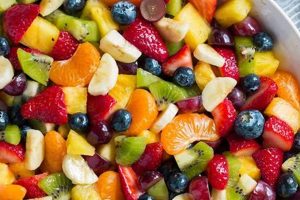
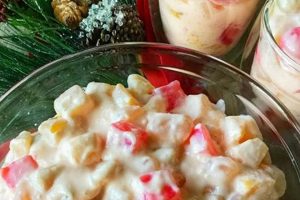
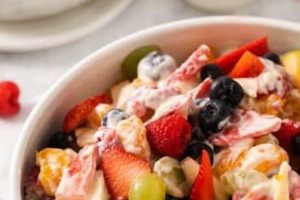
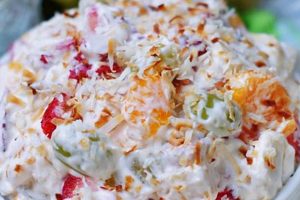
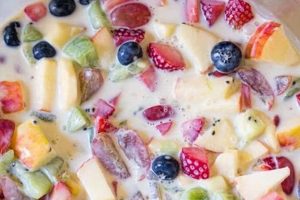
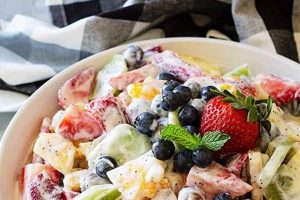
A combination of various fruits, typically fresh and sometimes canned, bound together with a mayonnaise-based dressing creates a dish often served as a side or dessert. Variations can include the addition of nuts, marshmallows, or other ingredients to complement the sweetness of the fruit and the creamy texture of the dressing. For instance, a simple version might combine apples, grapes, and bananas with mayonnaise, while more elaborate versions could incorporate whipped cream, sour cream, or yogurt into the dressing.
This type of dish offers a unique flavor profile combining sweet and tangy elements. Its creamy texture provides a contrasting mouthfeel to the often crisp or juicy fruits. While its origins are not definitively documented, it likely emerged as a popular dish in the mid-20th century alongside the rise of convenience foods and evolving culinary trends. This preparation can be a refreshing and economical way to utilize readily available ingredients. The adaptability of the recipe allows for customization based on seasonal availability and personal preferences.
Further exploration will cover the selection and preparation of fruits, different mayonnaise-based dressings, variations and additions, serving suggestions, and nutritional information.
Tips for Creating a Flavorful Fruit Salad with Mayonnaise Dressing
Preparation and ingredient selection significantly influence the final result when combining fruits and a mayonnaise-based dressing. Attention to detail ensures a balanced and enjoyable culinary experience.
Tip 1: Fruit Selection and Preparation: Opt for fruits at peak ripeness but still firm enough to hold their shape. Cutting fruits into uniform sizes ensures even coating and consistent texture. Consider the flavor profiles of different fruits and aim for a balance of sweetness and tartness. Canned fruits should be well-drained.
Tip 2: Mayonnaise Selection: Full-fat mayonnaise provides a richer flavor and creamier texture. Reduced-fat or light mayonnaise can be used, but the flavor and texture will be subtly different. Consider adding a touch of lemon juice or vinegar to enhance the tanginess of the dressing.
Tip 3: Dressing Customization: Incorporating additional ingredients into the mayonnaise base can elevate the flavor profile. Options include whipped cream, sour cream, yogurt, or a blend of these. Sweeteners like honey or powdered sugar can adjust overall sweetness.
Tip 4: Balancing Flavors: A successful fruit salad balances sweetness, acidity, and creaminess. Incorporating slightly tart fruits like apples or citrus segments can offset the sweetness of bananas or grapes. A small amount of salt can enhance the overall flavor profile.
Tip 5: Chilling and Serving: Chilling the fruit salad for at least 30 minutes allows the flavors to meld and the dressing to thicken slightly. Serve the salad chilled in a decorative bowl or individual portions. Garnish with chopped nuts, a sprinkle of spices, or a dollop of whipped cream.
Tip 6: Storage: Store leftover fruit salad in an airtight container in the refrigerator for up to two days. Note that the texture of the fruit may soften slightly over time.
By adhering to these guidelines, one can create a fruit salad with mayonnaise dressing that offers a balanced flavor profile and a pleasant textural experience. The adaptability of this dish allows for endless variations, ensuring a delightful culinary creation.
This concludes the tips section. The following section will provide a sample recipe and explore variations on this classic dish.
1. Fruit Selection

Fruit selection is paramount in determining the overall flavor profile, texture, and aesthetic appeal of a fruit salad with mayonnaise dressing. Careful consideration of fruit variety, ripeness, and complementary flavors is essential for a successful dish.
- Ripeness and Firmness
Fruits should be ripe but firm enough to maintain their structure when combined with the dressing. Overripe fruit can become mushy and contribute to an undesirable texture. Conversely, underripe fruit may lack sweetness and offer a less enjoyable eating experience. Choosing fruits at their peak ripeness ensures optimal flavor and texture. For example, bananas should be yellow with minimal browning, while berries should be plump and vibrant in color.
- Flavor Profiles
Balancing sweet and tart flavors creates a more complex and satisfying fruit salad. Incorporating a variety of fruits with different flavor profiles prevents the dish from becoming monotonous. Pairing sweet fruits like bananas and grapes with tart fruits such as apples, pineapple, or citrus segments enhances the overall taste experience. The interplay of these contrasting flavors adds depth and dimension.
- Textural Variety
Including fruits with varying textures creates a more interesting and engaging culinary experience. Combining soft fruits like berries and bananas with firmer fruits such as apples and pears adds textural contrast. This prevents the salad from feeling homogenous and contributes to a more enjoyable mouthfeel.
- Seasonal Considerations
Utilizing seasonal fruits enhances flavor and supports local agriculture. Seasonal fruits are often at their peak ripeness and offer the best flavor. Incorporating seasonal produce allows for greater variety throughout the year. For example, a summer fruit salad might feature berries and melons, while a fall version could include apples and pears.
By carefully considering these facets of fruit selection, one can create a fruit salad with mayonnaise dressing that offers a delightful balance of flavors, textures, and visual appeal. The interplay of these elements contributes to a more satisfying and enjoyable culinary experience.
2. Mayonnaise Type
Mayonnaise serves as the binding agent and contributes significantly to the overall flavor and texture of fruit salad. The type of mayonnaise selected directly impacts the final result. Full-fat mayonnaise, with its higher fat content, provides a richer, creamier texture and a more pronounced flavor. This richness complements the sweetness of the fruit and creates a luxurious mouthfeel. Conversely, using low-fat or light mayonnaise results in a thinner, less flavorful dressing. The reduced fat content can lead to a salad that feels watery and lacks the desired creaminess. For example, a fruit salad featuring ripe berries and bananas benefits from the richness of full-fat mayonnaise, while a lighter fruit salad with citrus and melons might tolerate a lower-fat option, though the overall flavor and texture will be impacted. Choosing the appropriate mayonnaise is crucial for achieving the desired balance of flavors and textures.
Beyond fat content, other variations in mayonnaise can also influence the fruit salad. Mayonnaise made with different oils, such as olive oil or avocado oil, will impart subtle flavor differences. Similarly, the addition of ingredients like lemon juice or mustard to the mayonnaise can further alter the flavor profile. For instance, a fruit salad with tropical fruits like mango and pineapple might pair well with a mayonnaise containing a hint of lime juice. Understanding these nuances allows for a more tailored and sophisticated approach to creating fruit salad.
In conclusion, the type of mayonnaise selected plays a pivotal role in the success of a fruit salad. Careful consideration of fat content, oil type, and additional flavorings allows for a customized flavor profile and textural experience. Selecting the appropriate mayonnaise is essential for achieving a harmonious balance between the sweetness of the fruit and the richness of the dressing, ultimately influencing the overall enjoyment of the dish.
3. Additional Ingredients

Supplemental ingredients, beyond fruit and mayonnaise, significantly influence the complexity and overall appeal of fruit salad with mayonnaise dressing. These additions can introduce contrasting textures, enhance sweetness, provide savory notes, or offer visual interest. The considered incorporation of such elements elevates the dish beyond a simple combination of fruit and dressing. Nuts, for example, contribute a satisfying crunch and nutty flavor, while marshmallows offer a soft, sweet counterpoint. Shredded coconut introduces a chewy texture and subtle sweetness, while miniature chocolate chips provide bursts of intense flavor. The selection of additional ingredients should complement the chosen fruits and the mayonnaise base.
Several factors influence the choice of additional ingredients. Flavor compatibility is paramount. The added components should harmonize with the existing flavors of the fruit and mayonnaise, creating a balanced and cohesive taste. Textural contrast adds another dimension to the dish. The interplay of creamy, crunchy, chewy, or crisp elements enhances the sensory experience. Visual appeal also plays a role. Colorful sprinkles, chopped nuts, or a dusting of spices can elevate the presentation. Practical considerations, such as ingredient availability and dietary restrictions, also factor into the decision-making process. For instance, individuals with nut allergies would necessitate careful selection of alternative additions.
In summary, the judicious use of additional ingredients can transform a basic fruit salad with mayonnaise dressing into a more complex and satisfying culinary creation. Careful consideration of flavor compatibility, textural contrast, visual appeal, and practical limitations ensures a harmonious and enjoyable final product. The thoughtful incorporation of these elements ultimately elevates the dish and caters to a wider range of preferences.
4. Flavor Balance
Flavor balance is crucial for a successful fruit salad with mayonnaise dressing. The inherent sweetness of most fruits necessitates a counterpoint to prevent the dish from becoming cloying. Mayonnaise, while providing a creamy texture, often possesses a tangy or slightly acidic note that can partially offset the sweetness. However, achieving true balance requires careful consideration of the fruits incorporated. Incorporating tart fruits, such as Granny Smith apples, cranberries, or citrus segments, provides the necessary acidity to cut through the sweetness of bananas, grapes, or mangoes. This interplay of contrasting flavors creates a more dynamic and enjoyable experience, preventing the sweetness from becoming overwhelming. For instance, a fruit salad containing solely sweet fruits like bananas and strawberries, even with mayonnaise, might taste overly sweet. Adding tart raspberries and a squeeze of lemon juice to the mayonnaise would achieve a more balanced profile.
The concept of flavor balance extends beyond simply sweet and tart. Other flavor dimensions, such as bitterness and saltiness, can also contribute to a well-rounded fruit salad. A sprinkle of sea salt can subtly enhance the sweetness of the fruit while adding a savory element. Incorporating ingredients with a slight bitterness, such as chopped pecans or walnuts, can further add complexity and depth to the flavor profile. Consider a fruit salad with sweet grapes, tart pineapple, and creamy mayonnaise. Adding a pinch of salt and some chopped walnuts would create a more nuanced and balanced flavor profile, enhancing the overall enjoyment of the dish. The specific flavor balance desired can be adjusted to personal preference. Some might prefer a sweeter fruit salad, while others might lean towards a more tart or savory profile.
In conclusion, flavor balance is an essential aspect of a successful fruit salad with mayonnaise dressing. The strategic combination of sweet, tart, salty, and bitter elements, through fruit selection and additional ingredients, elevates the dish beyond a simple combination of ingredients. Careful attention to these nuances allows for a more complex, dynamic, and satisfying culinary experience. Understanding the interplay of these flavors empowers one to create a fruit salad tailored to specific preferences and desired outcomes.
5. Preparation Technique
Preparation technique significantly impacts the final quality and enjoyment of fruit salad with mayonnaise dressing. Careful attention to procedural steps ensures optimal flavor, texture, and presentation. Improper techniques can lead to suboptimal outcomes, such as a watery consistency, uneven flavor distribution, or compromised food safety. The sequence and execution of each step directly influence the final result.
For instance, the timing of adding the mayonnaise dressing is crucial. Adding the dressing too early can cause the fruit to release excess moisture, resulting in a watery salad. Conversely, adding the dressing too late may lead to uneven coating and inconsistent flavor. Cutting the fruit into uniform sizes promotes even distribution of the dressing and enhances aesthetic appeal. Furthermore, proper sanitation practices, such as washing hands and using clean utensils, are essential for food safety. Neglecting these practices can introduce harmful bacteria and compromise the health of consumers. As a practical example, consider preparing a fruit salad with apples, bananas, and grapes. Chopping the fruit into similar-sized pieces before gently folding in the mayonnaise dressing shortly before serving ensures optimal texture and flavor distribution.
In conclusion, proper preparation technique is essential for creating a successful fruit salad with mayonnaise dressing. Attention to detail, from ingredient preparation to the timing of adding the dressing, directly influences the final outcome. Adhering to proper techniques, such as uniform cutting and prompt serving, ensures optimal flavor, texture, and food safety. Understanding these nuances empowers one to create a consistently enjoyable and visually appealing fruit salad.
6. Serving Suggestions

Serving suggestions significantly enhance the presentation and overall enjoyment of fruit salad with mayonnaise dressing. Consideration of temperature, accompanying dishes, portion size, and visual presentation elevates the dining experience. These elements transform a simple dish into a more appealing and satisfying culinary offering.
- Temperature
Serving temperature significantly influences the perceived flavors and textures. A chilled fruit salad offers a refreshing contrast to the creamy mayonnaise dressing, enhancing the sweetness of the fruit. Room temperature serving, while less common, can accentuate the sweetness and soften the textures. The ideal temperature depends on personal preference and the specific fruit combination. A chilled fruit salad featuring berries and melons provides a refreshing summer treat, while a room temperature salad with apples and bananas offers a different textural experience.
- Accompanying Dishes
Fruit salad with mayonnaise dressing can be served as a standalone dish or as an accompaniment to other culinary creations. It pairs well with grilled meats, sandwiches, or other salads. Consideration of the accompanying dishes influences the overall flavor balance and meal composition. For example, a light fruit salad complements a rich main course, while a heartier fruit salad, perhaps with added nuts or granola, can serve as a more substantial component of a lighter meal.
- Portion Size
Portion size impacts both visual appeal and satiety. Smaller portions, served in elegant bowls or individual dishes, enhance the perceived value and prevent overwhelming diners. Larger portions, often served family-style, offer a more casual and abundant presentation. The appropriate portion size depends on the context of the meal and the role of the fruit salad within the overall menu.
- Visual Presentation
Visual presentation enhances the dining experience and influences perceived flavor. A thoughtfully arranged fruit salad, with attention to color, texture, and garnish, stimulates appetite and elevates the dish beyond a simple mixture of ingredients. Garnishes such as chopped nuts, fresh mint, or a sprinkle of spices add visual interest and subtle flavor enhancements. A simple but elegant presentation in a clear glass bowl showcases the vibrant colors of the fruit and the creamy texture of the dressing.
In conclusion, thoughtful serving suggestions elevate fruit salad with mayonnaise dressing from a basic dish to a more refined and enjoyable culinary experience. Careful consideration of temperature, accompanying dishes, portion size, and visual presentation enhances both the perceived and actual enjoyment of the salad. These elements contribute to a more satisfying and memorable dining experience.
Frequently Asked Questions
This section addresses common inquiries regarding fruit salad with mayonnaise dressing, providing clear and concise responses to clarify potential uncertainties.
Question 1: Is fruit salad with mayonnaise a common dish?
While its popularity can vary regionally and culturally, fruit salad with mayonnaise dressing enjoys a degree of recognition, particularly in certain parts of the world and within specific culinary traditions. It is not universally prevalent but holds a place within various culinary landscapes.
Question 2: What types of fruit work best in this type of salad?
A variety of fruits complement mayonnaise-based dressings. Apples, grapes, bananas, and citrus fruits provide a foundational balance of sweet and tart flavors. However, adaptability allows for diverse options based on personal preference and seasonal availability. Firm fruits tend to hold their shape better, while softer fruits contribute to a creamier overall texture.
Question 3: Can the mayonnaise dressing be made ahead of time?
Preparing the mayonnaise dressing in advance is possible. However, immediate incorporation with the fruit is not recommended. Storing the dressing separately and adding it shortly before serving helps maintain the desired texture and prevents the fruit from becoming overly saturated.
Question 4: How long can fruit salad with mayonnaise dressing be stored?
Refrigeration in an airtight container is recommended for storing leftover fruit salad. While it typically remains palatable for up to two days, the texture of some fruits may soften over time. Consumption within 24 hours generally ensures optimal quality.
Question 5: Are there healthier alternatives to traditional mayonnaise?
Substitutions for mayonnaise, such as Greek yogurt or a blend of yogurt and whipped cream, offer potential health benefits depending on the specific ingredients and desired outcome. These alternatives often possess lower fat content and can contribute a tangier flavor profile. However, they may also alter the overall texture and creaminess of the salad.
Question 6: Can frozen fruit be used in this recipe?
While fresh fruit is generally preferred, frozen fruit can be incorporated with careful consideration. Thawing and thoroughly draining the fruit before adding it to the salad helps prevent excess moisture, which can compromise the texture and consistency of the dish.
Understanding these common inquiries provides a comprehensive foundation for approaching the preparation and enjoyment of fruit salad with mayonnaise dressing. Careful consideration of these aspects allows for a more informed and successful culinary experience.
The following section will provide a complete recipe for fruit salad with mayonnaise dressing.
Fruit Salad with Mayo Recipe
Exploration of the “fruit salad with mayo recipe” reveals a dish offering versatility and adaptability. Fruit selection, mayonnaise type, additional ingredients, flavor balance, preparation techniques, and serving suggestions each contribute significantly to the final product. Careful consideration of these elements allows for a tailored culinary experience, ranging from simple to complex flavor profiles and textures. Understanding the interplay of these components empowers informed decision-making for recipe customization and successful execution.
The “fruit salad with mayo recipe” presents an opportunity for culinary creativity and personal expression. Potential for experimentation with diverse ingredients and flavor combinations remains vast. Continued exploration and refinement of this recipe promise further enhancement and enjoyment of this unique culinary creation. Its adaptability ensures relevance and potential for evolution within the ever-changing landscape of food preparation and consumption.