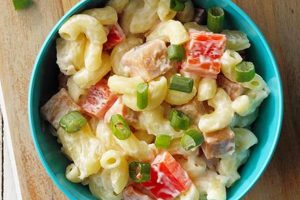
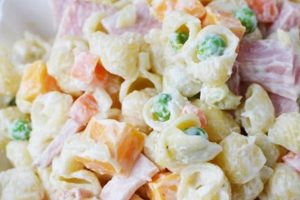
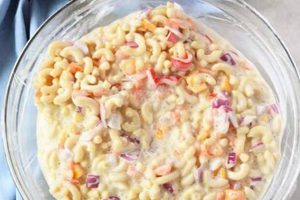
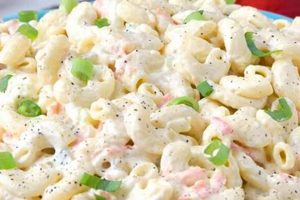
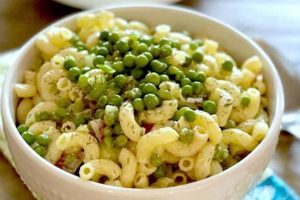
This classic side dish, a staple at Hawaiian plate lunches and potlucks, combines cooked elbow macaroni with a creamy, tangy dressing. Typical ingredients include mayonnaise, vinegar, and seasonings, often incorporating grated carrots, onions, and celery. Variations may feature additional components like potatoes, hard-boiled eggs, or shredded tuna.
Its popularity stems from the dish’s affordability, ease of preparation, and satisfying flavors. The blend of creamy, sweet, and tangy elements creates a balanced profile that complements a wide range of main courses. Furthermore, its adaptability allows for personalized variations based on individual preferences and available ingredients, contributing to its enduring presence in Hawaiian cuisine.
The following sections will delve into the specific ingredients required, step-by-step preparation instructions, suggestions for variations, and tips for optimal storage and serving.
Tips for Perfect Macaroni Salad
Achieving optimal results requires attention to detail throughout the preparation process. The following tips offer guidance for enhancing flavor, texture, and overall quality.
Tip 1: Cook the pasta al dente. Slightly firm pasta holds its shape better in the salad and prevents a mushy texture. Avoid overcooking.
Tip 2: Chill the cooked pasta thoroughly. This step stops the cooking process and helps the pasta absorb the dressing more effectively.
Tip 3: Use high-quality mayonnaise. The mayonnaise forms the base of the dressing; its quality significantly impacts the final flavor.
Tip 4: Balance the flavors in the dressing. Adjust the vinegar and seasonings to achieve the desired balance of sweet, tangy, and savory notes.
Tip 5: Add vegetables for texture and flavor. Finely chopped carrots, onions, and celery provide a satisfying crunch and enhance the overall taste.
Tip 6: Chill the salad for at least two hours before serving. This allows the flavors to meld and the salad to reach the ideal serving temperature.
Tip 7: Taste and adjust seasonings before serving. Final adjustments ensure the flavors are balanced and to preference.
By following these tips, one can create a macaroni salad that is both flavorful and visually appealing.
The following section will provide a complete recipe incorporating these tips for practical application.
1. Best elbow macaroni

Elbow macaroni’s structural properties significantly influence the final quality of Hawaiian macaroni salad. Its curved shape and hollow center allow for optimal absorption of the dressing, contributing to a flavorful and cohesive dish. Selecting high-quality durum wheat pasta ensures the macaroni maintains its shape during cooking and avoids becoming mushy, a critical factor in achieving the desired texture. Overcooked or low-quality pasta can result in a less appealing, gluey consistency, detracting from the overall sensory experience. Choosing the best elbow macaroni ensures the salad retains its structural integrity and enhances the flavor delivery.
Illustrative examples demonstrate this connection. Consider a comparison between salads made with premium durum wheat elbow macaroni and those made with less expensive, softer varieties. The former retains a pleasant firmness and distinct individual pieces, while the latter tends to clump together and absorb excessive dressing, leading to a less appealing presentation and a diluted flavor profile. This highlights the practical importance of selecting appropriate pasta for optimal results. Chefs and home cooks alike understand the impact of pasta choice on the final product, emphasizing durum wheat elbow macaroni as the preferred option for achieving authentic Hawaiian macaroni salad.
The importance of selecting appropriate elbow macaroni cannot be overstated. It directly impacts the texture, flavor absorption, and overall aesthetic appeal of the finished dish. Understanding the relationship between pasta quality and salad quality allows for informed ingredient selection, leading to a superior culinary outcome and a more enjoyable dining experience. Careful consideration of this key component ensures the creation of Hawaiian macaroni salad that embodies the desired characteristics of this iconic dish.
2. High-quality mayonnaise

Mayonnaise serves as the foundation of Hawaiian macaroni salad’s characteristic creamy texture and rich flavor. High-quality mayonnaise, typically made with real eggs and oil, provides a smooth, emulsified base that coats the pasta evenly and binds the other ingredients together. Its flavor profile, a balance of tanginess and richness, complements the sweetness of the carrots and the savory notes of the onions and celery. Conversely, lower-quality mayonnaise, often containing artificial ingredients and stabilizers, can result in a thinner, less flavorful dressing that separates easily and detracts from the overall quality of the salad.
The impact of mayonnaise quality becomes evident when comparing salads made with different types. A salad made with premium mayonnaise exhibits a luxurious, creamy texture and a well-rounded flavor profile. The individual ingredients meld harmoniously, creating a cohesive and satisfying culinary experience. In contrast, a salad made with lower-quality mayonnaise may have a watery consistency, a bland or artificial taste, and a less appealing visual appearance. The dressing may separate, leaving an oily residue on the pasta, further diminishing the enjoyment of the dish. This contrast underscores the practical importance of using high-quality mayonnaise in achieving an authentic and flavorful Hawaiian macaroni salad.
Ingredient selection significantly influences the final outcome of this classic dish. High-quality mayonnaise contributes not only to the desired texture and flavor but also to the overall aesthetic appeal and sensory experience. Understanding the impact of mayonnaise quality allows for informed decision-making in the kitchen, ultimately leading to a superior culinary result. Prioritizing this key component ensures the creation of Hawaiian macaroni salad that meets the expectations of both culinary professionals and home cooks.
3. Apple cider vinegar

Apple cider vinegar plays a crucial role in Hawaiian macaroni salad, contributing significantly to its distinctive flavor profile. The vinegar’s gentle acidity provides a necessary counterpoint to the richness of the mayonnaise and the sweetness of the other ingredients. This balance of sweet, tangy, and savory elements creates a complex flavor profile that distinguishes Hawaiian macaroni salad from other variations. Beyond its flavor contribution, apple cider vinegar also acts as a natural preservative, extending the shelf life of the salad, a practical consideration for potlucks and gatherings where food safety is paramount. The specific type of vinegar influences the final taste; apple cider vinegar, with its subtle fruit notes, harmonizes particularly well with the other components, unlike harsher white vinegars that might overpower the delicate balance.
Illustrative examples highlight the vinegar’s importance. Consider two versions of the salad: one with apple cider vinegar and one without. The version lacking vinegar may taste overly sweet and rich, lacking the characteristic tang that defines the dish. Furthermore, it may spoil more quickly due to the absence of the vinegar’s preservative properties. In a practical setting, this difference can be significant, affecting both the immediate enjoyment of the salad and its suitability for later consumption. Chefs and home cooks often emphasize the necessity of apple cider vinegar for achieving authentic flavor and ensuring food safety.
Achieving an authentic and flavorful Hawaiian macaroni salad necessitates a careful balance of ingredients. Apple cider vinegar contributes not only to the desired tangy flavor but also to the preservation of the dish. Understanding its role allows for informed ingredient choices, leading to a superior culinary outcome. Overlooking this key component can compromise both the taste and longevity of the salad, underscoring its significance in the overall recipe.
4. Finely diced carrots

Finely diced carrots represent an essential element within Hawaiian macaroni salad, contributing not only vibrant color but also subtle sweetness and textural complexity. Their inclusion elevates the dish beyond a simple pasta salad, transforming it into a multi-sensory experience. Understanding the role of carrots within this culinary context provides insights into the delicate balance of flavors and textures characteristic of authentic Hawaiian cuisine.
- Flavor and Sweetness
Carrots offer a mild sweetness that complements the tanginess of the mayonnaise and vinegar dressing. This subtle sweetness balances the overall flavor profile, preventing the salad from becoming overly acidic. The natural sugars within the carrots meld with the other ingredients, creating a harmonious blend of flavors.
- Texture and Visual Appeal
Finely diced carrots introduce a pleasant textural contrast to the softness of the macaroni and the creaminess of the dressing. This element of crunch enhances the overall eating experience. Visually, the bright orange hue of the carrots enlivens the salad, making it more appealing.
- Nutritional Value
Carrots contribute valuable nutrients, including beta-carotene, which the body converts to vitamin A. This nutritional aspect adds to the overall health benefits of the dish, aligning with the increasing emphasis on incorporating nutrient-rich ingredients into everyday meals.
- Cultural Significance
While not indigenous to Hawaii, carrots have become integrated into local cuisine, reflecting the diverse cultural influences that have shaped the islands’ culinary landscape. Their presence in Hawaiian macaroni salad demonstrates the adaptability and evolution of traditional recipes.
The inclusion of finely diced carrots within Hawaiian macaroni salad exemplifies the careful consideration given to flavor, texture, visual appeal, and even nutritional value. This seemingly simple ingredient plays a significant role in elevating the dish to its iconic status within Hawaiian cuisine. Understanding its contributions provides a deeper appreciation for the complexities and nuances of this beloved culinary tradition.
5. Sweet onion, finely chopped
Sweet onion, finely chopped, constitutes a critical component of Hawaiian macaroni salad, contributing significantly to its distinctive flavor profile. Its presence adds a nuanced layer of flavor that complements the other ingredients, creating a balanced and harmonious culinary experience. Understanding the onion’s role within this specific dish provides valuable insights into the careful construction of flavors that define authentic Hawaiian cuisine.
- Flavor Complexity and Balance
Sweet onions, such as Maui or Vidalia, offer a mild, sweet flavor with less pungency than traditional yellow or white onions. This characteristic sweetness balances the tanginess of the mayonnaise and vinegar dressing, preventing the salad from becoming overly acidic. The subtle onion flavor enhances the overall complexity of the dish without overpowering the other ingredients.
- Texture and Mouthfeel
Finely chopping the onion ensures even distribution throughout the salad and prevents large, overpowering pieces. This technique also contributes to a pleasant textural experience. The small pieces of onion provide a subtle crunch that complements the softness of the macaroni and the creaminess of the dressing.
- Aromatic Enhancement
The aromatic compounds within sweet onions contribute to the overall sensory experience of the salad. These volatile compounds, released when the onion is chopped, add a subtle fragrance that enhances the appeal of the dish. The aromatics blend with the other ingredients, creating a more complex and enticing aroma.
- Cultural Context and Adaptation
While onions are not native to Hawaii, their incorporation into local cuisine, specifically Hawaiian macaroni salad, demonstrates the adaptability and fusion of culinary traditions. The use of sweet onions, in particular, reflects a preference for milder flavors and a focus on balancing contrasting tastes within the dish.
The inclusion of finely chopped sweet onion in Hawaiian macaroni salad demonstrates the thoughtful consideration given to flavor balance, texture, and aroma. This seemingly simple ingredient plays a crucial role in shaping the overall sensory experience, contributing to the dish’s iconic status within Hawaiian cuisine. Understanding its contribution provides deeper insight into the complexities and nuances that define this beloved culinary creation.
6. Celery, finely diced
Finely diced celery represents a crucial component within Hawaiian macaroni salad, contributing distinct textural and flavor dimensions that elevate the dish beyond a simple pasta salad. Its presence adds a refreshing, slightly vegetal note that balances the richness of the mayonnaise and the sweetness of the other ingredients. Understanding celery’s role within this specific culinary context provides insights into the careful balance of flavors and textures characteristic of authentic Hawaiian cuisine.
- Flavor and Aromatic Complexity
Celery’s distinctive flavor profile, characterized by a slightly bitter, herbaceous note, complements the sweetness of the carrots and onions. This subtle bitterness adds depth and complexity to the overall flavor profile, preventing the salad from becoming overly sweet or rich. The aromatic compounds in celery also contribute to the overall sensory experience, enhancing the salad’s appeal.
- Texture and Mouthfeel
Finely diced celery provides a crisp, refreshing texture that contrasts with the softness of the macaroni and the creaminess of the dressing. This textural element enhances the overall eating experience, adding a satisfying crunch. Dicing the celery finely ensures even distribution throughout the salad and prevents large, fibrous pieces from overpowering the other ingredients.
- Nutritional Contribution
Celery contributes dietary fiber and essential vitamins and minerals, enhancing the nutritional value of the salad. While often overlooked, this nutritional aspect aligns with the increasing emphasis on incorporating nutrient-rich ingredients into everyday meals. The addition of celery contributes to a more balanced and healthful dish.
- Culinary Tradition and Adaptation
While not indigenous to Hawaii, celery’s inclusion in local cuisine, particularly in Hawaiian macaroni salad, exemplifies the adaptability and fusion of culinary traditions. Its widespread availability and compatibility with other ingredients have led to its adoption in various regional variations of macaroni salad, demonstrating its versatility.
The incorporation of finely diced celery within Hawaiian macaroni salad underscores the thoughtful consideration given to flavor balance, textural complexity, and nutritional value. This seemingly simple ingredient plays a significant role in shaping the dish’s overall character, contributing to its enduring popularity within Hawaiian cuisine. Understanding celery’s contribution provides a deeper appreciation for the nuances that define this beloved culinary tradition.
7. Salt and pepper to taste
Salt and pepper, while seemingly simple seasonings, play a crucial role in finalizing the flavor profile of Hawaiian macaroni salad. They enhance the existing flavors of the other ingredients, creating a balanced and harmonious taste experience. The phrase “to taste” emphasizes the importance of individual preference and the dynamic interplay between these seasonings and the other components of the salad. Salt enhances the sweetness of the carrots and onions while subtly reducing the perceived acidity of the vinegar. Pepper, depending on the type used, adds a layer of complexity, ranging from a mild warmth to a more robust spiciness. This interplay allows for customization based on individual palates, highlighting the subjective nature of seasoning and the importance of achieving a balanced flavor profile. The absence of salt and pepper can result in a bland and uninspired salad, demonstrating their integral role in elevating the dish.
Consider a scenario where Hawaiian macaroni salad is prepared without any seasoning adjustments. The individual flavors of the mayonnaise, vinegar, vegetables, and pasta may remain distinct and disjointed, lacking overall cohesion. The sweetness of the carrots might overpower the other flavors, while the tanginess of the vinegar could become overly prominent. The addition of salt, even in small amounts, harmonizes these disparate flavors, bringing them together into a unified whole. A touch of black pepper introduces a subtle warmth that further enhances the complexity of the taste, while white pepper offers a cleaner, less assertive spiciness. These seemingly minor adjustments significantly impact the overall enjoyment of the dish, underscoring the importance of seasoning “to taste.” Culinary professionals and experienced home cooks understand this dynamic, emphasizing the crucial role of salt and pepper in achieving a well-balanced and flavorful outcome.
Proper seasoning is essential for maximizing the flavor potential of Hawaiian macaroni salad. The interplay between salt, pepper, and the other ingredients highlights the importance of a balanced flavor profile. Understanding this dynamic empowers individuals to adjust seasonings according to personal preferences and the specific nuances of their ingredients, ultimately resulting in a more satisfying culinary experience. The phrase “to taste” serves as a reminder of the subjective nature of flavor and the crucial role of individual judgment in achieving culinary excellence.
Frequently Asked Questions
This section addresses common inquiries regarding the preparation and enjoyment of Hawaiian macaroni salad, offering practical guidance for achieving optimal results.
Question 1: What type of macaroni is best suited for this recipe?
Elbow macaroni is traditionally preferred due to its shape, which holds the dressing well. High-quality durum wheat pasta is recommended to maintain texture and prevent a mushy consistency.
Question 2: Can the mayonnaise be substituted with other ingredients?
While variations exist using plain yogurt or a combination of yogurt and mayonnaise, traditional recipes rely on mayonnaise for its characteristic flavor and texture. Substitutions may alter the authentic taste and consistency.
Question 3: How long can Hawaiian macaroni salad be stored in the refrigerator?
Properly stored in an airtight container, it typically lasts for 3-5 days in the refrigerator. However, quality may degrade over time.
Question 4: What are some common variations of Hawaiian macaroni salad?
Variations may include additions such as potatoes, hard-boiled eggs, shredded tuna, or different vegetables like peas or green onions. These additions offer diverse flavors and textures.
Question 5: Can this salad be frozen?
Freezing is not recommended, as it negatively affects the texture of the mayonnaise and vegetables, leading to a less desirable consistency upon thawing.
Question 6: What are some common serving suggestions for this dish?
It is frequently served as a side dish at plate lunches, barbecues, and potlucks, complementing a variety of main courses, from grilled meats to kalua pig.
Understanding these common inquiries can assist in the successful preparation and enjoyment of authentic Hawaiian macaroni salad. Attention to detail, from ingredient selection to storage practices, ensures a flavorful and satisfying culinary experience.
The following section will provide a comprehensive recipe, incorporating the insights and recommendations discussed throughout this article.
Hawaiian Macaroni Salad Recipe
This exploration of Hawaiian macaroni salad recipes has highlighted the essential components and techniques that contribute to its distinctive character. From the selection of high-quality elbow macaroni and mayonnaise to the careful balance of apple cider vinegar, carrots, sweet onions, and celery, each ingredient plays a crucial role in the final flavor profile. Proper seasoning with salt and pepper, adjusted to individual preferences, further enhances the overall taste experience. An understanding of these elements allows for consistent recreation of this iconic dish, preserving its culinary heritage.
Hawaiian macaroni salad represents more than just a side dish; it embodies the fusion of cultures and culinary traditions that define Hawaiian cuisine. Its continued presence at gatherings and celebrations underscores its enduring appeal and cultural significance. By appreciating the nuances of its preparation and the careful balance of flavors, one gains a deeper understanding of the culinary landscape of Hawaii and its rich history. This exploration encourages culinary enthusiasts to embrace the tradition and create their own interpretations of this classic dish, ensuring its legacy for generations to come.