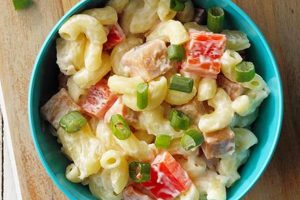
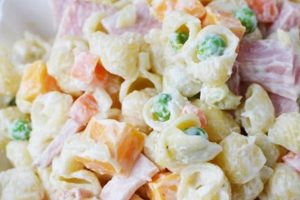
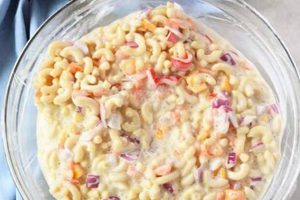
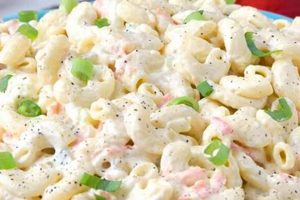
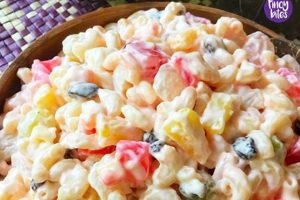
This dish typically combines cooked elbow macaroni, peas (fresh or frozen), and other ingredients like celery, onion, and hard-boiled eggs, bound together with a creamy dressing, often mayonnaise-based. Variations can include additions such as cheese, bacon, or different herbs and spices, offering diverse flavor profiles. A simple example involves combining the core ingredients with mayonnaise, salt, pepper, and a touch of Dijon mustard.
Such a dish offers a convenient and adaptable option for meals, picnics, and potlucks. Its flexibility allows for customization based on dietary preferences and seasonal ingredient availability. Historically, cold pasta salads gained popularity as refrigeration became more accessible, providing a refreshing and easy-to-prepare dish, particularly during warmer months. The affordability and versatility of the core ingredients contribute to its enduring appeal.
The following sections will delve deeper into specific aspects of creating this dish, including variations, ingredient selection, preparation techniques, and tips for achieving optimal flavor and texture.
Tips for an Excellent Macaroni and Pea Salad
Achieving optimal flavor and texture requires attention to several key details. The following tips offer guidance for creating a successful and enjoyable dish.
Tip 1: Pasta Perfection: Cook macaroni al dente for optimal texture. Overcooked pasta can result in a mushy salad. Rinse cooked pasta under cold water to stop the cooking process and cool it down quickly. This also helps prevent sticking.
Tip 2: Pea Preparation: Fresh or frozen peas may be used. If using frozen peas, thaw them completely before adding them to the salad. Briefly blanching fresh peas enhances their vibrant green color and tenderizes them slightly.
Tip 3: Flavorful Foundation: The dressing is crucial. While mayonnaise is common, consider incorporating other elements like Greek yogurt, sour cream, or vinaigrette for a lighter or tangier flavor profile.
Tip 4: Ingredient Incorporation: Add ingredients while the pasta is still slightly warm. This allows them to absorb the flavors of the dressing more effectively.
Tip 5: Seasoning Strategies: Seasoning should be layered. Add salt to the pasta water during cooking. Incorporate additional seasonings into the dressing and adjust to taste before serving. Freshly ground black pepper, garlic powder, onion powder, or Dijon mustard can enhance the overall flavor.
Tip 6: Chill Out: Chilling the salad for at least 30 minutes allows the flavors to meld and enhances the refreshing quality of the dish. However, avoid excessively long chilling times, which can dry out the salad.
Tip 7: Textural Variety: Consider adding chopped celery, red onion, or bell peppers for textural contrast. Chopped hard-boiled eggs and crumbled bacon can provide additional protein and flavor complexity.
By following these tips, one can create a macaroni and pea salad that offers a delightful balance of flavors, textures, and visual appeal.
The following section offers a sample recipe incorporating these principles.
1. Ingredient Quality

Ingredient quality significantly impacts the overall flavor, texture, and visual appeal of macaroni and pea salad. Using high-quality ingredients elevates the dish from simple to exceptional. Fresh, crisp vegetables contribute vibrant flavors and appealing textures, while using superior mayonnaise or other dressing components creates a richer, more nuanced flavor profile. Conversely, subpar ingredients can result in a bland, watery, or unappetizing salad. For instance, using limp or aged vegetables can negatively affect both the flavor and the aesthetic appeal. Similarly, opting for lower-quality mayonnaise can lead to a less flavorful and potentially oily dressing.
The choice between fresh, frozen, or canned peas illustrates the importance of ingredient selection. Fresh peas, when in season, offer optimal sweetness and texture. Frozen peas provide a convenient alternative, retaining much of their fresh flavor and nutritional value when handled correctly. Canned peas, while readily available, often exhibit a softer texture and less vibrant flavor compared to fresh or frozen options. The type of pasta also contributes to the final outcome. Standard elbow macaroni is commonly used, but exploring other small pasta shapes can provide interesting textural variations. The quality of the pasta itself also plays a role; higher-quality pasta typically holds its shape better and offers a more pleasing texture.
Prioritizing ingredient quality ensures a superior macaroni and pea salad experience. Selecting fresh, vibrant produce, flavorful dressings, and appropriate pasta shapes enhances taste and texture. While convenience sometimes dictates ingredient choices, understanding the impact of ingredient quality allows for informed decisions and the best possible outcome. Considering the interplay between individual components and the final result facilitates consistent creation of a delicious and satisfying dish.
2. Pasta Cooking Time

Pasta cooking time is a critical factor in achieving a successful macaroni and pea salad. Properly cooked pasta provides the foundation for the dish’s texture and overall enjoyment. Overcooked pasta results in a mushy, unappetizing salad, while undercooked pasta offers an unpleasant, firm bite. Understanding the nuances of pasta cooking and its impact on this specific application ensures a pleasant culinary experience.
- Al Dente Consistency:
The ideal consistency for pasta in macaroni and pea salad is al dente, meaning “to the tooth” in Italian. This refers to pasta that is cooked through but still retains a slight firmness in the center. Achieving this texture requires careful attention to cooking time and adherence to package directions. Al dente pasta holds its shape well in the salad and provides a pleasing chewiness. Overcooked pasta, by contrast, tends to absorb excessive dressing and become mushy, resulting in a less appealing texture.
- Cooling Process:
Immediately after cooking, rinsing the pasta under cold water serves a dual purpose. It stops the cooking process, preventing the pasta from becoming overcooked from residual heat. The cold water also cools the pasta down quickly, making it suitable for incorporating into the salad promptly. This rapid cooling also helps to remove excess starch, which can contribute to a sticky texture.
- Pasta Absorption:
Cooked pasta absorbs flavors from the dressing and other ingredients. Overcooked pasta absorbs more dressing than al dente pasta, potentially leading to a drier salad overall. The timing of incorporating the dressing and other components is also influenced by the pasta’s cooking state. Slightly warm pasta absorbs flavors more readily than cold pasta. Therefore, it’s generally recommended to combine ingredients while the pasta is still slightly warm but not hot.
- Visual Appeal:
Pasta cooking time impacts the visual presentation of the salad. Well-cooked, al dente pasta maintains its shape and contributes to an aesthetically pleasing dish. Overcooked pasta appears swollen and less distinct, detracting from the overall presentation. The visual appeal of a dish significantly influences its perceived palatability.
Precise pasta cooking time contributes significantly to the ultimate success of macaroni and pea salad. By focusing on achieving al dente consistency and understanding the subsequent impact on cooling, absorption, and visual appeal, one can ensure a delightful and satisfying final product. Attention to this detail, alongside other aspects of ingredient selection and preparation, elevates the dish from simple to exceptional.
3. Dressing Selection
Dressing selection significantly influences the overall flavor profile and character of macaroni and pea salad. The dressing acts as the unifying element, binding the individual components and imparting a cohesive taste. The choice of dressing should complement the other ingredients, creating a harmonious balance of flavors rather than overpowering them. A creamy, mayonnaise-based dressing provides a classic foundation, offering richness and a familiar comfort. However, variations such as vinaigrette-based dressings, incorporating ingredients like olive oil, lemon juice, and herbs, introduce a lighter, brighter dimension. Yogurt-based dressings provide a tangy alternative, potentially reducing overall fat content while maintaining a creamy consistency. The interplay between dressing and other ingredients creates a complex flavor dynamic; therefore, careful selection is crucial.
For instance, a macaroni and pea salad featuring ingredients like bacon and cheddar cheese might benefit from a ranch-style dressing, complementing the smoky and savory notes. Conversely, a salad emphasizing fresh herbs and vegetables might pair well with a lemon-herb vinaigrette, highlighting the fresh, vibrant flavors. The quantity of dressing used also plays a crucial role. Too much dressing can overwhelm the salad, making it heavy and soggy, while too little dressing can result in a dry, less flavorful experience. Achieving the right balance ensures that the dressing enhances the overall enjoyment without masking the individual components.
Understanding the impact of dressing selection empowers informed decision-making in recipe development and adaptation. Considering the desired flavor profile, the characteristics of other ingredients, and the overall balance allows for customization and optimization of the final product. Challenges may arise when balancing flavor intensity, accommodating dietary restrictions, or achieving desired textural consistency. Addressing these challenges requires careful consideration of ingredient interactions and potential substitutions. Ultimately, selecting the appropriate dressing elevates the macaroni and pea salad from a simple assemblage of ingredients to a cohesive, flavorful dish.
4. Flavor Balance
Flavor balance is paramount in a successful macaroni and pea salad recipe. It distinguishes a simple combination of ingredients from a cohesive, enjoyable dish. This balance involves a nuanced interplay of sweet, salty, sour, and savory elements, resulting in a harmonious flavor profile. Without proper balance, the salad can taste bland, overly sweet, excessively tangy, or dominated by a single flavor. Understanding how different ingredients contribute to flavor balance enables informed decisions regarding ingredient selection and proportion.
- Sweetness from Peas:
The natural sweetness of peas provides a foundational element. This sweetness can vary based on pea variety and freshness. Balancing this sweetness with other flavors is essential. Overly sweet salads lack complexity and can become cloying. Fresh or frozen peas typically offer a more pronounced sweetness than canned varieties. This natural sweetness contributes to the overall flavor profile, interacting with other ingredients to create a well-rounded taste experience.
- Acidity and Tang:
Acidity, often introduced through ingredients like vinegar, lemon juice, or pickles, provides a crucial counterpoint to sweetness and richness. This tangy element brightens the flavor profile and prevents the salad from becoming overly heavy. The type and amount of acid used directly influence the final flavor balance. A touch of Dijon mustard in the dressing can also contribute to a subtle tanginess, complementing the other flavors.
- Salt and Savory Notes:
Salt enhances other flavors and is vital for overall balance. Savory elements, often derived from ingredients like bacon, cheese, or cured meats, add depth and complexity. The interplay between salt and savory components provides a counterpoint to the sweetness and acidity. Carefully balancing these elements prevents the salad from tasting bland or overly salty. The type of salt used can also subtly influence the final flavor; sea salt, for example, can offer a more nuanced flavor than table salt.
- Creamy Richness from Dressing:
The dressing, often mayonnaise-based, adds a creamy richness that coats the other ingredients and contributes to the overall mouthfeel. However, excessive richness can overwhelm the other flavors. The choice of dressing and its fat content directly affect the perceived richness of the salad. Greek yogurt or low-fat mayonnaise can be used to create a lighter dressing while still providing a creamy texture. Incorporating fresh herbs into the dressing adds another layer of flavor complexity.
Successfully balancing these elements ensures a harmonious and enjoyable macaroni and pea salad. Each ingredient plays a role in the overall flavor profile, and careful consideration of their individual contributions allows for a well-rounded and satisfying final product. Adjusting proportions and incorporating complementary ingredients allows for customization based on individual preferences and desired flavor outcomes. The interplay of these flavors is essential to a well-executed macaroni and pea salad, highlighting the importance of thoughtful ingredient selection and preparation.
5. Textural Contrast

Textural contrast significantly contributes to the enjoyment of macaroni and pea salad. A monotonous texture, whether uniformly soft or excessively crunchy, diminishes the eating experience. The interplay of different textures creates a more dynamic and engaging sensory experience. The foundational texture derives from the cooked pasta, ideally al dente, offering a slight chewiness. Peas, whether fresh or frozen, contribute a tender, slightly sweet contrast. However, relying solely on these two elements results in a limited textural profile.
Introducing additional ingredients expands the textural landscape. Chopped celery adds a crisp, watery crunch, while diced red onion offers a sharp, pungent bite. Incorporating chopped hard-boiled eggs introduces a creamy, crumbly element. Crumbled bacon provides a smoky, crispy contrast. These additions transform the salad from a simple two-texture dish into a multi-dimensional culinary experience. The interplay of soft pasta, tender peas, crunchy vegetables, and potentially creamy or crispy additions elevates the overall enjoyment. Consider a salad composed solely of soft pasta and peas; while palatable, it lacks the dynamism offered by textural variation. Conversely, a salad overloaded with crunchy elements can feel disjointed and lack a unifying texture.
The practical significance of understanding textural contrast lies in the ability to create a more satisfying and engaging dish. Careful selection and preparation of ingredients allows for a deliberate construction of textural variety. Blanching vegetables like green beans or asparagus before adding them to the salad ensures they retain a pleasant crispness rather than becoming limp. Toasted nuts or seeds can provide an additional layer of crunch. Achieving a harmonious balance of textures elevates the macaroni and pea salad from a simple side dish to a more complex and enjoyable culinary creation. Balancing these elements ensures a symphony of textures that enhance the overall dining experience.
6. Chilling Duration
Chilling duration significantly influences the final quality of macaroni and pea salad. This seemingly simple step plays a crucial role in flavor development and overall palatability. Chilling allows the flavors of the various ingredients, including the pasta, vegetables, and dressing, to meld and harmonize. This fusion of flavors creates a more cohesive and complex taste profile compared to a freshly made, unchilled salad. The chilling process also enhances the refreshing quality of the salad, making it particularly appealing in warmer weather. However, excessive chilling can have detrimental effects. Extended refrigeration can dry out the salad, leading to a less appealing texture and diminished flavor. The delicate balance between sufficient chilling time for flavor development and avoiding excessive chilling for optimal texture requires careful consideration.
Consider a freshly made macaroni and pea salad; while the individual ingredients might be flavorful, their flavors remain distinct and somewhat disjointed. After a period of chilling, typically at least 30 minutes, these individual flavors begin to merge, creating a more unified and nuanced taste experience. The dressing, in particular, has time to permeate the pasta and vegetables, enhancing their individual flavors and contributing to a more cohesive whole. However, leaving the salad in the refrigerator for an extended period, such as overnight or longer, can lead to moisture loss. The pasta can become dry and hard, while the vegetables may lose their crispness. This dehydration compromises the overall texture and diminishes the enjoyment of the salad.
Understanding the impact of chilling duration allows for optimization of the salad’s flavor and texture. Practical application involves chilling the salad for a sufficient period to allow flavors to meld, typically 30 minutes to two hours, but avoiding excessively long chilling times. Covering the salad tightly during refrigeration helps to retain moisture and prevent drying. Addressing the challenge of balancing flavor development and moisture retention requires careful consideration of chilling time and storage methods. This understanding contributes to a more satisfying and enjoyable macaroni and pea salad experience, demonstrating the significance of even seemingly minor steps in culinary preparation.
7. Presentation

Presentation plays a significant role in the overall perception and enjoyment of macaroni and pea salad. While flavor and texture are paramount, visual appeal enhances the dining experience. Consideration of presentation elevates the dish from a simple side to a more thoughtfully prepared and appealing offering, whether for a casual gathering or a more formal occasion. Effective presentation enhances the perceived value and palatability of the salad.
- Serving Dish Selection:
The choice of serving dish contributes significantly to the overall presentation. A clear glass bowl showcases the vibrant colors and textures of the salad, while a ceramic bowl offers a more rustic aesthetic. The size and shape of the bowl should complement the quantity of salad and the overall setting. An overly large bowl containing a small amount of salad can appear underwhelming, while an overly small bowl for a large quantity can make serving difficult.
- Garnishing Techniques:
Garnishes provide visual interest and enhance the sensory experience. A sprinkle of freshly chopped herbs, such as parsley or chives, adds a pop of color and a fresh aroma. A few strategically placed cherry tomatoes or radish slices introduce vibrant color contrasts. Crumbled bacon or a sprinkle of paprika can add textural and visual appeal. Garnishes should complement the existing flavors and colors of the salad without overpowering the overall presentation.
- Plating Strategies:
Individual portions can be plated for a more formal presentation. Using a scoop or ring mold creates a defined shape and adds a touch of elegance. A bed of lettuce can provide a contrasting base. Careful plating enhances the visual appeal and demonstrates attention to detail. This approach is particularly suitable for buffet settings or more formal meals.
- Contextual Considerations:
The presentation of macaroni and pea salad should align with the overall context of the meal or event. A casual picnic might call for a simple presentation in a practical container, while a more formal dinner party warrants a more elegant approach. Adapting the presentation to the specific occasion ensures that the salad complements the overall dining experience.
These facets of presentation, while often overlooked, contribute significantly to the perceived quality and enjoyment of macaroni and pea salad. Thoughtful consideration of serving dish, garnishes, plating, and context elevates the dish from a simple side to a more visually appealing and satisfying culinary experience. By integrating these elements, one can transform a basic macaroni and pea salad into a dish that is both delicious and visually engaging.
Frequently Asked Questions
This section addresses common inquiries regarding the preparation and enjoyment of macaroni and pea salad, offering practical guidance for optimal results.
Question 1: Can frozen peas be used directly in the salad without thawing?
While possible, using frozen peas directly can result in a watery salad and dilute the dressing’s flavor. Thawing and draining the peas beforehand is recommended for optimal texture and flavor balance.
Question 2: How long can macaroni and pea salad be stored in the refrigerator?
Properly stored in an airtight container, the salad typically remains safe to consume for up to three to five days. However, optimal flavor and texture are best enjoyed within the first two days.
Question 3: Can other vegetables be added to the salad?
The recipe is highly adaptable. Chopped celery, red onion, bell peppers, or chopped hard-boiled eggs can enhance flavor and texture. Consider flavor compatibility when incorporating additional vegetables.
Question 4: What can be used as a substitute for mayonnaise in the dressing?
Greek yogurt or a combination of Greek yogurt and sour cream offer lighter alternatives to mayonnaise, potentially reducing overall fat content while retaining a creamy consistency. A vinaigrette-based dressing provides a different flavor profile.
Question 5: How can one prevent the salad from becoming too dry during refrigeration?
Storing the salad in an airtight container helps retain moisture. A thin layer of plastic wrap pressed directly onto the surface of the salad can further minimize moisture loss during refrigeration.
Question 6: Can this salad be served warm?
While traditionally served cold, a warm variation is possible. Serve the pasta and vegetables slightly warm, ensuring the dressing incorporates evenly. The flavors may differ slightly when served warm.
Addressing these common questions provides a comprehensive understanding of key considerations in macaroni and pea salad preparation. Attention to these details ensures optimal flavor, texture, and overall enjoyment.
The next section will provide a complete recipe for classic macaroni and pea salad.
Macaroni and Pea Salad Recipe
This exploration of macaroni and pea salad recipes has provided a comprehensive overview of key elements contributing to a successful outcome. From ingredient quality and pasta cooking time to dressing selection, flavor balance, textural contrast, chilling duration, and presentation, each aspect plays a vital role in the final product. Understanding the interplay of these elements allows for informed decision-making and customization based on individual preferences and desired flavor profiles. The versatility of this dish allows for adaptation to various dietary needs and ingredient availability.
Culinary success hinges on an appreciation for the nuances of ingredient selection and preparation techniques. Thoughtful consideration of these details elevates macaroni and pea salad from a simple combination of ingredients to a balanced and satisfying culinary creation. Exploration of variations and continued refinement of technique promise ongoing culinary enjoyment and exploration.