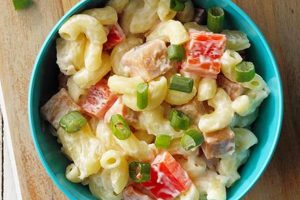
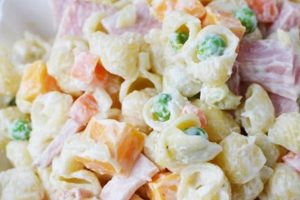
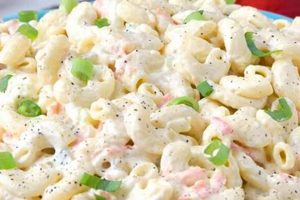
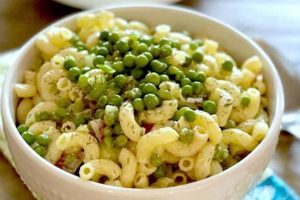
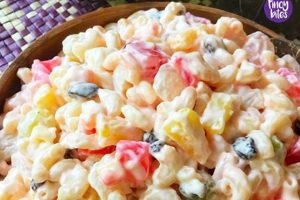
This dish involves combining cooked elbow macaroni with a creamy dressing made primarily from sweetened condensed milk. Other ingredients often include mayonnaise, fruits (such as pineapple, apples, or grapes), vegetables (like carrots or celery), and sometimes nuts or raisins. Variations exist, with some recipes incorporating cream cheese or whipped cream for added richness.
The sweetness from the condensed milk lends a unique flavor profile to this salad, differentiating it from traditional mayonnaise-based versions. This characteristic makes it a popular choice for potlucks, picnics, and casual gatherings, particularly in certain cultures and regions. The relative simplicity of preparation and readily available ingredients further contribute to its appeal. Historically, utilizing condensed milk in desserts and salads gained traction as refrigeration became more widespread, allowing for the preservation and utilization of dairy products in new ways.
Discussions regarding this culinary creation often revolve around ingredient variations, optimal ratios for dressing components, preferred macaroni shapes, and complementary side dishes. Further exploration of these aspects will provide a more complete understanding of the dish and its versatility.
Tips for Macaroni Salad with Sweetened Condensed Milk
Optimizing the preparation process contributes significantly to the final quality and enjoyment of the dish. Careful consideration of the following tips ensures a successful outcome.
Tip 1: Macaroni Selection: Elbow macaroni is traditional, but other small pasta shapes, like shells or ditalini, work well. Avoid long pasta types which are less suitable for this salad style.
Tip 2: Cooking the Pasta: Cook pasta according to package directions until al dente. Overcooked pasta results in a mushy texture. Rinsing the cooked pasta under cold water stops the cooking process and helps maintain firmness.
Tip 3: Dressing Consistency: Sweetened condensed milk forms the base of the dressing. The consistency can be adjusted by incorporating additional mayonnaise, cream cheese, or even a touch of milk or cream for a thinner texture.
Tip 4: Balancing Sweetness: The sweetness of the condensed milk can be balanced with a touch of acidity. A small amount of lemon juice or vinegar can enhance the overall flavor profile.
Tip 5: Fruit and Vegetable Incorporation: Traditional additions include well-drained canned fruits like pineapple tidbits, crushed pineapple, or fruit cocktail. Fresh fruits like grapes, apples, or mandarin oranges offer alternatives. Finely diced celery or carrots add a pleasant crunch.
Tip 6: Ingredient Ratios: Experimentation with ingredient ratios allows for customization to personal preference. Some may prefer a higher fruit-to-pasta ratio or a richer, creamier dressing.
Tip 7: Chilling Time: Allowing the salad to chill for at least an hour, preferably longer, allows the flavors to meld and enhances the overall experience. This chilling period also firms the pasta.
Adherence to these guidelines ensures a well-balanced and flavorful salad. Through thoughtful preparation and attention to detail, a superior culinary experience is attainable.
By understanding these fundamental principles, one can confidently create a dish that satisfies both novice and experienced palates. This exploration sets the stage for further culinary endeavors.
1. Sweetened Condensed Milk
Sweetened condensed milk plays a pivotal role in defining the character of macaroni salad made with this ingredient. Its presence shifts the flavor profile from the traditional savory or tangy versions to a distinctly sweet and creamy experience. The viscosity of condensed milk contributes significantly to the dressing’s texture, binding the other ingredients together while imparting a smooth, rich mouthfeel. This distinguishes it from mayonnaise-based macaroni salads, where the texture is typically lighter and less cohesive. For instance, in Filipino cuisine, where this type of macaroni salad is a staple, the condensed milks sweetness complements the tropical fruits often incorporated, such as pineapple and mango, creating a harmonious blend of flavors.
The concentration of sugar in condensed milk also acts as a preservative, contributing to the salad’s shelf life. This characteristic makes it a suitable choice for potlucks and outdoor gatherings where refrigeration might be limited. Furthermore, the intense sweetness of condensed milk allows for a reduction in the amount of added sugar otherwise required, streamlining the recipe. The interaction between the condensed milk and acidic ingredients, such as vinegar or lemon juice, is crucial. The acidity tempers the sweetness, preventing the final product from being cloying and adding depth to the flavor profile.
Understanding the impact of sweetened condensed milk on the overall composition of this macaroni salad is essential for achieving the desired outcome. Balancing its sweetness with other ingredients, considering its textural contributions, and acknowledging its preservative qualities are key factors to consider. This knowledge allows for informed adjustments to the recipe based on personal preferences and practical considerations. The interplay of these factors ultimately determines the final dishs success and its distinct character within the broader context of macaroni salad variations.
2. Elbow macaroni

Elbow macaroni’s significance within this specific macaroni salad recipe stems from its structural properties and how they interact with the other ingredients. The curved, hollow shape of elbow macaroni readily captures the sweetened condensed milk-based dressing, ensuring each piece is well-coated and contributes to a balanced flavor distribution throughout the salad. This shape also allows for even cooking and prevents clumping, crucial for maintaining a desirable texture. Alternatives like rotini or farfalle, while visually appealing, may not hold the dressing as effectively, leading to an uneven distribution of flavor and potentially a less satisfying experience. In contrast, smaller pasta shapes like ditalini, though capable of holding the dressing, might result in a denser, less texturally diverse salad.
Consider regional variations of this dish. In the Philippines, where this salad is a popular celebratory dish, elbow macaroni is the predominant choice, underscoring its suitability for this application. Its ability to absorb the sweet dressing while maintaining its structural integrity contributes to the dish’s cultural significance. Substituting elbow macaroni with longer pasta shapes like spaghetti or fettuccine would drastically alter the dish’s texture and presentation, diverging from established culinary norms. This reinforces the notion that elbow macaroni’s form and function are intrinsically linked to the recipe’s success.
Elbow macaroni’s contribution to this dish extends beyond mere functionality; it influences the overall sensory experience. Its size and shape offer a comfortable bite, complementing the creamy texture of the dressing and the potential additions of fruits and vegetables. The uniform shape also contributes to a visually appealing presentation, a factor often overlooked in discussions of recipe optimization. Choosing elbow macaroni demonstrates an understanding of the subtle interplay between ingredients, texture, and presentation, elevating this simple dish from a basic combination of components to a cohesive culinary creation. The selection of elbow macaroni, therefore, should not be viewed as arbitrary but as a deliberate choice that significantly impacts the final product’s success.
3. Complementary Ingredients

Complementary ingredients are essential for transforming a simple base of macaroni and sweetened condensed milk dressing into a well-rounded and flavorful salad. These additions introduce textural contrasts, balance the sweetness of the condensed milk, and provide visual appeal. Consider the common inclusion of fruits. Canned pineapple chunks offer a tangy sweetness that offsets the richness of the condensed milk, while simultaneously adding a chewiness that contrasts with the soft pasta. Similarly, grapes contribute a burst of juicy freshness and a pleasant pop, diversifying the textural profile. The judicious use of such ingredients elevates the dish beyond mere sweetness, offering a complex interplay of flavors and textures.
Vegetables also play a crucial role. Finely diced celery or shredded carrots introduce a refreshing crunch, contrasting with the creaminess of the dressing and the softness of the pasta. These ingredients not only add textural complexity but also provide subtle savory notes that balance the overall sweetness. Furthermore, the incorporation of nuts, such as chopped walnuts or cashews, offers a satisfying richness and another layer of textural variation. Raisins, another common addition, provide a chewy sweetness and a concentrated burst of flavor. Consider regional adaptations: In some cultures, shredded coconut is incorporated, introducing a unique tropical sweetness and a slightly chewy texture.
The selection and balance of complementary ingredients directly impact the final product’s success. Over-reliance on overly sweet additions can result in a cloying dish, while insufficient textural contrast can lead to a monotonous eating experience. Understanding the interplay of these ingredientshow their individual characteristics contribute to the overall composition of the saladallows for informed choices that enhance rather than detract from the dish. A well-executed balance of complementary ingredients transforms a simple macaroni salad into a multi-faceted culinary experience, showcasing the potential of this deceptively straightforward dish.
4. Texture

Texture plays a critical role in the overall sensory experience of macaroni salad made with sweetened condensed milk. The interplay of various textural elements contributes significantly to the dish’s appeal. The inherent creaminess of the sweetened condensed milk dressing establishes a foundational texture, providing a smooth, rich mouthfeel that coats the pasta and other ingredients. This creamy base serves as a canvas upon which contrasting textures are layered, creating a more dynamic and engaging culinary experience. The firmness of the al dente cooked macaroni offers a necessary counterpoint to the richness of the dressing, preventing the dish from becoming overly soft or homogenous. This textural contrast is essential for a satisfying bite.
Consider the impact of common additions. The inclusion of ingredients like chopped fruits (pineapple, grapes, apples) introduces bursts of juiciness and subtle textural variations. These elements disrupt the creamy homogeneity, adding pockets of contrasting textures that enhance the overall sensory experience. Similarly, incorporating vegetables, such as finely diced celery or shredded carrots, provides a crisp, refreshing counterpoint to the softer elements. Nuts, if added, introduce a satisfying crunch and a welcome textural complexity. Even the type of pasta chosen influences texture; elbow macaroni, with its hollow shape, holds the dressing effectively while providing a pleasant chewiness. Deviations, such as substituting overcooked pasta, would compromise this textural balance, resulting in a less appealing dish.
Achieving a harmonious balance of textures is crucial for a successful macaroni salad with sweetened condensed milk. A dish dominated solely by creamy elements can feel heavy and monotonous, while an overabundance of crunchy ingredients can detract from the intended creamy profile. A well-executed recipe balances these contrasting textures, ensuring a dynamic and enjoyable eating experience. Understanding the interplay of these textural elements empowers informed ingredient choices and preparation methods, ultimately leading to a more satisfying and well-rounded dish. This attention to texture elevates the dish beyond a simple combination of ingredients, transforming it into a thoughtfully composed culinary creation.
5. Flavor Balance

Flavor balance is paramount in a successful macaroni salad featuring sweetened condensed milk. The inherent sweetness of the condensed milk necessitates careful consideration of other ingredients to prevent an overly saccharine result. A harmonious flavor profile relies on the interplay of contrasting tastes, creating a more complex and enjoyable sensory experience. The following facets illustrate the key components of achieving this balance.
- Acidity
Acidity plays a crucial role in tempering the sweetness of the condensed milk. Ingredients like vinegar or lemon juice introduce a tartness that cuts through the richness, preventing the salad from being cloying. This acidic counterpoint brightens the overall flavor profile, adding depth and complexity. For example, a splash of apple cider vinegar provides a subtle tartness that complements the sweetness without overpowering other flavors. The judicious use of acidity is essential; an excessive amount can create an undesirable sourness, while insufficient acidity can leave the salad unbalanced and overly sweet.
- Salt
Salt acts as a flavor enhancer, accentuating the other ingredients and providing a savory counterpoint to the sweetness. It helps to ground the overall flavor profile, preventing it from becoming one-dimensional. A pinch of salt can heighten the sweetness of the condensed milk while simultaneously highlighting the flavors of the other components, such as fruits and vegetables. The amount of salt should be carefully calibrated; too much can make the salad taste salty, while too little can result in a bland and underwhelming dish.
- Complementary Flavors
The inclusion of ingredients with complementary flavors further enhances the complexity of the flavor profile. Fruits, like pineapple or grapes, introduce a natural sweetness and tanginess that interacts harmoniously with the condensed milk. Vegetables, such as celery or carrots, contribute subtle savory notes and a refreshing crispness. These additions create a more nuanced flavor profile, moving beyond simple sweetness to offer a more layered and engaging experience. For example, the tropical sweetness of pineapple complements the rich sweetness of condensed milk, while the slight tanginess prevents the combination from becoming overly sweet. The careful selection of complementary flavors is essential for achieving a well-balanced and nuanced final product.
- Spice (Optional)
While not traditional, a touch of spice can add an unexpected dimension to the flavor profile. A pinch of black pepper or a dash of cayenne pepper introduces a subtle heat that contrasts with the sweetness and adds complexity. This element, used sparingly, can create a more intriguing and dynamic flavor experience. For example, a hint of cinnamon can complement the sweetness while adding warmth and depth, particularly when paired with apple or raisins. However, caution is advised; excessive spice can easily overpower the delicate balance of flavors.
The successful execution of a macaroni salad with sweetened condensed milk hinges on a delicate balance of these flavor components. The interplay of sweetness, acidity, saltiness, and complementary flavors creates a harmonious and enjoyable culinary experience. Overemphasizing any single element can disrupt this balance, resulting in a dish that is either overly sweet, excessively tart, or simply bland. A thoughtful approach to flavor balance elevates this simple dish, showcasing the potential for complexity and nuance within its seemingly straightforward composition.
6. Chilling time

Chilling time is a crucial element in optimizing the flavor and texture of macaroni salad made with sweetened condensed milk. Allowing the salad to rest in a refrigerated environment for a period, ideally a minimum of two hours, facilitates several key improvements. First, chilling allows the flavors of the various componentsthe sweetened condensed milk, fruits, vegetables, and any other additionsto meld and harmonize. The initially distinct flavors merge, creating a more cohesive and balanced flavor profile. This melding is particularly important in this type of macaroni salad due to the prominent sweetness of the condensed milk; chilling allows the other ingredients to temper and complement this sweetness, preventing an overly saccharine taste.
Furthermore, chilling firms the pasta. The cold temperature causes the starch molecules in the macaroni to contract, resulting in a firmer, more desirable texture. This is especially relevant when using sweetened condensed milk dressings, which tend to soften the pasta over time. The chilling process mitigates this softening effect, ensuring the pasta retains a pleasant chewiness even after being coated in the dressing. A noticeable difference exists between a freshly made salad and one that has been chilled; the chilled version typically exhibits a more desirable textural profile. For instance, a salad consumed immediately after preparation might have a slightly mushy texture, while a chilled salad retains a distinct firmness in the pasta, enhancing the overall eating experience.
In summary, chilling time is not merely a suggested step but an integral component of the macaroni salad with sweetened condensed milk preparation process. It contributes significantly to both flavor development and textural improvement. The melding of flavors and the firming of the pasta during the chilling period elevate this dish from a simple mixture of ingredients to a more refined and enjoyable culinary experience. Understanding the importance of this step allows for a more informed approach to preparation, ensuring the final product achieves its full potential in terms of both taste and texture. Neglecting this crucial step can compromise the overall quality of the dish, underscoring the practical significance of incorporating adequate chilling time into the recipe.
Frequently Asked Questions
This section addresses common inquiries regarding macaroni salad prepared with sweetened condensed milk, aiming to clarify potential uncertainties and provide practical guidance.
Question 1: Can alternative sweeteners replace sweetened condensed milk?
While other sweeteners like honey or maple syrup can be used, they will significantly alter the flavor profile and texture. Sweetened condensed milk provides a specific creamy texture and distinct taste that is difficult to replicate. Substitutions should be made with an awareness of these inherent differences.
Question 2: How long can this type of macaroni salad be stored?
Refrigeration is crucial. Properly stored in an airtight container, the salad should be consumed within 3-5 days. The presence of dairy products and the potential for bacterial growth necessitate careful attention to storage time and temperature.
Question 3: Can this salad be frozen?
Freezing is not recommended. The mayonnaise and other dairy-based ingredients in the dressing can separate and become watery upon thawing, significantly affecting the texture and overall quality of the salad.
Question 4: What types of pasta work best in this recipe?
Elbow macaroni is traditional and ideal, but other small shapes like shells or ditalini function well. Longer pasta types are generally less suitable due to their inability to hold the creamy dressing effectively.
Question 5: How can the sweetness be adjusted?
The sweetness can be balanced by incorporating a small amount of acidity, such as lemon juice or vinegar. This adds depth to the flavor profile and prevents the salad from becoming overly sweet. The specific amount can be adjusted according to personal preference.
Question 6: What are common additions to enhance flavor and texture?
Common additions include fruits (pineapple, grapes, apples), vegetables (celery, carrots), and sometimes nuts or raisins. These ingredients offer contrasting textures and complementary flavors, enhancing the overall sensory experience.
Understanding these common points of inquiry facilitates a more successful preparation process, leading to a more satisfying culinary outcome. Addressing these potential uncertainties enhances ones ability to confidently navigate the nuances of this dish.
The subsequent sections will delve further into specific recipe variations and offer detailed instructions for optimal preparation.
Macaroni Salad with Sweetened Condensed Milk Recipe
This exploration has provided a comprehensive understanding of macaroni salad crafted with sweetened condensed milk. Key aspects, including the role of sweetened condensed milk, appropriate pasta selection, the importance of complementary ingredients, textural considerations, achieving flavor balance, and the crucial role of chilling time, have been thoroughly examined. The interplay of these elements determines the final dish’s success, transforming a simple combination of ingredients into a cohesive and satisfying culinary creation. Understanding the nuances of each component empowers informed decisions regarding ingredient selection, preparation methods, and flavor adjustments, ultimately leading to a superior outcome.
Mastery of this dish lies not solely in following a prescribed recipe but in understanding the underlying principles that govern its creation. This knowledge allows for adaptation and personalization, catering to individual preferences and culinary contexts. Further exploration and experimentation within the presented framework offer opportunities for continued culinary growth and the potential to elevate this seemingly simple dish to new heights of gastronomic enjoyment.