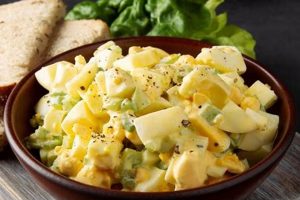
A classic Caesar salad typically includes romaine lettuce, croutons, Parmesan cheese, and a creamy dressing made with ingredients such as garlic, lemon juice, olive oil, Worcestershire sauce, and egg yolks. Variations often incorporate grilled chicken, seafood, or, as in this case, whole eggs or sliced boiled eggs for added protein and richness. A well-executed preparation showcases a balance of savory, tangy, and crunchy elements. An example might feature a bed of crisp romaine topped with creamy dressing, crunchy homemade croutons, shaved Parmesan, and perfectly cooked eggs.
Adding eggs enhances the nutritional value by contributing protein and essential vitamins. It also elevates the dish’s textural complexity. Historically, the Caesar salad’s origin is attributed to Caesar Cardini, a restaurateur in Tijuana, Mexico, in the 1920s. While the original recipe did not contain eggs, their inclusion has become a popular adaptation, adding a satisfying heartiness. The dish remains a lunchtime staple and a popular choice for simple yet elegant dinners.
This discussion will delve into various aspects of preparing this dish, including ingredient selection, dressing preparation techniques, crouton variations, and optimal egg cooking methods for incorporation into the salad.
Tips for an Exceptional Caesar Salad with Egg
Achieving a truly exceptional Caesar salad with egg requires attention to detail and a focus on quality ingredients. The following tips offer guidance for elevating this classic dish.
Tip 1: Fresh, High-Quality Ingredients are Paramount: The foundation of any good salad lies in the freshness of its components. Opt for crisp romaine lettuce, preferably the inner leaves. Source high-quality Parmesan cheese, ideally Parmigiano-Reggiano, and use fresh, free-range eggs.
Tip 2: Mastering the Dressing is Key: The emulsification process is crucial for a creamy, cohesive dressing. Gradually whisk the oil into the egg yolks and lemon juice mixture to ensure a stable emulsion. Freshly minced garlic and high-quality Worcestershire sauce are essential for flavor depth.
Tip 3: Crouton Creativity: Homemade croutons offer superior texture and flavor. Cubes of day-old bread, tossed in olive oil and seasoned generously, can be baked or pan-fried to golden perfection. Experiment with different bread types, such as sourdough or ciabatta, for varied flavor profiles.
Tip 4: Perfect Egg Preparation: Achieving the ideal egg consistency is crucial. Soft-boiled eggs, with a slightly runny yolk, add richness and visual appeal. Alternatively, hard-boiled eggs, sliced or quartered, offer a firmer texture and easy integration into the salad.
Tip 5: Proper Assembly Ensures Optimal Texture: To prevent a soggy salad, assemble the dish just before serving. Toss the romaine lettuce with the dressing, then add the croutons, Parmesan, and egg. This ensures that each component retains its distinct texture and flavor.
Tip 6: Seasoning Considerations: Seasoning throughout the process is important. Season the croutons, the dressing, and the salad itself with salt and freshly ground black pepper to taste. This layering of flavor enhances the overall complexity of the dish.
Tip 7: Garnishing for Visual Appeal: Consider adding a final flourish with extra Parmesan shavings, a sprinkle of paprika, or a few chopped anchovy fillets (if desired). These small additions enhance the visual presentation and add another layer of flavor complexity.
By following these tips, one can elevate a simple Caesar salad with egg into a truly memorable culinary experience. Attention to detail in ingredient selection, preparation, and assembly ensures a harmonious balance of flavors and textures.
These preparation guidelines serve as a foundation for creating a truly delicious and satisfying Caesar salad. The following section will explore variations and adaptations to further personalize the dish.
1. Fresh Romaine Lettuce

Fresh romaine lettuce serves as the foundational element of an egg Caesar salad. Its crisp texture and slightly bitter flavor provide a counterpoint to the richness of the dressing and other ingredients. The structural integrity of romaine’s leaves allows them to hold the dressing without becoming soggy, ensuring a pleasant eating experience. Using wilted or less-than-fresh romaine compromises the salad’s overall quality, resulting in a less appealing and potentially unappetizing dish. For instance, a Caesar salad made with crisp, cold romaine offers a refreshing crunch, while one made with limp lettuce becomes a textural disappointment.
The choice of romaine also impacts the salad’s nutritional value. Fresh romaine is a good source of vitamins A and K, contributing to the dish’s health benefits. Furthermore, its neutral flavor profile allows the other ingredients, such as the dressing, Parmesan cheese, croutons, and eggs, to shine without being overpowered. Consider a comparison: fresh romaine provides a clean canvas for the other flavors, while a stronger-flavored lettuce, like spinach, might clash with the Caesar dressing’s complexity.
Selecting and handling romaine correctly are essential for a successful egg Caesar salad. Look for heads of romaine with vibrant green leaves and no signs of browning or wilting. Store the lettuce properly to maintain its freshness. Washing and thoroughly drying the leaves before assembling the salad prevents excess moisture from diluting the dressing. This careful preparation underscores the critical role of fresh romaine in creating a truly satisfying egg Caesar salad experience. Failure to prioritize romaine’s freshness can undermine even the most meticulously prepared dressing and toppings.
2. Creamy Caesar Dressing
Creamy Caesar dressing is integral to an egg Caesar salad recipe, providing the characteristic richness and flavor that define the dish. The dressing’s quality significantly impacts the overall culinary experience, influencing the salad’s taste, texture, and enjoyment. Understanding the components and preparation of this dressing is essential for crafting a successful egg Caesar salad.
- Emulsification and Texture
The creamy texture of Caesar dressing relies on proper emulsification, a process that combines oil and water-based ingredients into a stable mixture. Egg yolks, often used as an emulsifier, contribute to the dressing’s richness and help bind the other components. A well-emulsified dressing clings evenly to the romaine lettuce, enhancing flavor delivery and contributing to a satisfying mouthfeel. Conversely, a poorly emulsified dressing can separate, resulting in an oily, unappetizing salad.
- Flavor Profile
The flavor profile of Caesar dressing typically includes a balance of savory, tangy, and umami notes. Ingredients like garlic, lemon juice, Worcestershire sauce, and Parmesan cheese contribute distinct layers of flavor. Anchovies are a traditional addition, adding a salty, umami depth. Balancing these flavors is crucial; an overly tangy or salty dressing can overwhelm the other salad components.
- Ingredient Quality
The quality of ingredients directly impacts the dressing’s flavor. Freshly squeezed lemon juice provides a brighter, more vibrant tanginess compared to bottled juice. High-quality Parmesan cheese offers a more complex, nutty flavor. Using fresh, high-quality ingredients elevates the dressing and, consequently, the entire salad.
- Variations and Adaptations
While traditional Caesar dressing recipes rely on egg yolks, variations exist to accommodate dietary restrictions or preferences. Egg-free versions may utilize mayonnaise, avocado, or other emulsifying agents. These adaptations offer alternatives while maintaining the creamy texture characteristic of a Caesar dressing. Vegan options often incorporate plant-based ingredients like silken tofu or cashew cream.
The interplay of these facets contributes to a successful creamy Caesar dressing, a critical element of the egg Caesar salad recipe. The dressing’s emulsification, balanced flavor profile, ingredient quality, and adaptability through variations all play a role in creating a delicious and satisfying culinary experience. A well-executed Caesar dressing elevates the simple combination of romaine, croutons, cheese, and egg into a classic and beloved dish.
3. Crunchy Croutons

Crunchy croutons contribute significantly to the textural complexity of an egg Caesar salad recipe. Their crispness offers a stark contrast to the smooth romaine lettuce, creamy dressing, and soft eggs. This interplay of textures elevates the eating experience beyond a simple combination of ingredients, creating a more dynamic and satisfying sensory perception. Consider a salad lacking croutons: the texture would be predominantly soft and potentially monotonous. The inclusion of croutons introduces a crucial element of contrasting texture, preventing the salad from feeling one-dimensional.
Beyond textural contrast, croutons also contribute to the overall flavor profile of the egg Caesar salad. The bread used for croutons, often seasoned with garlic, herbs, or spices, imparts subtle yet noticeable flavor notes. These flavors complement the savory dressing and other ingredients, creating a more complex and well-rounded taste experience. For example, croutons seasoned with garlic and Parmesan enhance the existing savory notes of the Caesar dressing. The toasting process itself deepens the bread’s flavor, adding a subtle nuttiness that complements the other ingredients.
The quality and preparation of croutons significantly impact the overall success of the egg Caesar salad. Store-bought croutons, while convenient, often lack the desired texture and flavor complexity. Homemade croutons, made from fresh bread and seasoned appropriately, offer superior quality and control over the final product. The size and shape of croutons also play a role. Smaller croutons distribute more evenly throughout the salad, while larger croutons offer more concentrated bursts of texture and flavor. Achieving the ideal balance of texture and flavor through carefully crafted croutons enhances the egg Caesar salad, transforming it from a simple dish into a more refined and enjoyable culinary experience.
4. Properly Cooked Eggs
Properly cooked eggs are essential for a successful egg Caesar salad recipe, contributing not only nutritional value but also textural and flavor complexity. The cooking method employed significantly influences the final dish, impacting the egg’s integration with other ingredients and the overall sensory experience.
- Consistency and Texture
The desired egg consistency depends on personal preference and the overall salad composition. Soft-boiled eggs, with a jammy yolk, offer a rich, creamy element that coats the lettuce and complements the dressing. Hard-boiled eggs, sliced or quartered, provide a firmer texture and a cleaner presentation. Overcooked eggs, however, become dry and rubbery, detracting from the salad’s appeal. Imagine the contrast between a soft-boiled egg’s velvety yolk enriching the dressing and a hard-boiled egg’s neat slices offering textural counterpoint.
- Flavor Integration
The egg’s cooking method influences its flavor integration with the other salad components. A soft-boiled egg’s runny yolk blends with the dressing, creating a richer, more cohesive flavor profile. Hard-boiled eggs offer a distinct egg flavor that contrasts with the other ingredients. The cooking process itself subtly alters the egg’s flavor; a soft-boiled egg retains a delicate flavor, while a hard-boiled egg develops a slightly more pronounced sulfurous note, which can either complement or clash with the other ingredients depending on their intensity.
- Visual Presentation
Visual appeal plays a role in the overall dining experience. Soft-boiled eggs, halved or quartered, add a touch of rustic elegance, with the vibrant yolk adding a pop of color. Sliced or quartered hard-boiled eggs offer a more structured, classic presentation. The visual contrast between the egg and the other ingredients, such as the green romaine and white Parmesan, further enhances the dish’s attractiveness.
- Nutritional Contribution
Eggs enrich the Caesar salad’s nutritional profile, providing a source of protein and essential vitamins. The cooking method, however, minimally impacts the overall nutritional content; both soft-boiled and hard-boiled eggs offer similar benefits. This protein boost complements the vitamins and minerals found in the romaine lettuce, contributing to a more balanced and nutritious meal.
The interplay of these factorsconsistency, flavor integration, visual appeal, and nutritional valuedemonstrates the importance of properly cooked eggs in an egg Caesar salad recipe. The chosen cooking method influences the final dish, affecting both the sensory experience and the nutritional content. A thoughtful approach to egg preparation elevates the Caesar salad, transforming it from a simple combination of ingredients into a well-balanced and satisfying dish.
5. Quality Parmesan Cheese

Quality Parmesan cheese plays a crucial role in the overall success of an egg Caesar salad recipe. It contributes not only a distinct sharp and salty flavor but also a unique texture that complements the other ingredients. Selecting the right Parmesan and understanding its impact on the final dish are essential for achieving the desired culinary experience. Inferior Parmesan substitutes can detract from the salad’s complexity, resulting in a less satisfying outcome. Authentic Parmigiano-Reggiano, with its complex flavor profile and granular texture, offers a superior contribution to the salad compared to pre-grated or less mature cheeses.
- Flavor Profile
Authentic Parmigiano-Reggiano possesses a complex flavor profile characterized by sharpness, saltiness, and nuttiness. These flavors blend with the other salad components, enhancing the dressing’s savoriness and complementing the eggs and croutons. The aging process contributes significantly to the cheese’s complexity. A younger Parmesan might offer a milder, less developed flavor, while a well-aged Parmigiano-Reggiano delivers a more robust and nuanced taste experience.
- Texture and Consistency
The granular texture of quality Parmesan cheese adds a pleasant textural element to the salad, contrasting with the creamy dressing and crisp lettuce. Grating the cheese freshly releases its aromas and allows for even distribution throughout the salad. Pre-grated Parmesan often contains cellulose as an anti-caking agent, which can result in a less desirable, slightly gritty texture. Freshly grated Parmigiano-Reggiano, on the other hand, melts slightly on the palate, enhancing the sensory experience.
- Nutritional Value
Parmesan cheese contributes to the nutritional value of the salad, offering a source of calcium and protein. While these nutrients are present in most Parmesan varieties, the quality of the cheese can impact the overall nutritional profile. Authentic Parmigiano-Reggiano, due to its traditional production methods and longer aging process, may offer a slightly higher concentration of certain nutrients compared to mass-produced alternatives.
- Visual Appeal
The visual presentation of Parmesan cheese enhances the salad’s overall aesthetic. Freshly grated Parmigiano-Reggiano, with its light, straw-like color and irregular shavings, adds an element of rustic elegance. The visual contrast between the cheese and the green romaine lettuce further enhances the dish’s attractiveness. Pre-grated Parmesan, with its uniform appearance, often lacks the same visual appeal.
These facets of quality Parmesan cheeseflavor profile, texture, nutritional value, and visual appealdemonstrate its crucial role in an egg Caesar salad recipe. Selecting authentic Parmigiano-Reggiano and grating it fresh elevates the salad from a simple combination of ingredients to a more refined and enjoyable culinary experience. The nuances of flavor and texture contributed by high-quality Parmesan complement the other components, creating a harmonious and satisfying dish. Attempting to substitute with lesser quality cheeses diminishes the overall experience, impacting the taste, texture, and visual appeal of the final product.
Frequently Asked Questions
This section addresses common inquiries regarding the preparation and enjoyment of egg Caesar salad.
Question 1: What is the best way to prevent a soggy Caesar salad?
Sogginess often results from premature dressing application. Assemble the salad just prior to serving, tossing the romaine with dressing immediately before adding croutons, cheese, and egg. This preserves the textural integrity of each component.
Question 2: Can anchovies be omitted from the Caesar dressing?
While anchovies contribute a characteristic umami depth, they can be omitted. Worcestershire sauce, often containing anchovy extract, provides a milder alternative. Other umami-rich ingredients, such as miso paste or a splash of fish sauce, offer additional options.
Question 3: What type of egg is best for a Caesar salad?
Both soft-boiled and hard-boiled eggs complement Caesar salad. Soft-boiled eggs, with a runny yolk, add richness, while hard-boiled eggs provide a firmer texture. The choice depends on individual preference.
Question 4: How can croutons be made crispier?
Ensuring crouton crispness involves proper bread selection and preparation. Day-old bread, cut into uniform cubes and tossed with olive oil and seasonings, should be baked or pan-fried until golden brown. Avoid overcrowding the pan during cooking to promote even browning and crispness.
Question 5: Can Caesar dressing be made ahead of time?
While possible, preparing the dressing immediately before serving ensures optimal flavor and emulsification stability. If making ahead, store the dressing separately and whisk vigorously before using to re-emulsify.
Question 6: What are some suitable alternatives to romaine lettuce?
While romaine is traditional, other lettuces, such as Little Gem or butter lettuce, offer similar texture and flavor profiles. For a bolder flavor, consider baby kale or spinach, but be mindful of potential flavor clashes with the dressing.
Understanding these key aspects of egg Caesar salad preparation contributes to a more successful and enjoyable culinary outcome. Careful attention to ingredient selection, proper techniques, and awareness of potential pitfalls elevates this classic dish.
The subsequent section will explore variations and adaptations of the classic egg Caesar salad recipe.
Egg Caesar Salad Recipe
Exploration of the egg Caesar salad recipe reveals the importance of individual components and their harmonious interplay. Fresh romaine provides a crisp foundation. Creamy Caesar dressing, often incorporating egg yolks, contributes richness and a distinct flavor profile. Crunchy croutons offer textural contrast, while properly cooked eggswhether soft-boiled for richness or hard-boiled for a cleaner presentationadd protein and visual appeal. Quality Parmesan cheese, preferably Parmigiano-Reggiano, provides sharp, salty notes and a pleasant granularity. Proper assembly and ingredient quality are paramount for preventing sogginess and ensuring a balanced, flavorful experience. Understanding these elements allows for adaptations and variations while preserving the essence of this classic dish.
The enduring popularity of the egg Caesar salad underscores its adaptability and enduring appeal. Continued experimentation with ingredients, techniques, and presentations ensures its relevance in the evolving culinary landscape. Careful consideration of each component’s contribution to the final product elevates this seemingly simple salad to a timeless culinary creation.