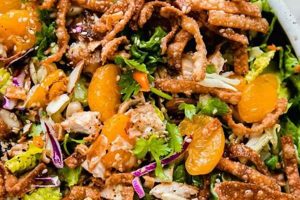
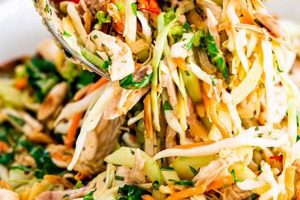
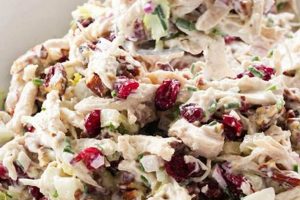
A dish rooted in Chinese-American cuisine, this salad typically features shredded chicken, crisp vegetables like lettuce, cabbage, and carrots, often with toasted almonds or sesame seeds, and a tangy, savory dressing. Variations can include ingredients such as mandarin oranges, crispy noodles, or water chestnuts, reflecting regional and individual preferences. It differs significantly from salads traditionally consumed in China, showcasing a fusion of culinary influences.
This salad’s popularity stems from its balanced flavor profile, combining fresh, crunchy elements with a rich dressing. Its adaptability makes it suitable for various occasions, from casual meals to festive gatherings. As a relatively recent culinary creation, it reflects the evolution of food culture and the blending of traditions within diverse communities. It offers a satisfying and flavorful meal option, often perceived as a lighter, healthier alternative to heavier dishes.
Further exploration will delve into the nuances of regional variations, the evolution of the recipe over time, and the specific techniques required to achieve optimal flavor and texture. Additionally, the nutritional aspects and potential health benefits will be examined.
Tips for Crafting an Exceptional Chicken Salad
Achieving a truly satisfying salad experience hinges on careful attention to detail. These tips offer guidance for creating a flavorful and texturally balanced dish.
Tip 1: Selecting the Chicken: Opting for poached or roasted chicken, rather than pre-cooked or fried, allows for greater control over flavor and moisture content. Shredding the chicken by hand, as opposed to using a food processor, yields a more desirable texture.
Tip 2: Balancing Textures: A combination of crisp and tender elements is key. Consider incorporating finely shredded napa cabbage alongside thinly sliced romaine lettuce. Toasted nuts or seeds provide welcome crunch.
Tip 3: Enhancing the Dressing: Freshly squeezed citrus juice and high-quality oils form the foundation of a vibrant dressing. Experimenting with ginger, garlic, and a touch of sesame oil can add depth and complexity.
Tip 4: Toasting Nuts and Seeds: To maximize flavor, toast nuts and seeds lightly in a dry pan or oven before adding them to the salad. This enhances their inherent nuttiness and adds a delightful crunch.
Tip 5: Proper Ingredient Preparation: Washing and thoroughly drying all vegetables is essential for preventing a soggy salad. Cutting vegetables into uniform sizes ensures even distribution of flavor and a pleasant mouthfeel.
Tip 6: Mindful Ingredient Incorporation: Adding dressing immediately before serving prevents the salad from becoming wilted. Gently tossing the ingredients ensures they are evenly coated without bruising delicate greens.
Tip 7: Garnishing Thoughtfully: A sprinkle of fresh herbs, such as cilantro or chives, elevates the visual appeal and adds a burst of fresh flavor. A scattering of toasted sesame seeds provides an additional layer of texture and aroma.
By focusing on these key elements, one can create a salad that is not only delicious but also visually appealing and texturally satisfying. Attention to detail throughout the preparation process ensures a truly exceptional culinary experience.
By understanding the nuances of flavor and texture, one can create a dish that truly stands out. The following section will explore variations and adaptations of this classic recipe.
1. Fresh, High-Quality Ingredients

The emphasis on fresh, high-quality ingredients is paramount in achieving an authentic representation of this salad. The delicate balance of flavors and textures, characteristic of the dish, relies heavily on the inherent qualities of each component. For instance, using freshly roasted and hand-shredded chicken contributes a depth of flavor and satisfying texture absent in pre-cooked or processed options. Similarly, crisp, vibrant vegetables, like recently harvested lettuce and carrots, offer a refreshing crunch and contribute nuanced flavors that enhance the overall composition. Wilt, or even slightly aging produce can negatively impact both the flavor profile and textural integrity of the final product.
Employing premium ingredients extends beyond the primary components. Selecting high-quality oils, vinegars, and spices is crucial for creating a balanced and flavorful dressing. Freshly squeezed citrus juices, rather than bottled concentrates, provide a brightness and acidity that elevates the overall taste experience. Even seemingly minor elements, such as toasted sesame seeds or slivered almonds, benefit from careful sourcing, as their freshness directly impacts their flavor contribution. Fresh ginger and garlic, minced or grated just before use, offer a pungent aroma and taste that complements the other ingredients. Substituting these with pre-minced or powdered versions diminishes the overall complexity of the dish.
Prioritizing ingredient quality ensures the intended flavor profile and textural nuances are fully realized. This commitment to freshness distinguishes an authentic preparation from less nuanced versions. While substitutions or shortcuts might offer convenience, they often compromise the delicate balance that defines this culinary creation. Ultimately, the pursuit of fresh, high-quality ingredients reflects a respect for the dish’s origins and a dedication to delivering a truly exceptional culinary experience.
2. Balanced Sweet and Savory Flavors
The hallmark of an authentic Chinese chicken salad lies in its nuanced flavor profile, a delicate balance between sweet and savory notes. This dynamic interplay is not merely a pleasant sensory experience; it’s a defining characteristic that distinguishes the dish from other salads. Achieving this balance requires careful consideration of ingredients and their proportions, reflecting a deep understanding of flavor interactions.
- The Role of the Dressing:
The dressing serves as the primary vehicle for delivering this balanced flavor profile. Typically, it incorporates ingredients such as soy sauce, rice vinegar, sesame oil, and sugar or honey. The soy sauce provides the savory foundation, while the vinegar contributes a tangy brightness. Sesame oil adds a nutty richness, and the sweetener rounds out the flavor profile with a touch of sweetness. The precise ratio of these ingredients is crucial, as an imbalance can result in a dressing that is overly sweet or excessively savory.
- Counterpointing Ingredients:
The inherent flavors of the other salad components play a vital role in achieving overall balance. The mild, slightly bitter flavor of Napa cabbage, for example, complements the sweetness of mandarin oranges. The savory chicken, whether poached or roasted, provides a protein-rich backdrop against which the other flavors can shine. The subtle nuttiness of toasted almonds or sesame seeds further enhances the complexity of the dish, adding another layer of flavor that complements both the sweet and savory elements.
- Regional Variations and Flavor Nuances:
Different regions and individual preferences can lead to variations in the specific balance of sweet and savory flavors. Some recipes might emphasize sweetness with the addition of dried cranberries or candied ginger, while others might lean towards a more savory profile by incorporating ingredients like water chestnuts or bean sprouts. These regional nuances reflect the adaptability of the dish and its ability to cater to diverse palates.
- Cultural Context and Flavor Expectations:
The concept of balanced sweet and savory flavors holds significant cultural weight in Chinese cuisine. This balance is often seen as a representation of harmony and completeness, reflecting a broader philosophical approach to food. In the context of Chinese chicken salad, this balance aligns with the dish’s Chinese-American heritage, serving as a bridge between two distinct culinary traditions.
The interplay of these elementsthe carefully crafted dressing, the complementary ingredients, regional variations, and cultural contextculminates in a flavor profile that is both complex and harmonious. This balanced sweetness and savoriness is not merely a characteristic of the dish; it is fundamental to its identity as an authentic Chinese chicken salad, reflecting a sophisticated understanding of flavor and a nuanced approach to culinary creation.
3. Crispy, crunchy textures
Textural contrast is fundamental to an authentic Chinese chicken salad experience, distinguishing it from other salads. The interplay of crispy and crunchy elements elevates the dish beyond mere sustenance, transforming it into a multi-sensory culinary experience. Understanding the role of these textures provides insight into the dish’s construction and its appeal.
- Role of Raw Vegetables:
Raw vegetables, such as shredded lettuce, Napa cabbage, and julienned carrots, provide the foundational layer of crispness. These elements offer a refreshing contrast to the softer textures of the chicken and other potential additions like mandarin orange segments. Their structural integrity maintains the salad’s appealing form and contributes to a satisfying mouthfeel. The selection of vegetables influences the specific type of crispness, ranging from the delicate crunch of iceberg lettuce to the more substantial bite of romaine or Napa cabbage.
- Contribution of Toasted Nuts and Seeds:
Toasted nuts and seeds, like almonds, cashews, or sesame seeds, introduce a contrasting crunchy element. The toasting process not only enhances their inherent flavors but also intensifies their textural contribution. These elements create pockets of concentrated crunch, interspersed throughout the salad, adding another dimension to the eating experience. The choice of nuts or seeds further diversifies the textural profile, from the delicate crunch of sesame seeds to the more robust crunch of almonds or cashews.
- Influence of Crispy Noodles:
Some variations incorporate crispy noodles, such as wonton strips or chow mein noodles, as a topping. These elements contribute a pronounced crunch and a unique textural contrast. Their delicate, airy structure shatters pleasingly with each bite, adding a light and playful element to the salad. However, the noodles must be added immediately before serving to prevent them from absorbing moisture and losing their crispness.
- Balance and Harmony of Textures:
The interplay of these various crispy and crunchy elements creates a dynamic textural experience. The goal is not simply to include crunchy ingredients, but to balance them thoughtfully. Too much crunch can become overwhelming, while too little can result in a salad that feels texturally monotonous. A well-executed Chinese chicken salad balances the various crispy and crunchy components to create a harmonious textural tapestry.
The strategic incorporation of crispy and crunchy components is not merely an afterthought; it’s an integral aspect of the salad’s composition. This interplay of textures elevates the dish from a simple combination of ingredients to a multi-dimensional culinary experience, highlighting the nuanced understanding of texture that defines authentic Chinese chicken salad.
4. Aromatic Sesame Influence

Sesame, in its various forms, plays a pivotal role in establishing the distinct aromatic profile of authentic Chinese chicken salad. This influence manifests primarily through the use of sesame oil and toasted sesame seeds, each contributing unique characteristics to the overall sensory experience. Sesame oil, derived from pressed sesame seeds, possesses a rich, nutty aroma and flavor that intertwines with the other ingredients, adding depth and complexity. Its presence is often subtle yet crucial, lending a distinctive character that distinguishes the salad from other similar preparations. Toasted sesame seeds, on the other hand, offer a more pronounced aromatic presence. The toasting process amplifies their inherent nuttiness, creating a fragrant counterpoint to the other components. The combination of sesame oil’s subtle depth and toasted sesame seeds’ assertive aroma creates a layered olfactory experience, fundamental to the dish’s authenticity.
The significance of sesame’s aromatic contribution extends beyond mere flavor enhancement. It reflects a deeper connection to the culinary traditions that inform the dish. Sesame oil is a cornerstone of many East Asian cuisines, its distinct aroma often associated with umami-rich dishes and stir-fries. Its inclusion in Chinese chicken salad serves as a subtle nod to these culinary roots, adding a layer of cultural significance. Furthermore, the use of toasted sesame seeds aligns with the broader emphasis on texture and visual appeal within Chinese culinary practices. The seeds’ visual presence, combined with their amplified aroma, adds a finishing touch that elevates the dish both aesthetically and aromatically. Examples of this influence can be observed in numerous variations of the salad, where different types of sesame oil (e.g., toasted vs. untoasted) or sesame seed preparations (e.g., black vs. white) are employed to create unique aromatic nuances.
Understanding sesame’s aromatic influence is crucial for appreciating the complexity of authentic Chinese chicken salad. This ingredient transcends its functional role as a flavor enhancer, serving as a cultural marker and an aromatic cornerstone. Recognizing its significance allows for a more nuanced appreciation of the dish’s origins and the carefully orchestrated balance of flavors and aromas that define its authentic character. It underscores the importance of ingredient selection and preparation in achieving a truly authentic and flavorful result, distinguishing a thoughtfully crafted salad from a mere assembly of ingredients. This understanding further enables informed adaptations and creative explorations, allowing individuals to personalize the recipe while remaining true to its fundamental principles.
5. Chinese-American Heritage
Authentic Chinese chicken salad embodies a unique culinary narrative, inextricably linked to Chinese-American heritage. It represents not a direct import of traditional Chinese cuisine, but rather an innovative adaptation born from the Chinese-American experience. This distinction is crucial. Traditional Chinese cuisine rarely features raw vegetable salads as centerpiece dishes. Instead, this salad emerged within Chinese-American communities, reflecting a fusion of culinary influences. Early Chinese immigrants in America, often faced with limited access to familiar ingredients and a desire to cater to American palates, creatively adapted their culinary traditions. This resourcefulness gave rise to dishes like Chinese chicken salad, which incorporate elements of both Chinese and American cuisines. One can observe the fusion in the use of ingredients like iceberg lettuce and mayonnaise-based dressings, not typically found in traditional Chinese dishes. The salad’s evolution reflects the broader Chinese-American experience, a story of adaptation, innovation, and cultural blending.
The importance of Chinese-American heritage as a component of this dish cannot be overstated. It provides context, differentiating it from salads consumed in China. Recognizing this heritage illuminates the dish’s historical evolution and its significance within the Chinese-American community. For example, the prevalence of this salad in Chinese-American restaurants across the United States speaks to its widespread adoption and cultural resonance. It functions not just as a menu item but as a symbol of culinary ingenuity and cultural adaptation. Furthermore, the dish often holds a place of prominence at family gatherings and community celebrations, further solidifying its role as a cultural touchstone. Understanding this heritage allows for a deeper appreciation of the dish, moving beyond its immediate gustatory appeal to recognize its cultural significance.
Recognizing the connection between Chinese-American heritage and authentic Chinese chicken salad provides a deeper understanding of the dish’s evolution and cultural relevance. It challenges the notion of culinary authenticity as a static concept, highlighting the dynamic nature of food traditions within immigrant communities. This understanding moves beyond simply consuming a dish to appreciating its cultural narrative, recognizing the ingenuity and adaptability of Chinese-Americans in shaping a unique culinary identity. This knowledge enriches the dining experience, transforming a seemingly simple salad into a tangible representation of cultural heritage and culinary innovation.
Frequently Asked Questions
This section addresses common inquiries regarding authentic Chinese chicken salad, clarifying potential misconceptions and providing further insight into its preparation and cultural context.
Question 1: What distinguishes “authentic” Chinese chicken salad from other variations?
Authenticity refers to the dish’s origins within Chinese-American communities, reflecting a fusion of culinary influences. It typically features shredded chicken, crisp vegetables, a savory dressing often incorporating sesame oil, and toasted nuts or seeds. It differs significantly from salads traditionally consumed in China.
Question 2: Is Chinese chicken salad a healthy meal option?
While generally considered a lighter alternative to heavier dishes, its nutritional value varies depending on specific ingredients and dressing. Opting for lean protein, fresh vegetables, and a balanced dressing can enhance its health benefits. Moderation is key, particularly regarding sodium and added sugars.
Question 3: Can the dressing be prepared in advance?
Preparing the dressing in advance allows the flavors to meld. However, it’s best to add the dressing to the salad immediately before serving to prevent the vegetables from wilting and maintain their crisp texture. Store the dressing separately in an airtight container in the refrigerator.
Question 4: What are suitable alternatives to chicken in this salad?
While chicken is traditional, alternative protein sources like tofu, shrimp, or char siu pork can be incorporated. Consider the flavor and texture profile of the chosen alternative to ensure compatibility with the other ingredients and the dressing.
Question 5: Are there vegetarian/vegan adaptations of this recipe?
Adapting the recipe for vegetarian or vegan diets involves replacing the chicken with plant-based protein sources like tofu or tempeh. Ensuring the dressing does not contain fish sauce or other animal-derived ingredients is crucial. Maple syrup or agave nectar can substitute for honey.
Question 6: Where can one find reliable recipes for authentic Chinese chicken salad?
Cookbooks specializing in Chinese-American cuisine and reputable online culinary resources offer reliable recipes. Prioritize recipes emphasizing fresh ingredients and balanced flavor profiles characteristic of an authentic preparation. Consider exploring recipes shared within Chinese-American communities for a deeper understanding of its cultural context.
Understanding the nuances of authentic Chinese chicken salad, from its cultural heritage to its flavor profile and textural complexity, allows for a more informed and appreciative approach to its preparation and consumption. These insights empower individuals to recreate the dish authentically and adapt it creatively while respecting its culinary roots.
Further exploration might include an examination of regional variations, the evolution of the recipe over time, and the specific techniques used by renowned chefs to achieve exceptional results.
Authentic Chinese Chicken Salad Recipe
Exploration of this dish reveals a nuanced interplay of flavors, textures, and cultural influences. Fresh, high-quality ingredients form the foundation, with an emphasis on the balanced interplay of sweet and savory notes within the dressing. The incorporation of crispy and crunchy elements, such as fresh vegetables and toasted nuts or seeds, elevates the sensory experience. The subtle yet crucial aromatic influence of sesame oil and toasted sesame seeds further distinguishes this salad. Crucially, its Chinese-American heritage underscores its unique identity, differentiating it from traditional Chinese cuisine and highlighting its significance within the Chinese-American community.
Authentic Chinese chicken salad stands as a testament to culinary adaptation and innovation. It embodies the dynamic nature of food traditions within immigrant communities, showcasing the fusion of cultural influences. Continued exploration of regional variations and individual interpretations promises a deeper understanding of its ongoing evolution and its enduring appeal. This dish invites culinary enthusiasts to appreciate not only its deliciousness but also its rich cultural narrative, encouraging a more thoughtful and nuanced approach to both its preparation and enjoyment.