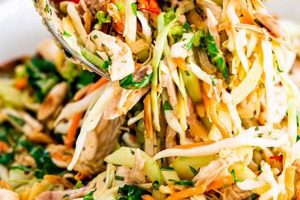
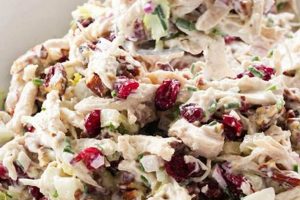
This dish typically combines cooked chicken, pecans, and grapes, often with celery, red onion, and a mayonnaise-based dressing. Variations may include different greens, cheeses, or fruits like apples or dried cranberries. A well-balanced combination of protein, healthy fats, and sweetness, it can be served as a light lunch, a side dish, or part of a buffet.
A refreshing and flavorful option, this type of salad provides a good source of protein from the chicken and healthy fats from the pecans. The grapes add natural sweetness and antioxidants, while the other ingredients contribute vitamins, minerals, and texture. Its adaptability makes it suitable for various occasions, from casual picnics to more formal gatherings. Historically, similar combinations of protein, fruit, and nuts have been popular, demonstrating a long-standing appreciation for this flavor profile.
The following sections will explore variations on this classic combination, offering tips on ingredient selection, preparation techniques, and dressing options to help create a perfectly balanced and delicious salad.
Tips for a Perfect Chicken Pecan Grape Salad
Optimizing ingredient choices and preparation methods enhances the flavor and texture of this classic dish. Attention to detail ensures a satisfying culinary experience.
Tip 1: Roasting the pecans intensifies their flavor. Spread pecans on a baking sheet and toast them in a preheated oven at 350F (175C) for 5-7 minutes, or until fragrant. This enhances their nutty notes and adds a pleasant crunch.
Tip 2: Poaching or grilling the chicken offers healthier alternatives to frying. These methods impart distinct flavors and prevent the salad from becoming overly heavy.
Tip 3: Selecting crisp, seedless grapes enhances the salad’s freshness. Red or green grapes can be used, depending on preference.
Tip 4: Adding a contrasting element like crumbled blue cheese or gorgonzola provides complexity. The sharp, tangy flavor of these cheeses complements the sweetness of the grapes and the richness of the pecans.
Tip 5: Utilizing fresh herbs, such as chopped chives or parsley, elevates the flavor profile. These additions provide a bright, herbaceous counterpoint to the other ingredients.
Tip 6: Making the dressing from scratch allows for customization. A simple vinaigrette with olive oil, lemon juice, and Dijon mustard provides a lighter alternative to mayonnaise-based dressings.
Tip 7: Chilling the salad before serving allows the flavors to meld. This enhances the overall dining experience.
By following these suggestions, one can create a salad that is both flavorful and visually appealing. Attention to these details ensures a delightful culinary outcome.
These tips offer a pathway to creating a truly exceptional dish. The following section will provide a complete recipe, incorporating these recommendations.
1. Ingredients

The quality and combination of ingredients directly impact the overall flavor profile and nutritional value of a chicken pecan grape salad. Careful selection and proper handling are essential for creating a successful dish.
- Protein: Chicken
Chicken provides the primary protein source. Options include pre-cooked rotisserie chicken for convenience, or fresh chicken breasts that can be poached, grilled, or roasted for enhanced flavor. The chosen cooking method influences the final taste and texture of the salad.
- Produce: Grapes, Celery, and Red Onion
Fresh produce contributes sweetness, texture, and visual appeal. Crisp, seedless grapes offer a burst of flavor, while celery adds crunch, and thinly sliced red onion provides a subtle sharpness. The variety of grape red, green, or a combination influences the overall sweetness and aesthetic.
- Nuts and Seeds: Pecans
Pecans offer healthy fats, protein, and a satisfying crunch. Roasting the pecans before adding them to the salad intensifies their flavor. Other nuts or seeds, such as walnuts or sunflower seeds, can be substituted or added for variation.
- Binding Agent and Flavor Enhancer: Dressing
The dressing binds the ingredients together and contributes significantly to the overall flavor profile. Mayonnaise-based dressings offer a creamy richness, while vinaigrettes provide a lighter, tangier option. Homemade dressings allow for customization of flavor, using ingredients like Dijon mustard, honey, or fresh herbs.
The interplay of these ingredient categories creates a balanced and flavorful salad. Consideration of individual ingredient quality, preparation methods, and the overall balance of flavors and textures are essential for achieving a delicious and satisfying result. Experimenting with different ingredient combinations allows for personalization and exploration of diverse flavor profiles within this classic dish.
2. Preparation
Preparation significantly impacts the final quality and enjoyment of a chicken pecan grape salad. Careful execution of each step ensures optimal flavor, texture, and presentation. This section outlines the essential preparatory stages.
- Cooking the Chicken
Properly cooked chicken is crucial for both flavor and food safety. Methods include poaching, grilling, or roasting. Poaching results in tender, moist chicken, while grilling imparts a smoky char. Roasting creates a flavorful, browned exterior. Each method contributes a unique nuance to the overall salad profile. The chicken should be cooked thoroughly and then cooled completely before being added to the salad to prevent bacterial growth and ensure the other ingredients maintain their optimal temperature.
- Toasting the Pecans
Toasting pecans enhances their natural nutty flavor and creates a desirable crunch. This is achieved by spreading them in a single layer on a baking sheet and baking in a preheated oven until fragrant. Over-toasting can result in a bitter flavor, so careful monitoring is essential. This step elevates the pecans from a simple ingredient to a key flavor component.
- Preparing the Produce
Proper handling of the produce maximizes freshness and visual appeal. Grapes should be washed and, if necessary, halved or quartered. Celery should be washed and thinly sliced for optimal texture. Red onion should be thinly sliced and optionally soaked in cold water to mellow its sharpness. These steps ensure a pleasant textural contrast and prevent the onion from overpowering the other flavors.
- Making the Dressing
Whether using a store-bought or homemade dressing, proper emulsification and seasoning are key for a balanced flavor. A homemade dressing allows for customization and control over ingredients, ensuring a perfect complement to the other salad components. Thorough whisking or blending creates a smooth, cohesive dressing that evenly coats the other ingredients.
These preparatory steps contribute significantly to the overall success of the chicken pecan grape salad. Attention to detail in each stage ensures a harmonious blend of flavors and textures, creating a truly satisfying culinary experience. The careful execution of these techniques transforms individual ingredients into a cohesive and delicious final product.
3. Dressing
The dressing is a crucial component of a chicken pecan grape salad recipe, significantly influencing the overall flavor profile and textural experience. It serves not only to bind the ingredients together but also to enhance and complement their individual characteristics. Selecting or creating the appropriate dressing elevates the salad from a simple combination of components to a cohesive and flavorful dish.
- Classic Mayonnaise-Based Dressings
Traditional mayonnaise-based dressings offer a creamy, rich texture that coats the ingredients and provides a familiar, comforting flavor. These dressings often incorporate additional ingredients such as sour cream, buttermilk, or yogurt for tang and added complexity. Variations can include herbs, spices, or sweeteners to further customize the flavor profile. In the context of chicken pecan grape salad, a classic mayonnaise dressing provides a smooth counterpoint to the crunch of the pecans and celery, unifying the diverse elements.
- Light and Tangy Vinaigrettes
Vinaigrettes offer a lighter alternative to mayonnaise-based dressings, providing a bright, acidic counterpoint to the richness of the other ingredients. Typically composed of oil and vinegar, vinaigrettes can be customized with a wide range of additions, including herbs, spices, mustards, and sweeteners. A lemon vinaigrette, for instance, enhances the sweetness of the grapes while adding a refreshing zest. This lighter dressing option allows the individual flavors of the chicken, pecans, and grapes to shine through.
- Creamy Yogurt-Based Dressings
Yogurt-based dressings provide a balance between the richness of mayonnaise and the lightness of a vinaigrette. Greek yogurt, in particular, offers a tangy flavor and a creamy texture that complements the other salad components. These dressings can be customized with herbs, spices, or a touch of honey or maple syrup for added sweetness. This option provides a healthier alternative while maintaining a desirable creaminess.
- Flavor-Infused Dressings
Infusing dressings with additional flavors adds complexity and depth. Roasted garlic, herbs, or spices can be incorporated into the dressing to create a more nuanced flavor profile. For example, a honey-mustard dressing with a touch of roasted garlic complements the sweetness of the grapes and the savory notes of the chicken and pecans. This approach elevates the dressing from a simple binding agent to a key flavor component in its own right.
The choice of dressing significantly impacts the final flavor and texture of a chicken pecan grape salad. Careful consideration of the desired balance of richness, acidity, and sweetness ensures a harmonious blend of flavors and a satisfying culinary experience. The dressing is the crucial element that unites the individual ingredients, transforming them into a cohesive and delicious whole.
4. Presentation

Presentation plays a vital role in the overall enjoyment of a chicken pecan grape salad. While flavor remains paramount, visual appeal enhances the dining experience, stimulating appetite and creating a sense of occasion. Thoughtful presentation elevates this simple salad from an everyday meal to a dish suitable for gatherings and special occasions.
- Plating
The choice of serving dish and the arrangement of ingredients significantly impact visual appeal. A shallow platter or bowl allows for an attractive spread of the salad, showcasing the vibrant colors and textures. Alternatively, individual portions in small bowls or glasses offer a more formal presentation. Consider the context of the meal when selecting the appropriate plating style. A family-style meal benefits from a large, communal platter, while a more formal setting calls for individual portions.
- Garnishing
Garnishes provide the finishing touch, adding visual interest and enhancing flavor. Fresh herbs, such as sprigs of parsley or chives, offer a pop of color and a complementary herbaceous note. Toasted pecan halves or crumbled blue cheese provide textural and flavor accents. A sprinkle of paprika or a drizzle of balsamic glaze adds a touch of elegance. Garnishes should be chosen thoughtfully, complementing the existing flavors and colors of the salad.
- Color Contrast
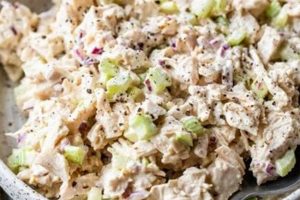
The natural colors of the ingredients offer an opportunity to create visual interest. The vibrant green of grapes, the crisp white of celery, and the rich browns of pecans and chicken create a naturally appealing palette. Consider the color of the dressing as well; a creamy white dressing contrasts beautifully with the other ingredients, while a vibrant vinaigrette adds a splash of color. Intentional use of color contrast enhances the visual appeal and makes the salad more appetizing.
- Texture Variation
The interplay of textures adds another dimension to the presentation. The crunch of pecans and celery, the juicy pop of grapes, and the tender texture of chicken create a satisfying sensory experience. Consider how these textures interact visually as well; the smooth surface of halved grapes contrasts with the rough texture of chopped pecans. Highlighting these textural variations contributes to a more engaging and enjoyable dining experience.
By considering these elements of presentation, one can elevate a simple chicken pecan grape salad to a visually stunning and more enjoyable culinary experience. Thoughtful plating, garnishing, and attention to color and texture transform this dish from a casual meal to a centerpiece worthy of any occasion. These visual elements, combined with the delicious flavors of the salad, create a truly memorable dining experience.
5. Variations

The inherent adaptability of chicken pecan grape salad allows for numerous variations, expanding its appeal and offering diverse flavor profiles. This flexibility stems from the core combination of protein, fruit, and nuts, which provides a solid foundation for culinary exploration. Variations introduce complexity and cater to individual preferences, transforming a classic dish into a versatile culinary canvas. This concept allows for both subtle adjustments and significant departures from the traditional recipe, ensuring its continued relevance and enjoyment.
Substituting ingredients offers a straightforward approach to variation. Swapping pecans for walnuts or almonds alters the flavor profile while maintaining the textural element of crunchy nuts. Replacing grapes with dried cranberries or chopped apples introduces different levels of sweetness and tartness. Utilizing different cheeses, such as crumbled blue cheese or feta, adds a salty, tangy dimension. These substitutions can be driven by dietary restrictions, seasonal ingredient availability, or simply a desire for a new flavor experience. For example, using a vegan mayonnaise allows the salad to become entirely plant-based, catering to vegan diets. Similarly, substituting seasonal fruits, like berries in the summer or pears in the fall, connects the salad to the time of year.
Beyond simple substitutions, variations can also involve incorporating new elements. Adding roasted vegetables, such as sweet potatoes or butternut squash, introduces depth and complexity. Incorporating grains, like quinoa or wild rice, enhances the nutritional value and provides a textural contrast. These additions expand the salad’s versatility, allowing it to function as a complete meal rather than just a side dish or appetizer. Understanding the interplay of flavors and textures empowers culinary creativity, allowing individuals to personalize the salad to their preferences. Ultimately, variations on the chicken pecan grape salad recipe demonstrate the enduring appeal of this classic combination, offering a dynamic and evolving culinary experience.
Frequently Asked Questions
This section addresses common inquiries regarding chicken pecan grape salad, providing clear and concise information to ensure optimal preparation and enjoyment.
Question 1: Can this salad be prepared in advance?
Yes, but it’s best to prepare components separately and combine them shortly before serving. Storing the dressing separately prevents the salad from becoming soggy. The chicken and pecans can be prepared a day ahead, while the grapes and other produce are best added just before serving to maintain their freshness and crispness.
Question 2: What type of grapes is recommended?
Seedless grapes, either red or green, are generally preferred for their convenience and sweetness. Red grapes offer a slightly sweeter flavor, while green grapes provide a touch of tartness. A combination of both can enhance visual appeal and offer a balanced flavor profile.
Question 3: How can the pecans be toasted without burning them?
Toasting pecans requires careful monitoring. Spread them in a single layer on a baking sheet and bake in a preheated oven at 350F (175C) for 5-7 minutes, checking frequently. They should be fragrant and lightly browned, not dark or burnt. Remove them from the oven promptly and allow them to cool completely before adding to the salad.
Question 4: What are suitable alternatives to mayonnaise-based dressings?
Vinaigrettes offer lighter, tangier alternatives. A simple lemon vinaigrette or a balsamic vinaigrette complements the salad’s flavors without adding excessive richness. Yogurt-based dressings, particularly those made with Greek yogurt, provide a balance between creaminess and lightness, while also offering a tangy flavor.
Question 5: How long can the salad be stored in the refrigerator?
If stored properly in an airtight container, chicken pecan grape salad can typically be refrigerated for up to 3 days. However, the freshness and quality of the ingredients will gradually decline over time. It’s best to consume the salad within 2 days for optimal flavor and texture.
Question 6: Can other fruits or vegetables be added?
Certainly. Apples, dried cranberries, or mandarin oranges offer complementary flavors and textures. Adding vegetables like chopped bell peppers or shredded carrots enhances nutritional value and adds color. Consider the balance of flavors and textures when incorporating additional ingredients.
Understanding these key aspects contributes to a successful and enjoyable experience preparing and consuming chicken pecan grape salad. Careful consideration of these details ensures optimal flavor, texture, and presentation.
This FAQ section aims to provide comprehensive answers to common queries. Further exploration of specific variations and dietary adaptations can enhance customization and enjoyment of this versatile salad.
Chicken Pecan Grape Salad Recipe
This exploration of chicken pecan grape salad recipes has highlighted the versatility and adaptability of this classic dish. From ingredient selection and preparation techniques to dressing options and presentation styles, the potential for customization is significant. Emphasis has been placed on understanding the balance of flavors, textures, and colors, enabling culinary creativity and personalization. The discussion encompassed key elements such as roasting pecans for enhanced flavor, selecting appropriate grapes for sweetness and texture, and choosing dressings that complement the other components. Furthermore, variations on the classic recipe were explored, demonstrating the potential for incorporating diverse ingredients and adapting to dietary preferences.
Chicken pecan grape salad offers a refreshing and nutritious meal option suitable for various occasions. Its adaptability allows for continuous exploration and refinement, ensuring its enduring appeal across culinary landscapes. The potential for customization empowers individuals to create unique flavor profiles and personalized dining experiences, solidifying the dish’s position as a versatile and enduring culinary staple.