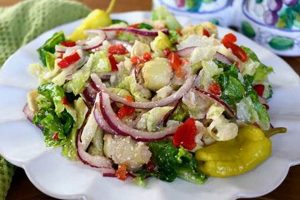
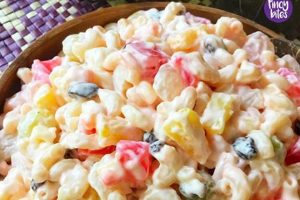
A chilled pasta salad featuring cooked spaghetti, typically combined with vegetables, cheese, and a flavorful dressing, constitutes a simple, adaptable dish. A classic example incorporates chopped tomatoes, cucumbers, bell peppers, black olives, mozzarella cheese, and a vinaigrette dressing.
Such dishes offer convenience and versatility, suitable for potlucks, picnics, and quick weeknight meals. Their adaptability allows for customization based on dietary preferences and available ingredients. Historically, pasta salads gained popularity in the mid-20th century as refrigeration became more commonplace, allowing for the safe consumption of cold pasta dishes. This ease of preparation and serving contributed to their widespread adoption in casual dining settings.
The following sections will explore variations on this theme, including ingredient selection, dressing options, and tips for optimal preparation and storage.
Tips for Creating a Delicious Spaghetti Salad
Achieving a successful spaghetti salad involves attention to detail in ingredient selection, preparation methods, and flavor balancing. These tips offer guidance for optimal results.
Tip 1: Cook the pasta al dente. Slightly firm pasta holds its shape better in a salad and prevents a mushy texture. Rinse the cooked spaghetti under cold water to stop the cooking process and cool it down quickly.
Tip 2: Choose fresh, high-quality ingredients. The success of a cold pasta salad relies heavily on the freshness of its components. Opt for ripe vegetables and flavorful cheeses.
Tip 3: Tailor the vegetables to preference and availability. While classic combinations exist, variations using seasonal produce or preferred vegetables are encouraged. Consider blanching certain vegetables like broccoli or green beans for optimal texture.
Tip 4: Select a complementary dressing. A vinaigrette, creamy Italian dressing, or even a pesto-based sauce can enhance the flavors of the salad. Consider the other ingredients when selecting a dressing to ensure a balanced flavor profile.
Tip 5: Allow the salad to chill before serving. Chilling allows the flavors to meld and enhances the refreshing nature of the dish. Refrigerate for at least 30 minutes before serving.
Tip 6: Add protein for a heartier meal. Cubed ham, cooked chicken or shrimp, or chickpeas can transform a side dish into a main course.
Tip 7: Don’t overdress the salad. Start with a smaller amount of dressing and add more as needed to prevent a soggy salad. It’s easier to add more dressing than to remove it.
By following these guidelines, one can consistently create a satisfying and flavorful spaghetti salad. Proper preparation and attention to detail elevate this simple dish from ordinary to exceptional.
These insights provide a strong foundation for crafting a successful spaghetti salad experience. The following section will offer concluding thoughts and further inspiration.
1. Simple Ingredients
The ease of a spaghetti salad recipe often correlates directly with the simplicity of its ingredients. Minimizing ingredient complexity contributes to quicker preparation, greater accessibility, and adaptability to individual preferences. This section explores key facets of simple ingredients in the context of spaghetti salad.
- Pre-cooked Pasta
Utilizing pre-cooked or quick-cooking spaghetti significantly reduces preparation time. Dried spaghetti readily available in most grocery stores offers convenience. This eliminates the need for boiling water and monitoring cooking times, streamlining the overall process. Pre-cooked options, while less common, offer the ultimate convenience for time-constrained cooks.
- Canned or Frozen Vegetables
Canned or frozen vegetables offer convenience and extended shelf life. Options such as peas, corn, carrots, and olives require no chopping or pre-cooking, further simplifying the process. Frozen vegetables maintain their nutritional value and can be quickly thawed and added to the salad. Canned vegetables, while requiring draining, offer a similar level of convenience.
- Bottled Dressings
Commercially available dressings eliminate the need for measuring and mixing individual dressing components. A wide variety of flavors, from classic Italian to ranch or vinaigrette, cater to diverse preferences. This simplifies the recipe and allows for quick customization based on taste.
- Common Pantry Staples
Simple ingredients often include readily available pantry staples. Items such as mayonnaise, vinegar, oil, salt, pepper, and dried herbs require no special trips to the grocery store. This accessibility contributes to the ease and affordability of the recipe, making it a practical choice for everyday meals.
By focusing on these simple ingredient categories, an easy spaghetti salad remains accessible to cooks of all skill levels. The emphasis on convenience and readily available components allows for a quick, flavorful, and adaptable dish suitable for a variety of occasions. This approach ensures that a satisfying meal can be created with minimal effort and readily accessible components.
2. Quick Preparation

The attribute of “quick preparation” plays a crucial role in defining an “easy spaghetti salad recipe.” Time efficiency is a primary consideration for many individuals, and a recipe that minimizes preparation time increases its appeal. This section explores facets contributing to the speed and simplicity of creating a spaghetti salad.
- Minimal Cooking Time
Spaghetti, a key ingredient, cooks relatively quickly. Even using dried pasta, the boiling process typically takes under 10 minutes. This short cooking time contributes significantly to the overall speed of recipe completion. Furthermore, using pre-cooked spaghetti eliminates this step entirely, maximizing time efficiency.
- Pre-chopped Ingredients
Many common spaghetti salad additions require minimal processing. Ingredients such as cherry tomatoes, olives, or pre-shredded cheese can be added directly, eliminating the need for chopping or slicing. This reduces active preparation time and contributes to the recipe’s ease.
- No-Cook Components
Many spaghetti salads incorporate ingredients that require no cooking at all. Fresh vegetables like cucumbers, bell peppers, and red onion add flavor and texture without the need for heat application. This further streamlines the preparation process and contributes to the overall speed of the dish.
- Simple Dressing Preparation
Dressings for spaghetti salad can be as simple as combining olive oil, vinegar, and seasonings. This avoids complex emulsion processes or lengthy cooking times for sauces. Pre-made dressings offer the ultimate convenience, requiring only opening and pouring.
The convergence of these elementsminimal cooking, pre-chopped ingredients, no-cook components, and straightforward dressing preparationcontributes significantly to the “easy” designation of a spaghetti salad recipe. The ability to assemble a flavorful and satisfying dish within a short timeframe enhances its appeal for individuals seeking convenient and efficient meal solutions.
3. Versatile Flavors
Flavor versatility significantly contributes to the enduring popularity of easy spaghetti salad recipes. Adaptability to diverse palates and ingredient availability ensures broad appeal and repeated enjoyment. This adaptability stems from the inherent simplicity of the dish, allowing for a wide range of flavor combinations and modifications.
- Adaptable Base Ingredients
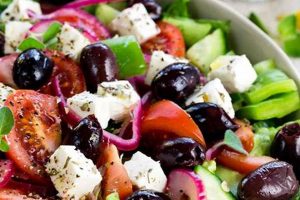
The neutral flavor profile of pasta provides a blank canvas for diverse flavor profiles. This allows the other ingredients and the dressing to take center stage. Whether incorporating Mediterranean flavors with olives, feta, and oregano, or a Southwestern twist with corn, black beans, and cilantro-lime dressing, the pasta readily absorbs and complements the chosen flavors.
- Interchangeable Vegetables
A wide variety of vegetables seamlessly integrates into spaghetti salad. Seasonal produce, readily available options, or personal preferences dictate vegetable choices without compromising the dish’s integrity. This allows for customization based on dietary restrictions, budget constraints, or simply a desire for specific flavors. From crisp cucumbers and bell peppers to roasted vegetables like zucchini or eggplant, the options are extensive.
- Diverse Dressing Options
The choice of dressing significantly influences the overall flavor profile of spaghetti salad. From light and tangy vinaigrettes to creamy and rich dressings, the possibilities are vast. This allows for tailoring the salad to complement the chosen vegetables and other add-ins, creating a cohesive and balanced flavor experience. A simple lemon-herb vinaigrette, a creamy pesto dressing, or a classic Italian dressing all offer distinct flavor profiles.
- Protein Incorporation
The addition of protein transforms a side dish into a complete meal. Grilled chicken, shrimp, cubed ham, or plant-based proteins like chickpeas or tofu seamlessly integrate, enhancing both the nutritional value and flavor complexity. The chosen protein can further influence the direction of the overall flavor profile, allowing for even greater customization.
The versatility inherent in easy spaghetti salad recipes contributes significantly to their appeal. The ability to adapt the flavor profile through ingredient selection and dressing choices ensures a consistently satisfying and customizable culinary experience. This adaptability makes the dish suitable for a wide range of occasions and individual preferences, solidifying its place as a versatile and convenient meal option.
4. Customizable Options

Customization plays a pivotal role in the appeal of easy spaghetti salad recipes. The ability to tailor the dish to individual preferences, dietary needs, and available ingredients enhances its versatility and ensures a satisfying culinary experience. This adaptability contributes significantly to the recipe’s broad appeal and frequent inclusion in diverse meal plans.
- Dietary Adaptations
Customization allows for seamless integration of dietary restrictions. Gluten-free pasta readily substitutes for traditional spaghetti, accommodating gluten sensitivities. Vegetarian or vegan adaptations easily omit meat and cheese, incorporating plant-based proteins like chickpeas or tofu. Ingredient substitutions based on allergies or intolerances further demonstrate the adaptability of this dish.
- Ingredient Availability
Customization allows flexibility based on available ingredients. Seasonal vegetables, pantry staples, or readily accessible items can be incorporated without compromising the dish’s essence. This adaptability reduces the need for specific grocery purchases and minimizes food waste by utilizing existing ingredients.
- Flavor Profile Variations
Customization extends to flavor profiles. A preference for spicy flavors might incorporate jalapeos or a sriracha-infused dressing. Those seeking Mediterranean influences might include feta cheese, olives, and a lemon-herb vinaigrette. This flexibility allows for endless variations, ensuring the dish remains interesting and adaptable to different tastes.
- Presentation and Serving Styles
Customization extends beyond ingredients and flavors to encompass presentation and serving styles. Individual portions in jars offer convenient portability. A large bowl presentation suits family-style meals or potlucks. Garnishes like fresh herbs or a sprinkle of Parmesan cheese further personalize the final presentation.
The inherent customizability of easy spaghetti salad recipes directly contributes to their widespread popularity. This adaptability ensures the dish remains a relevant and appealing option for diverse individuals and occasions. By offering a framework that encourages personalization, the easy spaghetti salad becomes more than just a recipe; it becomes a customizable culinary platform for individual expression.
5. Make-Ahead Convenience

Make-ahead convenience represents a crucial element within the concept of an “easy spaghetti salad recipe.” The ability to prepare the dish in advance significantly enhances its practicality, particularly for busy individuals or occasions involving large gatherings. This convenience stems from the salad’s inherent resilience to refrigeration and its ability to retain flavor and texture over time. Cause and effect intertwine; the cold nature of the salad and the robust structure of the pasta allow for advance preparation, resulting in reduced stress and increased flexibility on the day of serving. This characteristic elevates the “easy” aspect of the recipe beyond mere simplicity of preparation, extending it to encompass ease of scheduling and serving.
Consider a potluck scenario. Preparing a spaghetti salad the day before frees up valuable time on the day of the event, allowing focus to shift towards other tasks or simply enjoying the gathering itself. Similarly, for busy weeknights, a pre-made spaghetti salad eliminates the need for extensive cooking after a long workday, providing a quick, readily available, and satisfying meal. These practical applications underscore the significance of make-ahead convenience as a core component of what constitutes an “easy” spaghetti salad recipe. The ability to prepare the salad in advance significantly reduces time constraints and enhances overall convenience, contributing directly to the recipe’s appeal.
In summary, the make-ahead convenience afforded by spaghetti salad recipes significantly enhances their practicality and ease of use. This attribute allows for efficient time management, reduces stress associated with meal preparation, and enhances the overall appeal of the dish for various occasions. While challenges such as potential pasta drying or flavor absorption by the dressing can arise, these can be mitigated through proper storage techniques and mindful ingredient selection. Ultimately, the capacity to prepare this dish ahead of time firmly establishes its position as a convenient and versatile culinary solution.
6. Budget-Friendly

Affordability often ranks high among criteria for recipe selection. An “easy spaghetti salad recipe” aligns well with budget-conscious meal planning due to its reliance on cost-effective ingredients and adaptable nature. This inherent affordability contributes significantly to the recipe’s appeal, particularly for individuals or families seeking economical meal solutions without compromising flavor or satisfaction.
- Cost-Effective Core Ingredients
Pasta, a foundation of this dish, represents a highly economical carbohydrate source. Dried pasta, widely available and shelf-stable, offers significant value. Combined with inexpensive pantry staples like oil, vinegar, and common seasonings, the base of the salad remains budget-friendly, allowing for allocation of resources towards other components.
- Flexibility with Produce Choices
Seasonal vegetables offer significant cost savings compared to out-of-season options. An easy spaghetti salad recipe accommodates this flexibility, allowing utilization of readily available and affordable produce. Frozen or canned vegetables provide further budget-friendly alternatives, particularly for items not in season. This adaptability ensures affordability regardless of market fluctuations or regional availability.
- Stretching Ingredients with Fillers
Budget-conscious preparation often involves “stretching” core ingredients to maximize yield. Spaghetti salad recipes accommodate this approach seamlessly. Adding less expensive vegetables like chopped celery or carrots increases volume without significantly impacting overall cost. This allows for serving a larger group or enjoying leftovers without straining the budget.
- Reduced Reliance on Expensive Proteins
While protein enhances spaghetti salad, the recipe does not necessitate high-cost meat or seafood. Economical protein sources such as canned tuna, beans, or lentils integrate easily, adding nutritional value without excessive expenditure. Alternatively, omitting protein entirely retains the dish’s appeal and further reduces cost, emphasizing the vegetable and pasta components.
The convergence of these factorscost-effective core ingredients, flexible produce choices, ingredient stretching, and reduced reliance on expensive proteinsestablishes the “easy spaghetti salad recipe” as a budget-friendly meal solution. This affordability, combined with the ease of preparation and customizable nature, solidifies its position as a practical and economical choice for individuals and families seeking both value and flavor. The adaptability inherent in the recipe allows for creative substitutions and additions, ensuring a satisfying meal regardless of budget constraints.
Frequently Asked Questions
This section addresses common inquiries regarding easy spaghetti salad recipes, providing concise and informative responses to facilitate optimal preparation and enjoyment.
Question 1: What type of spaghetti is best suited for this dish?
While any variety of spaghetti works, thinner strands tend to absorb dressings more readily. Slightly thicker spaghetti or other pasta shapes like rotini or farfalle offer enhanced texture and hold their shape well.
Question 2: How can one prevent the salad from becoming soggy?
Sogginess can be avoided by ensuring the pasta is cooked al dente and thoroughly drained. Adding the dressing shortly before serving also helps maintain the desired texture. High-water-content vegetables should be patted dry before incorporation.
Question 3: How long can spaghetti salad be stored in the refrigerator?
Properly stored in an airtight container, spaghetti salad typically lasts for three to five days in the refrigerator. However, salads containing mayonnaise-based dressings should be consumed within two days.
Question 4: Can spaghetti salad be frozen?
Freezing is generally not recommended, as the texture of the pasta and vegetables can be negatively affected upon thawing. The dressing may also separate, resulting in an undesirable consistency.
Question 5: What are some suitable substitutions for common ingredients?
Ingredient flexibility is a hallmark of this dish. Gluten-free pasta accommodates dietary restrictions. Various vegetables can be substituted based on preference or availability. Different cheeses or protein sources offer further customization options.
Question 6: How can one elevate the flavor profile of a basic spaghetti salad recipe?
Fresh herbs, spices, and flavorful add-ins like olives, sun-dried tomatoes, or roasted garlic enhance the complexity of the dish. Experimenting with different dressings also significantly impacts the overall flavor profile.
Understanding these common inquiries and their corresponding solutions contributes to successful spaghetti salad preparation and a more enjoyable culinary experience. Addressing these points allows for greater control over the final product, enhancing both flavor and texture.
This concludes the frequently asked questions section. The following section will offer concluding thoughts and recipe variations.
Conclusion
Exploration of easy spaghetti salad recipes reveals consistent themes of simplicity, adaptability, and affordability. Minimal preparation time, combined with readily available ingredients, positions these dishes as convenient meal solutions. Adaptability to diverse dietary needs and flavor preferences further enhances their appeal. From quick weeknight meals to potluck contributions, the versatility of spaghetti salads ensures relevance across numerous culinary scenarios. The inherent affordability of the dish, facilitated by cost-effective ingredients and adaptable portioning, underscores its practicality for budget-conscious meal planning.
Culinary exploration often involves balancing simplicity with flavor complexity. Easy spaghetti salad recipes represent a successful embodiment of this balance, offering a foundation for creative expression within a framework of accessibility. Further exploration of variations and personalized adaptations promises continued culinary enjoyment and reinforces the enduring appeal of this adaptable dish.