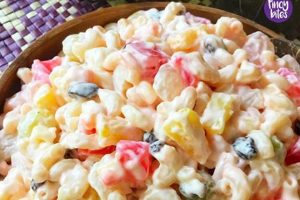
A Hawaiian macaroni salad, distinguished by its creamy, tangy, and slightly sweet profile, typically incorporates key ingredients such as cooked elbow macaroni, mayonnaise, apple cider vinegar, and carrots. Regional variations often include potatoes, hard-boiled eggs, or celery. The term “ono,” meaning delicious in Hawaiian, emphasizes the flavorful nature of this dish.
This side dish holds a significant place in Hawaiian cuisine, often served at luaus, potlucks, and family gatherings. Its popularity stems from its simple preparation, affordability, and satisfying flavors that complement a wide range of dishes, from kalua pig to grilled fish. The fusion of local ingredients with mainland staples reflects the islands’ unique culinary heritage. Furthermore, its adaptable nature allows for personalized variations, making it a versatile and beloved staple.
The following sections will explore various aspects of preparing an authentic Hawaiian macaroni salad, including ingredient selection, step-by-step instructions, and tips for achieving the perfect balance of flavors and textures.
Tips for a Delicious Hawaiian Macaroni Salad
Achieving the perfect Hawaiian macaroni salad involves attention to detail and a few key techniques. These tips will help ensure a creamy, flavorful, and authentic result.
Tip 1: Cook the pasta al dente. Slightly firm pasta holds its shape better in the salad and prevents a mushy texture. Rinse the cooked macaroni under cold water to stop the cooking process and cool it down quickly.
Tip 2: Use high-quality mayonnaise. The mayonnaise serves as the base of the dressing, so its flavor is crucial. Opt for a brand known for its rich, creamy texture and balanced flavor profile.
Tip 3: Balance sweetness and tang. Apple cider vinegar provides the essential tang, while sugar adds a touch of sweetness. Adjust the quantities of each to achieve the desired balance based on personal preference.
Tip 4: Incorporate finely diced vegetables. Uniformly small pieces of carrots, celery, and onions ensure even distribution of flavor and texture throughout the salad.
Tip 5: Chill thoroughly before serving. Chilling allows the flavors to meld and the salad to firm up, enhancing the overall experience. Ideally, chill for at least two hours before serving.
Tip 6: Consider regional variations. Experiment with additions such as hard-boiled eggs, potatoes, or relish to create unique flavor profiles. Research traditional recipes for inspiration.
Tip 7: Taste and adjust seasonings. Before serving, taste the salad and adjust the salt, pepper, sugar, or vinegar as needed to achieve the perfect balance of flavors.
By following these tips, one can create a Hawaiian macaroni salad that is both authentic and delicious, showcasing the vibrant flavors of the islands.
The following section will offer a complete recipe incorporating these tips, allowing readers to create their own version of this classic dish.
1. Best Macaroni Type

Macaroni selection significantly influences the final quality of Hawaiian macaroni salad. The pasta’s shape and texture affect dressing absorption and overall mouthfeel, contributing to the dish’s characteristic “ono” quality.
- Shape and Size
Elbow macaroni, the traditional choice, provides optimal surface area for capturing the creamy dressing. Its curved shape also contributes to a pleasant texture. Other small pasta shapes like shells or rotini can be substituted, but may alter the classic experience. Larger shapes, such as penne or rigatoni, are generally less suitable.
- Texture and Cook Time
Cooking the pasta al dente is crucial. Overcooked macaroni becomes mushy and absorbs less dressing, resulting in a less flavorful salad. Conversely, undercooked pasta offers an unpleasant, firm bite. Testing the pasta during cooking ensures the ideal texture firm to the bite, but not hard.
- Gluten Content
Standard durum wheat elbow macaroni works well. Gluten-free options are available, but their texture may differ slightly. Experimentation may be required to achieve a comparable result with gluten-free pasta, as these varieties often have a different density and absorb liquids differently.
- Fresh vs. Dried Pasta
Dried pasta is the standard for Hawaiian macaroni salad. Fresh pasta, while delicious in other applications, typically has a softer texture and higher moisture content, making it less suitable for this dish. It may become overly soft and lose its shape when mixed with the dressing and other ingredients.
Careful consideration of these factors ensures the macaroni complements the other ingredients, contributing to a well-balanced and flavorful Hawaiian macaroni salad. Selecting the right macaroni provides the foundation for a truly “ono” experience.
2. Mayonnaise Quality

Mayonnaise serves as the foundation of Hawaiian macaroni salad, binding the ingredients and contributing significantly to the overall flavor profile. The quality of mayonnaise directly impacts the final dish’s creaminess, texture, and taste, making it a crucial element in achieving an “ono” result.
- Brand and Composition
Different mayonnaise brands vary in their ingredients, oil types, and emulsifiers. Some brands use soybean oil, while others utilize canola or a blend of oils. These variations influence the mayonnaise’s flavor, texture, and stability. Higher-quality mayonnaises often contain fewer additives and preservatives, leading to a cleaner flavor that enhances the other ingredients.
- Consistency and Texture
Mayonnaise consistency ranges from thin and runny to thick and creamy. A thicker mayonnaise clings better to the pasta and other ingredients, creating a richer, more cohesive salad. A thinner mayonnaise may result in a watery or less flavorful dish. The texture also plays a role; a smooth, emulsified mayonnaise contributes to a pleasant mouthfeel.
- Flavor Profile
Mayonnaise flavor profiles differ based on ingredients and production methods. Some mayonnaises have a tangier flavor due to the type of vinegar used, while others offer a richer, eggy flavor. Selecting a mayonnaise with a balanced flavor profile complements the other ingredients without overpowering them. Consider the overall flavor profile desired for the salad when choosing a mayonnaise.
- Freshness and Storage
Mayonnaise quality degrades over time, especially once opened. Using fresh mayonnaise ensures optimal flavor and texture. Proper storage, in a cool and dry environment, prevents spoilage and maintains quality. Expired or improperly stored mayonnaise can introduce off-flavors and negatively impact the salad’s overall taste.
The selection of high-quality mayonnaise demonstrably elevates Hawaiian macaroni salad. Investing in a mayonnaise with a desirable flavor, texture, and freshness enhances the overall culinary experience, ensuring a truly “ono” mac salad.
3. Tangy Vinegar Choice

Vinegar provides essential acidity, balancing the richness of mayonnaise and sweetness of other ingredients in Hawaiian macaroni salad. This acidic component brightens the overall flavor profile, preventing the salad from tasting overly heavy or sweet. The specific type of vinegar significantly impacts the final “ono” quality.
Apple cider vinegar is the most common choice, offering a balanced sweetness and tang. Its mild acidity complements the other ingredients without overpowering them. White vinegar, while more acidic, can be used but may require careful adjustment to avoid excessive sharpness. Rice vinegar, with its subtle sweetness and lower acidity, presents a milder alternative, potentially requiring additional sugar to balance the flavor profile. Experimentation with different vinegars allows for nuanced flavor adjustments tailored to individual preferences. For instance, using a combination of apple cider vinegar and rice vinegar can create a complex, layered flavor profile.
The quantity of vinegar also plays a critical role. Too little vinegar results in a bland salad lacking the characteristic tang, while too much creates an overly sharp, acidic taste. Balancing the vinegar with the other ingredients, particularly the mayonnaise and sugar, is essential. Achieving this balance requires careful consideration of the other ingredients’ flavors and adjusting the vinegar accordingly. The interaction between vinegar and other components highlights the interconnectedness of flavors in Hawaiian macaroni salad and the importance of thoughtful ingredient selection in creating an “ono” dish.
4. Vegetable Composition

Vegetable composition plays a crucial role in the overall flavor and textural profile of Hawaiian macaroni salad. The careful selection and preparation of vegetables contribute significantly to the “ono” experience, enhancing both the taste and aesthetic appeal of the dish.
Traditional Hawaiian macaroni salad typically incorporates finely diced carrots and celery. Carrots offer a subtle sweetness and a pleasant crunch, while celery provides a refreshing, slightly bitter counterpoint. This combination creates a balanced flavor profile and adds textural complexity. Onions, often finely diced yellow or white onions, are another common addition, contributing a pungent sharpness that cuts through the richness of the mayonnaise. The proportions of these vegetables can be adjusted to suit individual preferences, but maintaining a balance ensures that no single flavor dominates.
Beyond the traditional ingredients, variations often include other vegetables to add depth and complexity. Finely diced bell peppers, for example, introduce a subtle sweetness and a vibrant color. Water chestnuts offer a crisp, refreshing texture. Experimentation with different vegetable combinations allows for personalized variations while maintaining the essence of Hawaiian macaroni salad. However, it’s important to consider the overall balance of flavors and textures when incorporating additional vegetables. For example, adding too many strong-flavored vegetables, like raw red onion, can overpower the delicate balance of the other ingredients.
The size and consistency of the vegetable pieces also contribute to the final product. Uniformly small dice ensures even distribution of flavor and texture throughout the salad. Larger pieces may disrupt the balance and create an uneven eating experience. The vegetables should be crisp-tender, not mushy or overcooked. This requires careful attention during preparation, as overcooked vegetables can detract from the salad’s overall appeal.
Proper vegetable selection and preparation are essential for creating a truly “ono” Hawaiian macaroni salad. The interplay of flavors and textures contributes significantly to the dish’s unique character and appeal. Understanding the role of each vegetable and achieving the right balance of ingredients elevates the dish from simple to exceptional.
5. Seasoning Balance

Seasoning balance is paramount in achieving the desired “ono” character in Hawaiian macaroni salad. It’s a delicate interplay of salt, sweetness, acidity, and sometimes heat, creating a harmonious flavor profile that complements the other ingredients without any single element dominating.
- Salt
Salt enhances the flavors of the other ingredients and provides a foundational savory element. Insufficient salt results in a bland salad, while excessive salt overpowers the delicate flavors of the vegetables and mayonnaise. The amount of salt needed depends on the saltiness of the other ingredients, such as the mayonnaise and any added relish. Careful tasting and adjustment are crucial.
- Sweetness
Sugar balances the acidity of the vinegar and contributes to the characteristic slightly sweet flavor profile. Granulated sugar is the most common sweetener, but alternatives like honey or agave nectar can be used. The level of sweetness should complement the other flavors, not overwhelm them. Over-sweetening can mask the subtle flavors of the vegetables and create an unbalanced profile.
- Acidity
Vinegar provides the essential acidity that balances the richness of the mayonnaise and the sweetness of the sugar. The type and amount of vinegar used influence the overall tanginess of the salad. Apple cider vinegar offers a balanced sweetness and acidity, while white vinegar provides a sharper tang. Adjusting the vinegar level ensures the desired balance and prevents the salad from tasting too sweet or too sour.
- Heat (Optional)
While not traditional, a touch of heat can add complexity and depth to the flavor profile. A small amount of black pepper or a pinch of cayenne pepper can provide a subtle warmth that enhances the other flavors. However, excessive heat can easily overpower the delicate balance of the salad. If incorporating heat, it should be used judiciously, complementing the other seasonings rather than dominating them.
Achieving seasoning balance in Hawaiian macaroni salad requires careful consideration of each element and how they interact. It’s a dynamic process of tasting and adjusting, ensuring that the final product offers a harmonious blend of flavors that exemplify the meaning of “ono.” The ultimate goal is a flavorful, well-rounded salad where no single seasoning overwhelms the others, creating a truly satisfying culinary experience.
6. Optimal Chilling Time

Optimal chilling time significantly influences the final quality of Hawaiian macaroni salad. This period allows the flavors of the various componentsmacaroni, mayonnaise, vegetables, and seasoningsto meld and harmonize, resulting in a more cohesive and flavorful dish. Chilling also firms the pasta and stabilizes the dressing, contributing to the desired texture. Insufficient chilling results in a salad with disparate flavors and a less appealing texture. For example, a freshly made salad may taste predominantly of mayonnaise, with the other flavors less pronounced. The pasta may also be softer and less able to hold the dressing effectively.
The optimal chilling time for Hawaiian macaroni salad is generally considered to be at least two hours. This duration allows ample time for flavor development and textural improvement. Extending the chilling time, up to four hours or even overnight, can further enhance these qualities, particularly the melding of flavors. However, excessively long chilling periods, especially beyond 24 hours, can lead to textural changes in the vegetables, potentially making them less crisp. Practical considerations, such as the timing of an event or meal, often influence the feasible chilling duration. When time constraints exist, even a shorter chilling period of one hour offers some improvement over serving the salad immediately.
The impact of chilling on Hawaiian macaroni salad underscores the importance of time and temperature in culinary processes. It demonstrates how seemingly simple steps, like refrigeration, contribute significantly to the final sensory experience. The development of a complex, balanced flavor profile and desirable texture relies on this crucial step, distinguishing a truly “ono” macaroni salad from a merely adequate one. Therefore, incorporating sufficient chilling time into the preparation process is essential for achieving optimal results and maximizing the enjoyment of this classic dish.
Frequently Asked Questions
This section addresses common inquiries regarding Hawaiian macaroni salad preparation, offering clarity on key aspects that contribute to its distinct character.
Question 1: What type of mayonnaise is recommended for authentic Hawaiian macaroni salad?
Best Foods mayonnaise is the preferred choice due to its flavor profile and consistency, although other full-fat, creamy mayonnaises may be substituted. Low-fat or non-fat versions are generally not recommended as they can compromise the salad’s texture and flavor.
Question 2: Can the traditional apple cider vinegar be replaced with another type of vinegar?
While apple cider vinegar is traditional, white vinegar or rice vinegar may be used. However, their stronger acidity or milder flavor may require adjustments to the sugar quantity to maintain balance. Experimentation is encouraged to achieve the desired flavor profile.
Question 3: How long should the macaroni be cooked?
Macaroni should be cooked al dente, slightly firm to the bite. Overcooked macaroni results in a mushy texture, while undercooked macaroni detracts from the overall enjoyment. Following package directions while checking for doneness is advised.
Question 4: What is the ideal chilling time for Hawaiian macaroni salad?
A minimum of two hours of refrigeration is recommended to allow flavors to meld. Longer chilling, up to four hours or overnight, enhances flavor development, but excessive chilling may affect vegetable crispness.
Question 5: Can other vegetables be added to Hawaiian macaroni salad?
While carrots and celery are traditional, additions such as finely diced bell peppers or water chestnuts can enhance flavor and texture. Consider the impact on the overall balance when incorporating additional ingredients. Maintaining a balance is essential.
Question 6: How can one prevent the salad from becoming watery?
Using high-quality, thick mayonnaise, ensuring the macaroni is cooked al dente and well-drained, and chilling the salad adequately helps maintain the desired consistency. Avoid over-dressing the salad, as excess liquid can contribute to a watery texture.
Addressing these common inquiries provides a foundation for successful Hawaiian macaroni salad preparation, emphasizing the importance of ingredient selection, technique, and attention to detail in achieving optimal results.
The next section offers a complete recipe, incorporating these insights and guiding readers through each step of the process.
ono mac salad recipe
This exploration of Hawaiian macaroni salad, commonly referred to as “ono mac salad recipe,” has highlighted the key elements contributing to its unique character. From the selection of high-quality mayonnaise and the specific type of vinegar to the balance of seasonings and the crucial chilling period, each component plays a vital role in the final product. The interplay of textures, from the firm yet tender macaroni to the crisp vegetables, further enhances the sensory experience. Understanding the nuances of ingredient selection, preparation techniques, and flavor balancing empowers one to create a truly authentic and delicious dish.
Hawaiian macaroni salad represents more than just a side dish; it embodies a culinary tradition, reflecting the fusion of cultures and the appreciation for simple, fresh ingredients. Careful attention to detail, combined with an understanding of the underlying principles discussed, elevates this seemingly simple dish to a culinary expression worthy of its “ono” designation. Further exploration of regional variations and personalized adaptations promises continued enjoyment and a deeper appreciation for this beloved Hawaiian staple.