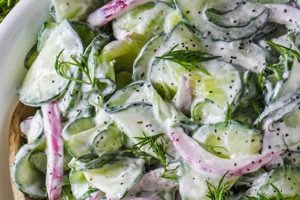
A refreshing summer dish combines the sweetness of watermelon with the salty tang of feta cheese and the cool aroma of mint. This type of salad typically features cubed watermelon as the base, crumbled feta as a contrasting savory element, and fresh mint leaves for an herbaceous lift. Other ingredients, such as red onion, cucumber, or a light vinaigrette, may also be incorporated to add complexity and balance the flavors. Variations can include different types of feta, such as goat or sheeps milk feta, and the addition of ingredients like olives or toasted nuts.
The combination of sweet, salty, and herbaceous flavors creates a palate-pleasing contrast that makes this salad a popular choice during warmer months. Watermelons high water content contributes to its hydrating quality, while feta provides calcium and protein. Mint offers a refreshing flavor and potential digestive benefits. This simple yet elegant dish can be served as a light lunch, a side dish at a barbecue, or part of a larger buffet. Historically, combining fruit and cheese has been a culinary tradition in various cultures, and this particular combination reflects contemporary tastes for fresh, vibrant flavors and simple preparation.
The following sections will explore variations on this classic combination, offering detailed recipes, tips for selecting the best ingredients, and suggestions for presentation and serving.
Tips for a Perfect Watermelon, Mint, and Feta Salad
Creating a successful salad hinges on proper ingredient selection and preparation. Attention to detail elevates this simple dish from refreshing to exceptional.
Tip 1: Watermelon Selection: Opt for a ripe, seedless watermelon. A deep pink-red flesh indicates optimal ripeness and sweetness. Avoid watermelons with pale flesh or excessive white streaking.
Tip 2: Feta Choice: Consider using high-quality feta cheese, preferably stored in brine. Block feta offers a creamier texture compared to pre-crumbled varieties. Crumble the feta just before serving to maintain its freshness.
Tip 3: Mint Preparation: Use fresh mint leaves. Gently tear or chop the leaves just before adding them to the salad to release their aromatic oils and prevent bruising.
Tip 4: Balancing Flavors: A touch of acidity enhances the sweetness of the watermelon and complements the saltiness of the feta. A squeeze of fresh lime juice or a light vinaigrette made with balsamic vinegar or red wine vinegar provides balance.
Tip 5: Adding Texture: Consider adding textural elements such as thinly sliced red onion, chopped cucumber, or toasted pine nuts. These ingredients provide a contrasting crunch and enhance the overall sensory experience.
Tip 6: Chilling and Serving: Chill the watermelon before preparing the salad for optimal refreshment. However, avoid over-chilling, as it can dull the flavor. Serve immediately after assembling to prevent the watermelon from releasing excess water and making the salad soggy.
Tip 7: Presentation: Consider the visual appeal of the salad. Arrange the watermelon, feta, and mint attractively on a platter or in individual bowls. A sprinkle of freshly ground black pepper can add a touch of visual contrast and subtle spice.
By following these tips, one can ensure a harmonious blend of flavors and textures, maximizing the refreshing and satisfying qualities of this summer salad.
These guidelines offer a foundation for creating a truly exceptional culinary experience. The following section will provide concluding thoughts and further inspiration.
1. Ripe, Sweet Watermelon

Ripe, sweet watermelon forms the foundation of a successful watermelon, mint, and feta salad. The watermelon’s sweetness dictates the overall balance of the dish, playing against the salty feta and aromatic mint. An underripe or bland watermelon compromises this balance, resulting in a less satisfying culinary experience. The sweetness also influences the perceived freshness and vibrancy of the salad. A ripe watermelon, bursting with juice, contributes to a more refreshing and enjoyable sensory experience. For instance, a watermelon picked at peak season offers optimal sweetness compared to one harvested prematurely or out of season.
Selection plays a crucial role in achieving optimal ripeness and sweetness. Visual cues, such as a deep pink-red flesh and a slightly dull rind, indicate maturity. A hollow sound when thumping the watermelon suggests ripeness. Avoiding watermelons with pale flesh, white streaking, or a shiny rind is essential for maximizing sweetness. Furthermore, the storage conditions post-harvest can influence the watermelon’s sweetness. Proper refrigeration maintains the sugar content, while exposure to excessive heat or cold can negatively impact the flavor profile.
The emphasis on ripe, sweet watermelon underscores its importance in this specific salad context. The watermelon’s quality directly affects the overall taste and enjoyment of the dish. Careful selection and proper handling are crucial for achieving the desired balance of flavors and maximizing the refreshing qualities of this summer salad. Compromising on the watermelon’s quality diminishes the culinary potential of the entire composition. Therefore, prioritizing ripe, sweet watermelon is essential for a truly satisfying experience.
2. Crumbled Feta Cheese

Crumbled feta cheese provides a crucial salty, tangy counterpoint to the sweetness of watermelon in the watermelon, mint, and feta salad. This interplay of contrasting flavors forms the core of the dish’s appeal. The feta’s creamy texture also complements the watermelon’s juicy crispness, adding another layer of sensory complexity. Without the feta, the salad risks becoming one-dimensionally sweet. The saltiness of the feta not only balances the sweetness but also enhances the perception of other flavors, making the mint more pronounced and the watermelon itself taste sweeter. Consider a similar salad featuring only watermelon and mint: the absence of feta would leave a noticeable gap in both flavor and texture. The saltiness also acts as a flavor bridge, allowing the disparate ingredients to harmonize into a cohesive whole.
The choice of feta and its preparation influence the final dish. High-quality feta, preferably stored in brine, provides a superior flavor and texture. Pre-crumbled feta, while convenient, often lacks the creamy texture of block feta crumbled just before serving. Additionally, the size of the crumbles affects the distribution of saltiness throughout the salad. Larger crumbles offer bursts of intense saltiness, while smaller crumbles provide a more even distribution. This consideration becomes particularly relevant when balancing the sweetness of different watermelon varieties, some of which may be inherently sweeter than others. For example, using a milder feta with a particularly sweet watermelon might necessitate smaller crumbles to avoid overpowering the delicate balance.
The strategic use of crumbled feta cheese significantly impacts the success of the watermelon, mint, and feta salad. Its function extends beyond simply adding a salty element; it serves as a critical balancing agent, a textural enhancer, and a flavor integrator. Understanding its role allows for informed decisions regarding feta selection, preparation, and proportion, ultimately contributing to a more balanced and flavorful culinary experience. The interplay of contrasting flavors and textures exemplifies the importance of ingredient synergy in creating a truly satisfying dish. This principle applies not only to this specific salad but also to a broader understanding of culinary balance and flavor composition.
3. Fresh Mint Leaves

Fresh mint leaves contribute a distinct herbaceous aroma and cool flavor to the watermelon salad recipe with mint and feta. This aromatic dimension elevates the salad beyond the basic interplay of sweet and salty, provided by the watermelon and feta, respectively. Mint’s cooling effect complements the refreshing nature of watermelon, particularly appealing in warm weather. The volatile oils responsible for mint’s characteristic aroma are best preserved in fresh leaves. Dried mint or mint extract lacks the same intensity and vibrancy, potentially altering the overall sensory experience. For example, a salad made with fresh mint will offer a bright, herbaceous lift, while one made with dried mint might present a duller, less pronounced minty flavor. Fresh mint also offers a pleasant textural contrast to the soft watermelon and crumbly feta. Its slightly fuzzy texture adds a subtle layer of complexity to each bite.
Beyond flavor and aroma, the choice of mint variety can further influence the salad’s character. Spearmint, with its sweeter, gentler aroma, provides a different nuance compared to the more pungent peppermint. The quantity of mint used also plays a significant role. Too much mint can overpower the other flavors, while too little might fail to provide the desired aromatic and cooling effect. Culinary traditions in various regions utilize mint in different ways, showcasing the versatility of this herb. In some cuisines, mint is paired with savory dishes, highlighting its ability to balance richer flavors. In others, it is used in desserts and beverages, emphasizing its refreshing qualities. This context demonstrates the adaptability of mint and its suitability in diverse culinary applications, including the watermelon, mint, and feta salad.
Fresh mint leaves prove essential for maximizing the sensory experience of the watermelon, mint, and feta salad. They contribute not only a distinct flavor and aroma but also a textural element that complements the other ingredients. The choice of mint variety and the quantity used require careful consideration to achieve a balanced and harmonious flavor profile. An understanding of mint’s culinary versatility further underscores its value in this particular application, highlighting its ability to enhance both the refreshment and complexity of the salad. Neglecting the importance of fresh mint diminishes the overall culinary potential of this seemingly simple yet nuanced dish. Its presence elevates the salad from a basic combination of ingredients to a more complex and satisfying culinary creation.
4. Balanced Acidity

Balanced acidity plays a crucial role in a watermelon, mint, and feta salad, elevating it from a simple combination of ingredients to a harmonious and refreshing dish. The inherent sweetness of ripe watermelon and the salty tang of feta require a counterbalancing acidic element to prevent the flavors from becoming cloying or overly simplistic. Acidity brightens the overall flavor profile, enhancing the perception of both sweet and salty notes. This balance creates a more complex and nuanced taste experience. Consider the difference between biting into a plain slice of watermelon and one drizzled with lime juice; the acidity heightens the sweetness and adds a refreshing tartness. This principle applies similarly to the salad, where the acidity acts as a bridge, unifying the disparate flavors into a cohesive whole.
Several acidic components can achieve this balance. A squeeze of fresh lime or lemon juice provides a straightforward and effective solution. Light vinaigrettes, crafted with balsamic, red wine, or apple cider vinegar, offer more complex flavor profiles and can introduce additional aromatic notes. The choice of acid depends on the desired intensity and overall flavor direction. A balsamic vinaigrette lends a deeper, slightly sweet acidity, while a lime juice dressing contributes a brighter, more citrusy note. Furthermore, the acidity level needs careful adjustment depending on the inherent sweetness of the watermelon and the saltiness of the feta. A particularly sweet watermelon may require a more assertive acidity to achieve balance. Similarly, a stronger feta, such as one made from sheep’s milk, might necessitate a milder acidic component to avoid overwhelming the other flavors.
Achieving balanced acidity is essential for a successful watermelon, mint, and feta salad. It enhances the perception of sweetness and saltiness, creating a more nuanced and refreshing flavor profile. The choice and quantity of the acidic component require careful consideration, taking into account the inherent qualities of the other ingredients. Without this crucial element, the salad risks becoming unbalanced, with the sweetness and saltiness potentially competing rather than complementing each other. The strategic use of acidity exemplifies the importance of considering the interplay of flavors in culinary compositions, highlighting how a seemingly simple addition can significantly elevate a dish’s complexity and overall appeal.
5. Optional Textural Additions

Optional textural additions contribute significantly to the overall sensory experience of a watermelon, mint, and feta salad. While the core componentswatermelon, mint, and fetaprovide a foundational flavor profile and a degree of textural contrast, incorporating additional elements elevates the dish by introducing new dimensions of mouthfeel. The predominantly soft and juicy nature of watermelon benefits from the inclusion of contrasting textures, preventing a monotonous sensory experience. Consider the difference between a salad composed solely of watermelon, mint, and feta, and one that also includes toasted pine nuts. The nuts introduce a welcome crunch, disrupting the uniformity of the softer elements. This interplay of textures creates a more dynamic and engaging experience for the palate.
Several ingredients serve effectively as textural additions. Toasted nuts, such as pine nuts, almonds, or walnuts, offer a satisfying crunch and complementary flavors. Seeds, like pumpkin or sunflower seeds, provide a similar textural benefit and contribute healthy fats. Chopped cucumber introduces a refreshing crispness, contrasting with the watermelon’s juiciness. Thinly sliced red onion adds a sharp bite and a subtle pungency. Even crumbled crispy bacon or prosciutto can offer a savory, salty crunch. The choice of textural addition depends on the desired flavor profile and overall balance of the salad. For example, toasted pine nuts complement the sweetness of watermelon and the saltiness of feta, while cucumber offers a lighter, more refreshing counterpoint. The quantity of textural additions also requires careful consideration; too much can overwhelm the delicate flavors of the core ingredients, while too little may fail to provide the intended textural contrast.
The strategic use of textural additions demonstrates a sophisticated understanding of culinary principles. By thoughtfully incorporating contrasting textures, one elevates the watermelon, mint, and feta salad from a simple dish to a more complex and engaging culinary experience. This attention to detail exemplifies the importance of considering texture alongside flavor when composing a dish. Ignoring this element can result in a less satisfying sensory experience, even when the flavors themselves are well-balanced. The practical application of this understanding allows for greater creativity and control in the kitchen, enabling the creation of dishes that are not only flavorful but also texturally stimulating and enjoyable.
6. Proper Chilling
Proper chilling is essential for maximizing the refreshing qualities of a watermelon, mint, and feta salad. Temperature significantly influences the perception of flavor and texture, impacting the overall enjoyment of this summer dish. Insufficient chilling can result in a bland, less invigorating salad, while excessive chilling can dull the delicate flavors and compromise the texture of the ingredients. Understanding the nuances of proper chilling allows for optimal enjoyment of this seemingly simple yet nuanced culinary creation.
- Watermelon Chilling:
Watermelon benefits from chilling, as its high water content contributes significantly to the salad’s refreshing quality. Chilling enhances the watermelon’s crispness and amplifies its sweetness. However, over-chilling can make the watermelon’s texture unpleasantly hard and diminish its flavor. Ideally, watermelon should be chilled for a period sufficient to achieve optimal coolness without compromising its textural integrity. For instance, chilling the watermelon for two to three hours in the refrigerator typically provides sufficient cooling without causing excessive hardening. A chilled watermelon, when combined with the other ingredients, creates a more refreshing and enjoyable salad.
- Ingredient Temperature Harmony:
While watermelon benefits from pre-chilling, the other ingredientsfeta cheese and minttypically do not require the same degree of chilling. Feta, particularly if stored in brine, should be served at a slightly cooler than room temperature to maintain its optimal creamy texture and prevent hardening. Overly chilled feta can become crumbly and lose some of its nuanced flavor. Mint, being a delicate herb, is best added to the salad just before serving to preserve its fresh aroma and prevent wilting. Chilling mint can dull its fragrance and compromise its visual appeal. Therefore, a successful salad requires a balance of temperatures, with the watermelon providing the primary cooling element and the other ingredients contributing their optimal flavors and textures at slightly warmer temperatures.
- Preventing Sogginess:
Proper chilling also plays a role in preventing the salad from becoming soggy. Watermelon, when chilled, retains its structural integrity better than when at room temperature. Overly chilled watermelon, however, can release excess water upon reaching room temperature, potentially leading to a watery salad. Similarly, adding the feta and mint just before serving minimizes the time they are in contact with the chilled watermelon, further reducing the risk of sogginess. This attention to timing ensures that each ingredient maintains its optimal texture and contributes to a crisp and refreshing salad.
- Serving Temperature and Flavor Perception:
The final serving temperature influences the overall perception of the salad’s flavors. A well-chilled salad enhances the refreshing qualities of the watermelon and mint, while allowing the subtle flavors of the feta to emerge. A salad served too cold can numb the palate, diminishing the perception of the nuanced flavors. Conversely, a salad served at room temperature may lack the desired refreshing effect and allow the watermelon to become overly soft. Therefore, achieving the ideal serving temperature is crucial for maximizing the sensory experience of the salad. This involves considering the ambient temperature and allowing the salad to briefly temper after chilling, if necessary, to reach the optimal temperature for flavor perception and enjoyment.
Proper chilling is integral to creating a successful watermelon, mint, and feta salad. It’s not merely about making the salad cold; it’s about optimizing the temperature of each ingredient to maximize its flavor, texture, and overall contribution to the dish. Careful consideration of chilling times and serving temperatures ensures a harmonious balance of flavors and textures, resulting in a truly refreshing and enjoyable culinary experience. This seemingly simple step elevates the salad from a basic combination of ingredients to a more nuanced and satisfying dish, highlighting the importance of temperature control in culinary arts.
7. Attractive Presentation
Attractive presentation elevates the perceived value and enjoyment of a watermelon, mint, and feta salad. Visual appeal significantly influences dining experiences. A thoughtfully presented salad stimulates appetite and enhances sensory anticipation. This connection stems from the inherent human appreciation for aesthetics and the understanding that visual cues often precede and influence taste perception. Consider the difference between a salad haphazardly thrown together and one artfully arranged: the latter immediately suggests greater care in preparation and a heightened attention to detail, creating a positive predisposition towards the culinary experience. This principle applies across culinary practices, from home kitchens to professional restaurants, demonstrating the universal impact of presentation on perceived quality.
Several techniques enhance the visual appeal of this particular salad. The vibrant colors of watermelon, the contrasting white of feta, and the verdant green of mint provide a natural palette for an attractive presentation. Strategic arrangement emphasizes these inherent color contrasts. Cubing the watermelon into uniform sizes creates a sense of order and professionalism. Distributing the feta crumbles evenly ensures visual balance and prevents clumps of saltiness. Artfully scattering whole mint leaves adds pops of color and visual interest. Further enhancements include a drizzle of olive oil for sheen, a sprinkle of black pepper for contrast, and a garnish of edible flowers for a touch of elegance. Consider a restaurant setting: a thoughtfully plated salad with carefully arranged ingredients and a considered garnish communicates attention to detail and elevates the perceived value of the dish. Conversely, a carelessly plated salad, even if composed of the same high-quality ingredients, may be perceived as less appealing and less valuable.
Understanding the importance of attractive presentation allows for a more holistic approach to culinary creation. It recognizes that dining is a multi-sensory experience, where visual appeal plays a crucial role in enhancing enjoyment. While flavor and texture remain paramount, presentation acts as a gateway to those sensory experiences, influencing initial perceptions and setting the stage for a more satisfying culinary experience. The practical application of these principles can elevate even simple dishes like the watermelon, mint, and feta salad, transforming them from basic combinations of ingredients into visually appealing and more enjoyable culinary creations. This understanding highlights the interconnectedness of aesthetics and gastronomy, demonstrating how visual appeal can enhance and enrich the overall dining experience.
Frequently Asked Questions
This section addresses common inquiries regarding the preparation and enjoyment of watermelon, mint, and feta salad. Clarity regarding these points ensures optimal results and addresses potential concerns.
Question 1: Can other cheeses be substituted for feta?
While feta provides a specific salty, tangy flavor and creamy texture, substitutions can be made. Goat cheese offers a similar tang, while halloumi provides a firmer texture that holds up well when grilled. Ricotta salata offers a salty, crumbly alternative. However, these substitutions will alter the overall flavor profile of the salad.
Question 2: How long can the salad be stored?
The salad is best consumed immediately after preparation. Watermelon releases water over time, potentially leading to a soggy salad. If storage is necessary, store the watermelon, feta, and mint separately and combine just before serving.
Question 3: What dressings complement this salad?
Light vinaigrettes, such as those made with balsamic, red wine, or apple cider vinegar, complement the salad’s flavors. A simple dressing of olive oil, lime juice, salt, and pepper also provides an effective enhancement. Avoid heavy, creamy dressings, which can overpower the delicate flavors.
Question 4: Can this salad be served as a main course?
While often served as a side dish or appetizer, the salad can be adapted into a main course. Adding grilled chicken, shrimp, or chickpeas increases protein content. Quinoa or couscous can provide additional bulk and nutrients.
Question 5: How does one select a ripe watermelon?
A ripe watermelon exhibits a deep pink-red flesh and a slightly dull rind. A hollow sound when thumping the watermelon also indicates ripeness. Avoid watermelons with pale flesh, white streaking, or a shiny rind.
Question 6: Can different types of mint be used?
While spearmint is commonly used, other mint varieties, such as peppermint or chocolate mint, can offer interesting flavor variations. However, consider the intensity of each variety, as some can be more overpowering than others. Experimentation with different mint types can lead to unique flavor profiles.
Careful consideration of these points ensures optimal preparation and enjoyment of watermelon, mint, and feta salad. Attention to detail elevates this simple dish to a truly refreshing and satisfying culinary experience.
For further culinary exploration and variations on this refreshing salad, consult the following resources.
Watermelon Salad Recipe with Mint and Feta
Exploration of this seemingly simple salad reveals a complex interplay of flavors, textures, and temperatures. Optimal preparation requires careful selection of ripe watermelon, high-quality feta cheese, and fresh mint leaves. Balancing acidity, incorporating textural additions, and precise chilling enhance the final product. Attractive presentation elevates the sensory experience, demonstrating the importance of visual appeal in culinary endeavors. Addressing frequently asked questions provides clarity and encourages informed culinary choices.
This analysis underscores the potential for culinary complexity within seemingly straightforward dishes. Attention to detail transforms basic ingredients into a harmonious and refreshing composition. Further exploration of individual components and experimentation with variations promise continued culinary discovery and enjoyment.