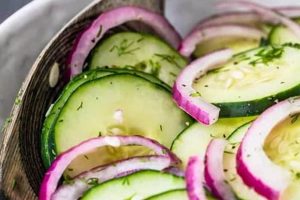
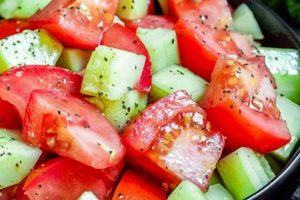
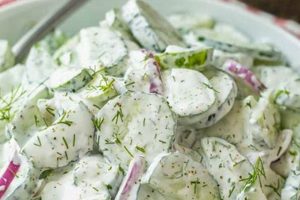
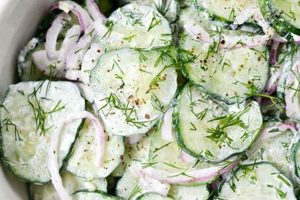
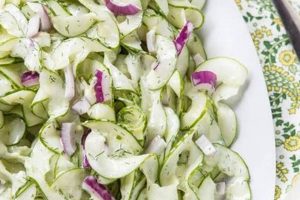
A refreshing and flavorful dish, this Mediterranean staple combines cucumbers with other fresh ingredients like tomatoes, onions, and herbs, often feta cheese, and a vinaigrette typically featuring olive oil, lemon juice, and oregano. Variations may include olives, bell peppers, or different herbs. A simple preparation yields a light side dish or appetizer, ideal for warm weather or as part of a larger Mediterranean meal.
This culinary creation offers numerous benefits. Its reliance on fresh produce makes it a nutritious choice, providing vitamins, minerals, and antioxidants. The light dressing and minimal cooking preserve the natural flavors and textures of the ingredients. Historically, similar salads have been part of the Mediterranean diet for centuries, reflecting the region’s abundant produce and culinary traditions. Its versatility allows for easy adaptation to individual preferences and seasonal availability.
Further exploration will delve into specific variations, preparation techniques, nutritional information, and tips for achieving optimal flavor and texture. This examination will provide a comprehensive understanding of how to create and enjoy this classic dish.
Tips for a Superior Greek Cucumber Salad
Achieving optimal flavor and texture requires attention to detail. The following tips offer guidance for creating a truly exceptional salad.
Tip 1: Select Fresh, High-Quality Cucumbers: Choose firm cucumbers with vibrant skin. For optimal flavor and texture, opt for smaller varieties like Persian or English cucumbers, as they tend to have fewer seeds and thinner skins.
Tip 2: Salt and Drain the Cucumbers: Salting the sliced cucumbers and allowing them to drain for approximately 15 minutes removes excess moisture, preventing a watery salad and concentrating the cucumber flavor.
Tip 3: Prioritize Fresh Herbs: Dried herbs can be used, but fresh herbs like dill, mint, and oregano provide a brighter, more nuanced flavor profile. Chop the herbs finely just before adding them to the salad to maximize their aroma and taste.
Tip 4: Use High-Quality Olive Oil and Fresh Lemon Juice: The vinaigrette forms the foundation of the salad’s flavor. Opt for extra virgin olive oil and freshly squeezed lemon juice for the best results.
Tip 5: Add Feta Cheese Strategically: Add the feta just before serving to prevent it from becoming overly salty or losing its texture. Consider using high-quality feta packed in brine for optimal flavor and freshness.
Tip 6: Balance the Ingredients: Achieve a harmonious blend of flavors by carefully balancing the proportions of cucumbers, tomatoes, onions, herbs, and feta. Adjust the quantities to suit individual preferences.
Tip 7: Chill Before Serving: Allowing the salad to chill for at least 30 minutes before serving allows the flavors to meld and enhances the refreshing qualities of the dish.
By following these tips, one can elevate a simple cucumber salad to a truly delightful culinary experience. The combination of fresh ingredients, proper preparation, and attention to detail yields a dish that is both flavorful and refreshing.
The insights provided offer a comprehensive guide to creating an exceptional Greek cucumber salad. Experimentation and adaptation to personal preferences are encouraged.
1. Fresh Cucumbers

Fresh cucumbers are fundamental to a successful Greek cucumber salad. Their crisp texture and mild, refreshing flavor provide a crucial base for the other ingredients. The quality of the cucumbers directly impacts the overall taste and enjoyment of the salad. Wilted or overripe cucumbers contribute an unpleasant texture and diminished flavor, detracting from the intended bright, refreshing profile. Choosing firm, unwaxed cucumbers with vibrant skin ensures optimal quality. Smaller varieties, such as Persian or English cucumbers, tend to have fewer seeds and thinner skins, further enhancing the salad’s textural appeal.
The importance of fresh cucumbers extends beyond taste and texture. Their high water content contributes to the salad’s hydrating properties, making it a particularly appealing choice in warm weather. Additionally, cucumbers offer nutritional benefits, providing vitamins and minerals. Slicing the cucumbers thinly and evenly ensures they absorb the vinaigrette effectively and contribute optimally to the salad’s overall composition. Salting and draining the sliced cucumbers before adding them to the salad draws out excess moisture, preventing a watery final product and concentrating the cucumber flavor.
Proper selection and preparation of fresh cucumbers are essential for maximizing the sensory and nutritional value of a Greek cucumber salad. Their role as the foundational ingredient underscores their significance in achieving the desired balance of flavors and textures. Neglecting this element can compromise the overall quality and enjoyment of this classic dish.
2. Ripe tomatoes
Ripe tomatoes constitute an integral component of a well-executed Greek cucumber salad, contributing not only essential flavor but also vibrant color and textural contrast. Their selection and preparation significantly influence the overall quality and balance of the final dish. A thorough understanding of their role within the recipe’s framework is critical for achieving optimal results.
- Flavor Contribution
Ripe tomatoes introduce a sweet and tangy flavor profile that complements the cool, refreshing essence of cucumbers. The natural acidity of tomatoes balances the richness of the feta cheese and olive oil, preventing the salad from becoming overly heavy. Different tomato varieties, such as heirloom or vine-ripened, offer nuanced flavor variations, allowing for subtle adjustments to the overall taste profile. The intensity of the tomato flavor depends heavily on ripeness; underripe tomatoes lack sweetness and can introduce an undesirable tartness.
- Visual Appeal and Texture
The vibrant red hue of ripe tomatoes adds a striking visual element to the salad, contrasting beautifully with the green cucumbers and white feta. Their juicy texture provides a pleasant counterpoint to the crispness of the cucumbers and onions. The structural integrity of the tomato is also important; overripe tomatoes can become mealy and detract from the desired textural contrast.
- Nutritional Value
Beyond their flavor and aesthetic contributions, tomatoes provide essential nutrients, including vitamins C and K, potassium, and antioxidants like lycopene. Incorporating ripe tomatoes enhances the nutritional profile of the salad, aligning with the broader emphasis on fresh, wholesome ingredients characteristic of Mediterranean cuisine.
- Preparation Techniques
Proper preparation techniques maximize the flavor and textural contribution of tomatoes. Dicing them into bite-sized pieces ensures even distribution throughout the salad and facilitates a pleasant eating experience. Removing the seeds and excess pulp can help prevent the salad from becoming watery, especially if using particularly juicy varieties. Adding the tomatoes just before serving maintains their freshness and prevents them from releasing excess moisture into the salad.
The careful selection and preparation of ripe tomatoes are crucial for achieving the desired balance of flavors, textures, and visual appeal in a Greek cucumber salad. Their contribution extends beyond mere ingredients, representing a key element that elevates the dish from simple to exceptional. Overlooking their importance can compromise the overall sensory experience and nutritional value of this classic Mediterranean preparation.
3. Red onion
Red onion plays a crucial role in a Greek cucumber salad, contributing a pungent, slightly sweet flavor and crisp texture that balances the other ingredients. Its sharp bite provides a counterpoint to the mild cucumbers and tomatoes, while its vibrant color enhances the salad’s visual appeal. The onion’s sulfur compounds, responsible for its pungency, also offer potential health benefits, including antioxidant and anti-inflammatory properties. Without red onion, the salad risks becoming bland, lacking the complexity and depth of flavor a proper balance provides. For instance, a Greek salad made without red onion might taste overly mild, lacking the necessary sharpness to cut through the richness of the feta and olive oil. The absence of its vibrant purple hue would also diminish the salad’s visual appeal.
The quantity of red onion used can be adjusted to suit individual preferences, but its presence remains essential for achieving the desired flavor profile. Thinly slicing the red onion is critical for even distribution and palatable texture. Soaking the sliced onion in ice water for a short period can mellow its sharpness without compromising its textural contribution. This technique is particularly beneficial for those sensitive to strong onion flavors. Examples of variations include using pickled red onions for a more pronounced tang or substituting shallots for a milder onion flavor, though these deviations alter the traditional character of the salad. Understanding the red onion’s contribution allows for informed adjustments while maintaining the essence of the dish.
In summary, red onion’s contribution to a Greek cucumber salad extends beyond mere flavor and aesthetics. It provides a necessary textural element and contributes to a more complex, balanced flavor profile. Its inclusion is a defining characteristic of the dish, and understanding its role allows for informed choices in preparation and adaptation. Successfully incorporating red onion elevates the Greek cucumber salad from a simple combination of ingredients to a harmonious culinary experience, highlighting the importance of each component in achieving a well-balanced and flavorful dish.
4. Feta cheese
Feta cheese is an indispensable component of a traditional Greek cucumber salad, contributing a salty, tangy, and creamy dimension that elevates the dish beyond a simple vegetable medley. Its unique characteristics interact with the other ingredients, creating a complex interplay of flavors and textures essential to the salad’s overall success. Understanding feta’s role and its impact on the final product is crucial for appreciating the dish’s nuanced composition.
- Flavor Profile and Texture
Feta’s characteristic salty, tangy flavor profile provides a crucial counterpoint to the refreshing cucumbers and tomatoes. Its creamy texture contrasts with the crisp vegetables, adding a richness that enhances the overall sensory experience. The saltiness of the feta also helps to draw out the flavors of the other ingredients, intensifying their impact.
- Authenticity and Cultural Significance
Feta, a protected designation of origin (PDO) cheese traditionally made from sheep’s milk or a mixture of sheep and goat’s milk, holds significant cultural weight in Greek cuisine. Its inclusion in the salad underscores the dish’s authenticity and connection to traditional Mediterranean gastronomy. Substituting feta with other cheeses compromises the salad’s genuine character and diminishes its cultural relevance.
- Interaction with other ingredients
Feta interacts dynamically with the salad’s other components. Its saltiness enhances the sweetness of the tomatoes and balances the acidity of the vinaigrette. The creamy texture complements the crisp vegetables, creating a harmonious blend of textures. The distinct flavor of feta melds with the herbs and olive oil, forming a cohesive and complex flavor profile that defines the dish.
- Practical Considerations and Variations
The quality of feta significantly impacts the salad’s overall taste. Feta stored in brine retains optimal moisture and flavor. Crumbling the feta rather than slicing allows for even distribution throughout the salad. While variations exist, such as using vegan feta substitutes, these alternatives alter the traditional flavor and texture profile, creating a different culinary experience.
Feta cheese’s contribution to a Greek cucumber salad extends beyond mere flavor; it represents a critical element that defines the dish’s identity. Its unique properties, cultural significance, and interaction with other ingredients contribute to a complex and harmonious culinary experience that exemplifies the essence of Mediterranean cuisine. Understanding these multifaceted aspects allows for a deeper appreciation of the seemingly simple, yet remarkably nuanced, Greek cucumber salad.
5. Simple vinaigrette

A simple vinaigrette forms the backbone of a successful Greek cucumber salad, binding the individual components into a cohesive whole. More than just a dressing, the vinaigrette contributes significantly to the salad’s overall flavor profile, texture, and visual appeal. Its simplicity belies its importance; the balance of acidity, oil, and herbs dictates the final character of the dish.
- Acidity: The Balancing Force
The primary source of acidity, typically fresh lemon juice or red wine vinegar, provides a bright, sharp counterpoint to the other ingredients. This acidity cuts through the richness of the feta and olive oil, preventing the salad from feeling heavy. It also interacts with the red onion, mellowing its pungency and contributing to a more balanced flavor profile. The choice between lemon juice and vinegar, or a combination of both, offers nuanced variations in tartness and aroma, influencing the final taste.
- Olive Oil: The Foundation of Flavor
High-quality extra virgin olive oil forms the foundation of the vinaigrette, contributing a rich, fruity flavor and smooth texture. The olive oil coats the vegetables, enhancing their individual flavors and creating a luscious mouthfeel. The quality of the olive oil directly impacts the final taste; a robust, flavorful oil elevates the salad, while a bland oil diminishes its overall character. The oil also carries the flavors of the herbs and spices, distributing them evenly throughout the salad.
- Fresh Herbs: Aromatic Enhancement
Fresh herbs, such as oregano, dill, and mint, contribute an aromatic dimension that elevates the vinaigrette beyond a simple acidic base. These herbs impart bright, herbaceous notes that complement the other ingredients, adding complexity and depth to the flavor profile. The choice and combination of herbs allow for customization, creating variations on the classic theme. Freshly chopped herbs provide the most vibrant flavor and aroma.
- Emulsification and Texture
The process of emulsification, where the oil and acidic components are combined into a stable mixture, is crucial for the vinaigrette’s texture and how it coats the salad ingredients. A properly emulsified vinaigrette clings lightly to the vegetables, ensuring even distribution of flavor and preventing a watery or oily residue. Whisking the ingredients together vigorously creates a temporary emulsion, while adding a small amount of Dijon mustard can help stabilize the mixture.
The simple vinaigrette, despite its seemingly straightforward composition, plays a crucial role in the overall success of a Greek cucumber salad. Its careful balance of acidity, quality olive oil, fresh herbs, and proper emulsification elevates the individual ingredients, transforming them into a harmonious and refreshing culinary experience. The vinaigrettes seemingly minor role belies its significant impact, demonstrating the importance of each element in creating a truly exceptional dish.
6. Fresh Herbs (Dill, Mint)
Fresh herbs, particularly dill and mint, constitute essential aromatic components within a traditional Greek cucumber salad, contributing significantly to its distinctive flavor profile. Their presence elevates the salad beyond a simple combination of vegetables and cheese, adding a layer of complexity and freshness crucial to the overall sensory experience. An examination of their individual characteristics and combined effect provides insight into their vital role within the recipe.
- Aromatic Complexity
Dill, with its slightly tangy, anise-like flavor, introduces a unique aromatic dimension that complements the cucumber’s subtle sweetness. Mint, known for its refreshing, cool taste, adds a contrasting layer of flavor that enhances the overall vibrancy of the salad. The combination of these two herbs creates a complex aromatic profile that distinguishes a Greek cucumber salad from other similar preparations. For example, dill’s subtle anise notes provide a savory counterpoint to the mint’s refreshing coolness, preventing the overall flavor from becoming overly sweet or one-dimensional.
- Freshness and Vibrancy
Fresh herbs impart a vibrant, verdant quality that enhances the salad’s overall freshness. Their bright flavors awaken the palate, creating a lively sensory experience that complements the crisp cucumbers and juicy tomatoes. The use of dried herbs, while acceptable in some contexts, cannot replicate the intensity and vibrancy of fresh herbs in this particular application. The difference is palpable; dried herbs tend to offer a more muted and less nuanced flavor profile compared to their fresh counterparts. This vibrancy is especially pronounced in a Greek cucumber salad, where the emphasis is on fresh, uncooked ingredients.
- Traditional Authenticity
The inclusion of fresh dill and mint aligns with traditional Greek culinary practices, reflecting the region’s emphasis on fresh, locally sourced ingredients. These herbs are commonly found in Greek cuisine, and their presence in the cucumber salad underscores its authenticity and connection to established culinary traditions. Omitting these herbs or substituting them with other herbs, while possible, deviates from the classic recipe, altering its fundamental character and cultural significance. For instance, substituting basil or parsley, while not inherently detrimental, would result in a salad that lacks the distinct flavor profile associated with a traditional Greek preparation.
- Balancing Flavors and Textures
The herbs’ contribution extends beyond mere flavor; they also contribute to the overall balance of the dish. Dill’s subtle tanginess complements the saltiness of the feta, while mint’s refreshing coolness balances the richness of the olive oil. This interplay of flavors and textures creates a harmonious culinary experience that distinguishes the Greek cucumber salad from a simple combination of ingredients. The interplay is particularly noticeable when considering the contrast between the creamy feta, the crisp cucumbers, and the bright, herbaceous notes of the dill and mint.
The inclusion of fresh dill and mint in a Greek cucumber salad signifies more than just a garnish; it represents a crucial component that contributes significantly to the dish’s overall character and authenticity. Their combined aromatic complexity, vibrant freshness, adherence to tradition, and contribution to the balance of flavors create a culinary experience that exemplifies the essence of Greek cuisine. Understanding the role of these seemingly simple ingredients provides a deeper appreciation for the nuanced composition and cultural significance of this classic Mediterranean dish.
Frequently Asked Questions
This section addresses common inquiries regarding the preparation and variations of this classic dish.
Question 1: Can other types of cucumbers be used?
While English or Persian cucumbers are preferred for their thinner skins and fewer seeds, other varieties can be substituted. However, removing the seeds from larger cucumbers is recommended to prevent excess moisture in the salad.
Question 2: What can be substituted for feta cheese?
While feta is traditional, crumbled goat cheese or a vegan feta alternative can be used for those with dietary restrictions. However, these substitutions will alter the authentic flavor profile.
Question 3: Can dried herbs be used instead of fresh?
Fresh herbs are strongly preferred for optimal flavor. If dried herbs are used, reduce the quantity as dried herbs have a more concentrated flavor.
Question 4: How long can the salad be stored?
It is best consumed fresh. If storage is necessary, refrigerate for up to 24 hours, but be aware that the texture and flavor may be slightly compromised.
Question 5: Can other vegetables be added?
While traditional recipes emphasize simplicity, additions like bell peppers, Kalamata olives, or capers can complement the existing flavors. Avoid vegetables with strong flavors that may overpower the delicate balance.
Question 6: How can the sharpness of the red onion be reduced?
Soaking thinly sliced red onion in ice water for 10-15 minutes mellows its pungency without sacrificing its crisp texture.
Understanding these common points of inquiry allows for informed adaptations and ensures a successful culinary outcome. Consideration of individual preferences and dietary needs can be accommodated while maintaining the essence of this classic dish.
This FAQ section provides a comprehensive overview of common concerns. Further exploration of specific recipe variations and advanced techniques will follow.
A Culinary Exploration of the Greek Cucumber Salad
This exploration has provided a comprehensive overview of the Greek cucumber salad, examining its core components, preparation techniques, and cultural significance. From the foundational role of fresh cucumbers and ripe tomatoes to the essential contributions of red onion, feta cheese, and a simple vinaigrette, each ingredient’s impact on the final product has been meticulously detailed. The significance of fresh herbs, particularly dill and mint, in contributing to the salad’s distinctive flavor profile has been highlighted, underscoring the importance of ingredient quality and freshness in achieving an authentic and flavorful dish. Furthermore, practical considerations such as appropriate cucumber selection, red onion preparation, and vinaigrette emulsification techniques have been addressed, equipping readers with the knowledge necessary to create a superior culinary experience. Addressing frequently asked questions provides further clarity and allows for informed adaptations while preserving the essence of this classic dish.
The Greek cucumber salad, while seemingly simple in its composition, represents a testament to the power of fresh, high-quality ingredients and balanced flavors. Its enduring popularity speaks to its refreshing nature and adaptability, allowing for both traditional adherence and personalized variations. This exploration serves not only as a guide to creating this classic dish but also as an invitation to appreciate the nuanced interplay of flavors and textures that define Mediterranean cuisine. Further culinary exploration and experimentation with fresh, seasonal ingredients are encouraged, fostering a deeper appreciation for the art of simple, yet elegant, cooking.