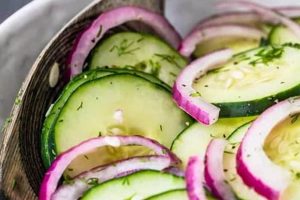
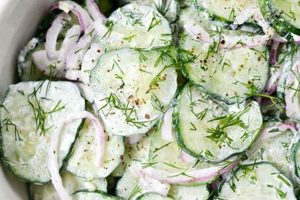
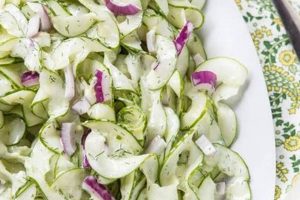
Refreshing and simple, combinations of sliced cucumbers and tomatoes form the base of a versatile salad. Numerous variations exist, incorporating ingredients like onions, herbs (dill, mint, parsley), cheeses (feta, goat), and diverse dressings (vinaigrettes, yogurt-based). These salads can range from basic, everyday meals to elegant accompaniments for special occasions, depending on the chosen components and presentation.
Such salads offer a light and nutritious option, particularly during warmer months. They provide essential vitamins and minerals, are generally low in calories, and contribute to hydration due to the high water content of the primary ingredients. Historically, cucumbers and tomatoes, originating from different parts of the world, became popular salad components as global trade routes expanded, allowing wider access to these ingredients. This accessibility, combined with the ease of preparation and the refreshing nature of the dish, solidified its place in various culinary traditions.
This exploration will delve into specific variations of these salads, offering detailed recipes and exploring the nutritional benefits of different ingredient combinations. Furthermore, the discussion will touch upon the versatility of these salads, suggesting suitable pairings with main courses and offering tips for optimal preparation and presentation.
Tips for Cucumber and Tomato Salads
Optimizing ingredient preparation and combining flavors enhances the enjoyment of these simple salads. Attention to detail elevates a basic dish into a culinary delight.
Tip 1: Salt the cucumbers. Salting sliced cucumbers draws out excess moisture, preventing a watery salad. Place cucumber slices in a colander, sprinkle with salt, and let them sit for 15-20 minutes before rinsing and drying.
Tip 2: Choose ripe tomatoes. Flavor peaks with perfectly ripe tomatoes. Select tomatoes that yield slightly to gentle pressure and offer a vibrant aroma.
Tip 3: Balance acidity. A touch of acidity brightens the salad. Incorporate a splash of vinegar or lemon juice into the dressing or add a few capers or chopped olives.
Tip 4: Enhance with fresh herbs. Fresh herbs add depth and complexity. Dill, mint, parsley, and chives complement cucumbers and tomatoes beautifully. Add them just before serving to maintain their vibrant flavor.
Tip 5: Consider textural contrast. Adding ingredients like crumbled feta cheese, toasted nuts, or croutons provides textural interest.
Tip 6: Dress lightly. Overdressing masks the delicate flavors of the vegetables. Start with a small amount of dressing and add more if needed.
Tip 7: Chill before serving. Chilling enhances the refreshing qualities of the salad. Refrigerate for at least 30 minutes before serving.
By following these guidelines, one can create a simple yet satisfying salad that maximizes flavor and texture. These tips ensure consistent results, transforming ordinary ingredients into a memorable dish.
With these preparation strategies in mind, the following section will offer specific recipe variations, catering to diverse tastes and preferences.
1. Fresh, Ripe Ingredients
The foundation of any successful tomato and cucumber salad rests upon the quality of its primary components: fresh, ripe tomatoes and cucumbers. Ingredient selection directly impacts the overall flavor, texture, and visual appeal of the final dish. Utilizing subpar produce results in a bland, watery, and ultimately unsatisfying salad.
- Tomato Selection
Ripe tomatoes offer a vibrant flavor profile, balancing sweetness and acidity. Indicators of ripeness include a deep, uniform color, a slight give when gently squeezed, and a fragrant aroma. Different tomato varieties, such as heirloom, cherry, or beefsteak, contribute unique flavor nuances and visual appeal. Choosing tomatoes at their peak ripeness ensures optimal flavor contribution to the salad.
- Cucumber Selection
Cucumbers should be firm and free from blemishes or soft spots. A vibrant green color signifies freshness. Different cucumber varieties, like English, Persian, or Kirby, offer varying levels of sweetness and water content. Selecting crisp, unwaxed cucumbers enhances both the textural and flavor components of the salad.
- Storage and Handling
Proper storage maintains the freshness of both tomatoes and cucumbers. Tomatoes are best stored at room temperature, away from direct sunlight, to preserve their flavor and texture. Cucumbers, however, thrive in cool, humid environments, making refrigeration ideal. Gentle handling prevents bruising and maintains the integrity of the vegetables.
- Seasonality
While available year-round, tomatoes and cucumbers reach peak flavor during their respective growing seasons. Locally sourced, seasonal produce offers superior taste and nutritional value. Incorporating seasonal ingredients elevates the salad, maximizing flavor and showcasing the best of nature’s offerings.
The emphasis on fresh, ripe ingredients highlights the fundamental principle that quality inputs yield superior outputs. By prioritizing the selection and handling of tomatoes and cucumbers, one ensures a flavorful, vibrant, and ultimately satisfying salad experience. This attention to detail elevates a simple dish to a culinary delight.
2. Proper Slicing Techniques
Proper slicing techniques significantly influence the final presentation, texture, and even flavor perception of tomato and cucumber salads. Uniformity in size and shape ensures even distribution of dressing and a visually appealing arrangement. Furthermore, appropriate cutting methods optimize the release of flavors and aromas, enhancing the overall sensory experience.
- Uniformity of Size and Shape
Consistent slicing promotes even marinating and dressing distribution, ensuring each bite contains a balanced blend of flavors. Uniformity also contributes to an aesthetically pleasing presentation, enhancing the visual appeal of the salad. Slices of similar dimensions create a harmonious arrangement, showcasing attention to detail and culinary expertise.
- Thickness Considerations
Slice thickness affects both texture and flavor release. Thicker slices retain more of the cucumber’s crispness and the tomato’s juiciness, while thinner slices offer a more delicate texture and quicker flavor infusion from the dressing. The desired thickness depends on the specific salad and personal preferences, balancing textural contrast and flavor intensity.
- Cutting Techniques for Different Shapes
Various cutting techniques, including slicing, dicing, and chopping, offer diverse aesthetic and textural possibilities. Slicing creates elegant, elongated pieces, while dicing produces smaller, more manageable pieces suitable for salads with other finely chopped ingredients. Chopping results in irregular pieces, often used for rustic-style salads. Selecting the appropriate technique depends on the desired presentation and texture.
- Knife Selection and Sharpness
A sharp knife is crucial for clean, precise cuts, minimizing bruising and cellular damage. A dull knife crushes the delicate cell walls of tomatoes and cucumbers, leading to excessive moisture release and a less appealing presentation. Utilizing a sharp knife ensures clean cuts, preserving the integrity of the vegetables and optimizing their texture and flavor.
Mastery of proper slicing techniques elevates tomato and cucumber salads from simple preparations to carefully crafted culinary creations. Attention to detail in slicing enhances both the visual appeal and the sensory experience, demonstrating a commitment to quality and culinary finesse. These techniques ensure that the salad not only tastes delicious but also presents beautifully, maximizing enjoyment and showcasing the inherent beauty of fresh ingredients.
3. Complementary Flavor Pairings

Flavor pairings significantly impact the overall taste experience of tomato and cucumber salads. Careful consideration of complementary flavors elevates a simple combination of ingredients into a complex and satisfying dish. Strategic pairings enhance the inherent flavors of the tomatoes and cucumbers, creating a balanced and harmonious palate experience. The following facets explore key flavor combinations that complement this classic salad pairing.
- Herbaceous Accents
Fresh herbs provide brightness and depth, complementing the refreshing nature of cucumbers and tomatoes. Dill, mint, parsley, and chives are classic choices. Dill, with its slightly tangy and anise-like flavor, pairs particularly well with cucumbers, while mint adds a cooling element. Parsley provides a clean, slightly peppery note, and chives contribute a subtle onion flavor. The choice of herbs can significantly influence the overall flavor profile of the salad.
- Salty and Tangy Additions
Salty and tangy ingredients provide a counterpoint to the sweetness of ripe tomatoes and the mildness of cucumbers. Feta cheese, crumbled goat cheese, or olives offer a salty, briny element that enhances the salad’s complexity. Capers introduce a piquant, salty burst, while a splash of vinegar or lemon juice adds a refreshing tang. These elements create a balanced flavor profile, preventing the salad from becoming monotonous.
- Alliums for Depth
Alliums, such as red onion, shallots, or green onions, contribute a pungent, savory depth to the salad. Red onion offers a sharp, slightly sweet flavor, while shallots provide a milder, more nuanced onion flavor. Green onions contribute a fresh, grassy note. The choice of allium depends on the desired intensity and flavor profile. Properly prepared, these ingredients add complexity without overpowering the delicate flavors of the cucumbers and tomatoes.
- Textural Contrasts
While not strictly a flavor pairing, adding ingredients with contrasting textures enhances the overall sensory experience. Toasted nuts, such as pine nuts or walnuts, provide a satisfying crunch. Croutons offer a crispy element, while seeds, like sunflower or pumpkin seeds, contribute a subtle nutty flavor and textural variation. These additions create a more dynamic and engaging culinary experience, complementing the softer textures of the cucumbers and tomatoes.
Understanding the interplay of these flavor pairings allows for the creation of dynamic and flavorful tomato and cucumber salads. By carefully considering the interplay of herbs, salty and tangy elements, alliums, and textural contrasts, one can elevate a simple salad into a truly exceptional dish. These pairings not only enhance the individual flavors of the tomatoes and cucumbers but also create a harmonious and balanced overall taste experience.
4. Balanced Dressings
Balanced dressings play a crucial role in tomato and cucumber salad recipes, enhancing the natural flavors of the vegetables without overpowering their delicate profiles. A well-executed dressing complements the inherent sweetness of ripe tomatoes and the refreshing coolness of cucumbers, creating a harmonious and flavorful culinary experience. The interplay of acidity, oil, and seasonings defines a balanced dressing, each component contributing to the overall taste and texture of the salad.
- Acidity
Acidity provides brightness and lift, balancing the sweetness of the tomatoes and adding a refreshing tang. Common acidic components include vinegar (red wine, white wine, apple cider), lemon juice, or lime juice. The level of acidity should be carefully calibrated to complement, not overpower, the other ingredients. Too much acidity can make the salad taste sour, while too little can result in a bland, one-dimensional flavor profile.
- Oil
Oil contributes richness, texture, and mouthfeel. Extra virgin olive oil, with its fruity and peppery notes, is a popular choice. Other options include avocado oil, grapeseed oil, or even a light-flavored nut oil. The oil acts as a carrier for the other dressing ingredients, helping to distribute flavors evenly throughout the salad. The type of oil chosen can influence the overall flavor profile, so selection should be based on the desired outcome and complementary flavor pairings.
- Seasonings
Seasonings enhance the complexity and depth of the dressing. Salt and freshly ground black pepper are essential foundational seasonings. Herbs, such as dill, mint, or parsley, add freshness and aromatic complexity. Garlic or shallots can contribute a pungent savory note. Sweeteners, like honey or maple syrup, can balance acidity and add a touch of sweetness. The choice and combination of seasonings allow for customization and creativity, tailoring the dressing to specific flavor preferences and complementing the other salad components.
- Emulsification
Emulsification refers to the process of combining oil and an acidic liquid into a stable mixture. A proper emulsification creates a creamy, cohesive dressing that clings to the salad ingredients, ensuring even flavor distribution. Whisking, shaking, or blending can achieve emulsification, creating a smooth and homogenous dressing that enhances the overall texture and flavor experience of the salad. A stable emulsion prevents the dressing from separating, ensuring a consistent and appealing presentation.
A balanced dressing elevates tomato and cucumber salads from simple to exceptional. The careful consideration of acidity, oil, seasonings, and emulsification results in a dressing that enhances the inherent flavors of the vegetables, creating a harmonious and delightful culinary experience. The interplay of these elements creates a symphony of flavors, transforming a basic salad into a sophisticated and satisfying dish.
5. Optimal Chilling Time
Optimal chilling time significantly influences the flavor and texture of tomato and cucumber salads. Chilling allows the flavors of the ingredients, including the dressing, to meld and deepen. Furthermore, chilling enhances the crispness of the cucumbers and provides a refreshing contrast to the juiciness of the tomatoes. However, excessive chilling can have detrimental effects. Over-chilling can dull the flavors of the tomatoes and cause the cucumbers to become watery and lose their textural integrity. A delicate balance exists between insufficient chilling and excessive chilling, impacting the overall quality of the salad. For example, a Greek salad with chilled cucumbers, tomatoes, and feta offers a refreshing and vibrant flavor profile compared to the same salad served at room temperature, where the feta can become overly creamy and the vegetables less crisp. Similarly, over-chilling the salad can make the tomatoes mealy and the cucumbers soggy.
The ideal chilling time varies depending on the specific recipe and the surrounding ambient temperature. Generally, a chilling time of 30 minutes to an hour suffices to allow flavors to meld and enhance the crispness of the vegetables without compromising their texture or flavor. Salads containing more delicate ingredients, such as fresh herbs, may benefit from a shorter chilling time to preserve their vibrant flavors. Conversely, salads with robust ingredients, like olives or feta cheese, can withstand longer chilling periods without detrimental effects. Practical application of this understanding requires assessing the specific ingredients and adjusting chilling time accordingly. Warmer ambient temperatures may necessitate shorter chilling periods, while cooler temperatures may allow for longer chilling times. Attention to these details demonstrates culinary expertise and ensures an optimal sensory experience.
Balancing chilling time optimizes the sensory qualities of tomato and cucumber salads. Understanding the interplay of temperature and ingredient characteristics allows for informed decisions regarding chilling duration. Appropriate chilling enhances flavor, texture, and overall enjoyment. Failure to consider optimal chilling can result in a subpar culinary experience, diminishing the potential of this simple yet versatile dish. This principle underscores the importance of attention to detail in culinary practices, even in seemingly simple preparations. Mastery of these nuances elevates the dish from ordinary to extraordinary.
Frequently Asked Questions
This section addresses common inquiries regarding tomato and cucumber salad preparation, offering practical solutions and clarifying potential misconceptions to ensure optimal results.
Question 1: How can watery salads be avoided?
Salting cucumbers prior to incorporating them into the salad draws out excess moisture. Place sliced cucumbers in a colander, sprinkle with salt, and allow them to rest for approximately 15-20 minutes. Rinse and thoroughly dry the cucumbers before adding them to the salad.
Question 2: What are the best tomato varieties for these salads?
Ripe, flavorful tomatoes are ideal. Heirloom, cherry, and beefsteak tomatoes offer distinct flavor profiles and visual appeal. The best choice depends on individual preferences and the desired salad aesthetic.
Question 3: How can one prevent the dressing from overpowering the salad?
Start with a small amount of dressing and add more as needed. Prioritize light, flavorful dressings that complement, rather than mask, the flavors of the cucumbers and tomatoes.
Question 4: What herbs pair well with cucumbers and tomatoes?
Fresh herbs like dill, mint, parsley, and chives complement the flavors of cucumbers and tomatoes. Experiment to determine preferred combinations.
Question 5: How long should the salad be chilled before serving?
A chilling time of 30 minutes to an hour typically suffices to allow flavors to meld and enhance crispness. Adjust chilling time based on specific ingredients and ambient temperature. Avoid over-chilling, which can negatively impact texture and flavor.
Question 6: Can these salads be prepared in advance?
While components can be prepared separately in advance, it is generally recommended to combine the salad just before serving to maintain optimal texture and prevent the vegetables from becoming watery. Dressings can be prepared ahead and stored separately.
Understanding these key aspects of preparation contributes significantly to the creation of a successful and enjoyable salad. Attention to detail, from ingredient selection to chilling time, optimizes the flavors and textures, creating a harmonious and refreshing culinary experience.
This concludes the frequently asked questions section. The next section will offer variations and recipe ideas for exploring diverse flavor combinations and presentations.
Tomato and Cucumber Salad Recipes
Exploration of tomato and cucumber salad recipes reveals the potential for culinary creativity within a seemingly simple dish. Emphasis on fresh, high-quality ingredients, proper slicing techniques, complementary flavor pairings, balanced dressings, and optimal chilling times contributes significantly to the final product. Understanding these elements allows for the creation of salads that showcase the inherent flavors of the primary ingredients while incorporating diverse textures and complementary tastes. From the selection of ripe tomatoes and crisp cucumbers to the nuanced interplay of herbs, cheeses, and dressings, each component plays a vital role in the overall sensory experience.
Culinary exploration extends beyond basic preparations. Numerous variations exist, offering opportunities for experimentation and personalization. The versatility of this salad allows for adaptation to individual preferences and dietary needs. Continued exploration of flavor profiles, textural contrasts, and presentation styles ensures that tomato and cucumber salad recipes remain a refreshing and engaging culinary pursuit.