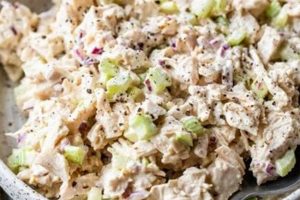
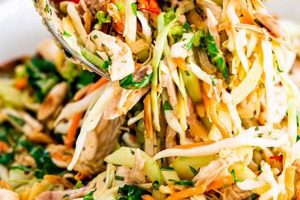
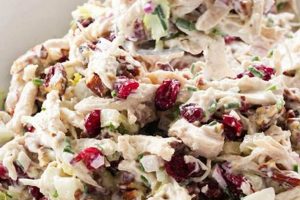
A dish combining cooked chicken, pineapple chunks, and other ingredients like celery, grapes, nuts, or mayonnaise creates a sweet and savory salad. Variations exist, ranging from simple mixtures with minimal dressing to more complex versions incorporating curry powder, chutney, or yogurt.
This type of salad offers a refreshing and flavorful meal option, suitable for picnics, potlucks, or light lunches. The blend of sweet and savory elements provides a balanced flavor profile, while the inclusion of fruits and vegetables contributes nutritional value. Historically, fruit and meat combinations have appeared in various cuisines, reflecting diverse cultural preferences. The modern iteration, often featuring mayonnaise-based dressings, gained popularity in the mid-20th century, coinciding with the rise of convenience foods.
Further exploration will cover variations in ingredients, preparation methods, nutritional information, and serving suggestions to provide a comprehensive understanding of this culinary creation.
Tips for a Delicious Pineapple Chicken Salad
Optimizing a pineapple chicken salad recipe involves careful consideration of ingredients and techniques. The following tips offer guidance for creating a flavorful and satisfying dish.
Tip 1: Chicken Selection: Rotisserie chicken offers convenience, while grilling or poaching fresh chicken breasts provides greater control over flavor and texture. Consider shredding or dicing the chicken based on preferred salad consistency.
Tip 2: Pineapple Preparation: Fresh pineapple offers superior flavor and texture compared to canned options. Ensure thorough draining to prevent excess moisture in the salad.
Tip 3: Balancing Sweetness and Acidity: Adjust the sweetness by varying the pineapple quantity or incorporating a touch of honey or maple syrup. A squeeze of lime juice can enhance the brightness and balance the sweetness.
Tip 4: Textural Variety: Toasted nuts, such as pecans or almonds, add crunch, while chopped celery or grapes contribute contrasting textures. Consider incorporating water chestnuts for a unique crispness.
Tip 5: Dressing Considerations: Classic mayonnaise provides a creamy base, while Greek yogurt offers a lighter, tangier alternative. Experiment with curry powder or a dash of Dijon mustard for added flavor complexity.
Tip 6: Chill Time: Allowing the salad to chill for at least 30 minutes enhances flavor development and allows the ingredients to meld.
Tip 7: Serving Suggestions: Serve the salad on croissants, lettuce cups, or crackers for a versatile presentation. Consider garnishing with fresh herbs or toasted coconut flakes.
By following these tips, one can create a pineapple chicken salad that is both flavorful and visually appealing. Attention to detail in ingredient selection and preparation ensures a satisfying culinary experience.
By understanding these nuances, one can create a customized version tailored to individual preferences.
1. Ingredients

Ingredient selection significantly impacts the final character of a pineapple chicken salad. The core components typically include cooked chicken, pineapple, and a binding agent, often mayonnaise or yogurt. These elements establish the foundational flavor profile. For instance, using grilled chicken versus rotisserie imparts a smoky nuance, while fresh pineapple offers brighter acidity compared to canned varieties. The choice of binding agent influences the salad’s richness and tang. Mayonnaise creates a creamier, more traditional salad, while Greek yogurt lends a lighter, tangier character.
Beyond the core ingredients, additions contribute complexity and textural contrast. Common additions include celery, grapes, nuts, and red onion. Celery provides a crisp, vegetal counterpoint, while grapes offer sweetness and juiciness. Nuts, such as pecans or almonds, introduce crunch and richness. Red onion contributes a sharp bite. Careful consideration of these additions allows for customization and balanced flavor profiles. A salad featuring toasted pecans and dried cranberries delivers a different sensory experience than one with slivered almonds and fresh grapes. Understanding these nuances empowers informed ingredient choices aligned with desired outcomes.
Ultimately, successful pineapple chicken salad preparation rests upon a thorough understanding of each ingredient’s contribution. This knowledge enables the creation of a balanced and flavorful dish tailored to individual preferences. Challenges may arise from ingredient availability or dietary restrictions, necessitating thoughtful substitutions. For instance, vegan alternatives to mayonnaise exist, and individuals with nut allergies can explore seeds like sunflower or pumpkin seeds for textural variation. Ultimately, a comprehensive understanding of ingredient interactions ensures a successful and satisfying culinary result.
2. Preparation
Preparation methods significantly influence the final quality and enjoyment of pineapple chicken salad. Careful execution of each step ensures optimal flavor development, texture, and food safety. From ingredient handling to combining components, a systematic approach yields superior results.
- Chicken Handling
Proper chicken handling is paramount for food safety and flavor optimization. Thorough cooking to an internal temperature of 165F (74C) eliminates bacterial risks. Cooling the chicken completely before incorporating it into the salad prevents mayonnaise-based dressings from becoming unsafe. Dicing or shredding the chicken into uniform pieces promotes even distribution and enhances the overall salad texture. Overcooked chicken can become dry and tough, while undercooked chicken presents health hazards. Therefore, precise temperature control and careful attention to doneness are critical.
- Pineapple Processing
Pineapple preparation contributes to the salad’s texture and moisture balance. Fresh pineapple requires careful coring and removal of the rind before dicing. Canned pineapple offers convenience but necessitates thorough draining to prevent excess liquid from thinning the salad dressing. The size of the pineapple pieces influences the salad’s overall mouthfeel. Larger chunks provide a more substantial bite, while smaller pieces integrate more seamlessly with other ingredients. Regardless of the pineapple source, controlling moisture content is crucial for achieving desired salad consistency.
- Ingredient Combination
The order and method of combining ingredients affect the final salad’s consistency and flavor distribution. Gently folding ingredients together prevents crushing delicate components and maintains textural integrity. Adding the dressing gradually allows for adjustments to the desired creaminess and prevents over-dressing. Incorporating ingredients in stages, such as adding nuts or dried fruit last, ensures their even distribution and prevents them from sinking to the bottom of the bowl.
- Chilling and Serving
Chilling the prepared salad allows flavors to meld and enhances the overall sensory experience. A minimum of 30 minutes of refrigeration is recommended, but longer chilling periods can further intensify flavors. Serving temperature also impacts enjoyment; excessively cold salad may numb taste buds, while room temperature salad can compromise food safety, especially with mayonnaise-based dressings. Proper chilling optimizes both flavor and food safety considerations.
These preparatory steps contribute significantly to a successful pineapple chicken salad. Attention to detail in each stage, from ingredient handling to chilling, elevates the final product from a simple mixture to a well-balanced and enjoyable dish. Overlooking any of these elements can compromise the salad’s quality, highlighting the importance of a meticulous approach to preparation.
3. Flavor Balance

Flavor balance is paramount in a successful pineapple chicken salad recipe. The dish inherently presents a complex interplay of sweet, savory, tangy, and creamy elements, demanding careful calibration to achieve a harmonious result. The pineapple’s sweetness must be balanced by the savory notes of the chicken and the tanginess of the dressing. An overemphasis on sweetness can result in a cloying dish, while insufficient sweetness can make the salad taste bland. For instance, a recipe relying solely on canned pineapple might lack the bright acidity of fresh pineapple, necessitating the addition of a squeeze of lime or lemon juice to achieve balance. Similarly, using a very mild chicken, such as poached breast, might require the incorporation of a more assertive dressing, perhaps one containing Dijon mustard or a touch of curry powder, to provide savory depth.
Real-life examples illustrate the practical significance of flavor balance. Consider a scenario where the mayonnaise base overwhelms the other flavors. The salad becomes overly rich and heavy, obscuring the delicate sweetness of the pineapple and the savory contribution of the chicken. Conversely, a salad with insufficient dressing might taste dry and lack cohesion. The individual ingredients remain disparate, failing to integrate into a unified whole. Achieving optimal flavor balance often involves experimentation and adjustment based on specific ingredient choices. A sweeter pineapple might require less added sugar in the dressing, while a tart pineapple might benefit from a touch of honey or maple syrup.
In summary, flavor balance acts as a cornerstone of a well-executed pineapple chicken salad. It requires a nuanced understanding of how individual ingredients contribute to the overall flavor profile and the ability to adjust components to create a harmonious result. Challenges arise when pre-made dressings or canned ingredients introduce unpredictable flavor variations. Overcoming these challenges involves careful tasting and adjustments during preparation. Ultimately, the successful execution of this dish depends on the cook’s ability to orchestrate a symphony of flavors, ensuring that no single element dominates the experience.
4. Presentation
Presentation plays a crucial role in the overall perception and enjoyment of pineapple chicken salad. While flavor remains paramount, visual appeal significantly enhances the dining experience. Thoughtful presentation elevates the dish from a simple mixture to a more enticing and appetizing meal. This applies to both casual and formal settings, impacting individual enjoyment and the impression conveyed to guests. Consider the difference between a scoop of salad plopped onto a plate versus a carefully arranged portion served on a bed of lettuce with a garnish of fresh herbs. The latter presentation immediately suggests greater care and attention to detail, enhancing perceived value and enjoyment.
Several factors contribute to effective presentation. Serving vessel selection plays a significant role. A classic bowl provides a familiar and functional option, while serving the salad in hollowed-out pineapple halves adds a touch of whimsy and visual interest. For more formal occasions, individual portions presented in elegant stemmed glasses or on crisp lettuce cups can elevate the perceived sophistication of the dish. Garnishes further enhance visual appeal. Toasted nuts, fresh herbs, or a sprinkle of paprika add color and texture, creating focal points and stimulating visual interest. These small details demonstrate care and attention, transforming a simple salad into a more visually engaging culinary creation. Portion size also contributes to presentation; overly large portions can appear overwhelming, while meager servings might suggest a lack of generosity.
Practical implications of presentation extend beyond aesthetics. Consider a buffet setting; a well-presented pineapple chicken salad is more likely to attract attention and entice guests to sample it. In a restaurant context, presentation directly impacts customer satisfaction and perceived value. Challenges arise when balancing practicality with aesthetics. For instance, intricate garnishes might be time-consuming for large-scale catering events. In such scenarios, simpler yet effective presentation techniques, such as using colorful serving dishes or arranging the salad attractively on platters, can still create a positive visual impact. Ultimately, understanding the impact of presentation allows one to enhance the dining experience, ensuring that the visual appeal complements the delicious flavors of the pineapple chicken salad.
5. Variations

The inherent adaptability of pineapple chicken salad allows for extensive variation, transforming a basic recipe into a canvas for culinary creativity. Exploring these variations expands the dish’s versatility, catering to diverse palates and dietary preferences. From ingredient substitutions to flavor profile adjustments, understanding the potential for variation unlocks a world of culinary possibilities within this seemingly simple dish.
- Protein Choices
While chicken traditionally anchors this salad, alternative protein sources offer diverse flavor profiles and cater to dietary restrictions. Substituting cooked shrimp or flaked tuna introduces seafood nuances, while chickpeas or tofu provide vegetarian options. These substitutions inherently shift the salad’s overall character. For instance, using smoked tofu imparts a smoky depth, while shrimp contributes a delicate sweetness. These protein variations necessitate adjustments to complementary ingredients and dressings to maintain flavor balance. A lighter vinaigrette might pair well with shrimp, while a richer, spicier dressing complements tofu.
- Fruit and Vegetable Combinations
Beyond pineapple, incorporating other fruits and vegetables adds textural and flavor complexity. Grapes, cranberries, and mandarin oranges contribute varied sweetness and juiciness, while chopped celery, bell peppers, or water chestnuts offer contrasting crispness. Real-life examples include a tropical variation featuring mango and red onion, or a more autumnal version with dried cranberries and pecans. These additions broaden the salad’s nutritional value and introduce diverse flavor dimensions. A combination of grapes and walnuts offers a different sensory experience than a mix of diced apple and celery. Choosing complementary flavor and texture combinations is crucial for creating a well-balanced and appealing salad.
- Dressing Adaptations
The dressing significantly influences the salad’s overall flavor profile. While mayonnaise remains a classic choice, variations like Greek yogurt, sour cream, or vinaigrette offer lighter, tangier alternatives. Flavor infusions further personalize the dressing. Curry powder introduces warmth and complexity, while a touch of Dijon mustard adds a sharp bite. A creamy avocado dressing provides a healthy and flavorful alternative to traditional mayonnaise, while a light vinaigrette featuring lime juice and cilantro enhances the tropical notes of the pineapple. These adaptations cater to individual preferences and dietary restrictions, expanding the salad’s versatility.
- Serving Styles
Presentation impacts the overall dining experience. Traditional service in a bowl offers simplicity, while serving the salad on lettuce cups, croissants, or crackers adds elegance and portability. These variations cater to different occasions and individual preferences. For a casual lunch, a simple bowl suffices, while serving the salad in hollowed-out pineapple halves adds a festive touch for a summer gathering. These serving styles influence portion control and convenience, adapting the salad to various contexts.
These variations demonstrate the remarkable adaptability of pineapple chicken salad. By understanding the interplay of ingredients, dressings, and presentation, one can transform a basic recipe into a personalized culinary expression. Whether seeking a lighter, healthier option or a more indulgent and flavorful creation, exploring these variations opens up a world of possibilities, ensuring continued enjoyment and culinary exploration.
Frequently Asked Questions
This section addresses common inquiries regarding pineapple chicken salad preparation and variations.
Question 1: What type of chicken is best suited for this salad?
While rotisserie chicken offers convenience, cooked and shredded chicken breasts or thighs provide greater control over seasoning and texture. Grilling or poaching chicken enhances flavor complexity.
Question 2: Can canned pineapple be used instead of fresh?
Canned pineapple can be substituted, but fresh pineapple offers superior flavor and texture. If using canned pineapple, ensure thorough draining to prevent excess liquid in the salad.
Question 3: How can the sweetness of the salad be adjusted?
Sweetness levels can be adjusted by varying the quantity of pineapple or incorporating a touch of honey or maple syrup. A squeeze of lime or lemon juice balances sweetness with acidity.
Question 4: What are suitable alternatives to mayonnaise in the dressing?
Greek yogurt or sour cream offer lighter alternatives to mayonnaise, while avocado-based dressings provide a creamy, healthier option. Vinaigrettes also offer a lighter, tangier alternative.
Question 5: How long can pineapple chicken salad be stored in the refrigerator?
Properly stored in an airtight container, pineapple chicken salad typically lasts for 3-5 days in the refrigerator. Discard any salad with an off odor or appearance.
Question 6: Can this salad be frozen?
Freezing is not recommended, as it negatively impacts the texture of the ingredients, particularly the mayonnaise or yogurt-based dressing, upon thawing.
Addressing these common questions aims to clarify preparation methods and storage guidelines, ensuring a successful and enjoyable culinary experience.
Exploring these frequently asked questions provides a comprehensive understanding of various aspects related to pineapple chicken salad, from ingredient selection to storage. Further sections will delve into specific recipe variations and nutritional information.
Pineapple Chicken Salad Recipe
Exploration of pineapple chicken salad recipes reveals a dish offering versatility and adaptability. From ingredient selection and preparation techniques to flavor balancing and presentation, each element contributes to the final product. Understanding the interplay of sweet, savory, and acidic components allows for customization and flavor optimization. Variations in protein choices, fruits, vegetables, and dressings further expand the recipe’s potential, catering to diverse preferences and dietary needs. Proper storage practices ensure food safety and maintain optimal quality.
Pineapple chicken salad demonstrates how a seemingly simple dish can become a canvas for culinary creativity. Careful consideration of each component elevates the final product from a basic mixture to a well-balanced and enjoyable culinary experience. Continued exploration of flavor profiles and ingredient combinations promises further evolution and enjoyment of this versatile dish.