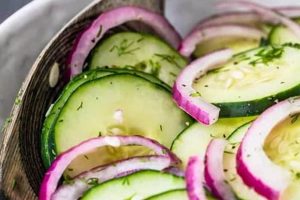
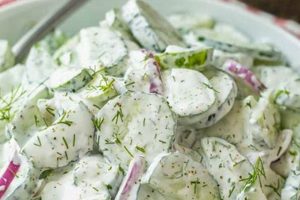
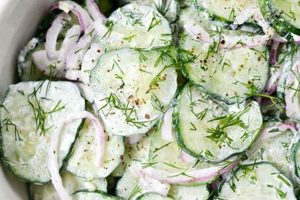
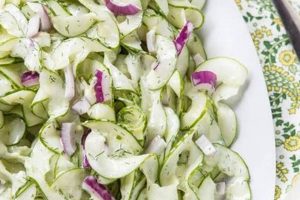
A refreshing and crisp dish typically combines thinly sliced cucumbers and radishes, often with other complementary ingredients like onions, herbs, and a light vinaigrette. Variations can include additions such as avocado, feta cheese, or different types of vinegar and oil for the dressing. A simple example features thinly sliced cucumbers and radishes tossed with a mixture of rice vinegar, sesame oil, and a sprinkle of black sesame seeds.
Such salads offer a healthy and flavorful option, contributing vitamins, minerals, and fiber to the diet. The hydrating nature of cucumbers and the peppery bite of radishes create a balanced flavor profile. Historically, both vegetables have been cultivated for centuries and incorporated into various cuisines worldwide, showcasing their versatility. Their combined presence in a salad provides a light yet satisfying dish, suitable as a side or a light meal.
The following sections will delve into specific variations of this culinary creation, exploring diverse ingredient combinations, dressing options, and tips for achieving optimal flavor and texture. Nutritional information and potential health benefits will also be examined.
Tips for Preparing a Cucumber and Radish Salad
Optimizing flavor and texture requires attention to detail throughout the preparation process. The following tips provide guidance for creating a truly exceptional salad.
Tip 1: Ingredient Selection: Opt for firm cucumbers and radishes with vibrant color and no signs of bruising or blemishes. Peak season produce offers the best flavor.
Tip 2: Slicing Techniques: Consistent thin slices ensure even flavor distribution and a pleasant texture. A mandoline slicer yields uniform results, but a sharp knife can also be used effectively.
Tip 3: Salting Cucumbers: Salting cucumbers prior to mixing draws out excess moisture, preventing a watery salad. After salting, gently pat the cucumber slices dry with a paper towel.
Tip 4: Dressing Timing: Add the dressing just before serving to prevent the vegetables from becoming soggy. This preserves their crispness and maintains the salad’s fresh appeal.
Tip 5: Herb Selection: Fresh herbs enhance flavor complexity. Dill, mint, and parsley complement the flavors of cucumber and radish particularly well.
Tip 6: Balancing Flavors: A balance of acidity, sweetness, and saltiness is key to a successful dressing. Experiment with different vinegars, oils, and sweeteners to achieve the desired profile.
Tip 7: Chilling Time (Optional): Briefly chilling the salad before serving enhances the refreshing quality, especially in warmer weather. Avoid prolonged chilling to prevent the vegetables from becoming overly soft.
By following these guidelines, one can create a salad that showcases the inherent qualities of these fresh ingredients, resulting in a delightful culinary experience.
The concluding section will offer final thoughts and suggestions for incorporating this versatile dish into various meal plans.
1. Fresh, Crisp Ingredients

The foundation of a successful cucumber and radish salad rests upon the quality of its primary components: fresh, crisp cucumbers and radishes. These ingredients provide the characteristic flavor, texture, and visual appeal that define the dish. Selecting and handling these vegetables properly is paramount to achieving optimal results.
- Sourcing Quality Produce
Locally sourced, seasonal produce typically offers superior flavor and texture. Farmers’ markets and reputable grocers are ideal locations for finding cucumbers and radishes at their peak. Look for firm, unblemished vegetables with vibrant color. Avoid those with soft spots, bruises, or signs of wilting. The quality of the raw ingredients directly impacts the final salad’s taste and overall appeal.
- Proper Storage
Maintaining freshness requires appropriate storage techniques. Cucumbers should be refrigerated in a crisper drawer or wrapped in a slightly damp paper towel to prevent dehydration. Radishes, with their greens removed, can be stored similarly in a sealed container or plastic bag. Proper storage extends shelf life and preserves optimal crispness.
- Preparation Techniques
Gentle handling and appropriate preparation methods further contribute to the salad’s success. Washing vegetables thoroughly and using sharp knives for slicing ensures clean cuts and minimizes bruising. Salting cucumbers prior to incorporating them into the salad draws out excess moisture, maintaining a crisp texture and preventing a watery final product.
- Flavor Enhancement
The inherent flavors of fresh cucumbers and radishes can be enhanced through complementary ingredients. Fresh herbs, such as dill, mint, or parsley, provide aromatic complexity. A well-balanced vinaigrette, incorporating acidity, sweetness, and saltiness, amplifies the vegetables’ natural flavors. These additions create a harmonious balance and elevate the sensory experience.
By prioritizing fresh, crisp ingredients and employing proper handling techniques, one ensures a cucumber and radish salad that exemplifies both flavor and textural appeal. The overall quality of these core components directly translates into a more satisfying and enjoyable culinary experience. Attention to these details elevates a simple salad into a truly delightful dish.
2. Thin, even slicing

Thin, even slicing plays a crucial role in a successful cucumber and radish salad recipe. This technique impacts several aspects of the final dish, from texture and flavor distribution to visual appeal and dressing adherence. Slices of consistent thinness ensure each bite offers a balanced combination of cucumber and radish, maximizing the interplay of flavors and textures. Uniformity also allows the dressing to coat the vegetables evenly, preventing pockets of excess dressing or undressed pieces. Consider the difference between a salad with thick, unevenly chopped vegetables and one with thinly and uniformly sliced components. The former often results in a less harmonious blend of flavors, with some bites dominated by one ingredient and others lacking any dressing. Visually, thin, even slices create a more refined and elegant presentation.
The practical significance of this technique extends beyond aesthetics and flavor. Thinly sliced vegetables offer a more delicate texture, enhancing the overall eating experience. Imagine biting into a thick chunk of cucumber in a salad meant to be light and refreshing. The contrast in textures would disrupt the intended harmony. Thin slices, however, integrate seamlessly with the other components, creating a cohesive and enjoyable culinary experience. Furthermore, thin slicing increases the surface area of the vegetables, allowing them to absorb the dressing more effectively and develop a more complex flavor profile. This also contributes to a more evenly distributed flavor throughout the salad.
Achieving thin, even slices requires the appropriate tools and techniques. A mandoline slicer offers the most consistent results, but a sharp knife wielded with a steady hand can also achieve the desired outcome. Practicing proper knife skills enhances precision and control, leading to more uniform slices. Regardless of the chosen method, prioritizing thin, even slicing demonstrably elevates the final cucumber and radish salad, enhancing its sensory appeal and overall enjoyment.
3. Balanced Vinaigrette

A balanced vinaigrette constitutes a critical component of a successful cucumber and radish salad recipe. It provides the acidic element that complements the inherent flavors of the vegetables, enhancing their natural sweetness and adding depth to the overall profile. The vinaigrette acts as a unifying element, binding the individual components into a cohesive and flavorful whole. A poorly constructed vinaigrette can easily overpower the delicate flavors of the cucumbers and radishes or leave the salad tasting bland and uninspired. Therefore, understanding the principles of a balanced vinaigrette is essential for creating a truly exceptional salad.
- Acidity
Acidity forms the backbone of a vinaigrette, providing the necessary brightness and sharpness to cut through the subtle flavors of the vegetables. Common acidic ingredients include various types of vinegar (rice vinegar, apple cider vinegar, white wine vinegar) and citrus juices (lemon, lime). The level of acidity should be carefully calibrated to complement, not overpower, the other ingredients. For example, a highly acidic vinaigrette might overwhelm the delicate flavor of fresh cucumbers.
- Sweetness
A touch of sweetness balances the acidity and rounds out the flavor profile of the vinaigrette. Sugar, honey, maple syrup, or even a pinch of fruit preserves can serve as sweeteners. The amount of sweetener should be judiciously applied to avoid creating a cloying or overly sweet dressing. A small amount of honey can complement the peppery bite of radishes, while too much could mask their distinct flavor.
- Oil
Oil provides richness and texture to the vinaigrette, coating the vegetables and contributing to a more satisfying mouthfeel. Common choices include olive oil, avocado oil, and sesame oil. The type of oil selected can significantly influence the overall flavor profile of the salad. For instance, a robust extra virgin olive oil might clash with the delicate flavors of the vegetables, while a lighter olive oil or a neutral oil like grapeseed oil would provide a more harmonious backdrop.
- Seasoning
Proper seasoning with salt and pepper enhances the flavors of the other ingredients and brings the vinaigrette into balance. Salt amplifies the inherent sweetness of the vegetables and helps to meld the flavors of the dressing. Pepper adds a touch of complexity and spice. The amount of seasoning should be adjusted to taste, ensuring it complements rather than overwhelms the other flavors. Too much salt can make the salad unpleasantly salty, while too much pepper can overpower the delicate cucumber and radish flavors.
A well-balanced vinaigrette elevates a simple cucumber and radish salad from a basic dish to a sophisticated culinary creation. By carefully considering the interplay of acidity, sweetness, oil, and seasoning, one can create a dressing that perfectly complements the fresh, crisp flavors of the vegetables. This harmonious blend of flavors transforms the salad into a truly delightful and refreshing culinary experience.
4. Complementary Herbs

Complementary herbs contribute significantly to the flavor complexity of a cucumber and radish salad recipe. These aromatic additions elevate the basic combination of cucumber and radish, transforming a simple salad into a more nuanced and flavorful dish. The selection and application of herbs require consideration of their individual flavor profiles and how they interact with the inherent flavors of the primary ingredients. Herbs provide more than just a hint of freshness; they can create layers of flavor that enhance the overall sensory experience.
Specific herbs exhibit inherent affinities for cucumber and radish. Dill, with its slightly tangy and anise-like notes, complements the cool, crisp flavor of cucumber. Mint, particularly spearmint, adds a refreshing sweetness and counterbalances the peppery bite of radish. Parsley, with its clean, slightly peppery flavor, provides a versatile backdrop that enhances both cucumber and radish. Chives offer a subtle onion flavor that adds depth without overpowering the delicate flavors of the salad’s main components. The quantity of herbs used also plays a crucial role. Too much can overwhelm the delicate balance, while too little might render their presence imperceptible. A light hand and careful consideration of flavor pairings ensure a harmonious blend.
Consider a cucumber and radish salad with a rice vinegar dressing. The addition of fresh dill enhances the brightness of the vinegar and complements the subtle sweetness of the cucumber. Alternatively, a salad featuring a lemon vinaigrette might benefit from the addition of fresh mint, creating a refreshing and vibrant flavor combination. These examples illustrate the practical significance of understanding how different herbs interact with other ingredients. Careful selection and application of complementary herbs elevate the cucumber and radish salad from a simple side dish to a more complex and satisfying culinary experience.
5. Optional additions (e.g., feta)
Optional additions represent opportunities to enhance flavor profiles, introduce textural contrasts, and elevate nutritional value within a cucumber and radish salad recipe. These additions, while not essential to the core composition of the salad, provide avenues for customization and creativity. Feta cheese, for instance, introduces a salty, tangy element that complements the fresh, crisp vegetables. Its crumbly texture contrasts with the smoothness of the cucumber and the slight crunch of the radish. Avocado adds creaminess and healthy fats, contributing a richer mouthfeel and a subtly nutty flavor. Toasted nuts or seeds, such as sesame seeds or slivered almonds, offer textural complexity and subtle nuttiness. Incorporating protein-rich elements like chickpeas or grilled chicken transforms the salad into a more substantial meal. The strategic use of optional additions expands the culinary possibilities, catering to individual preferences and dietary needs.
The choice of optional additions influences the overall balance and character of the salad. Adding ingredients like feta or olives introduces a salty, savory dimension, potentially requiring adjustments to the vinaigrette. The inclusion of creamy elements, such as avocado or a yogurt-based dressing, might necessitate a reduction in the amount of oil to prevent an overly rich final product. Understanding these potential interactions allows for thoughtful ingredient selection and balanced flavor combinations. A salad featuring feta cheese, Kalamata olives, and a lemon vinaigrette might offer a Mediterranean-inspired flavor profile. Conversely, incorporating avocado, toasted pepitas, and a lime-cilantro dressing creates a vibrant and refreshing salad with a Southwestern flair.
Consideration of optional additions demonstrates a nuanced understanding of flavor pairings and textural interplay. It transforms a simple cucumber and radish salad into a canvas for culinary expression, allowing for customization and creativity within a basic framework. These additions, while optional, offer significant potential to elevate the sensory experience and nutritional value, ultimately contributing to a more satisfying and enjoyable culinary outcome.
6. Proper Seasoning
Proper seasoning represents a crucial step in finalizing a cucumber and radish salad recipe. It elevates the inherent flavors of the fresh ingredients and ensures a balanced, palatable final product. Seasoning not only enhances taste but also contributes to the overall sensory experience, affecting how other flavors are perceived and how the dish is enjoyed. Over- or under-seasoning can drastically impact the final result, highlighting the importance of understanding the nuances of this seemingly simple step.
- Salt’s Role
Salt amplifies the natural sweetness of the vegetables and harmonizes the other flavors present in the salad, particularly the acidity of the vinaigrette. It also helps to draw out excess moisture from the cucumbers, contributing to a crisper texture. Different types of salt, such as kosher salt or sea salt, offer varying textures and levels of salinity. The quantity of salt used should be carefully calibrated to enhance, not overpower, the delicate flavors of the vegetables.
- Pepper’s Contribution
Pepper adds a subtle layer of complexity and spice. Freshly ground black pepper offers a more robust flavor than pre-ground pepper. The type of pepper used, such as black pepper, white pepper, or even a small amount of pink peppercorns, can introduce different flavor nuances. The amount of pepper should complement the other ingredients and the overall flavor profile of the salad. Overuse can easily mask the delicate flavors of the cucumber and radish.
- Balancing Flavors
The balance between salt and pepper is essential. The goal is to create a harmonious flavor profile where neither ingredient dominates. Tasting and adjusting seasoning throughout the preparation process ensures the final salad achieves the desired balance. This iterative approach allows for adjustments based on other ingredients present, such as the acidity of the vinaigrette or the presence of salty additions like feta cheese.
- Timing of Seasoning
The timing of seasoning can influence the final outcome. Salting cucumbers before adding other ingredients helps draw out excess moisture and maintain crispness. Adding salt and pepper to the vinaigrette ensures even distribution throughout the salad. Final seasoning adjustments just before serving allow for last-minute corrections and account for any flavor changes that may have occurred during preparation or chilling.
Proper seasoning elevates the cucumber and radish salad from a basic combination of ingredients to a well-balanced and flavorful dish. Attention to the nuances of salt and pepper, their balance, and timing contributes significantly to the overall sensory experience. This seemingly simple step has a profound impact on the final product, highlighting the importance of careful seasoning in achieving a truly exceptional cucumber and radish salad.
7. Serve Chilled
Serving a cucumber and radish salad chilled significantly enhances its sensory appeal and overall enjoyment. Temperature plays a crucial role in the perception of flavor and texture, especially with dishes featuring fresh, crisp ingredients. Chilling accentuates the refreshing qualities of cucumbers and radishes, intensifying their inherent flavors and creating a more pleasurable culinary experience. The practice of chilling extends beyond mere preference; it demonstrably impacts the salad’s palatability and perceived freshness.
- Enhanced Crispness and Texture
Chilling firms the cellular structure of cucumbers and radishes, enhancing their crispness and providing a more satisfying textural contrast. A chilled salad offers a refreshing crunch that complements the delicate flavors of the vegetables. Serving the salad at room temperature or warmer diminishes this desirable textural element, resulting in a less appealing and potentially less refreshing experience. The difference between a crisp, chilled radish and one that has softened at room temperature highlights the importance of temperature in achieving optimal texture.
- Intensified Flavor Perception
Lower temperatures intensify the perception of certain flavors, particularly the refreshing, slightly sweet notes of cucumbers and the peppery bite of radishes. Chilling accentuates these contrasting flavors, creating a more dynamic and enjoyable sensory experience. A warmer salad might mute these distinct flavor profiles, resulting in a less vibrant and potentially less satisfying taste. The heightened perception of flavor in chilled vegetables exemplifies the interplay between temperature and taste.
- Improved Palatability and Refreshment
A chilled salad provides a more refreshing and palate-cleansing experience, particularly in warmer weather. The cool temperature contrasts pleasantly with the surrounding environment, offering a welcome respite from heat. This enhanced sense of refreshment contributes significantly to the overall enjoyment of the dish. Serving a room-temperature salad on a hot day diminishes this refreshing quality, resulting in a less satisfying culinary experience. The contrast between a chilled salad and a room-temperature salad on a warm day underscores the importance of temperature in achieving optimal palatability.
- Preservation of Freshness
Chilling helps preserve the freshness of the salad by slowing down enzymatic activity and bacterial growth. This is particularly important for salads containing delicate ingredients prone to wilting or spoilage. While chilling does not indefinitely preserve the salad, it extends its optimal window of consumption. Serving a salad that has been left at room temperature for an extended period compromises both its flavor and its food safety. The impact of temperature on food preservation underscores the importance of chilling for maintaining freshness and quality.
Serving a cucumber and radish salad chilled elevates it from a simple side dish to a truly refreshing and enjoyable culinary experience. The lower temperature enhances crispness, intensifies flavor perception, improves palatability, and preserves freshness. These combined effects underscore the significance of “serve chilled” as a key element in a successful cucumber and radish salad recipe. Chilling optimizes the sensory qualities of the dish, maximizing its refreshing and flavorful potential.
Frequently Asked Questions
This section addresses common inquiries regarding cucumber and radish salad preparation, offering practical guidance and clarifying potential uncertainties.
Question 1: How can excess moisture in cucumber be minimized?
Salting sliced cucumbers and allowing them to rest for approximately 15 minutes draws out excess water. Gently patting them dry with a paper towel before adding to the salad further reduces moisture and prevents a watery final product.
Question 2: What are the best radish varieties for this type of salad?
While traditional red globe radishes are commonly used, other varieties, such as French breakfast radishes or watermelon radishes, offer varying colors and subtle flavor nuances, enhancing visual appeal and taste complexity.
Question 3: Can this salad be prepared in advance?
While the components can be prepared separately ahead of time, it’s generally recommended to combine the salad just before serving to maintain optimal texture and prevent the vegetables from becoming soggy. The dressing can be prepared separately and added just prior to serving.
Question 4: What alternatives exist for those with vinegar sensitivities?
Lemon or lime juice offer viable alternatives to vinegar in the dressing, providing necessary acidity while avoiding potential sensitivities. Adjustments to sweetness and other seasonings might be necessary to achieve a balanced flavor profile.
Question 5: How can this salad be made more substantial as a main course?
Adding protein-rich ingredients such as grilled chicken, chickpeas, or lentils transforms the salad into a more complete and satisfying meal. Adjusting the quantity of vegetables and dressing accordingly maintains a balanced composition.
Question 6: What storage recommendations apply to leftover salad?
Storing leftover salad in an airtight container in the refrigerator maintains freshness for a short period, typically one to two days. However, optimal texture and flavor are best enjoyed immediately after preparation. Consume any leftovers promptly.
Understanding these aspects of preparation and customization allows for informed choices in crafting a cucumber and radish salad tailored to individual preferences and dietary needs. Careful consideration of each element contributes to a more enjoyable and satisfying culinary experience.
This concludes the frequently asked questions section. The following section will offer a collection of varied recipes for cucumber and radish salads, exploring diverse flavor profiles and ingredient combinations.
Cucumber and Radish Salad Recipe
Exploration of the cucumber and radish salad recipe has revealed its versatility and potential for culinary creativity. From ingredient selection and preparation techniques to dressing composition and optional additions, each element contributes to the final dish’s overall success. Emphasis on fresh, high-quality produce, precise slicing methods, and a balanced vinaigrette ensures optimal flavor and texture. The judicious use of complementary herbs and optional additions, such as feta cheese, avocado, or toasted nuts, further enhances the sensory experience. Proper seasoning and chilling optimize the salad’s refreshing qualities and amplify its inherent flavors.
The simplicity of this salad belies its culinary potential. Its adaptability to diverse flavor profiles and ingredient combinations positions it as a versatile dish suitable for various occasions and palates. Continued exploration of flavor combinations and creative interpretations promises further evolution of this classic culinary creation. Ultimately, the cucumber and radish salad recipe exemplifies how a few simple, fresh ingredients, when thoughtfully combined, can yield a remarkably satisfying and refreshing culinary experience.