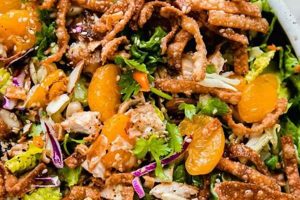
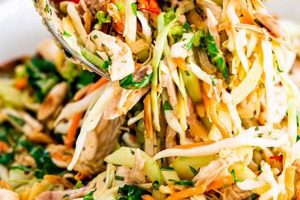
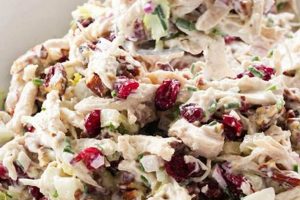
A quintessential American dish, this salad typically features shredded chicken, crisp vegetables like lettuce, cabbage, and carrots, often with crunchy noodles and toasted almonds or sesame seeds. The dressing, a creamy, slightly sweet, and tangy blend, commonly incorporates ingredients like soy sauce, sesame oil, and rice vinegar. Variations abound, with some versions including mandarin oranges, water chestnuts, or dried cranberries.
This salad’s popularity stems from its satisfying combination of textures and flavors, offering a balance of savory, sweet, and crunchy elements. Its adaptable nature allows for customization to individual preferences and dietary needs. Though inspired by Chinese cuisine, this dish has evolved into a uniquely American creation, reflecting the country’s culinary history of adapting and incorporating flavors from diverse cultures. It has become a staple at potlucks, picnics, and casual restaurants across the United States.
The following sections will explore the origins and evolution of this beloved salad, provide a detailed recipe for a classic version, and offer variations for customizing the ingredients and dressing.
Tips for a Superior Salad
Achieving optimal flavor and texture requires attention to detail in ingredient selection and preparation. The following tips offer guidance for creating a truly exceptional salad.
Tip 1: Crisp Vegetables are Key: Use the freshest, crispest vegetables available. Consider chilling shredded lettuce and cabbage before assembling the salad to enhance their crunch.
Tip 2: Protein Perfection: Poached or rotisserie chicken offer convenient and flavorful protein options. Ensure the chicken is shredded or diced into bite-sized pieces.
Tip 3: Noodle Nuances: Crunchy noodles, such as wonton strips or chow mein noodles, add a satisfying textural contrast. Ensure they remain crisp by adding them just before serving.
Tip 4: The Art of the Dressing: The dressing is crucial. Freshly prepared dressings using high-quality ingredients offer superior flavor. Balance the sweet, sour, and savory elements for a harmonious blend.
Tip 5: Toast for Taste: Toasting nuts and seeds enhances their flavor and aroma. Toast almonds or sesame seeds lightly in a dry pan until fragrant.
Tip 6: Customize and Conquer: The adaptable nature of this salad allows for creative variations. Consider adding mandarin orange segments, dried cranberries, or water chestnuts for added flavor and texture.
Tip 7: The Importance of Timing: To prevent the salad from becoming soggy, dress it just before serving. This preserves the crispness of the vegetables and noodles.
By following these tips, one can elevate this classic dish to new heights, ensuring a delightful culinary experience.
These insights provide a foundation for crafting a truly memorable salad. The following section offers a complete recipe to guide culinary endeavors.
1. Fresh, Crisp Vegetables

Fresh, crisp vegetables are fundamental to a successful rendition of this American classic. They provide textural contrast to the tender chicken and crunchy noodles, contributing a refreshing element that balances the richness of the dressing. Without crisp vegetables, the salad can become heavy and lose its characteristic lightness. Napa cabbage, romaine lettuce, and shredded carrots are common choices, offering a variety of textures and flavors. Iceberg lettuce, while less nutritious, is sometimes used for its crispness. The freshness of these ingredients directly impacts the overall quality of the salad; wilted or limp vegetables detract significantly from the experience. For example, using crisp romaine hearts instead of pre-shredded bagged lettuce elevates the salad’s overall quality.
The choice of vegetables can also influence the nutritional value and aesthetic appeal of the salad. Darker greens like spinach or kale can boost the vitamin content. Adding thinly sliced red onion or bell peppers introduces vibrant colors and sharper flavors. Practical applications of this understanding include proper storage of vegetables to maintain their crispness refrigeration in airtight containers lined with paper towels can help absorb excess moisture. Furthermore, prepping vegetables close to serving time prevents them from becoming soggy. Chefs often employ techniques like ice baths to revive slightly wilted greens.
In summary, the emphasis on fresh, crisp vegetables underscores their critical role in achieving a balanced and satisfying culinary experience. The selection, handling, and storage of these ingredients directly affect the final product’s quality, taste, and visual appeal. Overlooking this aspect can compromise the integrity of the dish, highlighting the importance of prioritizing fresh, high-quality produce when creating this iconic American salad.
2. Tender Chicken
Tender chicken plays a crucial role in the success of the great American Chinese chicken salad. It provides a substantial protein source, contributing to the salad’s satisfying and balanced nature. The tenderness of the chicken is paramount; dry, overcooked chicken can significantly detract from the overall enjoyment. This tenderness allows the chicken to absorb the flavors of the dressing, enhancing its integration with the other ingredients. For instance, using pre-cooked rotisserie chicken offers a convenient and flavorful option, while poaching chicken breasts provides a healthier, more controlled approach. Improperly cooked chicken, such as grilled or pan-fried variations, can result in a tougher, less desirable texture within the salad context. Therefore, achieving tender chicken is essential for a harmonious blend of flavors and textures.
Several factors influence the chicken’s tenderness. The cooking method employed significantly impacts the final result. Poaching or steaming generally yields the most tender results, as these methods gently cook the chicken in liquid, preventing it from drying out. Alternatively, using leftover roasted or rotisserie chicken offers a practical and flavorful shortcut, provided the chicken remains moist. Marinating the chicken before cooking can also contribute to tenderness and enhance flavor absorption. Conversely, overcooking or using high-heat cooking methods can result in tough, dry chicken, negatively impacting the salad’s overall quality. Consider the practical implications: preparing the chicken in advance allows for efficient assembly closer to serving time.
In conclusion, the importance of tender chicken in the Chinese chicken salad cannot be overstated. It serves as a vital protein component, contributing to the salad’s satisfying nature and overall balance. The choice of cooking method and careful attention to cooking time directly impact the chicken’s tenderness, ultimately affecting the salad’s success. Prioritizing tender chicken elevates the dish from a simple salad to a more refined and enjoyable culinary experience. The focus on tender chicken reflects a broader emphasis on quality ingredients and careful preparation that define successful renditions of this classic dish.
3. Crunchy Noodles/Seeds
Crunchy noodles or seeds represent an essential textural component within the Americanized Chinese chicken salad. Their presence offers a stark contrast to the softer elements of the salad, such as the chicken and leafy greens. This contrast elevates the sensory experience, providing a satisfying interplay of textures that contributes significantly to the dish’s overall appeal. The crispness also offers an auditory element the satisfying crunch further enhancing enjoyment. Consider the difference between a salad with crisp wonton strips and one without: the absence of this element diminishes the complexity and satisfaction derived from each bite. Examples of suitable crunchy additions include fried wonton strips, crispy chow mein noodles, toasted almonds, and sesame seeds. Each option contributes a unique flavor profile and level of crispness, allowing for customization based on individual preferences. This textural element transforms the salad from a simple combination of ingredients into a multi-faceted culinary experience.
The specific choice of crunchy element influences not only the texture but also the flavor profile of the salad. Wonton strips, often seasoned with spices, introduce a savory dimension, while toasted almonds offer a nutty richness. Sesame seeds, particularly when toasted, contribute a subtle nuttiness and enhance the Asian-inspired flavors. The quantity of crunchy elements also requires careful consideration. Too few, and the desired textural contrast diminishes; too many, and the crunchy elements may overwhelm the other flavors and textures. Achieving the proper balance ensures the crunch enhances, rather than dominates, the overall composition. This balance further underscores the crucial role of these components in achieving a well-rounded and satisfying dish. Practical applications include adding the crunchy elements immediately before serving to maintain optimal crispness. Storing them separately from the dressed salad prevents them from becoming soggy, preserving their textural contribution.
In summary, crunchy noodles or seeds play a pivotal role in defining the Americanized Chinese chicken salad experience. They provide a vital textural counterpoint to the softer ingredients, enhancing the sensory experience and contributing to the dish’s widespread popularity. Careful selection and application of these elements ensure the desired balance of textures and flavors, highlighting the importance of thoughtful ingredient selection in crafting a successful and satisfying salad. The attention to this seemingly minor detail elevates the dish from a simple mixture of ingredients to a carefully constructed culinary creation, demonstrating the significant impact of textural contrast on the overall dining experience. This understanding allows for informed choices that maximize the enjoyment and appreciation of this beloved American dish.
4. Balanced, flavorful dressing

The dressing serves as the unifying element in a Chinese chicken salad, binding the diverse ingredients and contributing significantly to its distinctive character. A well-executed dressing elevates the salad from a simple collection of components to a harmonious and flavorful dish. The balance of flavors within the dressing is crucial; it must complement the other ingredients without overpowering them. This balance is typically achieved through a careful interplay of sweet, sour, savory, and umami notes.
- Sweetness
Sweetness often comes from ingredients like sugar, honey, or fruit juices. It provides a counterpoint to the savory and acidic elements, contributing to the complexity of the dressing. For example, a touch of honey can mellow the sharpness of vinegar while adding a subtle floral note. The level of sweetness should be carefully calibrated to avoid an overly sugary profile that might mask the other flavors.
- Acidity
Acidity, typically derived from rice vinegar, apple cider vinegar, or citrus juices, provides brightness and cuts through the richness of the other ingredients. It also acts as a preservative, extending the salad’s shelf life. Rice vinegar, for instance, offers a milder acidity compared to other vinegars, aligning well with the delicate flavors of the salad. The appropriate level of acidity provides a refreshing tang without being overly sour.
- Savory and Umami
Savory and umami notes are essential for depth of flavor. These are often achieved through soy sauce, sesame oil, ginger, and garlic. Soy sauce contributes saltiness and umami, while sesame oil adds a nutty richness. Freshly grated ginger and minced garlic provide pungent aromatic complexity. The careful balance of these savory elements prevents the dressing from becoming overly salty or one-dimensional.
- Texture and Emulsification
The texture of the dressing also plays a role in the overall experience. A smooth, emulsified dressing coats the ingredients evenly, ensuring that every bite carries a balanced flavor. This emulsification is often achieved by whisking the dressing vigorously or using a small amount of emulsifier like Dijon mustard. A creamy dressing, sometimes achieved by adding a touch of mayonnaise or yogurt, provides a richer mouthfeel and further enhances the salad’s textural complexity. However, the dressing should not be so thick that it weighs down the delicate ingredients.
The interplay of these elementssweetness, acidity, savory/umami notes, and texturecreates a dressing that complements the chicken, vegetables, and crunchy elements, culminating in a harmonious and flavorful experience. A successful dressing enhances, rather than masks, the individual flavors of the other components, contributing to the overall balance and appeal that defines a truly great American Chinese chicken salad. Mastering the art of a balanced and flavorful dressing is therefore essential for creating an exceptional rendition of this popular dish.
5. Adaptable, Customizable Nature

The adaptable, customizable nature of Chinese chicken salad contributes significantly to its status as a beloved American dish. This inherent flexibility allows the salad to cater to a wide range of palates and dietary preferences, solidifying its presence in diverse culinary settings, from casual weeknight dinners to festive gatherings. This adaptability also reflects broader American culinary trends, emphasizing personalization and creative interpretations of classic dishes.
- Ingredient Flexibility
The core components of the saladchicken, vegetables, and a flavorful dressingprovide a foundation upon which numerous variations can be built. Substituting grilled tofu or shrimp for chicken caters to vegetarian or pescatarian diets. Different vegetables, from shredded carrots and bell peppers to edamame and snap peas, can be incorporated to add nutritional value, textural variety, or seasonal flair. This ingredient flexibility allows individuals to tailor the salad to their liking and readily available ingredients, reducing food waste and promoting culinary creativity.
- Dressing Variations
The dressing offers another avenue for customization. While a classic sesame-ginger dressing remains popular, variations incorporating different vinegars, oils, sweeteners, and spices allow for a spectrum of flavor profiles. A lighter vinaigrette can cater to calorie-conscious individuals, while a creamy dressing, perhaps incorporating peanut butter or tahini, adds richness and complexity. This adaptability in dressing choices further expands the salad’s versatility, accommodating diverse taste preferences and dietary considerations.
- Cultural Adaptations
The salad’s adaptable nature also extends to cultural interpretations. While rooted in Chinese cuisine, the Americanized version has evolved to incorporate ingredients and flavors reflective of diverse culinary traditions. Adding mandarin oranges or pineapple chunks introduces a tropical sweetness, while incorporating elements like cilantro, mint, or peanuts reflects Southeast Asian influences. These adaptations showcase the dynamic exchange of culinary ideas within the American melting pot and demonstrate how a dish can evolve while retaining its core identity.
- Presentation and Serving Styles
Beyond ingredients and flavors, the salad’s presentation and serving style offer further opportunities for customization. It can be served as a light starter, a substantial main course, or a side dish at a larger meal. Presentation can range from a simple tossed salad to a more elaborate layered arrangement, enhancing its visual appeal and suitability for different occasions. This flexibility in presentation further solidifies its place as a versatile dish adaptable to various culinary contexts.
These facets of adaptability and customization highlight why Chinese chicken salad has become a staple in American cuisine. Its capacity to evolve and cater to individual preferences ensures its continued relevance in a dynamic culinary landscape. The salad’s enduring popularity demonstrates how adaptability, combined with a balanced and flavorful foundation, can contribute to a dish’s widespread appeal and longevity. This characteristic also reflects a broader appreciation for culinary creativity and personalized dining experiences within American culture.
6. Cultural Fusion Influence
Examining the cultural fusion influence inherent in the Americanized Chinese chicken salad reveals a fascinating culinary narrative. This dish exemplifies the dynamic exchange and adaptation of culinary traditions within the American context. Understanding this fusion provides insights into the evolution of American cuisine and the complex interplay of cultural influences that shape its identity. The salad’s journey from its Chinese culinary inspiration to its distinctly American iteration reflects a broader pattern of cultural exchange and adaptation within the American food landscape.
- Chinese Culinary Roots
While not a direct replica of any specific Chinese dish, the salad draws inspiration from various Chinese culinary traditions. The emphasis on fresh vegetables, the incorporation of soy sauce and sesame oil, and the frequent inclusion of crunchy noodles or seeds all point towards Chinese culinary origins. These elements provide a foundational layer upon which the Americanized version builds, demonstrating the initial point of cultural contact and influence.
- American Adaptation and Innovation
The American adaptation of this salad involved significant departures from traditional Chinese cuisine. The inclusion of ingredients like iceberg lettuce, dried cranberries, and creamy dressings reflects distinctly American preferences and ingredient availability. These adaptations showcase the dynamic nature of culinary evolution, highlighting how dishes are transformed as they cross cultural boundaries. The resulting dish, while retaining echoes of its Chinese inspiration, becomes something uniquely American.
- The Role of Immigration and Cultural Exchange
The emergence of this salad coincided with waves of Chinese immigration to the United States, particularly on the West Coast. Chinese restaurants, adapting to American tastes, began offering dishes that blended familiar Chinese flavors with American preferences. This culinary exchange led to the creation of dishes like chop suey and egg foo young, alongside the evolution of the Chinese chicken salad. These dishes represent a tangible manifestation of cultural exchange and adaptation within the American culinary landscape.
- A Reflection of American Culinary Identity
The Americanized Chinese chicken salad ultimately reflects the diverse and ever-evolving nature of American cuisine. It embodies the concept of a “melting pot,” where different culinary traditions converge and intermingle, resulting in new and unique dishes. The salad’s widespread popularity underscores its acceptance as a distinctly American creation, further solidifying its place within the nation’s culinary tapestry. It stands as a testament to the ongoing evolution and dynamism of American food culture.
By tracing the cultural fusion influence on the Americanized Chinese chicken salad, one gains a deeper appreciation for the complex interplay of culinary traditions that shape American cuisine. This dish exemplifies how culinary adaptation and innovation can lead to the creation of dishes that transcend their original cultural context and become emblematic of a new culinary identity. The salad serves as a microcosm of the broader American culinary story, reflecting the nation’s history of cultural exchange and its ongoing embrace of diverse flavors and culinary practices.
7. Widespread American Appeal
The widespread American appeal of Chinese chicken salad speaks to its successful integration into the American culinary landscape. This appeal stems from a confluence of factors, transforming a dish with loose ties to Chinese cuisine into a distinctly American staple. Analyzing this widespread acceptance provides valuable insights into American culinary preferences and the dynamics of cultural adaptation in food.
- Accessibility and Familiarity
The salad’s appeal is rooted in its accessibility. Common ingredients like chicken, lettuce, and readily available pantry staples contribute to its ease of preparation. The flavors, while possessing a hint of exoticism due to the soy sauce and sesame oil, remain familiar and comforting to the American palate. This balance of novelty and familiarity likely contributes to its broad acceptance. The relative affordability of the ingredients further enhances its accessibility, making it a viable option for a wide range of consumers.
- Adaptability to Diverse Preferences
The customizable nature of the salad plays a crucial role in its widespread appeal. The ability to substitute ingredients, adjust the dressing, and incorporate diverse flavors allows individuals to tailor the salad to their specific preferences. This adaptability caters to a broad spectrum of tastes, accommodating dietary restrictions and regional variations. This inherent flexibility ensures the salad remains relevant and appealing across diverse culinary contexts.
- Restaurant and Media Influence
The proliferation of Chinese-American restaurants across the United States played a significant role in popularizing the salad. These restaurants, often adapting traditional dishes to suit American tastes, introduced the salad to a wider audience. Media portrayals, including cookbooks and television programs, further reinforced its presence in the American culinary consciousness. This combined influence of restaurants and media normalized the salad within American dining culture.
- Social and Cultural Contexts
The salad’s popularity also reflects its suitability for various social and cultural contexts. Its frequent appearance at potlucks, picnics, and casual gatherings speaks to its perceived approachability and shareability. Its relatively light and refreshing nature makes it a suitable option for warmer climates and casual dining occasions. This social and cultural embeddedness further contributes to its widespread appeal and acceptance.
The widespread American appeal of Chinese chicken salad ultimately reflects its successful adaptation to American tastes and culinary practices. The convergence of accessibility, adaptability, media influence, and social context has transformed a dish of foreign origin into a beloved American classic. This success story underscores the dynamic and ever-evolving nature of American cuisine, highlighting its capacity to embrace and integrate diverse culinary influences.
Frequently Asked Questions
This section addresses common inquiries regarding this popular American salad, providing clarity and dispelling misconceptions.
Question 1: Is this salad authentically Chinese?
While inspired by Chinese culinary traditions, the American version has evolved significantly, incorporating ingredients and flavors not typically found in traditional Chinese cuisine. It represents a unique American adaptation.
Question 2: What is the best type of chicken to use?
Rotisserie chicken offers convenience and flavor, while poached chicken breasts provide a healthier, leaner option. Avoid using overly dry or tough chicken, as it can detract from the salad’s overall quality.
Question 3: Can the dressing be made in advance?
Yes, the dressing can be prepared in advance and stored in an airtight container in the refrigerator for up to three days. This allows for efficient assembly closer to serving time.
Question 4: How can sogginess be prevented?
To prevent the salad from becoming soggy, add the dressing and crunchy elements, such as noodles or seeds, immediately before serving. Storing these components separately helps maintain their crispness.
Question 5: What are some suitable substitutions for those with dietary restrictions?
Tofu or shrimp can be substituted for chicken to accommodate vegetarian or pescatarian diets. Gluten-free noodles or omitting noodles altogether caters to gluten-free needs.
Question 6: How long can the salad be stored?
While best served fresh, the salad (without dressing and crunchy elements) can be stored in an airtight container in the refrigerator for up to two days. The dressing and crunchy elements should be added just before serving.
Understanding these frequently asked questions equips one with the knowledge to prepare and enjoy this dish to its fullest potential.
The following section delves into a detailed, step-by-step recipe for creating this classic American salad.
The Enduring Appeal of the Chinese Chicken Salad
This exploration of the Chinese chicken salad, a quintessential American dish, has delved into its multifaceted nature. From its nuanced blend of fresh, crisp vegetables and tender chicken to the textural interplay of crunchy noodles and the balanced, flavorful dressing, each component contributes to the salad’s enduring appeal. Its adaptable nature, allowing for personalized variations, reflects the dynamic and evolving culinary landscape of the United States. The dish’s journey from its Chinese-inspired roots to its distinctly American iteration exemplifies the fusion of cultures that shapes American cuisine. The widespread popularity of this salad underscores its successful integration into American dining traditions, solidifying its status as a beloved classic.
The Chinese chicken salad stands as a testament to the power of culinary adaptation and innovation. Its continued presence in American homes and restaurants suggests an enduring appreciation for its balanced flavors, refreshing textures, and adaptable nature. Further exploration of regional variations and evolving culinary trends promises to reveal even more nuanced dimensions of this iconic dish and its place within the broader narrative of American food culture.