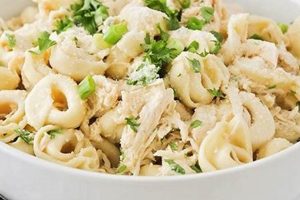
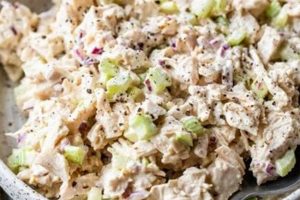
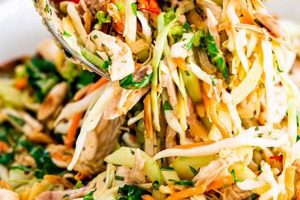
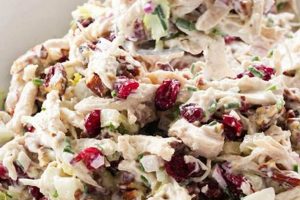
This dish combines two classic picnic favorites: chicken salad and pasta salad. It typically involves cooked pasta, often small shapes like rotini or farfalle, tossed with a creamy chicken salad mixture. This mixture generally includes diced cooked chicken, mayonnaise, celery, onion, and seasonings. Variations can incorporate grapes, nuts, dried cranberries, or other fruits and vegetables.
The convenience and adaptability of this dish contribute to its popularity. It can be prepared in advance, making it ideal for potlucks, picnics, and quick meals. The flexible nature of the recipe allows for customization based on dietary preferences and available ingredients. Its affordability and relatively simple preparation further enhance its appeal as a versatile dish suitable for various occasions. Furthermore, it offers a good source of protein and can be a relatively balanced meal when incorporating a variety of vegetables.
This exploration will delve into various aspects of creating this appealing dish, including different ingredient combinations, preparation techniques, tips for achieving optimal flavor and texture, and suggestions for presentation and serving.
Tips for a Superior Chicken Salad Pasta Salad
Elevating this classic dish requires attention to detail and thoughtful ingredient selection. The following tips offer guidance for creating a pasta salad that stands out in flavor, texture, and presentation.
Tip 1: Use high-quality ingredients. Freshly cooked chicken and crisp vegetables contribute significantly to the overall flavor and texture. Opt for flavorful mayonnaise and consider incorporating a touch of Dijon mustard for added depth.
Tip 2: Cook pasta al dente. Slightly firm pasta holds its shape better and prevents a mushy texture in the final salad. Rinse the cooked pasta under cold water to stop the cooking process and maintain its firmness.
Tip 3: Balance flavors thoughtfully. Consider the sweetness of added fruits and the acidity of the dressing. A touch of lemon juice or vinegar can brighten the flavors and prevent the salad from becoming overly rich.
Tip 4: Don’t overmix. Gently combine the ingredients to avoid breaking the pasta and bruising the more delicate vegetables. A light touch ensures a pleasing texture and visual appeal.
Tip 5: Chill thoroughly. Allowing the salad to chill in the refrigerator for at least an hour allows the flavors to meld and the ingredients to marry. This also improves the overall texture and provides a more refreshing experience.
Tip 6: Garnish thoughtfully. Fresh herbs, a sprinkle of paprika, or a scattering of toasted nuts can elevate the presentation and add another layer of flavor. Consider the color and texture of garnishes for visual appeal.
Tip 7: Adjust seasonings to taste. Before serving, taste the salad and adjust the seasonings as needed. A pinch of salt, pepper, or a dash of garlic powder can make a significant difference in the final flavor profile.
By implementing these tips, one can create a chicken salad pasta salad that is not only satisfying but also showcases culinary expertise. Attention to detail, from ingredient selection to final presentation, ensures a dish that is both delicious and visually appealing.
These insights pave the way for a concluding exploration of variations and serving suggestions.
1. Ingredients

Ingredient selection significantly impacts the quality, flavor profile, and overall success of a chicken salad pasta salad recipe. Careful consideration of each component ensures a balanced and satisfying final dish. The following facets highlight key ingredient categories and their contributions.
- Protein: Chicken
Chicken serves as the primary protein source. Options include pre-cooked rotisserie chicken for convenience, or freshly poached or grilled chicken for enhanced flavor control. The chosen cooking method influences the final taste and texture of the salad. Dicing the chicken into bite-sized pieces ensures even distribution throughout the pasta.
- Base: Pasta
The pasta provides the foundation of the dish. Small pasta shapes like rotini, farfalle, or shells work well, holding the dressing and other ingredients effectively. Cooking the pasta al dente prevents a mushy texture in the finished salad. Rinsing the cooked pasta under cold water stops the cooking process and maintains firmness.
- Binding Agent & Flavor: Dressing/Mayonnaise
Mayonnaise acts as the primary binding agent, coating the ingredients and creating a creamy consistency. Variations include using plain mayonnaise, adding Dijon mustard for tang, or incorporating Greek yogurt for a lighter alternative. The chosen dressing significantly influences the overall flavor profile.
- Vegetables & Add-ins
Vegetables add texture, flavor, and visual appeal. Common choices include celery, onion, bell peppers, and grapes. Other additions, such as dried cranberries, nuts, or seeds, introduce contrasting textures and flavors. The selection of vegetables and add-ins offers opportunities for customization based on preference and dietary needs.
The interplay of these ingredient categories contributes to the complexity and balance of the final dish. Thoughtful ingredient selection ensures a chicken salad pasta salad that is both flavorful and texturally satisfying. Harmonizing these components is crucial for achieving a successful and enjoyable culinary experience.
2. Preparation
Preparation plays a crucial role in a successful chicken salad pasta salad recipe. Careful execution of preparatory steps ensures optimal flavor, texture, and food safety. Each stage contributes to the final quality of the dish.
- Cooking the Chicken
Properly cooked chicken is essential for both flavor and food safety. Methods include poaching, grilling, or roasting. Each technique imparts a unique flavor profile. Reaching an internal temperature of 165F (74C) ensures safe consumption. Allowing the chicken to cool completely before dicing prevents the mayonnaise from melting and creating a watery salad.
- Cooking the Pasta
Cooking the pasta al dente is key for optimal texture. Overcooked pasta becomes mushy and absorbs less dressing. Following package instructions for cooking time is recommended, but checking for doneness a minute or two early is often advisable. Rinsing the cooked pasta under cold water halts the cooking process and firms the pasta, preventing sticking.
- Chopping Ingredients
Uniformly chopping ingredients ensures even distribution of flavors and textures. Dicing vegetables into similar sizes creates visual appeal and promotes even cooking (if applicable). Consistent sizing also ensures that each bite contains a balanced mix of ingredients.
- Chilling Ingredients
Chilling ingredients, particularly the chicken and cooked pasta, before combining prevents bacterial growth and enhances the final salad’s refreshing quality. Cold ingredients also help maintain the structure of the mayonnaise, preventing a runny consistency. Chilling the finished salad for at least 30 minutes allows the flavors to meld.
These preparatory steps contribute significantly to the overall success of the chicken salad pasta salad recipe. Attention to detail in each stage ensures a final dish that is both flavorful and safe to consume. The combination of properly cooked ingredients, uniform chopping, and chilling contributes to a pleasant and satisfying dining experience. Overlooking these steps can compromise the texture, flavor, and safety of the final product.
3. Cooking Method

The cooking method employed for the chicken significantly impacts the final flavor profile and texture of a chicken salad pasta salad. Different techniques impart unique characteristics, influencing the overall dining experience. Several methods offer distinct advantages and disadvantages within this context.
Poaching produces a moist and tender chicken, ideal for absorbing the flavors of the dressing. This gentle method preserves the chicken’s natural flavor, allowing other ingredients to shine. However, it might be perceived as lacking the depth of flavor achieved through other methods.
Grilling imparts a smoky char and enhances the chicken’s savory notes. This method adds a layer of complexity to the salad, appealing to those who prefer bolder flavors. However, grilling can dry out the chicken if not carefully monitored, potentially compromising the final texture of the salad.
Roasting offers a balance between moisture and flavor development. The dry heat of the oven browns the chicken, creating appealing Maillard reactions, while maintaining interior moisture. Roasting also allows for efficient batch cooking, making it suitable for larger quantities.
Using pre-cooked chicken, such as rotisserie chicken, offers unparalleled convenience. This option simplifies the preparation process, making it ideal for time-constrained situations. However, flavor and texture control are diminished, and sodium content might be higher.
The choice of cooking method depends on individual preferences and priorities. Considerations include available time, desired flavor profile, and texture preferences. Understanding the nuances of each method empowers informed decision-making, ultimately leading to a more satisfying culinary outcome. Selecting the appropriate cooking method enhances the chicken’s contribution to the overall composition, ensuring a well-balanced and flavorful pasta salad.
4. Flavor Balance
Flavor balance is paramount in a successful chicken salad pasta salad recipe. It determines the overall palatability and enjoyment of the dish. A well-balanced salad features a harmonious interplay of flavors, preventing any single element from dominating. Achieving this balance requires careful consideration of various taste components and their interactions.
- Saltiness
Salt enhances the flavors of other ingredients and provides a foundational savory element. It can come from the chicken itself, added salt in the dressing, or salty ingredients like olives or capers. Over-salting can overwhelm the palate, while under-salting can lead to a bland dish. Finding the right balance is crucial.
- Acidity
Acidity brightens the flavors and cuts through the richness of the mayonnaise. Sources of acidity include lemon juice, vinegar, or pickles. Acidity balances the creamy and savory elements, preventing the salad from feeling heavy. The level of acidity should complement, not overpower, other flavors.
- Sweetness
Sweetness adds another dimension to the flavor profile. Ingredients like grapes, dried cranberries, or apples contribute sweetness. This element can balance the savory and acidic components, creating a more complex and nuanced flavor. However, excessive sweetness can make the salad cloying.
- Umami/Savory
Umami, the savory “fifth taste,” adds depth and richness. Sources of umami include the chicken, certain cheeses, or a touch of Worcestershire sauce. This element enhances the overall complexity and satisfaction of the salad. Careful balancing prevents the umami from becoming overpowering.
The interplay of these flavor components determines the overall balance and appeal of the chicken salad pasta salad. A successful recipe harmonizes these elements, ensuring a complex and enjoyable flavor profile. Careful attention to each taste component prevents any single flavor from dominating, resulting in a well-rounded and satisfying dish. The delicate balance achieved through thoughtful ingredient selection and seasoning elevates the chicken salad pasta salad from simple to exceptional.
5. Presentation

Presentation significantly influences the perceived appeal and enjoyment of a chicken salad pasta salad. While flavor and texture remain paramount, visual appeal enhances the dining experience. Consideration of color, arrangement, and serving vessels elevates this dish from simple fare to a visually engaging culinary creation. A thoughtfully presented salad entices the appetite and suggests attention to detail, reflecting positively on the overall culinary effort.
Several factors contribute to effective presentation. The choice of serving dish plays a key role. A clear glass bowl showcases the vibrant colors and textures of the salad, while a rustic wooden bowl offers a more casual aesthetic. Garnishes provide opportunities to introduce contrasting colors and textures. Fresh herbs, such as chopped parsley or chives, add a touch of green, while a sprinkle of paprika introduces warm hues. Toasted nuts or seeds provide textural contrast and visual interest. The arrangement of ingredients also contributes to visual appeal. Evenly distributing ingredients ensures a balanced presentation, while a deliberate arrangement, such as layering ingredients or creating a central focal point, adds an element of sophistication.
For instance, serving the salad in individual portions, such as in hollowed-out tomatoes or bell peppers, elevates the presentation for a more formal setting. Alternatively, arranging the salad on a platter garnished with lettuce leaves creates a visually appealing centerpiece for a buffet or picnic. The practical significance of thoughtful presentation lies in its ability to enhance the perceived value and enjoyment of the dish. A visually appealing salad encourages consumption and conveys a sense of care and attention to detail. While not a substitute for flavor and texture, presentation adds a crucial layer to the overall dining experience, transforming a simple chicken salad pasta salad into a memorable culinary creation.
6. Serving Suggestions
Serving suggestions enhance the versatility and enjoyment of a chicken salad pasta salad recipe. Thoughtful consideration of accompaniments and presentation elevates this dish from a simple side to a satisfying meal or a standout component of a larger spread. Appropriate serving suggestions maximize the recipe’s potential, catering to diverse occasions and palates. This understanding allows for a more comprehensive and adaptable approach to enjoying the dish.
Several factors influence appropriate serving suggestions. The context of the meal, whether a casual lunch, a picnic, or a more formal gathering, dictates the appropriateness of various accompaniments. For a light lunch, pairing the pasta salad with a simple green salad or fresh fruit creates a balanced and refreshing meal. In a picnic setting, serving the pasta salad alongside grilled meats or sandwiches provides a hearty and satisfying option. For more formal occasions, presenting the pasta salad in individual portions, garnished with fresh herbs and edible flowers, elevates the dish to a more refined offering. Consideration of dietary restrictions and preferences also informs serving suggestions. Offering gluten-free pasta or substituting the mayonnaise with a dairy-free alternative caters to specific dietary needs. Providing a variety of accompaniments allows guests to customize their meal according to their preferences.
Practical application of these concepts enhances the overall dining experience. Serving the pasta salad chilled maximizes its refreshing qualities, particularly in warmer weather. Presenting the salad in an attractive serving dish or individual portions enhances visual appeal. Offering a variety of accompaniments, such as crusty bread, crackers, or fresh vegetables, provides textural contrast and complements the flavors of the salad. Understanding the interplay between the recipe and its serving suggestions allows one to tailor the dish to specific occasions and preferences, maximizing its potential and ensuring a satisfying culinary experience. This awareness transforms a simple chicken salad pasta salad into a versatile and adaptable culinary creation, suitable for a wide range of dining occasions.
Frequently Asked Questions
This section addresses common inquiries regarding chicken salad pasta salad recipes, providing clear and concise information to facilitate successful preparation and enjoyment.
Question 1: How long can chicken salad pasta salad be stored safely?
Properly stored in an airtight container in the refrigerator, this dish typically remains safe for consumption for three to five days. Beyond this timeframe, the risk of bacterial growth increases significantly.
Question 2: Can frozen chicken be used in this recipe?
While not ideal, frozen chicken can be used. Ensure the chicken is fully thawed and cooked to an internal temperature of 165F (74C) before incorporating it into the salad. Thawing in the refrigerator is the safest method.
Question 3: What are suitable substitutions for mayonnaise?
Greek yogurt offers a lighter alternative to mayonnaise, reducing overall fat content. Alternatively, a combination of mayonnaise and sour cream can provide a tangier flavor profile. Avocado can also be used for a vegan option, although it will impart a distinct flavor.
Question 4: Can this dish be made ahead of time for a large gathering?
This dish is well-suited for make-ahead preparation. The flavors often meld and improve overnight. Store the prepared salad in the refrigerator until ready to serve. If adding garnishes, wait until just before serving for optimal freshness.
Question 5: How can one prevent the pasta salad from becoming watery?
Several strategies help prevent excess moisture. Ensuring all ingredients are dry before combining is crucial. Using chilled, cooked pasta helps absorb less moisture. Additionally, adding the dressing gradually allows better control over the final consistency.
Question 6: How can the nutritional value of this dish be increased?
Incorporating a variety of vegetables, such as bell peppers, broccoli florets, or shredded carrots, enhances the nutritional value. Adding legumes, such as chickpeas or black beans, increases protein and fiber content. Using whole wheat pasta further boosts fiber intake.
Understanding these common points of inquiry facilitates a smoother and more enjoyable preparation process. Addressing these potential concerns allows for greater confidence in creating a delicious and satisfying chicken salad pasta salad.
This concludes the frequently asked questions section. The following section will provide a summary of key takeaways and concluding remarks.
Conclusion
Exploration of chicken salad pasta salad recipes reveals a dish offering both simplicity and adaptability. Key elements highlighted include the importance of ingredient quality, proper cooking techniques for both chicken and pasta, and the careful balancing of flavors. Presentation and serving suggestions further demonstrate the dish’s versatility, adaptable to both casual and more formal settings. Understanding these core components allows for successful preparation and enjoyable consumption.
Chicken salad pasta salad recipes provide a canvas for culinary creativity. From classic combinations to innovative variations, the dish offers opportunities for personalized expression. Attention to detail, from ingredient selection to presentation, elevates this seemingly simple dish to a satisfying and memorable culinary experience. Further exploration and experimentation promise continued enjoyment and discovery within this versatile culinary framework.