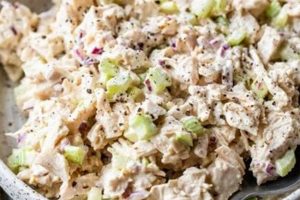
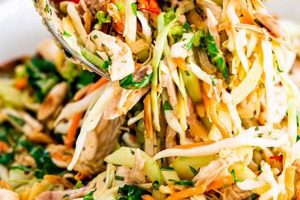
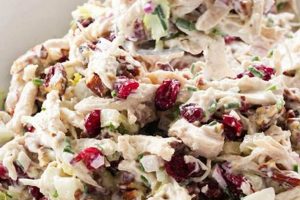
Avian-based salads typically use an emulsified condiment as a binder and source of richness. However, recipes omitting this ingredient offer an alternative for those seeking lighter fare, or with dietary restrictions related to eggs or fat. Such recipes often utilize substitutes like Greek yogurt, avocado, or hummus to create a creamy texture and add flavor. For instance, a simple version might combine cooked chicken with celery, grapes, and a dressing of Greek yogurt seasoned with Dijon mustard and herbs.
The popularity of such alternatives stems from a growing awareness of dietary needs and preferences. Avoiding the traditional emulsified condiment can significantly reduce fat and calorie content without sacrificing flavor or satisfaction. This approach also caters to individuals with egg allergies or sensitivities. Historically, salads centered around poultry were often bound with ingredients like sour cream or simply dressed with oil and vinegar, reflecting resourcefulness and diverse culinary traditions. The later prevalence of the emulsified condiment led to its widespread adoption in such dishes, but a renewed interest in lighter, healthier options has brought alternative preparations back to the forefront.
This exploration will further delve into various ingredient combinations and preparation techniques for creating flavorful and satisfying poultry salads without the standard emulsified condiment. Topics will include suitable replacement binders, complementary flavor profiles, and tips for achieving optimal texture and consistency.
Tips for Crafting Mayonnaise-Free Chicken Salad
Achieving a flavorful and satisfying chicken salad without mayonnaise requires careful consideration of ingredients and techniques. The following tips offer guidance for creating a successful dish.
Tip 1: Choose a Suitable Binder. Greek yogurt, avocado, or hummus offer creamy textures and distinct flavors. Consider the desired flavor profile when selecting a binder. Plain Greek yogurt provides a tangy base, while mashed avocado lends richness and a subtle vegetal note. Hummus contributes a nutty, savory element.
Tip 2: Optimize Chicken Texture. Shredded or diced chicken works well. Avoid over-processing, as this can result in a dry, mushy texture. Roasting or grilling the chicken prior to shredding adds depth of flavor.
Tip 3: Incorporate Flavorful Additions. Chopped celery, grapes, red onion, and dried cranberries provide textural and flavor contrasts. Fresh herbs, such as dill, parsley, or chives, enhance the overall taste.
Tip 4: Season Thoughtfully. A balanced blend of seasonings is essential. Dijon mustard, lemon juice, salt, and pepper are common additions. Experiment with spices like paprika, cumin, or curry powder for unique flavor profiles.
Tip 5: Adjust Consistency. If the mixture appears too dry, add a small amount of plain yogurt or additional binder. Conversely, if too wet, incorporate more shredded chicken or finely chopped vegetables.
Tip 6: Chill Before Serving. Chilling allows the flavors to meld and enhances the overall experience. Serve chilled on bread, crackers, lettuce cups, or as a standalone dish.
Tip 7: Consider Flavor Combinations. Explore diverse flavor combinations. A curry-spiced chicken salad with mango chutney and chopped cashews provides an exotic twist. A Mediterranean-inspired version might incorporate Kalamata olives, feta cheese, and a lemon-herb dressing.
By following these guidelines, one can create delicious and healthful poultry salads without relying on the traditional emulsified condiment. The resulting dishes offer diverse flavors and textures, catering to a range of palates and dietary preferences.
This exploration concludes with a collection of recipes exemplifying these principles, demonstrating the versatility and appeal of mayonnaise-free chicken salad.
1. Healthy Alternative

The designation “healthy alternative” applied to chicken salad recipes without mayonnaise stems from several nutritional factors. Traditional mayonnaise, composed primarily of oil and egg yolks, contributes significant fat and calories. Eliminating this ingredient inherently reduces the overall fat content, particularly saturated fat, which is often linked to cardiovascular health concerns. Furthermore, calorie reduction is achieved, making such recipes suitable for individuals managing weight. For example, a typical mayonnaise-based chicken salad might contain upwards of 300 calories per serving, while a version utilizing Greek yogurt could contain significantly fewer calories, potentially around 150-200, depending on specific ingredients. This difference can be substantial for those tracking caloric intake. The substitution also frequently lowers cholesterol content due to the absence of egg yolks.
Beyond macronutrient comparisons, “healthy alternative” also considers the nutritional benefits provided by replacement ingredients. Greek yogurt, a common substitute, offers protein and calcium. Avocado contributes healthy fats, fiber, and various vitamins. These additions enhance the nutritional profile of the salad beyond simply reducing undesirable components. The increased protein content can promote satiety, further assisting with weight management goals. Additionally, the inclusion of fresh vegetables and herbs in these recipes often boosts vitamin and mineral intake. This multifaceted approach contributes to the overall perception and practical application of these recipes as healthier options.
In summary, the “healthy alternative” label associated with mayonnaise-free chicken salad signifies a demonstrable reduction in fat and calories, often accompanied by increased protein, fiber, vitamins, and minerals due to substitute ingredients. This nutritional profile shift provides a practical strategy for individuals seeking healthier dietary choices without sacrificing flavor or satisfaction. However, it remains crucial to consider overall ingredient composition, as the inclusion of certain add-ins, such as nuts or dried fruits, can still impact calorie and fat content.
2. Flavorful Substitutes

Flavorful substitutes play a crucial role in “chicken salad recipe no mayonnaise” preparations, compensating for the absence of mayonnaise while contributing distinct tastes and textures. These substitutes not only bind the ingredients but also significantly influence the overall sensory experience. Understanding the characteristics of various substitutes allows for informed choices aligned with desired flavor profiles.
- Greek Yogurt
Greek yogurt offers a tangy, slightly acidic flavor profile that contrasts well with the richness of chicken. Its thick consistency effectively binds the salad ingredients, providing a creamy texture reminiscent of traditional mayonnaise-based versions. The lower fat content of Greek yogurt contributes to the “healthy alternative” aspect often associated with these recipes. For instance, plain non-fat Greek yogurt can be used as a direct replacement for mayonnaise, offering a lighter, protein-rich base. The tanginess can be further enhanced with the addition of lemon juice or Dijon mustard.
- Avocado
Mashed avocado delivers a creamy, subtly nutty flavor and rich texture. Its healthy fats contribute to a satisfying mouthfeel while offering nutritional benefits. Avocado complements chicken well, adding a mild buttery note. In a recipe, avocado can be combined with Greek yogurt or used independently as the primary binder. The vibrant green hue also enhances the visual appeal of the salad. However, avocado’s delicate flavor can be easily overpowered by strong seasonings, requiring careful balancing of ingredients.
- Hummus
Hummus introduces a savory, earthy flavor profile derived from chickpeas, tahini, and garlic. Its creamy texture effectively binds the salad, offering a distinct departure from traditional flavors. The nutty notes of tahini and the pungent garlic create a complex flavor dimension. Hummus pairs particularly well with Mediterranean-inspired variations, incorporating ingredients like Kalamata olives, feta cheese, and sun-dried tomatoes. The inherent richness of hummus requires careful portioning to avoid overpowering the other flavors.
- Cottage Cheese
Cottage cheese, while less common, provides a lighter, slightly tangy alternative. Its curdled texture offers a different mouthfeel compared to the smoothness of yogurt or avocado. Lower-fat varieties contribute to the overall healthfulness of the salad. Cottage cheese works well in recipes emphasizing fresh herbs and lighter flavors. Its mild taste allows other ingredients to shine without being overshadowed. Pureeing cottage cheese creates a smoother consistency if desired.
Selecting an appropriate flavorful substitute is paramount to achieving a successful “chicken salad recipe no mayonnaise.” The interplay between the chosen substitute and other ingredients dictates the final flavor profile and texture. Considering the desired outcome and the characteristics of each substitute allows for informed choices, leading to a diverse range of culinary possibilities beyond the limitations of traditional mayonnaise-based recipes. Experimentation with different combinations and complementary ingredients can yield unique and satisfying results.
3. Textural Balance
Textural balance is a critical component of successful “chicken salad recipe no mayonnaise” preparations. The absence of mayonnaise, which typically contributes a creamy, cohesive texture, necessitates careful consideration of alternative ingredients and techniques to achieve a satisfying mouthfeel. A well-balanced chicken salad offers a pleasant interplay of textures, preventing monotony and enhancing overall enjoyment.
- Chicken
The chicken itself forms the foundation of textural balance. Shredded chicken provides a finer texture, readily absorbing flavors from the other ingredients and contributing to a softer overall feel. Diced chicken offers more substantial, distinct pieces, creating a heartier texture. The choice between shredded and diced, or a combination of both, influences the final textural profile. Over-processed chicken can result in an undesirable mushy consistency, highlighting the importance of proper preparation.
- Binder
The chosen binder significantly impacts texture. Greek yogurt provides a smooth, creamy texture similar to mayonnaise, while mashed avocado offers a richer, denser consistency. Hummus contributes a slightly grainy texture due to the presence of chickpeas. The binder’s texture interacts with the chicken and other ingredients, creating a layered textural experience. For instance, a combination of shredded chicken and Greek yogurt might yield a smoother, more uniform texture compared to diced chicken with hummus.
- Vegetables and Fruits
The incorporation of vegetables and fruits introduces contrasting textures. Crisp ingredients like celery, bell peppers, and red onion provide a refreshing crunch. Softer elements, such as grapes or dried cranberries, offer a chewy counterpoint. The interplay between these contrasting textures prevents a homogenized mouthfeel, creating a more dynamic and engaging sensory experience. The size of the chopped vegetables and fruits further influences the perceived texture, with finer pieces integrating more seamlessly and larger pieces providing more pronounced textural contrast.
- Nuts and Seeds
Nuts and seeds add another layer of textural complexity. Toasted slivered almonds, chopped walnuts, or sunflower seeds introduce a satisfying crunch and nutty flavor. These additions provide textural contrast and visual interest. However, the quantity of nuts and seeds should be carefully considered, as an excessive amount can overpower the other ingredients and create an overly crunchy texture.
Achieving textural balance in a “chicken salad recipe no mayonnaise” requires a holistic approach, considering the interplay between the chicken, binder, vegetables, fruits, and optional additions like nuts and seeds. The careful selection and preparation of these ingredients ensures a harmonious blend of textures, contributing significantly to the overall enjoyment and satisfaction derived from the dish. A thoughtfully constructed chicken salad offers a dynamic and engaging eating experience, demonstrating that the absence of mayonnaise need not compromise textural appeal.
4. Versatile Ingredients
The concept of “versatile ingredients” takes center stage in “chicken salad recipe no mayonnaise” preparations, offering a wide spectrum of flavor profiles and culinary possibilities. This versatility stems from the inherent adaptability of chicken as a base ingredient and the freedom to incorporate diverse flavor combinations without the constraints of traditional mayonnaise-based recipes.
- Fruits and Vegetables
Fruits and vegetables contribute significantly to the versatility of mayonnaise-free chicken salads. Common additions include celery, grapes, red onion, apples, and dried cranberries. These ingredients provide textural contrast, sweetness, acidity, and visual appeal. For example, grapes offer a burst of sweetness, while red onion introduces a sharp bite. The choice of produce allows customization based on seasonal availability and desired flavor profiles, ranging from a classic combination of celery and grapes to more adventurous pairings like chopped apples and dried cranberries. The inclusion of fruits and vegetables also enhances the nutritional value of the dish.
- Herbs and Spices
Herbs and spices offer a powerful tool for flavor manipulation in these salads. Fresh herbs like dill, parsley, chives, and tarragon introduce bright, herbaceous notes. Dried spices such as curry powder, cumin, paprika, and smoked paprika contribute depth and complexity. A simple combination of dill and lemon zest can create a light, refreshing flavor, while a blend of curry powder and mango chutney yields a more exotic profile. The flexibility in herb and spice selection allows for endless customization, catering to diverse palates and culinary traditions.
- Nuts and Seeds
Nuts and seeds contribute both textural and flavor versatility. Toasted slivered almonds, chopped walnuts, sunflower seeds, and pumpkin seeds offer a satisfying crunch and nutty notes. These ingredients not only enhance the sensory experience but also add nutritional value. For instance, toasted pecans complement a cranberry-apple chicken salad, while sunflower seeds enhance a curry-spiced version. The judicious use of nuts and seeds adds another layer of complexity and customization to these recipes.
- Flavorful additions
Beyond the core ingredients, various flavorful additions further expand versatility. Chopped pickles, capers, olives, and crumbled cheeses introduce salty, briny, or tangy elements. These additions can transform the character of the salad, creating distinct flavor profiles. For example, crumbled feta cheese and Kalamata olives complement a Mediterranean-inspired version, while chopped pickles and capers enhance a more traditional flavor profile. The strategic incorporation of such additions allows for endless experimentation and personalized flavor combinations.
The versatility inherent in “chicken salad recipe no mayonnaise” preparations stems from the adaptability of chicken and the freedom to incorporate a wide array of fruits, vegetables, herbs, spices, and other flavorful additions. This flexibility allows for customization based on dietary preferences, seasonal availability, and desired flavor profiles, showcasing the culinary potential of these mayonnaise-free alternatives. The absence of mayonnaise, rather than being a limitation, becomes an opportunity to explore diverse ingredient combinations and create unique, flavorful, and satisfying dishes.
5. Dietary Accommodations
The “chicken salad recipe no mayonnaise” concept offers significant advantages regarding dietary accommodations. Eliminating mayonnaise addresses several common dietary restrictions, expanding accessibility for individuals with specific needs. This inclusivity represents a key benefit of these alternative preparations. Mayonnaise, containing eggs and oil, poses challenges for individuals with egg allergies or sensitivities, and those following low-fat or low-cholesterol diets. Recipes omitting mayonnaise inherently address these restrictions, providing safe and palatable options. For instance, individuals with egg allergies can safely consume chicken salad prepared with yogurt or avocado-based dressings, expanding their culinary choices.
Furthermore, “chicken salad recipe no mayonnaise” accommodates broader dietary preferences beyond specific allergies or intolerances. The lower fat content inherent in these recipes aligns with weight management goals and heart-healthy dietary patterns. Using Greek yogurt as a base increases protein content, promoting satiety and supporting muscle maintenance. Customization with various fruits and vegetables further enhances nutritional value, catering to individuals seeking increased fiber or specific vitamin and mineral intake. For example, incorporating ingredients like chopped bell peppers and spinach boosts vitamin C and folate content, catering to specific nutritional needs. This adaptability allows individuals to tailor recipes to their specific dietary goals without sacrificing flavor or satisfaction.
In summary, “chicken salad recipe no mayonnaise” offers valuable dietary accommodations, addressing allergies, intolerances, and broader health-conscious dietary patterns. Eliminating mayonnaise removes a common allergen and source of excess fat and cholesterol. The flexibility afforded by alternative ingredients allows for customization to meet specific nutritional needs and preferences. This adaptability makes these recipes a valuable resource for individuals seeking inclusive and health-conscious meal options. The focus on dietary accommodations expands culinary possibilities and promotes healthier eating habits for a wider range of individuals. However, careful consideration of all ingredients remains essential, as certain additions, such as nuts or dried fruits, can impact overall nutritional profiles and may require adjustments based on individual dietary restrictions.
6. Creative Seasonings
Creative seasonings become paramount in a “chicken salad recipe no mayonnaise,” offering opportunities to elevate flavor profiles beyond traditional limitations. The absence of mayonnaise necessitates a nuanced approach to seasoning, compensating for the loss of its inherent richness and tang while introducing new dimensions of taste. Strategic seasoning transforms a simple mixture of ingredients into a culinary creation.
- Balancing Flavor Profiles
Seasonings achieve balance by complementing the chosen binder and other ingredients. The tanginess of Greek yogurt pairs well with bright herbs like dill and lemon zest. The richness of avocado harmonizes with smoky spices like paprika or cumin. Understanding these interactions is crucial for creating a cohesive flavor profile. For example, a Mediterranean-inspired salad using hummus benefits from the addition of oregano, mint, and a touch of sumac, enhancing its savory character. Conversely, a salad featuring grapes and walnuts might benefit from cinnamon and nutmeg, creating a subtly sweet and warm flavor profile.
- Building Complexity through Layering
Layering seasonings involves incorporating multiple flavor elements to create depth and complexity. A base of salt and pepper establishes a foundation, followed by complementary herbs, spices, and acidic elements. For instance, a chicken salad might start with salt, pepper, and garlic powder, then incorporate fresh parsley, chives, and a squeeze of lemon juice. This layered approach builds a more nuanced and interesting flavor profile than simply adding a single seasoning. The order of addition can also influence the final outcome; adding spices early in the cooking process, if applicable, allows them to bloom and develop richer flavors.
- Highlighting Specific Ingredients
Seasonings can highlight specific ingredients within the salad. A curry powder blend accentuates the sweetness of mango chutney in a tropical-inspired chicken salad. Smoked paprika enhances the savory notes of roasted chicken. A touch of cayenne pepper adds a spicy kick to a Southwestern-style salad with black beans and corn. This targeted approach to seasoning elevates individual components and creates a more dynamic overall flavor experience.
- Considering Dietary Restrictions
Creative seasoning becomes particularly important when accommodating dietary restrictions. Lower-sodium diets necessitate exploring herbs, spices, and other flavor enhancers beyond salt. Individuals avoiding certain spices due to allergies or sensitivities require alternative flavor combinations. For example, a low-sodium chicken salad might utilize lemon zest, garlic powder, and onion powder to compensate for reduced salt, while someone avoiding black pepper might utilize white pepper or pink peppercorns for a different type of heat. Creative seasoning provides solutions for maintaining flavor complexity while adhering to dietary limitations.
In “chicken salad recipe no mayonnaise” preparations, creative seasoning elevates the dish beyond a simple combination of ingredients. It compensates for the absence of mayonnaise’s inherent flavor, caters to dietary restrictions, and unlocks a world of culinary possibilities. The thoughtful application of herbs, spices, and other flavor enhancers transforms a basic chicken salad into a nuanced and satisfying culinary experience. The interplay between seasonings and other ingredients creates a symphony of flavors, demonstrating the power of creative seasoning in mayonnaise-free preparations.
Frequently Asked Questions
This section addresses common inquiries regarding chicken salad recipes that omit mayonnaise, providing concise and informative responses.
Question 1: What are the primary benefits of omitting mayonnaise from chicken salad?
Omitting mayonnaise reduces fat and calorie content, caters to egg allergies and sensitivities, and allows for exploration of diverse flavor profiles using alternative binders and seasonings.
Question 2: What can be used as a substitute for mayonnaise in chicken salad?
Suitable substitutes include Greek yogurt, avocado, hummus, and cottage cheese. Each offers distinct flavor and textural characteristics. The best choice depends on desired flavor profile and dietary preferences.
Question 3: How can one achieve a creamy texture without mayonnaise?
The selected binder contributes significantly to creaminess. Greek yogurt and avocado, in particular, offer creamy textures. Properly cooked and shredded or diced chicken also contributes to a desirable consistency. Avoiding over-processing prevents a mushy texture.
Question 4: What seasonings work well in mayonnaise-free chicken salad?
Fresh herbs such as dill, parsley, chives, and tarragon provide bright flavors. Spices like curry powder, cumin, paprika, and smoked paprika add depth and complexity. Dijon mustard, lemon juice, salt, and pepper are foundational seasonings. The specific combination depends on the overall flavor profile desired.
Question 5: How should chicken be prepared for mayonnaise-free chicken salad?
Roasting, grilling, or poaching chicken before shredding or dicing enhances flavor. Avoid overcooking, which can result in dry, stringy chicken. Properly cooked chicken contributes to the overall texture and taste of the salad.
Question 6: How long can mayonnaise-free chicken salad be stored?
Storage time depends on the ingredients used. Generally, chicken salad made without mayonnaise can be refrigerated for 3-5 days in an airtight container. However, salads containing avocado may brown more quickly. Always observe signs of spoilage before consumption.
Understanding these key aspects ensures successful preparation of flavorful and satisfying chicken salads without relying on mayonnaise. Exploration of various ingredient combinations and seasonings allows for customization and a diverse range of culinary experiences.
The following section provides a collection of sample recipes showcasing the versatility and deliciousness of mayonnaise-free chicken salad.
Chicken Salad Recipe No Mayonnaise
Exploration of “chicken salad recipe no mayonnaise” reveals a versatile culinary landscape extending beyond traditional preparations. Analysis demonstrates that omitting mayonnaise offers notable advantages, including reduced fat and calorie content, accommodation of dietary restrictions, and expanded flavor possibilities. Alternative binders, such as Greek yogurt, avocado, and hummus, provide diverse textures and flavor profiles. Strategic incorporation of fruits, vegetables, herbs, and spices further enhances culinary potential. Careful attention to textural balance and creative seasoning elevates these recipes beyond simple substitutions, achieving complex and satisfying dishes.
The absence of mayonnaise, rather than a limitation, becomes a catalyst for culinary innovation. This approach fosters exploration of diverse ingredients and flavor combinations, resulting in a wider range of culinary experiences. Chicken salad recipes without mayonnaise represent a shift towards healthier, more inclusive, and adaptable culinary practices, offering a compelling alternative for both health-conscious individuals and culinary enthusiasts seeking new flavor adventures. Continued exploration and experimentation within this culinary domain promise further innovation and delicious discoveries.