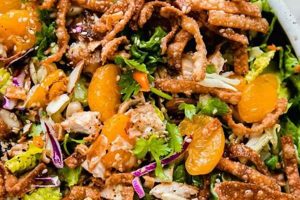
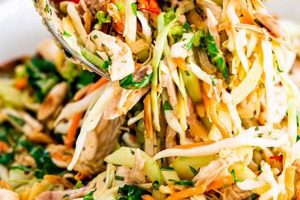
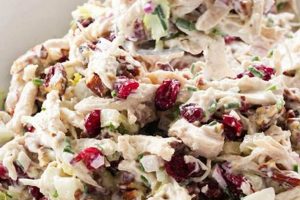
A vibrant and refreshing dish, typically composed of shredded or diced cooked chicken, crisp mandarin orange segments, and a variety of fresh vegetables such as lettuce, carrots, and scallions. A sweet and tangy dressing, often containing ingredients like soy sauce, vinegar, ginger, and sesame oil, binds the components together. Variations may include crunchy noodles, toasted almonds, or other additions for texture and flavor.
This type of salad offers a nutritious and flavorful meal option. The combination of lean protein from the poultry, vitamins and antioxidants from the produce, and the light, flavorful dressing creates a balanced and satisfying culinary experience. Its adaptability makes it suitable for diverse dietary preferences, with options for substituting ingredients or adjusting portion sizes. The historical origins likely stem from the fusion of American and Asian culinary traditions, reflecting a growing appreciation for global flavors.
Further exploration will cover variations on the basic formula, detailed ingredient lists, step-by-step preparation instructions, tips for presentation, and suggestions for complementary dishes.
Tips for a Superior Mandarin Chicken Salad
Creating an exceptional mandarin chicken salad involves attention to detail and an understanding of the interplay of flavors and textures. The following tips offer guidance for achieving optimal results.
Tip 1: Chicken Selection and Preparation: For optimal flavor and texture, utilize grilled or roasted chicken. Pre-cooked rotisserie chicken offers a convenient alternative. Ensure the chicken is cooled and properly shredded or diced before incorporating it into the salad.
Tip 2: Freshness of Produce: Select crisp, fresh lettuce, carrots, and scallions. Thoroughly wash and dry all produce before use. Consider using pre-shredded carrots or a bag of mixed greens for convenience.
Tip 3: Mandarin Orange Quality: Opt for high-quality canned mandarin oranges, packed in juice or water, not heavy syrup. Drain the oranges well before adding them to the salad to prevent excess liquid from diluting the dressing.
Tip 4: Dressing Preparation and Customization: While pre-made dressings are available, preparing a homemade dressing allows for greater control over flavor profiles. Experiment with different vinegars, oils, and sweeteners to achieve the desired balance of sweet, tangy, and savory notes.
Tip 5: Ingredient Incorporation: Gently toss all ingredients together, ensuring the dressing is evenly distributed. Avoid overmixing, which can bruise delicate greens and mandarin segments.
Tip 6: Chill Time and Serving: Allow the salad to chill for at least 30 minutes before serving to allow the flavors to meld. This also enhances the crispness of the vegetables. Serve chilled.
Tip 7: Optional Enhancements: Consider adding crunchy elements like toasted almonds, sesame seeds, or chow mein noodles for textural contrast. A sprinkle of fresh cilantro or mint can provide a refreshing herbal note.
By following these guidelines, one can elevate a simple mandarin chicken salad into a truly memorable culinary experience. Attention to these details ensures a harmonious blend of flavors, textures, and visual appeal.
This comprehensive guide provides the foundation for creating a delicious and satisfying mandarin chicken salad. The following section will offer concluding remarks and suggestions for further exploration.
1. Ingredients

Ingredient selection significantly impacts the overall quality and flavor profile of a chicken mandarin salad. Careful consideration of each component contributes to a balanced and satisfying culinary experience. The core ingredients typically include cooked chicken, mandarin oranges, and a variety of fresh vegetables. The choice of chicken, whether grilled, roasted, or rotisserie, influences the final taste and texture. Similarly, opting for fresh, high-quality mandarin oranges packed in juice or water, rather than syrup, ensures a brighter, less cloying sweetness. The selection of crisp, fresh vegetables, such as romaine lettuce, butter lettuce, or a mix of spring greens, further enhances the salad’s textural and nutritional value. For instance, using vibrant, dark green romaine lettuce provides a sturdy base and a visually appealing contrast to the orange segments, while adding shredded carrots introduces a subtle sweetness and a pleasing crunch.
Beyond the core components, additional ingredients can elevate the salad’s complexity and appeal. Toasted slivered almonds or sesame seeds contribute a satisfying crunch and nutty flavor, while thinly sliced red onion adds a pungent bite. The inclusion of dried cranberries or raisins introduces a touch of sweetness and chewiness. These supplementary ingredients offer opportunities for customization and cater to individual preferences. For example, incorporating crispy wonton strips creates a textural contrast reminiscent of classic Chinese chicken salad, while adding crumbled goat cheese introduces a creamy, tangy element. Thoughtful ingredient combinations result in a more dynamic and flavorful salad.
Understanding the role and impact of each ingredient allows for informed choices that ultimately determine the salad’s success. Freshness, quality, and thoughtful combinations contribute to a vibrant, flavorful, and nutritious final product. Balancing flavors and textures through careful ingredient selection is key to creating a chicken mandarin salad that is both appealing and satisfying. This principle extends beyond individual recipes; it underscores the importance of quality ingredients in any culinary endeavor.
2. Preparation
Preparation plays a crucial role in the final outcome of a chicken mandarin salad recipe. Methodical preparation ensures that individual components contribute harmoniously to the overall flavor and texture profile. This stage encompasses several key steps: proper handling of ingredients, precise cutting techniques, and strategic timing of ingredient combination. For instance, neglecting to thoroughly dry lettuce after washing can lead to a diluted dressing and a less crisp salad. Similarly, inconsistent chicken sizing can result in uneven cooking and an unbalanced textural experience. The timing of adding delicate ingredients, such as mandarin orange segments, is also crucial. Adding them too early can cause them to break down and lose their distinct shape and flavor.
Efficient preparation streamlines the cooking process and contributes to a more enjoyable culinary experience. Organized ingredient preparation, often referred to as mise en place, is a fundamental culinary practice that promotes efficiency and reduces the risk of errors during assembly. Having all ingredients prepped and readychicken cooked and shredded, vegetables washed and chopped, dressing preparedallows for a seamless transition to the final stages of combining and serving. This organized approach ensures a composed and stress-free cooking environment. Consider the practical example of preparing the dressing in advance. This not only saves time during final assembly but also allows the flavors to meld and deepen, resulting in a more complex and satisfying dressing.
In conclusion, methodical preparation is essential for executing a successful chicken mandarin salad recipe. Attention to detail in each preparatory step contributes significantly to the final dish’s quality, flavor, and presentation. From ingredient handling and knife skills to strategic timing, preparation forms the backbone of a well-executed recipe, directly impacting the overall dining experience. Neglecting this crucial stage can compromise the intended outcome, highlighting its integral role in achieving culinary excellence.
3. Dressing
Dressing constitutes a pivotal element within a chicken mandarin salad recipe, significantly influencing the overall flavor profile and perceived quality. The dressing acts as a unifying agent, binding individual components while contributing distinct flavor characteristics that complement the other ingredients. A well-crafted dressing enhances the inherent flavors of the chicken, mandarin oranges, and vegetables, creating a cohesive and balanced culinary experience. Conversely, an improperly balanced or poorly executed dressing can detract from the salad’s potential, overpowering delicate flavors or introducing undesirable notes. The interplay between the dressing and other components is crucial; the dressing should complement, not mask, the individual flavors.
A classic chicken mandarin salad dressing often features a sweet and tangy base, typically derived from a combination of vinegar, citrus juice, and a sweetener such as honey or sugar. These acidic and sweet elements provide a counterpoint to the savory chicken and the inherent sweetness of the mandarin oranges. Additional components, like soy sauce, ginger, and sesame oil, introduce umami notes and subtle layers of complexity. The viscosity of the dressing also plays a role; a thicker dressing adheres better to the ingredients, ensuring even distribution of flavor, while a thinner dressing offers a lighter, less coating experience. For example, a dressing based on rice vinegar and sesame oil will offer a lighter, more nuanced flavor profile compared to a creamy dressing made with mayonnaise and sour cream. The choice of dressing should reflect the desired balance of flavors and textures.
Careful consideration of dressing selection or preparation is paramount to a successful chicken mandarin salad. A harmonious balance between sweet, sour, savory, and umami notes is crucial. The dressing’s texture, viscosity, and overall flavor profile must complement the other ingredients, enhancing rather than overwhelming their individual contributions. Achieving this balance elevates the dish from a simple combination of ingredients to a cohesive and satisfying culinary creation. Understanding this dynamic allows for informed decision-making regarding dressing selection and preparation, ultimately determining the salad’s overall success.
4. Variations
Variations within a chicken mandarin salad recipe demonstrate the dish’s adaptability and versatility. Exploring these variations provides insights into how core ingredients and flavor profiles can be modified to cater to individual preferences and dietary needs. This flexibility contributes to the recipe’s enduring appeal and its suitability for diverse culinary contexts. Examining specific variations highlights the potential for customization while retaining the fundamental essence of a chicken mandarin salad.
- Protein Alternatives
Substituting chicken with alternative protein sources expands the recipe’s inclusivity and offers opportunities for nutritional customization. Tofu, tempeh, or cooked shrimp provide distinct textural and flavor profiles while catering to vegetarian or pescatarian diets. These alternatives maintain the salad’s core structure while introducing nuanced flavor variations. For example, grilled tofu offers a hearty, plant-based protein option, while succulent shrimp introduces a delicate seafood element. These substitutions demonstrate the recipe’s adaptability to diverse dietary preferences and ingredient availability.
- Vegetable Additions
Incorporating different vegetables beyond the traditional lettuce, carrots, and scallions allows for expanded nutritional value and flavor complexity. Adding ingredients such as bell peppers, snap peas, edamame, or water chestnuts introduces varied textures and flavors while boosting the salad’s vitamin and mineral content. These additions offer a personalized touch and align with seasonal availability. For example, incorporating roasted sweet potatoes during autumn adds a seasonal element and contributes a creamy texture and subtle sweetness.
- Dressing Modifications
Adapting the dressing to explore different flavor profiles significantly impacts the overall culinary experience. Experimenting with various vinegars, oils, and sweeteners allows for customized flavor combinations that range from tangy and citrusy to creamy and savory. For instance, substituting lime juice for rice vinegar introduces a zesty, tropical twist, while incorporating a creamy avocado-based dressing adds richness and healthy fats. These modifications cater to individual taste preferences and offer endless possibilities for flavor exploration.
- Crunchy Element Enhancements
The addition of crunchy elements contributes textural contrast and enhances the sensory experience. While toasted almonds and chow mein noodles are popular choices, exploring alternative options such as roasted peanuts, cashews, or crispy wonton strips diversifies the texture profile. For example, using toasted pumpkin seeds introduces a seasonal touch and a unique nutty flavor, while adding crushed wasabi peas provides a spicy kick and satisfying crunch. These variations contribute to a more dynamic and engaging culinary experience.
These variations underscore the adaptability of the chicken mandarin salad recipe, highlighting its capacity to accommodate individual preferences, dietary needs, and ingredient availability. This exploration demonstrates how a foundational recipe can serve as a canvas for culinary creativity while retaining its essential character. By understanding the interplay of ingredients, dressings, and textural elements, individuals can personalize the recipe to create a truly unique and satisfying culinary experience.
5. Presentation

Presentation plays a crucial role in the overall enjoyment of a chicken mandarin salad recipe. While flavor and texture are paramount, visual appeal significantly enhances the dining experience. Consideration of color, arrangement, and serving vessel elevates the perceived value and enjoyment of the salad. A thoughtfully presented salad entices the appetite and contributes to a more satisfying culinary experience. This principle applies not only to formal settings but also to everyday meals; even a simple lunch can be enhanced through mindful presentation.
Strategic use of color contrast creates visual interest. The vibrant orange of mandarin segments against the deep green of leafy greens establishes an appealing color palette. Further contrast can be achieved through the incorporation of ingredients like red bell peppers, shredded purple cabbage, or bright green edamame. Careful arrangement of these elements adds to the visual appeal. For instance, rather than simply tossing all ingredients together, consider arranging the chicken, mandarin segments, and other components in distinct sections or layers. This creates a more visually dynamic and appealing presentation. The choice of serving vessel also contributes to the overall presentation. A shallow, wide bowl allows for better visibility and appreciation of the arranged ingredients, while individual plates offer a more formal presentation. Serving the salad in hollowed-out orange halves provides a playful and thematic presentation.
Thoughtful presentation elevates the perception of a chicken mandarin salad from a simple dish to a more refined culinary creation. The visual appeal stimulates appetite and contributes to a more satisfying and memorable dining experience. This understanding underscores the importance of presentation as an integral component of any culinary endeavor. Investing time and effort in presentation, even in casual settings, demonstrates care and attention to detail, enhancing both the perceived and actual enjoyment of the meal. This principle transcends individual recipes, highlighting the universal importance of visual appeal in culinary arts.
Frequently Asked Questions
This section addresses common inquiries regarding the preparation and enjoyment of chicken mandarin salad.
Question 1: Can canned mandarin oranges be substituted with fresh mandarin oranges?
While fresh mandarin oranges can be used, canned mandarins offer convenience and consistent sweetness. If using fresh mandarins, ensure they are peeled and segmented properly. Adjust the amount used based on taste and size.
Question 2: What type of chicken is best suited for this salad?
Grilled or roasted chicken provides optimal flavor. Rotisserie chicken offers a convenient alternative. Ensure any skin and bones are removed before shredding or dicing the chicken.
Question 3: How can the salad be made more nutritious?
Nutritional value can be increased by incorporating a variety of vegetables. Consider adding ingredients like bell peppers, edamame, snap peas, or spinach. Choose a dressing made with healthy oils and minimal added sugars.
Question 4: How long can the salad be stored in the refrigerator?
Properly stored in an airtight container, the salad can be refrigerated for up to three days. For optimal quality, consume the salad within two days. Note that the addition of crunchy elements like noodles may reduce shelf life due to potential softening.
Question 5: Can the dressing be made in advance?
Preparing the dressing in advance enhances flavor development. Store the dressing in a sealed container in the refrigerator for up to five days. Allow the dressing to come to room temperature before tossing with the salad.
Question 6: Can this salad be served as a main course or a side dish?
This versatile salad is suitable as both a main course and a side dish. When served as a main course, consider adding protein-rich ingredients like nuts or seeds to enhance satiety. As a side dish, it complements a variety of entrees, particularly grilled meats or fish.
Careful attention to ingredient selection, preparation techniques, and dressing choice ensures a satisfying culinary experience. The preceding FAQ section provides practical guidance for addressing common concerns and optimizing the preparation process.
The following section will offer a summary of key takeaways and concluding remarks.
Chicken Mandarin Salad Recipe
Exploration of this culinary creation reveals a dish characterized by nuanced flavor profiles, adaptable ingredients, and diverse presentation possibilities. Careful consideration of core componentschicken, mandarin oranges, and fresh vegetablesforms the foundation for a successful outcome. Preparation techniques emphasizing freshness and proper handling of ingredients are crucial. The dressing, a pivotal element, requires a balanced interplay of sweet, tangy, and savory notes. Variations in protein choices, vegetable additions, and crunchy element enhancements demonstrate the recipe’s adaptability to individual preferences and dietary considerations. Finally, thoughtful presentation elevates the dining experience, transforming a simple salad into a visually appealing culinary creation.
The enduring appeal of this dish lies in its harmonious balance of flavors, textures, and visual appeal. Continued exploration of variations and ingredient combinations offers opportunities for personalized culinary expression. This adaptable recipe provides a framework for culinary creativity, allowing for a personalized interpretation of a classic combination. Chicken mandarin salad represents a versatile and satisfying culinary creation suitable for diverse occasions and palates.