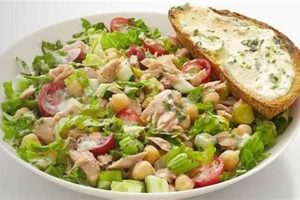
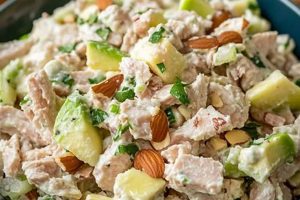
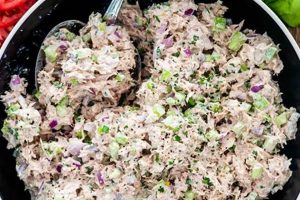
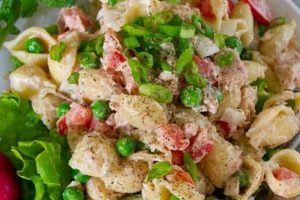
A superior macaroni and tuna salad combines cooked pasta, canned tuna, and a flavorful dressing, often mayonnaise-based. Additional ingredients can include celery, onion, relish, hard-boiled eggs, and seasonings. Variations exist, ranging from simple mixtures to more complex recipes featuring herbs, spices, or different types of pasta. A well-executed version offers a balance of textures and tastes the creaminess of the dressing, the heartiness of the pasta, and the savory flavor of the tuna.
This classic dish offers convenience and affordability, making it a popular choice for quick lunches, picnics, or potlucks. Its adaptability allows for customization to individual preferences, and it serves as a good source of protein and carbohydrates. Historically, tuna salad gained popularity in the early 20th century with the advent of canned tuna, becoming a staple in American cuisine. This accessible dish continues to be a versatile option for various occasions.
The following sections will explore various aspects of creating an exceptional macaroni and tuna salad, including ingredient selection, preparation techniques, and creative variations to elevate this culinary staple.
Tips for an Exceptional Macaroni and Tuna Salad
Creating a truly satisfying dish requires attention to detail and thoughtful ingredient selection. These tips offer guidance for elevating macaroni and tuna salad from simple to extraordinary.
Tip 1: Pasta Selection: Opt for small pasta shapes like elbows, shells, or rotini. These hold the dressing well and create a pleasant texture. Avoid overcooking the pasta; it should be al dente for optimal results.
Tip 2: High-Quality Tuna: Select tuna packed in water or oil, depending on preference. Solid or chunk light tuna generally works best. Draining the tuna thoroughly prevents excess liquid from watering down the salad.
Tip 3: Dressing Enhancement: While mayonnaise is traditional, consider adding a touch of Greek yogurt or sour cream for tanginess and a lighter texture. Experiment with different mustards, such as Dijon or stone-ground, to add depth of flavor.
Tip 4: Fresh Ingredients: Incorporating crisp vegetables like celery, red onion, or bell peppers adds texture and flavor. Finely chopping these ingredients ensures even distribution throughout the salad.
Tip 5: Seasoning Savvy: Freshly ground black pepper, paprika, or a pinch of cayenne pepper can enhance the flavor profile. A dash of lemon juice or apple cider vinegar adds brightness. Taste and adjust seasonings as needed.
Tip 6: Chill Time: Allowing the salad to chill in the refrigerator for at least 30 minutes allows the flavors to meld. This step also improves the overall texture and makes the salad more refreshing.
Tip 7: Creative Additions: Consider incorporating chopped hard-boiled eggs, olives, capers, or fresh herbs like dill or parsley for added complexity. These elements can elevate the salad and create unique flavor combinations.
By following these tips, one can achieve a macaroni and tuna salad that is both flavorful and satisfying. Careful attention to ingredients and preparation techniques ensures a delightful culinary experience.
The following section provides a concluding overview of how these elements contribute to a superior macaroni and tuna salad experience.
1. High-quality Ingredients

Ingredient quality directly impacts the overall taste and enjoyment of macaroni and tuna salad. Utilizing superior components elevates this simple dish from ordinary to exceptional. Fresh, crisp vegetables contribute significantly to texture and flavor. For example, opting for vibrant, firm celery over limp stalks adds a satisfying crunch and clean taste. Similarly, using sweet, pungent red onion instead of older, less flavorful bulbs enhances the overall profile.
Tuna selection plays a crucial role. High-quality tuna, packed in either oil or water, offers a superior flavor and texture compared to lower-grade options. The difference becomes particularly noticeable in the final product. Oil-packed tuna lends richness and moisture, while water-packed tuna provides a leaner, cleaner taste. Choosing premium mayonnaise contributes to a creamy, balanced dressing. Investing in flavorful mayonnaise enhances the overall experience, avoiding a bland or overly processed taste.
Selecting superior ingredients, though potentially involving a slightly higher cost, yields a demonstrably better result. The enhanced flavor, texture, and overall enjoyment justify the investment. This principle underscores the importance of prioritizing quality components in achieving a truly exceptional macaroni and tuna salad. Discerning palates will appreciate the noticeable difference that high-quality ingredients make in this classic dish.
2. Proper Pasta Cooking

Proper pasta cooking is crucial for achieving an optimal macaroni and tuna salad. Overcooked pasta becomes mushy and absorbs excessive dressing, leading to a heavy, unappetizing texture. Undercooked pasta, conversely, results in a tough, unpleasant bite. The ideal texture is al dente, meaning “to the tooth” in Italian. Al dente pasta offers a slight resistance when bitten, contributing a pleasant chewiness to the salad.
The cooking process directly affects the pasta’s ability to hold its shape and absorb the dressing evenly. Overcooked pasta breaks down, releasing excess starch, resulting in a gummy consistency. This excess starch also interferes with the flavor balance, diluting the other ingredients. Conversely, al dente pasta maintains its structural integrity, preventing the salad from becoming overly saturated and ensuring a more pleasing textural experience.
Achieving al dente pasta requires careful attention to cooking time and following package directions. Testing the pasta frequently towards the end of the recommended cooking time allows for precise control. Immediately rinsing the cooked pasta under cold water halts the cooking process and removes excess starch, preventing sticking and further softening. This rinsing process is essential for maintaining the pasta’s desirable texture and contributes significantly to the overall quality of the macaroni and tuna salad.
3. Balanced Flavor Profile

A balanced flavor profile is paramount in achieving a superlative macaroni and tuna salad. This balance hinges on the harmonious interplay of savory, tangy, creamy, and subtly sweet notes. The inherent richness of tuna necessitates a counterpoint; hence, the importance of acidic elements. A judicious inclusion of ingredients like lemon juice, apple cider vinegar, or finely diced pickles provides the necessary acidity, cutting through the richness and preventing the salad from becoming cloying. This interplay creates a dynamic flavor experience that elevates the dish beyond a simple combination of ingredients.
Consider the role of textural contrast in achieving balance. The creamy base, typically mayonnaise, provides a smooth backdrop against which other ingredients contribute textural complexity. Crisp vegetables, such as celery or red onion, offer a refreshing crunch, while the pasta itself contributes a satisfying chewiness. These varying textures create a multi-dimensional eating experience, enhancing the overall enjoyment. Without such textural contrasts, the salad risks becoming monotonous and heavy.
A well-balanced macaroni and tuna salad avoids extremes. Over-reliance on any single flavor element detracts from the overall experience. For example, excessive mayonnaise results in an overly rich, heavy salad, while too much acid can make it unpleasantly sharp. Careful consideration of ingredient proportions and their individual flavor contributions is essential. The ultimate objective is to create a synergistic blend where each component complements the others, culminating in a harmonious and satisfying flavor profile.
4. Optimal Tuna Selection
Optimal tuna selection significantly impacts the overall quality of macaroni and tuna salad. Tuna, as the central protein source, dictates much of the final flavor and texture. Careful consideration of tuna variety, packing method, and quality ensures a superior culinary outcome. Understanding these factors allows for informed decisions that elevate the dish beyond the ordinary.
- Tuna Varieties:
Different tuna species possess distinct flavor profiles and textures. Albacore, known for its light color and delicate flavor, offers a mild option. Yellowfin, slightly darker and firmer, presents a more robust taste. Skipjack, often the most affordable choice, tends to have a stronger, more assertive flavor. Choosing the appropriate variety depends on individual preferences and the desired intensity of the final dish. Albacore complements lighter flavor profiles, while yellowfin or skipjack can stand up to bolder additions.
- Packing Methods:
Tuna packed in oil retains moisture and exhibits a richer flavor. The oil itself contributes to the overall taste and texture of the salad, often enhancing creaminess. Water-packed tuna offers a leaner option, allowing for greater control over the dressing’s richness and flavor. This choice allows for more flexibility in customizing the salad’s final profile, accommodating dietary preferences or specific flavor goals.
- Quality Indicators:
Look for solid or chunk tuna rather than flaked, as these typically indicate higher quality and better texture. Examine the tuna’s appearance; it should be uniform in color and free from dark or discolored spots. Reputable brands often indicate sustainable fishing practices, further contributing to responsible consumption. These factors, while seemingly minor, directly influence the overall taste and enjoyment of the final dish.
- Draining Excess Liquid:
Regardless of packing method, thoroughly draining the tuna is essential. Excess liquid dilutes the dressing, leading to a watery salad with compromised flavor. Proper draining ensures that the tuna’s flavor remains concentrated and that the dressing maintains the desired consistency. This simple step significantly impacts the final texture and taste, preventing a bland or watery outcome.
By considering these facets of tuna selection, one can ensure that the tuna contributes optimally to the macaroni and tuna salad. The chosen tuna variety, packing method, quality indicators, and proper draining techniques collectively influence the final product. A discerning approach to tuna selection elevates this seemingly simple dish, transforming it into a truly satisfying culinary experience.
5. Fresh Vegetable Additions
Fresh vegetable additions constitute a critical component of a superior macaroni and tuna salad, contributing significantly to both flavor and textural complexity. These additions move the dish beyond basic protein and carbohydrate elements, introducing nuanced flavors, vibrant colors, and satisfying crispness. Strategic vegetable incorporation elevates the salad from simple to sophisticated, offering a more complete and enjoyable culinary experience.
- Textural Contrast
Fresh vegetables introduce a crucial textural counterpoint to the creamy dressing and soft pasta. Celery, for example, provides a distinctive crunch, while diced bell peppers offer a slightly firmer bite. This contrast prevents the salad from becoming texturally monotonous, creating a more dynamic and satisfying mouthfeel. The interplay of textures enhances the overall enjoyment of the dish, making each bite more engaging.
- Flavor Enhancement
Beyond texture, fresh vegetables contribute layers of flavor that complement the tuna and dressing. Red onion imparts a pungent bite, while chopped dill or parsley introduce fresh herbal notes. These additions create a more complex and nuanced flavor profile, preventing the salad from tasting bland or one-dimensional. The careful selection of vegetables allows for customization, catering to individual preferences and creating unique flavor combinations.
- Nutritional Value
Incorporating fresh vegetables increases the nutritional value of the salad. These additions introduce vitamins, minerals, and dietary fiber, contributing to a more balanced and healthful meal. This nutritional boost enhances the appeal of the salad, making it a more wholesome and satisfying option. The inclusion of vegetables transforms the dish from a simple indulgence into a more nutritious and well-rounded meal component.
- Visual Appeal
Fresh vegetables enhance the visual appeal of the macaroni and tuna salad. Brightly colored vegetables, such as red onion, green bell peppers, or chopped chives, create a more visually engaging dish. This visual enhancement increases the overall appeal and makes the salad more appetizing. A visually appealing salad is more enticing and contributes to a more enjoyable dining experience.
The strategic incorporation of fresh vegetables elevates macaroni and tuna salad from a basic dish to a culinary creation that satisfies on multiple levels. The interplay of textures, the nuanced flavors, the increased nutritional value, and the enhanced visual appeal collectively contribute to a superior and more enjoyable dining experience. These additions transform a simple combination of ingredients into a well-rounded and satisfying meal.
6. Thoughtful Seasoning
Thoughtful seasoning distinguishes a truly exceptional macaroni and tuna salad from a mediocre one. Seasoning elevates the inherent flavors of the core ingredients tuna, pasta, and mayonnaise transforming a simple combination into a complex and nuanced culinary experience. It is not merely a matter of adding salt and pepper; rather, it involves a considered approach to balancing flavors and enhancing overall complexity.
Consider the interplay of salt, acid, and heat. Salt enhances the natural flavors of the tuna and other ingredients. A touch of acidity, from lemon juice or vinegar, brightens the palate and cuts through the richness of the mayonnaise. A subtle hint of heat, from a pinch of cayenne pepper or a dash of hot sauce, adds depth and complexity. The precise combination and quantity of these elements depend on the desired flavor profile and the other ingredients present, such as the type of tuna or the chosen vegetables. For example, a salad featuring oil-packed tuna might require less added salt compared to one using water-packed tuna. Similarly, the addition of briny olives or capers might necessitate adjustments to the amount of acid.
Fresh herbs offer another dimension to seasoning. Dill, parsley, or chives introduce bright, herbaceous notes that complement the other flavors. Dried herbs, while convenient, lack the vibrancy and freshness of their fresh counterparts. The choice of herbs depends on personal preference and the desired overall flavor profile. Experimentation is key to discovering successful flavor combinations. Over-seasoning can easily overwhelm the delicate balance of flavors, while under-seasoning results in a bland and uninspired dish. A judicious approach, coupled with careful tasting and adjustment throughout the preparation process, is essential to achieving a harmonious and flavorful final product. This meticulous attention to seasoning transforms a basic macaroni and tuna salad into a culinary delight.
7. Adequate Chilling Time
Adequate chilling time plays a crucial role in the development of a superior macaroni and tuna salad. Chilling allows the flavors of the various componentstuna, pasta, vegetables, and dressingto meld and harmonize. This melding creates a more cohesive and complex flavor profile than achievable immediately after mixing. The chilling process allows the individual ingredients to contribute their nuances to the overall taste, resulting in a more balanced and satisfying final product. For example, the sharpness of raw onions mellows during chilling, blending more harmoniously with the other ingredients. Similarly, the flavors of herbs and spices infuse the dressing and other components more thoroughly, creating a deeper and more integrated taste.
Beyond flavor development, chilling improves the structural integrity of the salad. The pasta firms slightly as it cools, preventing it from becoming mushy. The chilling process also allows the dressing to thicken and adhere more effectively to the other ingredients. This results in a salad with a more desirable texture, avoiding a watery or separated consistency. A chilled salad holds its shape better, facilitating cleaner serving and presentation. This structural improvement contributes to a more aesthetically pleasing and enjoyable eating experience.
The optimal chilling time allows for complete flavor integration and textural enhancement without compromising the quality of the individual ingredients. While a minimum of 30 minutes offers noticeable improvement, an hour or more yields even better results. Over-chilling, however, can negatively impact certain ingredients, such as fresh vegetables, making them lose their crispness. Finding the right balance between flavor development, textural improvement, and ingredient preservation is key to achieving the best possible macaroni and tuna salad. This balance demonstrates the importance of adequate chilling time as an essential step in creating a truly exceptional dish.
Frequently Asked Questions
This section addresses common inquiries regarding the preparation and enjoyment of macaroni and tuna salad.
Question 1: What type of pasta works best?
Small pasta shapes like elbows, shells, or rotini are ideal. These hold the dressing well and create a pleasant texture. Larger shapes or long strands are less suitable.
Question 2: Can different types of tuna be used?
Albacore, yellowfin, and skipjack all work well, each offering a distinct flavor profile. Solid or chunk light tuna generally provides the best texture. Avoid tuna packed in strong sauces, as these can clash with the other flavors.
Question 3: How can one reduce the salad’s caloric content?
Using Greek yogurt or light mayonnaise in place of full-fat mayonnaise reduces calories and fat. Incorporating more vegetables also contributes to a lighter, more nutritious salad.
Question 4: How long can macaroni and tuna salad be stored?
Properly stored in an airtight container in the refrigerator, it typically lasts for three to five days. Discard any salad that exhibits an off odor or appearance.
Question 5: What are some creative variations for macaroni and tuna salad?
Consider adding ingredients like chopped hard-boiled eggs, grapes, chopped apples, or different herbs and spices. These additions introduce unique flavors and textures, elevating the classic recipe.
Question 6: Can this salad be served warm?
While traditionally served cold, macaroni and tuna salad can be enjoyed slightly warm. However, avoid heating it excessively, as this can negatively impact the texture and flavor of the ingredients.
Careful attention to these frequently asked questions ensures successful preparation and enjoyment of macaroni and tuna salad. Understanding these aspects allows for greater control over the final product, catering to individual preferences and dietary needs.
The following section offers concluding thoughts on creating a truly exceptional macaroni and tuna salad.
Crafting the Best Macaroni and Tuna Salad
Exploration of optimal macaroni and tuna salad preparation reveals the significance of ingredient selection, technique, and thoughtful flavor balancing. High-quality tuna, properly cooked pasta, and fresh, crisp vegetables contribute to a superior textural and flavor profile. Judicious seasoning and adequate chilling time further enhance the final product. Attention to these details elevates this classic dish from simple fare to a truly satisfying culinary experience.
Culinary experimentation holds the key to unlocking the full potential of macaroni and tuna salad. Adaptability allows for personalized variations catering to individual palates. Continued exploration of flavor combinations and ingredient pairings promises further refinement and evolution of this versatile dish. The pursuit of the “best” macaroni and tuna salad remains an ongoing culinary journey, driven by creativity and a commitment to quality.