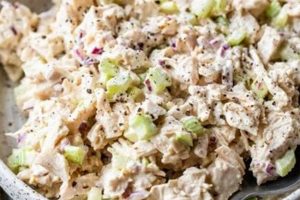
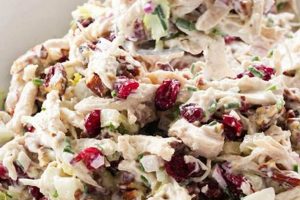
A superior canned chicken salad combines high-quality canned chicken with complementary ingredients and seasonings to create a convenient and flavorful dish. For example, a simple yet satisfying version might include mayonnaise, celery, onion, and a touch of Dijon mustard. Variations can incorporate grapes, apples, nuts, or dried cranberries for added texture and flavor complexity.
A well-executed canned chicken salad offers a quick and easy meal option, perfect for lunches, picnics, or light dinners. Its adaptability allows for diverse flavor profiles, catering to a wide range of palates. Historically, canned chicken emerged as a shelf-stable protein source, gaining popularity in the mid-20th century. This convenience paved the way for dishes like chicken salad to become staples in many households, offering a practical and affordable meal solution.
This article will explore various aspects of creating a delicious canned chicken salad, covering topics such as ingredient selection, preparation techniques, flavor variations, and nutritional considerations.
Tips for Elevated Canned Chicken Salad
Optimizing canned chicken salad involves careful consideration of ingredients and techniques. These tips offer guidance for creating a flavorful and satisfying dish.
Tip 1: Drain the chicken thoroughly. Excess liquid can dilute the salad’s flavor and create a watery consistency. Pressing the chicken gently with a paper towel removes unwanted moisture.
Tip 2: Select high-quality mayonnaise. Mayonnaise serves as the foundation of the salad’s flavor profile. Opting for a richer, full-flavored mayonnaise significantly enhances the overall taste.
Tip 3: Add texture with finely diced celery and onion. These classic additions provide a satisfying crunch and contribute a subtle savory note.
Tip 4: Incorporate a touch of acidity. A squeeze of lemon juice or a dash of apple cider vinegar brightens the flavors and balances the richness of the mayonnaise.
Tip 5: Season generously. Salt, pepper, and a pinch of paprika or garlic powder enhance the overall flavor profile. Experimenting with herbs like dill or tarragon can create unique flavor combinations.
Tip 6: Consider adding texture and sweetness with fruit or nuts. Grapes, chopped apples, dried cranberries, or slivered almonds offer a pleasant contrast in texture and introduce complementary sweet notes.
Tip 7: Chill thoroughly before serving. Chilling allows the flavors to meld and enhances the salad’s refreshing qualities.
By following these tips, one can elevate canned chicken salad from a simple convenience food to a truly enjoyable culinary experience.
These preparation strategies contribute to a superior canned chicken salad, ensuring a delightful and satisfying meal.
1. High-quality Canned Chicken

The foundation of a superior canned chicken salad rests upon the selection of high-quality canned chicken. Subpar canned chicken can compromise the overall flavor, texture, and nutritional value of the final dish. Understanding the characteristics of high-quality canned chicken is crucial for achieving optimal results.
- Texture and Firmness
High-quality canned chicken exhibits a firm, yet tender texture. It should not be mushy or stringy. This desirable texture contributes to a more pleasant mouthfeel in the finished salad. Conversely, low-quality canned chicken often presents a less appealing, softer texture that can negatively impact the overall salad experience.
- Flavor Profile
The flavor of the canned chicken should be clean and neutral, allowing the other ingredients in the salad to shine. Any off-flavors or excessive saltiness can detract from the overall balance. Premium canned chicken typically features a mild, natural chicken flavor, enhancing the complementary flavors of the added ingredients.
- Ingredient List
Examining the ingredient list provides insights into the quality of the canned chicken. Ideally, the list should be short and contain minimal additives or preservatives. Chicken, water, and salt are the core components. Unnecessary fillers or artificial flavorings can indicate lower quality.
- Nutritional Value
High-quality canned chicken offers a good source of lean protein. Comparing nutritional labels across different brands can help identify options with higher protein content and lower sodium levels. This nutritional value contributes to a more satisfying and healthful chicken salad.
By prioritizing these elements of high-quality canned chicken, one ensures a flavorful, texturally pleasing, and nutritionally sound base for a truly exceptional canned chicken salad. A discerning approach to canned chicken selection significantly elevates the final dish.
2. Flavorful Mayonnaise

Mayonnaise serves as the foundational flavor element in canned chicken salad, significantly influencing the final dish’s overall quality. The choice of mayonnaise impacts not only the taste but also the texture and richness of the salad. Understanding the nuances of mayonnaise selection is essential for achieving a truly exceptional canned chicken salad.
- Classic Mayonnaise
Traditional mayonnaise, composed primarily of oil, eggs, and vinegar, provides a creamy, tangy base for the salad. Its neutral flavor profile allows other ingredients, such as herbs and spices, to shine. Classic mayonnaise offers a familiar and comforting taste that complements the chicken and other additions.
- Flavored Mayonnaise
Specialty mayonnaises infused with herbs, spices, or other flavorings, such as chipotle, roasted garlic, or lemon, can elevate the chicken salad to a new level of complexity. These pre-flavored options provide a convenient shortcut to a more nuanced flavor profile, adding depth and intrigue to the dish.
- Homemade Mayonnaise
For ultimate control over flavor and freshness, homemade mayonnaise offers a unique opportunity to tailor the salad to specific preferences. Adjusting the ingredients, like using different oils or vinegars, allows for customization of the flavor profile. Freshly made mayonnaise often exhibits a lighter, brighter flavor compared to commercial varieties.
- Light Mayonnaise
While offering a lower-fat option, light mayonnaise can sometimes compromise the flavor and texture of the salad. Its thinner consistency may result in a less creamy and satisfying final product. Careful consideration is required when using light mayonnaise to ensure it doesn’t detract from the overall quality.
The selection of mayonnaise represents a pivotal step in crafting the best canned chicken salad. Whether opting for a classic, flavored, homemade, or light variety, the choice directly impacts the salad’s flavor profile, texture, and overall enjoyment. A well-chosen mayonnaise elevates canned chicken salad from simple to extraordinary.
3. Balanced Seasonings
Balanced seasonings are essential for a superlative canned chicken salad. They elevate the dish beyond basic convenience food, transforming it into a flavorful and satisfying culinary experience. Careful consideration of seasonings allows the inherent flavors of the chicken and other ingredients to shine, creating a harmonious and well-rounded flavor profile.
- Salt and Pepper
The foundation of any well-seasoned dish, salt and freshly ground black pepper are indispensable in canned chicken salad. Salt enhances the natural flavors of the chicken and other ingredients, while pepper adds a subtle bite. The proper balance of these two fundamental seasonings is crucial; too much salt can overpower the dish, while too little can leave it bland. Freshly ground black pepper provides a more robust flavor compared to pre-ground pepper.
- Herbs
Fresh herbs like dill, parsley, chives, or tarragon contribute brightness and complexity to canned chicken salad. Dill, with its slightly tangy and anise-like flavor, pairs particularly well with chicken. Parsley offers a fresh, clean taste, while chives provide a mild onion flavor. Tarragon imparts a subtle licorice note. The choice of herbs can significantly influence the overall flavor profile of the salad.
- Spices
A pinch of paprika, garlic powder, onion powder, or celery seed can enhance the savory notes in canned chicken salad. Paprika adds a touch of smokiness and color. Garlic and onion powders provide a pungent depth of flavor. Celery seed contributes a subtle celery flavor, complementing the texture of diced celery in the salad. Judicious use of spices ensures they enhance rather than overpower the other flavors.
- Acidity
A touch of acidity brightens the flavors of canned chicken salad and balances the richness of the mayonnaise. A squeeze of lemon juice or a dash of apple cider vinegar provides the necessary acidity. This acidic element cuts through the richness of the mayonnaise, preventing the salad from feeling heavy or overly rich. It also helps to preserve the salad’s freshness.
The interplay of these seasoningssalt, pepper, herbs, spices, and aciditydetermines the final flavor profile of the canned chicken salad. Achieving a balanced combination of these elements is paramount to creating a truly exceptional dish. A well-seasoned canned chicken salad demonstrates culinary expertise and elevates a simple meal to a delightful sensory experience.
4. Textural Variety
Textural variety is a key component of a superior canned chicken salad. A monotonous texture can render the salad unappealing, while a combination of textures creates a more engaging and enjoyable eating experience. This dimension elevates canned chicken salad from simple to sophisticated, offering a more complex and satisfying culinary experience.
- Crunchy Elements
Crunchy elements provide a counterpoint to the softness of the chicken and mayonnaise. Finely diced celery and red onion are classic choices, offering a refreshing crispness. Water chestnuts, chopped walnuts, or pecans can also contribute a satisfying crunch. These textural contrasts make each bite more interesting and prevent the salad from becoming overly smooth or paste-like.
- Soft Components
The inherent softness of the chicken and mayonnaise provides a foundational texture. The quality of the chicken itself plays a role here; firm, high-quality chicken offers a more substantial bite than softer, lower-quality options. The creaminess of the mayonnaise contributes to the overall smooth texture, binding the ingredients together.
- Integrating Fruits and Nuts
Incorporating fruits, such as grapes or dried cranberries, introduces a burst of sweetness and a slightly chewy texture. Nuts, like slivered almonds or chopped pecans, offer a satisfying crunch and a richer, more complex flavor profile. These additions provide bursts of flavor and texture that contrast pleasantly with the other components.
- Balancing Textures
Achieving the right balance of textures is essential. Too much crunch can be overwhelming, while not enough can result in a monotonous texture. The goal is to create a harmonious blend of textures that complement each other, resulting in a dynamic and satisfying eating experience. The interplay of textures significantly influences the overall enjoyment of the salad.
The careful consideration of textural variety transforms canned chicken salad from a basic staple into a more refined and enjoyable dish. The interplay of crunchy, soft, and chewy elements creates a dynamic sensory experience, elevating the perceived quality and satisfaction derived from this simple yet versatile dish. Attention to texture demonstrates culinary expertise and a commitment to creating a truly exceptional canned chicken salad.
5. Proper Chilling
Proper chilling is integral to a best canned chicken salad recipe, significantly impacting both food safety and flavor development. Chilling inhibits bacterial growth, a critical consideration for any dish containing mayonnaise. Beyond safety, chilling allows the flavors of the various ingredients to meld and deepen. A freshly made salad, while palatable, lacks the complexity achieved through proper chilling. The flavors remain distinct, rather than harmonizing into a cohesive whole. For instance, the subtle notes of herbs and spices become more pronounced after chilling, enhancing the overall flavor profile.
The optimal chilling time for canned chicken salad is at least two hours, but preferably longer. This duration allows ample time for flavor development and ensures food safety. Chilling overnight further intensifies the flavors, resulting in a more nuanced and satisfying salad. Practical applications of this understanding include preparing the salad the day before a picnic or luncheon, allowing sufficient chilling time without last-minute preparation. This pre-emptive approach ensures optimal flavor and minimizes food safety risks associated with inadequate chilling.
In summary, proper chilling is not merely a precautionary step but a crucial element in crafting the best canned chicken salad recipe. It ensures both food safety and optimal flavor development. Understanding the importance of chilling and its impact on the final product allows for strategic meal preparation, maximizing both safety and flavor. Neglecting this critical step compromises the quality of the canned chicken salad, impacting both its palatability and its safety for consumption.
Frequently Asked Questions
This section addresses common inquiries regarding the preparation and enjoyment of canned chicken salad.
Question 1: How long can canned chicken salad be safely stored in the refrigerator?
Canned chicken salad should be consumed within three to five days when stored properly in an airtight container in the refrigerator at 40F (4C) or below.
Question 2: Can frozen canned chicken be used for chicken salad?
While not ideal, previously frozen canned chicken can be used. However, thawing and refreezing can negatively impact the texture, potentially resulting in a drier, less desirable consistency.
Question 3: How can one reduce the sodium content in canned chicken salad?
Rinsing the canned chicken under cold water before use can help reduce sodium content. Additionally, opting for low-sodium or no-salt-added canned chicken is recommended. Using low-sodium mayonnaise and minimizing added salt during preparation also contributes to lower overall sodium.
Question 4: What are suitable alternatives to mayonnaise in canned chicken salad?
Plain Greek yogurt or avocado can be substituted for mayonnaise, offering a healthier alternative with distinct flavor profiles. Greek yogurt provides a tangy flavor, while avocado contributes a creamy texture and a slightly nutty taste.
Question 5: Can canned chicken salad be frozen?
Freezing canned chicken salad is not generally recommended. Freezing negatively impacts the texture of both the chicken and the mayonnaise, often resulting in a watery and less palatable salad upon thawing. It’s best to prepare and consume canned chicken salad fresh.
Question 6: How can one enhance the flavor of bland canned chicken?
Elevating the flavor of bland canned chicken can be achieved through careful seasoning. Incorporating herbs, spices, and a touch of acidity can significantly improve the taste. Consider adding ingredients like Dijon mustard, lemon juice, garlic powder, onion powder, or fresh herbs such as dill or parsley to enhance the flavor profile.
Understanding these aspects of canned chicken salad preparation and storage contributes to a safer and more satisfying culinary experience.
This concludes the frequently asked questions section. The following section will offer concluding thoughts on creating the best canned chicken salad.
Conclusion
This exploration of optimal canned chicken salad preparation has highlighted the critical elements contributing to a superior final product. From the selection of high-quality canned chicken to the nuanced balancing of seasonings and the incorporation of varied textures, each step plays a vital role. Proper chilling techniques further enhance both flavor and food safety. The frequently asked questions section addresses common concerns regarding storage, ingredient substitutions, and flavor enhancement, providing practical guidance for achieving culinary success.
Ultimately, the pursuit of the best canned chicken salad recipe represents a dedication to culinary excellence, even within the realm of seemingly simple dishes. Careful consideration of each component elevates this convenient staple to a truly satisfying and enjoyable culinary experience. This knowledge empowers individuals to transform readily available ingredients into a dish that delights the palate and reflects a commitment to quality.