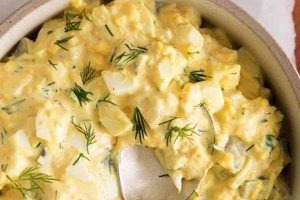
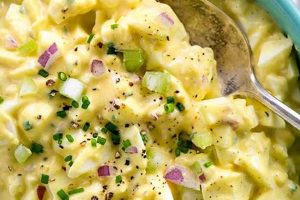
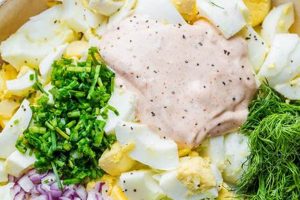
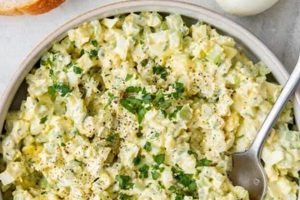
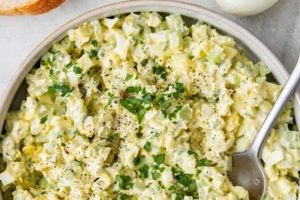
A superior egg salad transcends basic ingredients. It involves a careful selection of fresh, high-quality eggs, flavorful mayonnaise, and complementary seasonings. A perfectly balanced egg salad might include finely diced celery, red onion, Dijon mustard, and a touch of paprika for color and depth. The texture should be creamy yet retain a slight bit of egg white integrity, avoiding an overly mushy consistency.
This dish offers a versatile and nutritious meal option. It can be enjoyed as a sandwich filling, a light lunch on its own, or served as a component of a larger spread. Historically, egg salad’s popularity stemmed from its affordability and ease of preparation, making it a common household staple. Its enduring appeal lies in its adaptability; variations can range from classic to innovative, accommodating diverse palates and dietary needs.
The following sections will delve into specific techniques for achieving optimal egg cooking and chopping, explore a variety of flavorful additions and variations, and offer guidance on presentation and storage for maximizing freshness and enjoyment.
Tips for an Exceptional Egg Salad
Elevating egg salad from ordinary to extraordinary involves attention to detail in every step of preparation. These tips offer guidance for achieving optimal results.
Tip 1: Perfect Egg Cooking: Achieving the ideal texture begins with properly cooked eggs. Simmering eggs for 10-12 minutes ensures fully cooked yolks and whites that are tender, not rubbery. An ice bath immediately after cooking halts the cooking process and simplifies peeling.
Tip 2: Precise Chopping: Uniformly chopped eggs create a pleasing texture and ensure even distribution of flavor. A sharp knife or an egg slicer facilitates clean cuts, preventing crumbling. Aim for a consistent size, neither too fine nor too chunky.
Tip 3: Mayonnaise Selection: The quality of mayonnaise significantly impacts the final flavor profile. A full-bodied mayonnaise provides richness and creaminess, while lighter options offer a less intense flavor. Consider incorporating a touch of Dijon mustard or plain Greek yogurt for added tang and complexity.
Tip 4: Flavorful Enhancements: Fresh herbs such as dill or chives impart a bright, fresh element. Finely diced celery and red onion add a satisfying crunch. A dash of paprika provides a pop of color and subtle smokiness. Experimentation with different spice blends can further elevate the flavor profile.
Tip 5: Seasoning with Care: Seasoning should be gradual and tasted throughout the process. Salt and freshly ground black pepper are essential, but consider incorporating other seasonings like smoked paprika, garlic powder, or a touch of cayenne pepper for a subtle kick.
Tip 6: Proper Chilling: Allowing the egg salad to chill for at least 30 minutes before serving allows the flavors to meld and enhances the overall experience. Chilling also firms the mixture, making it easier to spread or serve.
Tip 7: Bread Selection: The choice of bread or vessel significantly influences the final presentation. Consider crusty bread, croissants, or lettuce wraps for a lighter option. Serving the egg salad in a bowl with crackers or crudits provides another appealing presentation style.
By following these tips, one can create an egg salad that is not only delicious but also visually appealing and texturally satisfying. Attention to detail in each step, from ingredient selection to presentation, elevates this simple dish to a culinary delight.
This concludes the exploration of optimal egg salad preparation.
1. Fresh, High-Quality Eggs

Fresh, high-quality eggs form the cornerstone of an exceptional egg salad. The inherent flavor and texture of the eggs directly influence the final result. Fresh eggs possess a delicate sweetness and a clean taste, absent of any sulfurous notes that can develop over time. Their yolks are vibrant and firm, contributing a rich creaminess to the mixture. Conversely, older eggs can result in a flat, less appealing flavor and a watery consistency that detracts from the overall quality of the egg salad. For instance, using farm-fresh eggs, compared to store-bought eggs that may have been sitting on shelves for weeks, yields a noticeable difference in both flavor and texture, resulting in a brighter, creamier, and more satisfying egg salad.
The quality of eggs also affects their structural integrity. Fresher eggs hold their shape better during the cooking process, simplifying peeling and chopping. Their firm whites contribute a desirable texture to the salad, preventing it from becoming overly mushy. This is crucial for achieving a balanced mouthfeel, where distinct pieces of egg are coated in a creamy dressing, rather than a homogenous paste. Consider the difference between using freshly laid eggs from a local market versus using older eggs the former will yield distinct, flavorful pieces, while the latter might crumble and result in a less appealing texture.
Prioritizing fresh, high-quality eggs ensures the foundation of a truly excellent egg salad. This emphasis on quality ingredients allows the other components mayonnaise, seasonings, and additions to shine, contributing to a well-rounded and flavorful final product. While other ingredients play a supporting role, the quality of the eggs remains paramount in determining the overall success of the dish. Failing to appreciate this connection can lead to a disappointing outcome, regardless of the effort put into other aspects of the preparation.
2. Creamy, Flavorful Mayonnaise

Mayonnaise serves as the textural and flavor backbone of egg salad, significantly impacting the final product’s quality. The choice of mayonnaise, therefore, represents a critical step in crafting an exceptional dish, influencing both the overall taste and mouthfeel. Its quality and characteristics play a crucial role in binding the ingredients together and delivering a harmonious blend of flavors.
- Texture and Consistency:
Mayonnaise contributes the characteristic creaminess expected in a well-made egg salad. A thick, full-bodied mayonnaise coats the egg pieces effectively, creating a luxurious mouthfeel and preventing a dry or crumbly texture. Conversely, a thin or watery mayonnaise can result in a soupy, unappetizing consistency. Consider the contrast between a premium mayonnaise, which provides a velvety texture, and a low-fat alternative, which may lack the necessary richness and body to bind the ingredients properly.
- Flavor Profile:
The flavor profile of the mayonnaise itself plays a crucial role in the overall taste of the egg salad. A high-quality mayonnaise, made with fresh ingredients, offers a clean, tangy flavor that complements the eggs without overpowering them. Different varieties, such as those incorporating Dijon mustard or other flavorings, can introduce additional complexity. For example, using a lemon-infused mayonnaise can add a bright, citrusy note, while a mayonnaise with roasted garlic can impart a savory depth.
- Ingredient Binding:
Mayonnaise acts as an emulsifier, binding the chopped eggs and other ingredients into a cohesive mixture. This binding action prevents the salad from falling apart and creates a smooth, evenly distributed texture. The quality of the mayonnaise directly affects its binding capacity, with a higher-quality product generally providing better emulsification and a more stable final product. Consider the difference between using a homemade mayonnaise, which offers excellent binding properties, and a commercially produced mayonnaise with stabilizers that may hinder its ability to hold the ingredients together optimally.
- Balancing Flavors:
Mayonnaise also plays a crucial role in balancing the flavors of the other ingredients in the egg salad. Its inherent tanginess can cut through the richness of the eggs, while its creamy texture helps to mellow any sharp or pungent additions, such as onions or spices. This balancing act ensures that no single flavor dominates, creating a harmonious and well-rounded final product. For instance, using a slightly tangy mayonnaise can balance the richness of hard-boiled yolks and prevent the egg salad from tasting overly bland.
The selection of mayonnaise represents a critical decision in creating an exceptional egg salad. By understanding the interplay between mayonnaise’s texture, flavor profile, binding ability, and balancing effect, one can elevate this seemingly simple dish to a new level of culinary enjoyment. The careful consideration of these factors contributes significantly to the overall balance and harmony of flavors, ensuring a truly satisfying culinary experience.
3. Balanced Seasonings and Spices
Seasonings and spices constitute the crucial element that elevates egg salad from simple to extraordinary. A balanced approach to flavor enhancement prevents blandness while avoiding overpowering the delicate taste of the eggs. Careful consideration of spice combinations contributes significantly to the complexity and overall enjoyment of the final product.
- Salt and Pepper Foundation:
Salt and freshly ground black pepper provide the foundational seasoning for any egg salad. Salt enhances the inherent flavors of the eggs and other ingredients, while pepper adds a subtle bite and complexity. The correct balance of these two essential seasonings is crucial; too much salt can make the salad unpalatable, while too little can leave it tasting flat. Similarly, an excessive amount of pepper can overpower the delicate egg flavor, while too little can fail to provide the necessary depth. For instance, using kosher salt allows for better control over salinity due to its larger crystal size, while freshly ground black pepper offers a more pronounced aroma and flavor compared to pre-ground pepper.
- Herbaceous Accents:
Fresh herbs offer a bright, refreshing counterpoint to the richness of the mayonnaise and eggs. Dill, chives, parsley, and tarragon are popular choices, each imparting a unique flavor profile. Dill adds a slightly tangy, anise-like flavor, chives contribute a mild oniony taste, parsley provides a clean, fresh element, and tarragon offers a subtle licorice note. The key is to use fresh herbs sparingly, allowing their delicate flavors to enhance the egg salad without dominating it. For example, a sprinkle of fresh dill can complement the creamy texture and add a touch of brightness, while too much dill can overwhelm the other flavors.
- Spice Dimensions:
Spices like paprika, cayenne pepper, and mustard powder introduce warmth and depth to the flavor profile. Paprika adds a subtle smokiness and a touch of color, cayenne pepper provides a gentle heat, and mustard powder contributes a tangy complexity. These spices should be used judiciously to avoid overpowering the delicate egg flavor. A small pinch of cayenne pepper can add a pleasant warmth without making the salad spicy, while a dash of smoked paprika can enhance the overall savory notes. Overusing these spices, however, can create an imbalance and mask the desired egg salad flavor.
- Acidic Balance:
A touch of acidity brightens the egg salad and balances the richness of the mayonnaise and eggs. Lemon juice, vinegar, or a pinch of citric acid can provide this necessary acidic element. A small amount of lemon juice can lift the flavors without making the salad taste sour, while a splash of apple cider vinegar can add a subtle sweetness and tang. Achieving the correct balance is essential; too much acid can make the salad taste sharp, while too little can leave it tasting heavy and rich. For instance, a teaspoon of lemon juice can brighten the flavors, while a tablespoon might overwhelm the other ingredients.
Achieving a harmonious balance of seasonings and spices is fundamental to crafting an exceptional egg salad. The careful interplay of salt, pepper, herbs, spices, and acidity elevates this simple dish, transforming it into a flavorful and nuanced culinary experience. By understanding the individual contributions of each element and employing a measured approach, one can create an egg salad that is both complex and satisfying.
4. Proper Egg Cooking Technique

Proper egg cooking technique stands as a cornerstone of an amazing egg salad recipe. The final texture and flavor of the egg salad depend heavily on how the eggs themselves are cooked. Overcooked eggs become dry, rubbery, and chalky, detracting from the desired creamy texture. Undercooked eggs, conversely, present food safety concerns and an unappetizing, runny consistency. The ideal egg for egg salad exhibits a fully cooked, firm yolk and a tender, yet not rubbery, white. This balance ensures a pleasant mouthfeel and optimal flavor release.
Consider the cause-and-effect relationship between cooking time and egg texture. Eggs simmered for excessive durations develop a greenish ring around the yolk, indicating the production of ferrous sulfide. While not harmful, this discoloration often imparts an unpleasant sulfurous odor and flavor. Conversely, eggs cooked for too short a time result in runny whites and yolks, making them difficult to chop and incorporating unwanted moisture into the salad. Practical application of this understanding involves precise timing and temperature control during the cooking process. A consistent simmer for 10-12 minutes, followed by an immediate ice bath, typically yields perfectly cooked eggs suitable for egg salad.
The importance of proper egg cooking technique extends beyond texture and flavor. It also significantly affects the ease of peeling and chopping. Overcooked eggs cling stubbornly to their shells, resulting in fragmented pieces and a frustrating preparation process. Properly cooked eggs, however, peel cleanly and effortlessly, allowing for uniform chopping and an aesthetically pleasing final product. This contributes not only to the visual appeal but also to the even distribution of flavors and textures within the salad. Challenges can arise from variations in egg size and freshness; however, adhering to recommended cooking times and employing the ice bath technique minimizes these variables. Mastering this fundamental step ensures a significant advantage in achieving an amazing egg salad recipe.
5. Thoughtful Ingredient Combinations
Thoughtful ingredient combinations elevate egg salad from basic to extraordinary. A truly amazing egg salad recipe transcends simply mixing chopped eggs and mayonnaise; it involves a curated selection of complementary flavors and textures that create a harmonious and balanced final product. This principle hinges on understanding the interplay between different ingredients and how they contribute to the overall sensory experience.
Consider the textural contrast achievable through incorporating crunchy elements. Finely diced celery, red onion, or water chestnuts introduce a satisfying counterpoint to the creamy base of mayonnaise and egg yolks. This interplay of textures prevents the salad from becoming monotonous and adds a dimension of interest to each bite. Similarly, the incorporation of fresh herbs, such as dill, chives, or parsley, introduces a burst of freshness and a subtle aromatic complexity. These additions not only enhance the flavor profile but also contribute visual appeal with their vibrant green hues. The practical significance of these combinations lies in their ability to transform a simple dish into a multi-sensory experience, appealing to both palate and eye.
Flavor combinations offer another avenue for enhancing egg salad. The tang of Dijon mustard or a hint of horseradish can cut through the richness of the mayonnaise, creating a more balanced flavor profile. Sweet pickle relish adds a touch of sweetness and acidity, while a sprinkle of smoked paprika introduces a subtle smoky depth. These additions, when carefully balanced, create a complex tapestry of flavors that engage the palate and elevate the overall enjoyment of the dish. Challenges arise when attempting to incorporate too many contrasting flavors, potentially leading to a disjointed or overwhelming taste experience. The key lies in selecting a few complementary ingredients and using them judiciously, allowing the natural flavors of the eggs and mayonnaise to shine through. A thoughtful approach to ingredient combinations transforms egg salad from a simple staple into a culinary creation worthy of admiration.
Frequently Asked Questions
This section addresses common inquiries regarding the preparation and enjoyment of exceptional egg salad.
Question 1: How can one ensure perfectly cooked eggs for egg salad?
Achieving perfectly cooked eggs involves a precise cooking time and temperature control. A gentle simmer for 10-12 minutes, followed by an immediate ice bath, yields yolks that are fully cooked and firm, while whites remain tender and easy to chop. Overcooking results in dry, rubbery textures and an unpleasant sulfurous odor.
Question 2: What type of mayonnaise is best suited for egg salad?
Full-bodied, high-quality mayonnaise contributes richness and creaminess. Consider using mayonnaise made with fresh ingredients, or explore options incorporating Dijon mustard or other flavorings for added complexity. Avoid low-fat or overly processed mayonnaises, as these can compromise texture and flavor.
Question 3: How can one prevent egg salad from becoming watery?
Watery egg salad often results from overcooked or improperly drained eggs. Adhering to the recommended cooking time and utilizing an ice bath minimizes excess moisture. Ensuring all ingredients are dry before combining also aids in preventing a watery consistency.
Question 4: What are the best storage practices for egg salad?
Egg salad should be stored in an airtight container in the refrigerator. Consume within three to five days for optimal freshness and quality. Avoid leaving egg salad at room temperature for extended periods, as this can promote bacterial growth.
Question 5: How can one elevate egg salad beyond the basic recipe?
Experimenting with different flavor combinations expands the possibilities of egg salad. Incorporating fresh herbs, spices, or crunchy vegetables adds depth and complexity. Consider additions like dill, chives, smoked paprika, finely diced celery, or red onion for enhanced flavor and texture.
Question 6: What are some serving suggestions for egg salad beyond sandwiches?
Egg salad offers versatility beyond sandwiches. Serve it as a filling for lettuce wraps, atop crackers or crudits, or as a component of a larger salad. Presentation options include using deviled egg platters or scooped onto endive leaves for an elegant touch.
Careful attention to preparation techniques and ingredient selection contributes significantly to the final quality and enjoyment of this versatile dish.
This concludes the frequently asked questions section. The subsequent section will explore variations on the classic egg salad recipe.
Conclusion
Achieving an exceptional egg salad hinges on a combination of factors, starting with the selection of fresh, high-quality ingredients. Proper egg cooking techniques, resulting in tender whites and firm yolks, are essential for optimal texture and flavor. The choice of mayonnaise contributes significantly to the overall richness and creaminess, while a balanced blend of seasonings and spices elevates the flavor profile without overpowering the delicate taste of the eggs. Thoughtful ingredient combinations, incorporating crunchy vegetables and fresh herbs, further enhance the sensory experience. Attention to detail in each step, from ingredient selection to final presentation, distinguishes a truly amazing egg salad from a mediocre one.
The pursuit of a superior egg salad represents more than simply following a recipe; it embodies a commitment to culinary excellence. By understanding the underlying principles of flavor balance, texture interplay, and ingredient selection, one can consistently create a dish that transcends the ordinary. This exploration offers a pathway to achieving that goal, empowering culinary enthusiasts to transform a simple staple into a truly remarkable culinary experience.