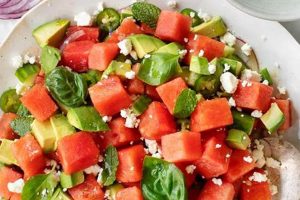
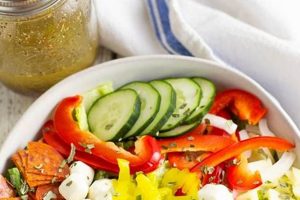
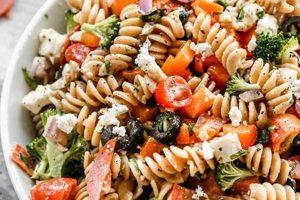
A guide for preparing a cold salad featuring pepperoni as a key ingredient typically involves combining sliced pepperoni with other elements such as cheeses, vegetables, olives, and a vinaigrette-style dressing. Variations exist, incorporating pasta, beans, or marinated artichoke hearts. An example might include cubed provolone, black olives, pepperoncini, cherry tomatoes, and a red wine vinegar-based dressing.
Such a dish offers a flavorful and convenient meal option, suitable for picnics, potlucks, or quick lunches. The blend of savory cured meat, crisp vegetables, and tangy dressing provides a balanced flavor profile. While not deeply rooted in traditional culinary history, this style of salad gained popularity in the mid-20th century with the rise of convenience foods and the increasing accessibility of ingredients like pepperoni. Its adaptable nature allows for creativity and personalization, catering to diverse palates.
The following sections will delve deeper into specific ingredient choices, preparation techniques, dressing variations, and serving suggestions for crafting a delicious and visually appealing cold salad centered around this cured meat.
Tips for Crafting a Superior Pepperoni Salad
Careful consideration of ingredients and techniques elevates a simple pepperoni salad from ordinary to exceptional. These tips offer guidance for achieving optimal flavor and texture.
Tip 1: Pepperoni Selection: Opt for thick-cut pepperoni for a more robust chew and flavor. Thinly sliced varieties tend to become lost among other ingredients.
Tip 2: Cheese Pairing: Consider cheeses that complement pepperoni’s salty, spicy notes. Provolone, mozzarella, and parmesan are classic choices. Experiment with sharper cheeses like cheddar or smoked gouda for added complexity.
Tip 3: Vegetable Inclusion: Incorporate fresh, crisp vegetables for textural contrast. Bell peppers, cucumbers, red onion, and cherry tomatoes provide vibrant color and flavor.
Tip 4: Dressing Selection: A vinaigrette-style dressing, often based on red wine vinegar or Italian dressing, provides acidity to cut through the richness of the pepperoni and cheese. Avoid creamy dressings, which can overwhelm the other flavors.
Tip 5: Olive Choices: Black olives, green olives, or a combination of both, offer a briny, salty counterpoint to the other ingredients. Kalamata olives provide a more intense flavor.
Tip 6: Enhancing Flavor: Marinated artichoke hearts, pepperoncini, or banana peppers add a tangy, spicy kick. Fresh herbs like oregano or basil contribute an aromatic element.
Tip 7: Chilling Time: Allow the salad to chill for at least 30 minutes before serving. This allows the flavors to meld and the ingredients to marinate in the dressing.
By employing these tips, one can achieve a well-balanced and flavorful pepperoni salad that satisfies the palate and presents well. Attention to detail ensures a dish exceeding expectations.
The following section concludes with variations and serving suggestions for a truly customized culinary experience.
1. Ingredients

Ingredient selection forms the foundation of a successful pepperoni salad, directly impacting its flavor profile, textural complexity, and overall appeal. The interplay of individual components contributes to a balanced and satisfying culinary experience. For instance, the saltiness of pepperoni requires counterpoints like the creamy richness of cheese and the acidity of a vinaigrette. Fresh vegetables introduce contrasting textures and contribute essential vitamins and nutrients. The careful balance of these elements determines the final character of the dish. A lack of quality ingredients or an imbalance in proportions can result in a bland or unappetizing outcome.
Consider the specific role of each ingredient type. Pepperoni, the star ingredient, provides a savory, spicy base. Cheese adds a creamy, salty element, while vegetables offer freshness and crunch. Olives contribute a briny, salty note. The dressing, often a vinaigrette, provides acidity to cut through the richness of the meat and cheese. Every element plays a critical role, and their interaction determines the dish’s overall success. A pepperoni salad relying solely on low-quality pepperoni and iceberg lettuce would lack depth and complexity compared to one incorporating artisanal pepperoni, a mix of cheeses, and a variety of fresh, colorful vegetables.
Understanding the importance of ingredient selection empowers one to create a pepperoni salad exceeding basic expectations. By focusing on high-quality components and thoughtfully balancing flavors and textures, a simple dish transforms into a culinary delight. This knowledge also enables informed substitutions based on dietary restrictions or personal preferences. Recognizing the crucial role of each ingredient contributes to a more informed and satisfying culinary experience.
2. Preparation

Preparation significantly influences the final outcome of a pepperoni salad. This stage encompasses crucial steps impacting texture, flavor development, and overall presentation. Consider the slicing of pepperoni: thin slices distribute flavor evenly throughout the salad while thicker cuts offer a more substantial bite. Vegetable preparation also plays a vital role. Uniformly chopped vegetables ensure even distribution and contribute to a visually appealing presentation. For example, unevenly chopped onions can result in some bites having an overwhelming onion flavor while others lack it entirely. Conversely, uniformly diced vegetables provide a consistent flavor experience in each bite.
Furthermore, the order of preparation contributes to optimal results. Combining ingredients in a specific sequence ensures even coating of the dressing and prevents premature wilting of delicate vegetables. For instance, adding the dressing too early can cause leafy greens to wilt. Delaying the addition of certain ingredients, like croutons, helps maintain their crisp texture. Consider also the practical implications. Proper preparation streamlines the assembly process, reduces the risk of cross-contamination, and ensures food safety by adhering to appropriate cutting and handling techniques.
In conclusion, the preparation stage in a pepperoni salad recipe should not be underestimated. Its impact extends beyond simply combining ingredients; it directly affects the final dish’s flavor, texture, presentation, and food safety. Attention to detail during preparation elevates the culinary experience from satisfactory to exceptional. This understanding empowers one to execute the recipe effectively, ensuring a consistently delicious and visually appealing result.
3. Dressing

Dressing constitutes a critical component of a pepperoni salad, significantly influencing the final flavor profile and overall balance. It provides a cohesive element, unifying the diverse ingredients while adding essential acidity to cut through the richness of the pepperoni and cheese. The choice of dressing should complement, not overpower, the other components, creating a harmonious blend of flavors and textures.
- Acidity
Acidity is paramount in a pepperoni salad dressing, counteracting the richness of the meat and cheese. Vinaigrettes, typically employing red wine vinegar, white wine vinegar, or balsamic vinegar, provide the necessary acidity. The level of acidity should be balanced to enhance, not overwhelm, the other flavors. A dressing overly acidic can render the salad unpleasant, while insufficient acidity results in a heavy, unbalanced dish. For instance, a balsamic vinaigrette with a touch of sweetness offers a balanced contrast to the savory pepperoni.
- Flavor Profile
The dressing’s flavor profile should complement the other ingredients. Italian-inspired dressings often incorporate herbs like oregano, basil, and parsley, enhancing the savory notes. Garlic or Dijon mustard can add depth and complexity. Sweet elements like honey or maple syrup can balance the acidity and provide a contrasting flavor dimension. For example, a lemon-herb vinaigrette adds brightness and freshness.
- Oil
The choice of oil influences the dressing’s texture and flavor. Extra virgin olive oil provides a robust flavor that complements Mediterranean-inspired salads. Lighter oils, such as canola or grapeseed oil, offer a more neutral flavor, allowing other ingredients to shine. The oil also contributes to the dressing’s mouthfeel and emulsification properties. A high-quality olive oil contributes a peppery note and a smooth texture.
- Emulsification
A well-emulsified dressing clings evenly to the salad ingredients, ensuring consistent flavor distribution. Proper emulsification, often achieved by whisking or blending, prevents the oil and vinegar from separating. This creates a smoother, more palatable texture and prevents the salad from becoming oily or watery. A stable emulsion is essential for a visually appealing and evenly flavored salad.
The careful consideration of these facets when selecting or preparing a dressing ensures a well-balanced and flavorful pepperoni salad. The dressing’s acidity, flavor profile, oil choice, and emulsification all contribute to the overall harmony and enjoyment of the dish. A thoughtfully chosen dressing elevates the salad from a simple combination of ingredients to a cohesive and satisfying culinary experience.
4. Variations

Adaptability represents a significant advantage of the pepperoni salad, allowing for extensive customization based on individual preferences, dietary needs, and available ingredients. Exploring variations within the basic framework expands the culinary possibilities, transforming a standard recipe into a versatile dish suitable for diverse occasions and palates. Understanding the interplay of ingredients and how substitutions affect the final product empowers culinary creativity and personalized flavor experiences.
- Vegetarian Adaptations
Vegetarian variations can substitute the pepperoni with plant-based alternatives like marinated mushrooms, roasted red peppers, or artichoke hearts. These alternatives provide a similar savory, umami element while adhering to dietary restrictions. Texture can be maintained through ingredients like smoked tofu or firm tempeh. Flavor profiles can be adjusted by incorporating ingredients such as sun-dried tomatoes or olives for a deeper, more intense taste.
- Pasta Salad Integration
Incorporating pasta transforms the pepperoni salad into a heartier, more substantial meal. Small pasta shapes like rotini, farfalle, or penne hold the dressing well and complement the other ingredients. The pasta adds a textural element and absorbs the flavors of the dressing and other components, creating a cohesive and satisfying dish. Different pasta varieties offer varied textures and flavor absorption capabilities. For example, whole wheat pasta adds a nutty flavor and increased fiber.
- Bean-Based Variations
Adding beans, such as cannellini, chickpeas, or kidney beans, introduces a protein-rich element and enhances the salad’s nutritional value. Beans provide a textural contrast and absorb the dressing’s flavors. Different beans contribute unique flavor profiles and textures. For example, cannellini beans offer a mild, creamy texture, while chickpeas provide a nuttier flavor and firmer bite.
- Regional Influences
Regional variations can incorporate local ingredients and flavor profiles. A Mediterranean-inspired version might include feta cheese, Kalamata olives, and a lemon-herb vinaigrette. A Southwestern variation could incorporate black beans, corn, avocado, and a chipotle-lime dressing. These adaptations reflect diverse culinary traditions and offer unique flavor experiences.
These variations highlight the adaptability of the pepperoni salad, demonstrating its potential beyond a basic recipe. By understanding the role of each ingredient and the impact of substitutions, one can create personalized versions catering to specific preferences and dietary needs. This exploration of variations demonstrates the versatility of the dish and its suitability for a wide range of culinary occasions, from casual gatherings to more formal settings. The adaptability of the pepperoni salad encourages culinary experimentation and ensures a consistently enjoyable and personalized experience.
5. Serving
Serving considerations for a pepperoni salad extend beyond simply placing the salad on a plate. Appropriate serving practices enhance the dining experience, ensuring optimal enjoyment of the dish’s flavors, textures, and visual appeal. Factors such as portioning, accompaniments, temperature, and timing contribute significantly to the overall perception and satisfaction derived from consuming the salad. Careful attention to these details elevates the dish from a simple meal to a more considered and satisfying culinary experience.
- Portioning
Appropriate portion sizes contribute to a balanced meal and prevent food waste. Portioning considers the context of the meal, whether it serves as a main course, side dish, or part of a buffet. Smaller portions may suffice for lighter meals or larger gatherings, while more generous portions may be appropriate for individual servings or when the salad constitutes the primary dish. Consideration of portion sizes also facilitates efficient resource utilization and minimizes leftovers.
- Accompaniments
Complementary accompaniments enhance the overall dining experience and can balance the flavor profile of the pepperoni salad. Crusty bread, crackers, or breadsticks provide a textural contrast and a vehicle for enjoying the salad’s dressing. Grilled meats, such as chicken or fish, offer a protein complement for a more substantial meal. The choice of accompaniments should consider the overall flavor profile of the salad and the desired balance of textures and nutrients. For example, a light, citrusy vinaigrette might pair well with grilled fish, while a richer Italian dressing might complement crusty bread and cured meats.
- Temperature
Serving temperature impacts the salad’s flavor and texture. A chilled pepperoni salad enhances the crispness of the vegetables and allows the flavors to meld. Serving the salad too warm can result in wilted greens and a less appealing texture. Conversely, serving it excessively cold can mute the flavor of the dressing and other ingredients. Therefore, achieving the optimal serving temperature enhances the overall sensory experience.
- Timing
The timing of serving influences the freshness and quality of the pepperoni salad. Serving the salad immediately after preparation ensures optimal texture and prevents the vegetables from wilting or becoming soggy. If preparing the salad in advance, storing it properly and adding delicate ingredients like croutons just before serving maintains their crispness and prevents the salad from becoming overly saturated with dressing. Attention to timing preserves the intended flavors and textures of the individual ingredients, maximizing the overall enjoyment of the dish.
These serving considerations demonstrate that the final presentation of a pepperoni salad significantly impacts its overall appreciation. Attention to portioning, accompaniments, temperature, and timing demonstrates care in preparation and contributes to a more satisfying dining experience. By addressing these aspects, one elevates the enjoyment of the pepperoni salad beyond simply consuming a dish and transforms it into a more complete and fulfilling culinary event.
6. Presentation

Presentation constitutes the final, yet crucial, stage in the preparation of a pepperoni salad. It directly influences the perceived value and enjoyment of the dish. While flavor and texture remain paramount, visual appeal significantly enhances the overall dining experience. A thoughtfully presented salad entices the appetite and elevates the perception of the culinary effort involved. Conversely, a carelessly plated salad, regardless of its inherent flavor, can diminish the dining experience.
- Color Palette
A vibrant color palette stimulates visual interest and enhances the perceived freshness of the salad. The inherent colors of the core ingredientsthe rich reds of pepperoni, the varied hues of vegetables, and the creamy whites of cheeseprovide a foundation. Thoughtful arrangement maximizes visual appeal. For example, contrasting colors, such as red pepperoni against green bell peppers or bright orange carrots, create a visually dynamic presentation. Strategic placement of ingredients avoids monochromatic clustering, enhancing the overall aesthetic.
- Arrangement
The arrangement of ingredients contributes significantly to the salad’s visual appeal. Avoid simply tossing ingredients together haphazardly. Consider height and texture variation to create visual interest. Elevating certain ingredients, such as placing pepperoni slices artfully on top of the salad or creating a bed of greens, adds dimension. Thoughtful placement of elements draws the eye and adds a sense of artistry to the dish. For instance, arranging pepperoni slices in a circular pattern on a bed of lettuce creates a focal point and a sense of deliberate presentation.
- Garnishing
Garnishing adds a final touch of elegance and flavor enhancement. Fresh herbs, such as sprigs of parsley, oregano, or basil, provide a pop of color and aroma. A sprinkle of grated Parmesan cheese adds a savory element and visual texture. A light drizzle of olive oil or balsamic glaze elevates the presentation while contributing subtle flavor nuances. However, garnishes should be used judiciously to avoid overpowering the main components of the salad. They should complement, not compete with, the existing flavors and textures.
- Serving Dish
The choice of serving dish contributes to the overall presentation. A simple white plate provides a neutral backdrop that allows the vibrant colors of the salad to stand out. A wooden bowl adds a rustic touch, while a clear glass bowl showcases the layers of ingredients. The size and shape of the serving dish should complement the volume and style of the salad. For example, a shallow, wide bowl works well for a larger, family-style salad, while individual plates or bowls are more appropriate for smaller portions.
These elements of presentation collectively contribute to the overall enjoyment of a pepperoni salad. While the quality of ingredients and the balance of flavors remain essential, thoughtful presentation elevates the dish from merely palatable to a visually appealing and satisfying culinary experience. Attention to color, arrangement, garnishing, and the serving dish demonstrates care and enhances the perceived value of the meal. The presentation acts as a final flourish, transforming a simple salad into a more considered and aesthetically pleasing culinary creation.
Frequently Asked Questions
This section addresses common inquiries regarding pepperoni salad preparation and variations, providing clarity and guidance for achieving optimal results.
Question 1: What type of pepperoni is best suited for this salad?
Thick-cut pepperoni is generally preferred for its robust flavor and ability to hold its shape. Thinly sliced varieties tend to become lost amongst other ingredients. However, thinly sliced pepperoni can be suitable for layering or creating visual appeal.
Question 2: Can other cured meats be substituted for pepperoni?
While pepperoni remains the defining ingredient, salami, soppressata, or chorizo can be incorporated or substituted to explore alternative flavor profiles. Consider the flavor profile of the substituted meat and its compatibility with other ingredients.
Question 3: How can one prevent the salad from becoming overly oily?
Proper emulsification of the dressing and allowing the salad to chill before serving helps prevent excessive oiliness. Ensuring the dressing ingredients are well combined and using a balanced ratio of oil to vinegar contributes to a stable emulsion that adheres to the ingredients rather than pooling at the bottom.
Question 4: What are suitable cheese pairings for a pepperoni salad?
Provolone, mozzarella, and parmesan are classic choices, complementing pepperoni’s saltiness. Sharper cheeses like cheddar or smoked gouda offer a more intense flavor contrast. Consider the overall flavor profile desired when selecting cheese varieties.
Question 5: Can this salad be prepared in advance?
Yes, but it’s advisable to add delicate ingredients like croutons or leafy greens just before serving to maintain their texture. Storing the salad without the dressing and combining it just before serving helps prevent the vegetables from becoming soggy.
Question 6: How can the salad be adapted for dietary restrictions, such as gluten-free or low-carb diets?
Gluten-free variations require attention to ingredient selection, ensuring all components, including the dressing and any added croutons, are gluten-free. Low-carb adaptations may involve reducing or eliminating pasta or croutons and focusing on vegetables and lean protein sources.
Careful consideration of these frequently asked questions helps ensure a successful and enjoyable pepperoni salad experience. Understanding the nuances of ingredient selection, preparation techniques, and potential adaptations empowers one to create a personalized dish tailored to individual preferences and dietary needs.
The following section offers concluding remarks and suggestions for further exploration of this versatile dish.
Conclusion
Exploration of the multifaceted aspects of a pepperoni salad reveals a dish offering significant versatility and culinary potential. Careful ingredient selection, precise preparation techniques, and thoughtful consideration of dressing, variations, serving methods, and presentation collectively contribute to a successful and enjoyable culinary outcome. Understanding the interplay of these elements allows for adaptation and customization, transforming a simple combination of ingredients into a personalized and satisfying meal.
The adaptability of the pepperoni salad positions it as a dish suitable for diverse occasions and palates. From casual gatherings to more formal settings, its versatility allows for creative exploration and personalized expression. Further investigation of regional variations and ingredient combinations promises continued culinary discovery and enjoyment.