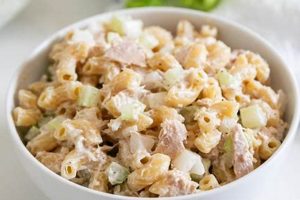
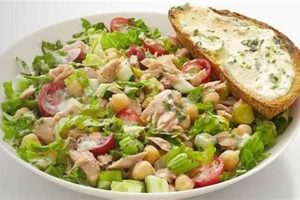
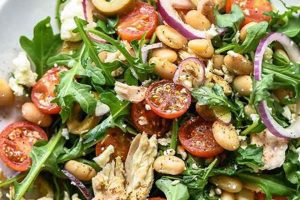
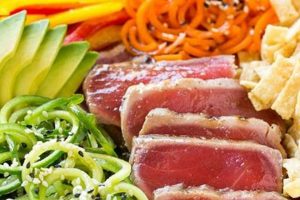
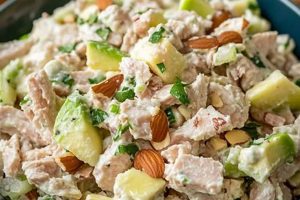
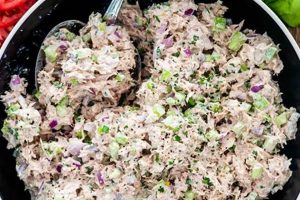
A top-tier, nutritious tuna salad prioritizes lean protein, healthy fats, and fresh ingredients. Such a dish might feature tuna packed in water, Greek yogurt instead of mayonnaise, and a variety of crisp vegetables like celery, red onion, and bell peppers. Flavor enhancements could include lemon juice, Dijon mustard, and fresh herbs.
Prioritizing a nutritious preparation offers numerous advantages. It provides a substantial source of protein, crucial for muscle building and repair, while minimizing saturated fat and maximizing vitamins and minerals. This approach aligns with contemporary dietary guidelines that emphasize whole foods and nutrient density. Historically, tuna salad has often relied on mayonnaise, resulting in a higher calorie and fat content. The shift towards healthier variations reflects evolving understandings of nutrition and a growing demand for lighter, more wholesome meals.
This article will explore diverse strategies for crafting a flavorful, health-conscious tuna salad, including variations for different dietary needs, creative ingredient combinations, and tips for optimal preparation and storage. It will also delve into the nutritional profile of key ingredients, empowering readers to make informed choices.
Tips for Crafting a Superior Healthy Tuna Salad
Optimizing tuna salad for both flavor and nutrition requires careful consideration of ingredients and preparation techniques. The following tips provide guidance for creating a truly exceptional dish.
Tip 1: Choose Tuna Packed in Water: Opting for tuna packed in water significantly reduces fat and calorie content compared to tuna packed in oil. This choice supports a healthier nutritional profile without sacrificing flavor.
Tip 2: Embrace Greek Yogurt: Substituting Greek yogurt for mayonnaise drastically reduces saturated fat and adds a boost of protein. The tangy flavor of Greek yogurt complements tuna remarkably well.
Tip 3: Maximize Fresh Vegetables: Incorporating a variety of crisp vegetables, such as celery, red onion, bell peppers, and carrots, adds valuable nutrients, texture, and flavor complexity.
Tip 4: Enhance with Fresh Herbs: Dill, parsley, chives, or cilantro can elevate the flavor profile of tuna salad. These herbs provide a fresh, vibrant element while contributing antioxidants.
Tip 5: Explore Citrus and Mustard: Lemon juice or lime juice provides brightness and acidity, while Dijon mustard adds a tangy depth. These ingredients enhance the overall flavor without relying on excessive salt or unhealthy fats.
Tip 6: Consider Avocado for Healthy Fats: Adding diced avocado introduces healthy monounsaturated fats, creamy texture, and a subtle, complementary flavor.
Tip 7: Season Mindfully: Utilize sea salt, black pepper, and other spices judiciously to enhance the natural flavors of the ingredients without overwhelming the palate.
Tip 8: Chill Thoroughly Before Serving: Allowing the tuna salad to chill in the refrigerator for at least 30 minutes allows the flavors to meld and enhances the overall dining experience.
By employing these strategies, one can create a tuna salad that is both delectable and nutritionally sound, maximizing flavor while minimizing unhealthy components.
These tips offer a foundation for creating a truly exceptional healthy tuna salad. The following section will explore specific recipe variations and provide further guidance for customization.
1. High-quality Tuna
High-quality tuna forms the cornerstone of a truly exceptional and healthy tuna salad. The choice of tuna significantly impacts not only the flavor profile but also the nutritional value of the final dish. Understanding the characteristics of high-quality tuna empowers informed decision-making, contributing to a superior culinary outcome.
- Sourcing and Sustainability
Sustainably caught tuna from reputable fisheries ensures the long-term health of marine ecosystems. Look for certifications like Marine Stewardship Council (MSC) certification, which indicates responsible fishing practices. This commitment to sustainability contributes to a more ethical and environmentally conscious food choice.
- Species Selection
Different tuna species possess varying flavor profiles and textures. Albacore tuna offers a delicate flavor, while skipjack provides a more robust taste. Yellowfin tuna falls somewhere in between. Selecting the appropriate species allows for customization based on individual preferences.
- Preservation Method
Tuna packed in water is a healthier choice compared to tuna packed in oil, as it significantly reduces fat and calorie content. Opting for water-packed tuna aligns with the goals of a health-conscious recipe.
- Freshness and Quality Indicators
High-quality tuna exhibits a firm texture and a clean, fresh aroma. Avoid tuna that appears mushy or has a strong, fishy odor. Careful examination ensures a pleasant sensory experience and optimal flavor.
By considering these factors, one can select tuna that elevates the overall quality and nutritional value of a healthy tuna salad. Prioritizing high-quality tuna contributes to a more flavorful, healthful, and ethically conscious meal. This careful selection distinguishes a truly exceptional tuna salad from a mediocre one.
2. Reduced-fat mayonnaise
Reduced-fat mayonnaise plays a crucial role in achieving a “best healthy tuna salad recipe” by offering a healthier alternative to traditional mayonnaise without compromising the creamy texture essential for a palatable salad. Substituting reduced-fat mayonnaise directly impacts the overall nutritional profile, aligning the dish with health-conscious dietary guidelines. Its inclusion necessitates careful consideration of flavor balance and ingredient compatibility to ensure the final product remains both flavorful and nutritious.
- Fat Content and Calorie Reduction
Reduced-fat mayonnaise contains significantly less fat and fewer calories than traditional mayonnaise. This reduction contributes directly to a lower overall calorie count in the tuna salad, making it a more suitable option for those managing weight or adhering to specific dietary restrictions. The difference can be substantial, potentially saving several grams of fat and dozens of calories per serving.
- Flavor and Texture Considerations
While reduced-fat mayonnaise offers clear health benefits, it can sometimes possess a slightly tangier flavor and thinner consistency compared to full-fat versions. This difference can impact the overall taste and texture of the tuna salad. Careful selection and potential adjustments to other ingredients, such as the addition of a small amount of Greek yogurt for creaminess, may be necessary to achieve the desired flavor profile and consistency.
- Ingredient Composition and Quality
Not all reduced-fat mayonnaises are created equal. Examining ingredient lists for additives, preservatives, and added sugars is essential. Opting for products with cleaner ingredient profiles ensures a healthier and more wholesome tuna salad. Prioritizing quality ingredients contributes to a more nutritious and flavorful final product.
- Balancing Health and Flavor
Successfully incorporating reduced-fat mayonnaise into a “best healthy tuna salad recipe” requires balancing health benefits with flavor preservation. This balance might involve taste-testing different brands, adjusting other ingredients to compensate for flavor variations, or incorporating additional flavor enhancers such as lemon juice, herbs, or spices. The ultimate goal is to create a dish that is both healthy and enjoyable to consume.
The strategic use of reduced-fat mayonnaise represents a significant step toward achieving a “best healthy tuna salad recipe.” By carefully considering fat content, flavor implications, ingredient quality, and overall balance, one can create a tuna salad that is both nutritionally sound and undeniably delicious. This balance underscores the importance of ingredient selection in achieving a truly healthy and flavorful dish.
3. Fresh, crisp vegetables

The incorporation of fresh, crisp vegetables is integral to achieving a “best healthy tuna salad recipe.” These elements contribute significantly to both the nutritional value and the sensory experience of the dish. Their presence elevates the salad from a simple protein source to a complex and satisfying meal. The textural contrast provided by crisp vegetables, coupled with their inherent nutritional benefits, positions them as essential components of a truly healthy and enjoyable tuna salad. For example, the addition of celery introduces a satisfying crunch and subtle vegetal notes, while diced red onion provides a sharp bite and vibrant color. These additions create a more dynamic and engaging culinary experience.
Beyond textural and aesthetic enhancements, fresh vegetables dramatically increase the nutritional density of tuna salad. They introduce vitamins, minerals, and dietary fiber often lacking in simpler preparations. The inclusion of ingredients like bell peppers, carrots, and cucumbers provides a substantial influx of antioxidants, vitamins A and C, and fiber, respectively. These nutrients contribute to overall health and well-being, aligning the dish with dietary recommendations that emphasize whole foods and nutrient-rich meals. The practical significance of this understanding lies in the ability to transform a calorie-dense, nutritionally limited dish into a balanced and health-promoting meal.
Fresh, crisp vegetables are therefore not merely optional additions but rather essential components of a “best healthy tuna salad recipe.” They are instrumental in achieving both nutritional excellence and a satisfying sensory experience. The strategic selection and incorporation of these ingredients distinguish a truly superior tuna salad from a less healthful and less enjoyable alternative. Understanding this connection empowers informed recipe development and promotes the creation of meals that are both delicious and conducive to well-being.
4. Wholesome additions
Wholesome additions represent a pivotal element in achieving a “best healthy tuna salad recipe,” transforming it from a basic protein source into a nutritionally complete and satisfying meal. These additions, characterized by their inherent nutritional value and contribution to overall dietary balance, play a crucial role in enhancing the health benefits and culinary appeal of the salad. Their strategic incorporation demonstrates a commitment to maximizing both flavor and nutritional content. For example, the inclusion of avocado introduces healthy monounsaturated fats, contributing to satiety and cardiovascular health, while also imparting a creamy texture that complements the tuna. Similarly, adding chickpeas boosts protein and fiber content, promoting digestive health and providing sustained energy.
The impact of wholesome additions extends beyond individual nutritional contributions. They synergistically interact with other ingredients, creating a more complex and balanced flavor profile. Nuts and seeds, for instance, introduce textural variety and healthy fats, while also contributing essential minerals and antioxidants. Dried fruits, such as cranberries or raisins, offer a touch of sweetness and a concentrated source of micronutrients. These additions not only enhance the flavor complexity but also expand the nutritional spectrum of the salad, aligning it with dietary guidelines that emphasize variety and nutrient density. The practical significance lies in the ability to customize the salad to address specific dietary needs or preferences, creating a truly personalized and health-conscious meal.
In summary, wholesome additions are not merely supplemental components but rather integral elements of a “best healthy tuna salad recipe.” Their inclusion elevates the nutritional value, flavor complexity, and overall culinary experience. Understanding the diverse roles and potential benefits of these additions empowers informed decision-making, facilitating the creation of a tuna salad that is both delicious and conducive to a healthy lifestyle. This approach distinguishes a truly exceptional tuna salad, prioritizing both taste and nutritional excellence.
5. Flavorful Seasonings
Flavorful seasonings are essential for elevating a healthy tuna salad recipe from simply nutritious to genuinely enjoyable. Strategic seasoning enhances the inherent flavors of the core ingredients while adding depth and complexity. This facet of recipe development distinguishes a truly exceptional tuna salad, demonstrating an understanding of flavor balance and culinary finesse.
- Balancing Salt and Acidity
Achieving a harmonious flavor profile requires a delicate balance between salt and acidity. A touch of sea salt enhances the natural flavors of the tuna and vegetables, while a squeeze of lemon juice or a dash of apple cider vinegar provides brightness and cuts through the richness of the mayonnaise or yogurt. This interplay creates a dynamic flavor experience that avoids monotony. Over-salting can mask delicate flavors, while excessive acidity can make the salad unpleasantly tart. Careful calibration of these elements is crucial.
- Herbaceous Enhancements
Fresh herbs introduce a vibrant, aromatic dimension to tuna salad. Dill, parsley, chives, and tarragon are classic choices, each offering a distinct flavor profile. Dill imparts a slightly tangy, anise-like flavor, while parsley provides a fresh, clean taste. Chives offer a subtle oniony note, and tarragon contributes a slightly licorice-like flavor. The choice of herbs can significantly influence the overall character of the salad, allowing for customization based on personal preference.
- Spice and Complexity
A judicious use of spices can add depth and complexity to tuna salad. Black pepper provides a subtle heat, while paprika offers a smoky sweetness. A pinch of cayenne pepper introduces a more pronounced heat, while cumin adds an earthy warmth. The selection and combination of spices allows for a wide range of flavor profiles, from subtly nuanced to boldly assertive. Experimentation is key to discovering preferred combinations.
- Aromatic Vegetables
Incorporating aromatic vegetables like finely diced red onion or shallots adds another layer of flavor complexity. These ingredients contribute not only flavor but also texture, enhancing the overall sensory experience. Red onion provides a pungent bite, while shallots offer a milder, sweeter flavor. These additions create a more dynamic and interesting salad, moving beyond basic flavor profiles.
The strategic use of flavorful seasonings is paramount in crafting a “best healthy tuna salad recipe.” By carefully balancing salt and acidity, incorporating fresh herbs and spices, and utilizing aromatic vegetables, one can create a dish that is both nutritionally sound and exceptionally flavorful. This attention to detail elevates the salad from a simple meal to a culinary delight, demonstrating a commitment to both health and taste.
6. Proper Storage
Proper storage is crucial for maintaining the quality, safety, and flavor of a “best healthy tuna salad recipe.” Neglecting proper storage practices can compromise the nutritional integrity of the ingredients, lead to bacterial growth, and diminish the overall sensory experience. Implementing appropriate storage techniques ensures that the salad remains fresh, flavorful, and safe for consumption, preserving the intended benefits of the carefully selected ingredients.
- Temperature Control
Maintaining a consistent, low temperature is paramount for inhibiting bacterial growth and preserving the freshness of tuna salad. Refrigeration at or below 40F (4C) is essential. Leaving tuna salad at room temperature for extended periods, especially in warmer environments, creates a breeding ground for bacteria that can cause foodborne illness. Consistent temperature control preserves the quality and safety of the salad.
- Airtight Containers
Storing tuna salad in airtight containers prevents oxidation and minimizes exposure to airborne contaminants. Oxidation can lead to off-flavors and a decline in nutritional value. Airtight containers create a barrier, protecting the salad from these undesirable effects. This practice preserves the intended flavors and nutritional integrity of the ingredients, ensuring a more enjoyable and healthful culinary experience.
- Storage Duration
While proper refrigeration significantly slows bacterial growth, tuna salad does not remain fresh indefinitely. Consuming the salad within 3-5 days of preparation is generally recommended. Beyond this timeframe, the risk of bacterial contamination increases, and the quality of the ingredients may deteriorate. Adhering to recommended storage durations minimizes food safety risks and ensures optimal flavor and texture.
- Freezing Considerations
While freezing can extend the shelf life of tuna salad, it can also negatively impact the texture and consistency, particularly if mayonnaise is used. Mayonnaise tends to separate upon thawing, resulting in a less desirable texture. If freezing is necessary, consider preparing the salad without mayonnaise and adding it fresh after thawing. Freezing should be viewed as a last resort for long-term storage, and its potential effects on texture should be considered.
Proper storage practices are integral to ensuring that a “best healthy tuna salad recipe” remains safe, flavorful, and nutritionally sound. By adhering to these guidelines, one can maximize the shelf life of the salad while preserving the quality and integrity of its carefully selected ingredients. This diligence underscores a commitment to both health and culinary excellence, ensuring a truly enjoyable and beneficial dining experience.
Frequently Asked Questions
This section addresses common inquiries regarding the preparation and consumption of healthy tuna salad, providing clear and concise information to facilitate informed culinary choices.
Question 1: What is the best type of tuna to use for a healthy tuna salad?
Tuna packed in water is generally recommended for health-conscious recipes due to its lower fat and calorie content compared to tuna packed in oil. Albacore tuna offers a mild flavor, while skipjack possesses a more robust taste. Sustainably sourced tuna is preferred for environmental considerations.
Question 2: How can mayonnaise be replaced in a healthy tuna salad recipe?
Greek yogurt serves as an excellent substitute for mayonnaise, providing a creamy texture while significantly reducing fat and increasing protein content. Mashed avocado can also contribute creaminess and healthy fats. Alternatively, a combination of lemon juice, Dijon mustard, and a small amount of olive oil can create a light and flavorful dressing.
Question 3: What vegetables pair well with tuna salad to enhance its nutritional value and flavor?
Celery, red onion, bell peppers, cucumbers, and carrots are excellent additions to tuna salad, providing valuable nutrients, textural variety, and flavor complexity. These vegetables offer vitamins, minerals, and dietary fiber, contributing to a more balanced and nutritious meal.
Question 4: How long can healthy tuna salad be stored safely in the refrigerator?
Healthy tuna salad, when stored in an airtight container at or below 40F (4C), is generally safe to consume for 3-5 days. Beyond this timeframe, the risk of bacterial growth increases, and the quality of the ingredients may deteriorate.
Question 5: Can healthy tuna salad be frozen?
Freezing tuna salad can extend its shelf life, but it can also negatively impact the texture and consistency, particularly if mayonnaise or yogurt is used. These ingredients tend to separate upon thawing. If freezing is necessary, consider preparing the salad without these ingredients and adding them fresh after thawing.
Question 6: How can one ensure a flavorful healthy tuna salad without relying on excessive salt or unhealthy fats?
Flavorful seasonings, such as fresh herbs (dill, parsley, chives), spices (black pepper, paprika), lemon juice, and aromatic vegetables (red onion, shallots), can enhance the taste of tuna salad without relying on excessive salt or unhealthy fats. These ingredients provide depth and complexity while aligning with health-conscious dietary principles.
By understanding these key aspects of healthy tuna salad preparation and storage, individuals can confidently create and enjoy a nutritious and flavorful meal. Prioritizing ingredient quality, mindful seasoning, and proper storage practices ensures a truly exceptional culinary experience.
The following section will explore specific recipe variations and offer further guidance for customizing healthy tuna salad to individual dietary needs and preferences.
Crafting the Best Healthy Tuna Salad Recipe
Achieving a truly exceptional healthy tuna salad requires a multifaceted approach, encompassing careful ingredient selection, mindful preparation techniques, and proper storage practices. Prioritizing high-quality, sustainably-sourced tuna lays a strong foundation. Minimizing saturated fats through the use of reduced-fat mayonnaise or Greek yogurt, while maximizing nutritional value through the incorporation of fresh, crisp vegetables, represents a crucial balance. Wholesome additions, such as avocado, chickpeas, nuts, or seeds, further enhance the nutritional profile and contribute to flavor complexity. Judicious seasoning with fresh herbs, spices, and aromatic vegetables elevates the sensory experience without relying on excessive salt or unhealthy fats. Finally, proper storage techniques maintain the safety, quality, and flavor of the prepared salad.
Culinary exploration within the realm of healthy tuna salad offers a path towards both gustatory satisfaction and nutritional well-being. By embracing these principles and continually seeking innovative ingredient combinations and flavor profiles, individuals can transform a simple dish into a culinary masterpiece that nourishes both body and palate. This pursuit of excellence underscores the potential of mindful cooking to enhance overall quality of life.