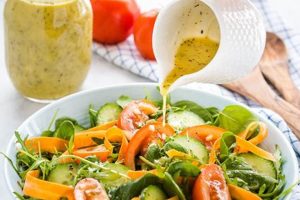
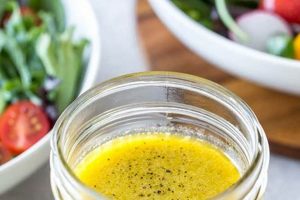
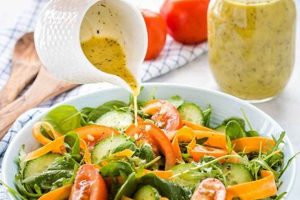
A vibrant and versatile emulsion, typically composed of maple syrup, vinegar, oil, and seasonings, forms the foundation of this culinary staple. A simple example combines pure maple syrup with apple cider vinegar, extra virgin olive oil, Dijon mustard, salt, and pepper. Variations can include ingredients such as shallots, garlic, herbs, or citrus zest, allowing for customized flavor profiles.
The balance of sweet and tangy notes offered by this dressing enhances the flavor of various salad components, from leafy greens and roasted vegetables to grains and fruits. Maple syrup provides a nuanced sweetness and viscosity that complements the acidity of the vinegar, while the oil contributes a smooth texture and carries the flavors of the other ingredients. Historically, vinaigrettes have been a cornerstone of culinary traditions, prized for their simplicity and adaptability. The incorporation of maple syrup offers a distinctive twist, reflecting the regional flavors of areas where maple trees thrive.
Further exploration will delve into the specific techniques for creating an optimal emulsion, the diverse range of flavor profiles achievable through ingredient variations, and ideal pairings of this dressing with various salad compositions.
Tips for Crafting Exceptional Maple Vinaigrettes
Achieving a balanced and flavorful maple vinaigrette requires attention to detail and an understanding of the interplay between ingredients. These tips offer guidance for creating a dressing that elevates any salad.
Tip 1: Quality Ingredients Matter: The foundation of a superb vinaigrette lies in the quality of its components. Opt for pure maple syrup, preferably a grade with a robust flavor profile. Select a high-quality vinegar, such as apple cider, balsamic, or white wine vinegar. Extra virgin olive oil is recommended for its flavor and health benefits.
Tip 2: Emulsification is Key: A stable emulsion prevents the dressing from separating. Whisk the ingredients vigorously or use a blender to create a smooth, cohesive mixture. A small amount of Dijon mustard can act as an emulsifier and add a subtle tang.
Tip 3: Balance Sweet and Tangy: The ideal maple vinaigrette balances the sweetness of the maple syrup with the acidity of the vinegar. Adjust the ratio to suit personal preference. Start with a 1:1 ratio and adjust according to the specific vinegar used.
Tip 4: Seasoning Enhances Flavor: Salt and freshly ground black pepper are essential seasonings. Experiment with additional flavors like garlic powder, onion powder, or a pinch of cayenne pepper for a touch of heat.
Tip 5: Fresh Herbs Elevate the Profile: Incorporating fresh herbs like thyme, rosemary, or chives adds complexity and freshness to the vinaigrette. Finely chop the herbs before adding them to the dressing.
Tip 6: Taste and Adjust: Before serving, taste the vinaigrette and adjust the seasoning as needed. Additional maple syrup, vinegar, or spices can be added to fine-tune the flavor profile.
Tip 7: Proper Storage Extends Shelf Life: Store leftover vinaigrette in an airtight container in the refrigerator for up to one week. Shake well before using, as some separation may occur.
By following these tips, one can consistently create a maple vinaigrette that enhances the flavor of any salad, showcasing the delightful synergy between sweet, tangy, and savory elements.
The following section will offer specific recipe variations and suggested salad pairings to inspire culinary creativity.
1. Maple Syrup (Grade A)
Maple syrup, particularly Grade A, plays a pivotal role in defining the character of a maple vinaigrette. Its contribution extends beyond mere sweetness, influencing the texture, viscosity, and overall balance of the dressing. Grade A syrups, known for their lighter color and delicate flavor profiles, offer a nuanced sweetness that harmonizes with the acidity of the vinegar without overpowering the other ingredients. This characteristic allows for a more complex flavor profile, enabling the subtle nuances of other components, such as herbs and spices, to shine through. For instance, a maple vinaigrette featuring delicate herbs like chives or chervil benefits from the subtlety of Grade A syrup, allowing the herbal notes to be prominent. Conversely, a more robust grade might mask these delicate flavors.
The specific grade of maple syrup also influences the emulsification process. The sugar content and viscosity of Grade A syrups contribute to the stability of the emulsion, helping to prevent separation and maintain a cohesive texture. This stability is crucial for a visually appealing and palatable vinaigrette. Imagine a dressing where the oil and vinegar separate it not only looks unappetizing but also delivers an inconsistent flavor experience with each bite. The use of Grade A syrup, therefore, contributes directly to the overall quality and enjoyment of the salad.
In conclusion, the selection of Grade A maple syrup demonstrates a deliberate choice, significantly impacting the final character of the vinaigrette. It provides a balanced sweetness, contributes to emulsion stability, and allows the other flavors within the dressing to be fully appreciated. Choosing the appropriate grade of maple syrup underscores the importance of ingredient selection in crafting a well-balanced and flavorful culinary experience.
2. Vinegar (apple cider, balsamic)

Vinegar constitutes a crucial balancing element within a maple vinaigrette salad dressing recipe. Its acidity provides the necessary counterpoint to the sweetness of the maple syrup, creating a dynamic interplay of flavors. The specific type of vinegar employed significantly influences the overall character of the dressing, impacting not only the taste but also the aroma and visual appeal. Exploring the nuances of different vinegars reveals their importance in achieving a well-balanced and flavorful vinaigrette.
- Acidity Level and Flavor Profile
Vinegars vary significantly in their acidity levels and flavor profiles. Apple cider vinegar, for example, possesses a milder acidity and a slightly sweet, fruity character, complementing the maple syrup’s sweetness while adding a refreshing note. Balsamic vinegar, on the other hand, exhibits a deeper, more complex flavor profile with notes of caramel and fig, contributing a richer, more intense dimension to the vinaigrette. The chosen vinegar’s acidity directly impacts the balance of sweet and tangy elements within the dressing.
- Impact on Emulsification and Texture
The acidity of vinegar also plays a role in the emulsification process. It interacts with the oil and other ingredients, contributing to the stability of the emulsion. A vinegar with the right acidity level helps prevent the vinaigrette from separating, ensuring a consistent texture. Apple cider vinegar, with its milder acidity, creates a lighter emulsion, while balsamic vinegar, being more acidic and often thicker, contributes to a more viscous dressing.
- Complementary Flavor Pairings
The choice of vinegar should also consider the other ingredients in the salad and the desired flavor profile. Apple cider vinegar pairs well with lighter salads featuring fresh greens, fruits, and nuts, while balsamic vinegar complements salads with roasted vegetables, cheeses, and richer ingredients. For example, a maple-apple cider vinaigrette enhances a salad with spinach, apples, and walnuts, while a maple-balsamic vinaigrette elevates a salad with roasted beets, goat cheese, and pecans.
- Visual Appeal and Color Contribution
While often overlooked, vinegar contributes to the visual appeal of the vinaigrette. Apple cider vinegar lends a light golden hue, maintaining the vibrancy of the other ingredients. Balsamic vinegar, with its darker color, imparts a richer, deeper tone to the dressing, enhancing the overall presentation of the salad. The color of the vinaigrette plays a subtle yet important role in creating an appetizing visual experience.
Ultimately, the choice between apple cider vinegar and balsamic vinegar, or even other varieties, depends on the desired balance of sweetness, acidity, and complexity in the maple vinaigrette. Careful consideration of these factors ensures a dressing that not only complements the salad ingredients but also offers a delightful sensory experience. Selecting the right vinegar highlights the importance of each component in crafting a well-executed and harmonious maple vinaigrette salad dressing recipe.
3. Oil (extra virgin olive)

Oil, specifically extra virgin olive oil, forms an integral component of a maple vinaigrette salad dressing recipe, contributing significantly to its texture, flavor, and nutritional value. Its presence is essential for achieving the desired emulsion and delivering a balanced sensory experience. The relationship between extra virgin olive oil and the overall success of the vinaigrette warrants careful consideration.
Extra virgin olive oil’s primary role lies in creating the emulsion, the process of binding the vinegar and other aqueous ingredients with the oil. Its viscosity and chemical composition allow it to suspend the other components, preventing separation and ensuring a smooth, homogenous texture. Beyond its functional role, extra virgin olive oil contributes a distinct flavor profile. Its characteristic peppery and slightly fruity notes complement the sweetness of the maple syrup and the tang of the vinegar, adding depth and complexity to the vinaigrette. Furthermore, opting for extra virgin olive oil enhances the nutritional value of the dressing, introducing beneficial monounsaturated fats and antioxidants. For instance, a salad featuring delicate greens dressed with a maple vinaigrette containing extra virgin olive oil benefits from the oil’s flavor, texture, and nutritional boost, without overpowering the subtle flavors of the greens. Conversely, using a less flavorful or lower quality oil could detract from the overall culinary experience.
Careful selection of extra virgin olive oil demonstrates an understanding of its multi-faceted contribution to a successful maple vinaigrette. It facilitates emulsification, provides a desirable texture, enhances the flavor profile, and contributes to nutritional value. Understanding the significance of this seemingly simple ingredient highlights the importance of considering each element in achieving a well-balanced and flavorful maple vinaigrette salad dressing recipe. Furthermore, this knowledge can be applied to other culinary endeavors where emulsions and balanced flavor profiles are desired, showcasing the practical application of this understanding beyond the specific context of maple vinaigrette.
4. Emulsification (whisk, blend)

Emulsification represents a critical process in creating a successful maple vinaigrette salad dressing. It involves the combination of two immiscible liquidsoil and vinegarinto a stable mixture. This process prevents the vinaigrette from separating into its constituent parts, ensuring a consistent texture and flavor delivery. The method employed for emulsification, whether whisking or blending, significantly influences the final characteristics of the dressing.
Whisking, a traditional method, involves the vigorous agitation of the ingredients using a whisk. This mechanical action breaks down the oil into smaller droplets and disperses them throughout the vinegar, creating a temporary emulsion. The addition of an emulsifying agent, such as Dijon mustard, aids in stabilizing the mixture. The mustard’s lecithin molecules act as a bridge between the oil and vinegar, reducing surface tension and promoting a more homogenous blend. However, whisk-created emulsions are generally less stable than those achieved through blending. A vinaigrette made with a whisk may separate over time, requiring re-whisking before serving. This method offers a more rustic texture and is ideal for vinaigrettes intended for immediate consumption.
Blending, on the other hand, utilizes a higher shear force, creating smaller oil droplets and a more stable emulsion. The high-speed rotation of the blender blades thoroughly integrates the ingredients, resulting in a smoother, more homogenous mixture. This method is particularly effective for incorporating thicker ingredients, like honey or pureed fruits, into the vinaigrette. Blending offers increased control over the final texture, enabling the creation of anything from a light and airy vinaigrette to a thicker, creamier dressing. A blender-emulsified vinaigrette is less likely to separate, providing a more consistent experience over time. For example, a maple vinaigrette intended for use over several days benefits from the stability achieved through blending.
The choice between whisking and blending depends on the desired texture and stability of the vinaigrette. Whisking offers a quicker, more rustic approach, while blending yields a smoother, more stable emulsion. Understanding the impact of each method enables informed decisions regarding the preparation technique, ensuring a maple vinaigrette that not only tastes delicious but also maintains its desired qualities over time. This understanding extends beyond the specific case of maple vinaigrette, providing insights applicable to any culinary endeavor involving emulsions.
5. Seasoning (salt, pepper)

Seasoning, primarily with salt and pepper, constitutes a fundamental step in finalizing a maple vinaigrette salad dressing recipe. Their judicious use elevates the inherent flavors of the other ingredients, creating a balanced and harmonious taste profile. Beyond merely enhancing taste, salt and pepper influence the overall sensory experience of the vinaigrette.
- Salt’s Impact on Flavor Enhancement
Salt acts as a flavor enhancer, amplifying the sweetness of the maple syrup and the acidity of the vinegar. It suppresses bitterness while accentuating the more desirable taste components. The correct amount of salt balances the flavors, preventing any single element from dominating. For instance, in a maple-balsamic vinaigrette, salt balances the sweetness of the maple syrup and the tanginess of the balsamic vinegar, preventing an overly sweet or sour taste. The absence of salt would result in a flat, less vibrant flavor profile.
- Pepper’s Role in Adding Complexity
Pepper introduces complexity and depth to the vinaigrette. Freshly ground black pepper offers a subtle heat and a range of aromatic compounds that complement the other ingredients. Its inclusion adds a nuanced layer of flavor, balancing the sweetness and acidity. For example, the subtle spiciness of black pepper enhances the fruitiness of a maple-apple cider vinaigrette, preventing it from tasting overly sweet. White pepper, a milder alternative, offers a similar aromatic complexity without the heat, providing a different dimension to the flavor profile.
- Balancing Flavor Profiles
The interplay between salt and pepper is crucial for achieving a well-balanced flavor profile. Salt enhances the existing flavors, while pepper adds complexity. Their combined effect elevates the overall taste experience. Too much salt can overpower the other ingredients, while too much pepper can create an undesirable heat. Careful adjustment ensures a harmonious blend of sweet, tangy, spicy, and savory notes. Consider a maple vinaigrette with Dijon mustard; the correct balance of salt and pepper accentuates the mustard’s pungency while maintaining the overall harmony of the dressing.
- Enhancing Sensory Perception
Beyond taste, salt and pepper influence the overall sensory perception of the vinaigrette. Salt affects the texture of the dressing by interacting with its water content, influencing viscosity. Pepper stimulates the trigeminal nerve, adding a subtle tingling sensation that enhances the overall sensory experience. These textural and sensory nuances contribute to a more complex and enjoyable culinary experience. The slight textural change induced by salt and the subtle tingle of pepper elevate the consumption of a simple salad dressed with maple vinaigrette, demonstrating the impact of these seasonings beyond just taste.
Proper seasoning with salt and pepper is essential for a well-executed maple vinaigrette salad dressing recipe. Their combined effect enhances flavor, adds complexity, and contributes to a balanced and enjoyable culinary experience. Understanding their individual roles and interplay enables informed decisions regarding their use, highlighting their significance in achieving a truly exceptional vinaigrette. This knowledge translates to broader culinary applications, emphasizing the importance of seasoning in optimizing flavor profiles across a range of dishes.
6. Flavor Enhancements (Herbs, Spices)

Flavor enhancements, encompassing herbs and spices, play a crucial role in elevating a maple vinaigrette salad dressing recipe beyond its basic components. These additions introduce complexity, depth, and nuance, transforming a simple vinaigrette into a dynamic culinary experience. Careful selection and application of herbs and spices allow for customization and creativity, aligning the flavor profile of the dressing with specific salad ingredients and desired taste outcomes.
- Fresh Herbs: A Burst of Vibrancy
Fresh herbs contribute brightness and freshness to a maple vinaigrette. Chives offer a delicate onion flavor, parsley provides a clean, slightly peppery taste, and thyme imparts earthy, slightly lemony notes. For instance, a maple-apple cider vinaigrette paired with a salad containing grilled chicken and fresh berries benefits from the addition of fresh thyme, which complements both the sweetness of the maple and the savory notes of the chicken. The choice of herbs should complement the other salad ingredients and the overall flavor profile desired.
- Dried Spices: Concentrated Depth
Dried spices offer concentrated flavors and a longer shelf life than fresh herbs. Garlic powder adds a savory depth, onion powder provides a subtle sweetness, and smoked paprika introduces a smoky complexity. Consider a maple-balsamic vinaigrette intended for a salad with roasted root vegetables; the addition of smoked paprika enhances the earthy sweetness of the vegetables and complements the richness of the balsamic vinegar. The use of dried spices allows for year-round access to specific flavor profiles, irrespective of seasonal availability.
- Spice Blends: Layered Complexity
Pre-mixed spice blends offer a convenient way to introduce layered complexity to a maple vinaigrette. Herbes de Provence, a blend of dried herbs like thyme, rosemary, and oregano, contributes a distinctly Mediterranean character. A Cajun spice blend, containing paprika, cayenne pepper, and garlic powder, introduces heat and complexity. For a salad with blackened fish and seasonal greens, a maple vinaigrette enhanced with Cajun spices complements the spiciness of the fish and adds depth to the greens. Spice blends offer a shortcut to complex flavor profiles, simplifying the creation of unique vinaigrettes.
- Balancing Flavors: A Harmonious Blend
The key to successful flavor enhancement lies in achieving a balance between the existing vinaigrette components and the added herbs and spices. The goal is not to mask the core flavors of the maple syrup and vinegar but to complement and enhance them. Overpowering the base flavors with excessive herbs or spices creates a disjointed and unbalanced taste. For example, in a maple vinaigrette with delicate spring greens, a subtle hint of fresh chives enhances the overall flavor profile without overwhelming the delicate greens. Careful consideration ensures that the flavor enhancements contribute positively to the final culinary experience.
Ultimately, the choice and application of flavor enhancements in a maple vinaigrette salad dressing recipe represent an opportunity for creativity and personalization. Understanding the impact of individual herbs and spices, and their interaction with other ingredients, enables the creation of vinaigrettes tailored to specific salads and desired flavor profiles. This knowledge extends beyond maple vinaigrette, providing insights into the broader principles of flavor balancing and enhancement in culinary arts.
7. Storage (airtight, refrigerated)
Proper storage is crucial for maintaining the quality and extending the shelf life of maple vinaigrette salad dressing. A carefully crafted vinaigrette deserves proper care to preserve its flavor, texture, and prevent spoilage. Neglecting appropriate storage practices can compromise the dressing’s quality, leading to undesirable changes in flavor, texture, and even safety.
- Airtight Container Necessity
Storing maple vinaigrette in an airtight container is paramount. Exposure to air oxidizes the oil component, leading to rancidity and off-flavors. An airtight seal minimizes this oxidation process, preserving the fresh, vibrant flavors of the maple syrup, vinegar, and any added herbs or spices. Suitable airtight containers include glass jars with tight-fitting lids or high-quality plastic containers specifically designed for food storage. Using a container with a loose lid, even for a short period, can compromise the dressing’s quality.
- Refrigeration’s Role in Preservation
Refrigeration plays a vital role in preserving the quality and safety of maple vinaigrette. The cool temperature inhibits the growth of microorganisms, such as bacteria and mold, which can cause spoilage. Furthermore, refrigeration helps maintain the stability of the emulsion, minimizing separation of the oil and vinegar components. While some vinaigrettes can be stored at room temperature for short periods, refrigeration ensures optimal quality and safety, especially for dressings containing fresh ingredients like herbs or garlic.
- Impact of Temperature Fluctuations
Consistent refrigeration temperature is essential for preserving the vinaigrette’s quality. Frequent temperature fluctuations, such as repeatedly removing the dressing from the refrigerator and leaving it at room temperature, can accelerate oxidation and promote microbial growth. These fluctuations can also destabilize the emulsion, leading to separation and a less appealing texture. Storing the vinaigrette in the coldest part of the refrigerator, away from the door, helps maintain a more stable temperature and prolongs its shelf life.
- Shelf Life Considerations
Even with proper storage, maple vinaigrette has a limited shelf life. Generally, a properly stored vinaigrette maintains optimal quality for up to one week. Beyond this timeframe, the flavor and texture may begin to deteriorate, even if spoilage is not evident. Factors influencing shelf life include the quality of the ingredients, the presence of fresh herbs or spices, and the consistency of refrigeration temperature. Regularly inspecting the vinaigrette for any signs of spoilage, such as off-odors, mold growth, or changes in texture, is crucial, regardless of the time elapsed.
Adhering to proper storage practices, utilizing airtight containers and consistent refrigeration, ensures the longevity and quality of a maple vinaigrette salad dressing recipe. Understanding the impact of air exposure, temperature fluctuations, and shelf life considerations allows for informed decisions regarding storage, maximizing the enjoyment of this versatile dressing. These practices, while discussed in the context of maple vinaigrette, are applicable to a wider range of homemade culinary creations, highlighting the importance of proper storage in maintaining food quality and safety.
Frequently Asked Questions
This section addresses common inquiries regarding maple vinaigrette salad dressing, offering concise and informative responses to clarify potential uncertainties and provide practical guidance.
Question 1: What is the ideal ratio of maple syrup to vinegar in a maple vinaigrette?
A balanced starting point is a 1:1 ratio. However, the ideal ratio depends on the specific vinegar used. Milder vinegars, like apple cider, may require slightly more maple syrup, while stronger vinegars, like balsamic, may necessitate less. Taste and adjust according to preference.
Question 2: Can other sweeteners be substituted for maple syrup?
While honey or agave nectar can be used, they will alter the flavor profile. Maple syrup offers a unique flavor that contributes significantly to the character of the vinaigrette. Substitutions should be made with awareness of their impact on the overall taste.
Question 3: How can one prevent a maple vinaigrette from separating?
Vigorous whisking or blending creates a more stable emulsion. Adding a small amount of Dijon mustard also acts as an emulsifier, helping to bind the oil and vinegar. If separation occurs, simply re-whisk or blend before serving.
Question 4: What types of salads pair well with maple vinaigrette?
Maple vinaigrette complements a wide array of salads. It pairs well with leafy greens, roasted vegetables, fruits, nuts, and cheeses. Consider the other salad components when selecting the type of vinegar and additional flavor enhancements for the vinaigrette.
Question 5: How long can maple vinaigrette be stored?
When stored correctly in an airtight container in the refrigerator, maple vinaigrette typically maintains optimal quality for up to one week. Always inspect the dressing for any signs of spoilage before use.
Question 6: Can maple vinaigrette be used for marinades?
Its balanced sweet and tangy profile makes maple vinaigrette an excellent marinade for various proteins, including chicken, pork, and tofu. The marinade’s acidity helps tenderize the protein, while the maple syrup adds flavor and promotes browning during cooking.
Understanding these key aspects of maple vinaigrette preparation and storage empowers culinary exploration and ensures a consistently delicious and satisfying salad experience.
This concludes the FAQ section. The following section will offer a collection of curated recipes demonstrating the versatility of maple vinaigrette.
Maple Vinaigrette Salad Dressing Recipe
Exploration of the maple vinaigrette salad dressing recipe reveals a compelling interplay of ingredients, techniques, and flavor profiles. From the foundational elements of maple syrup, vinegar, and oil to the nuances of emulsification, seasoning, and flavor enhancements, each component contributes significantly to the final product. Proper storage practices ensure the longevity and quality of this versatile dressing, allowing for repeated enjoyment. Understanding the subtle interactions within the recipe empowers informed decision-making, enabling customization and adaptation to individual preferences and culinary contexts.
Mastery of the maple vinaigrette salad dressing recipe offers a pathway to culinary creativity and a deeper appreciation for the transformative power of balanced flavors. This exploration encourages further experimentation and refinement, unlocking the potential for personalized variations and innovative applications within the broader culinary landscape. The seemingly simple combination of ingredients provides a foundation for continued exploration and discovery, enriching culinary experiences and inspiring a deeper connection with the art of flavor creation.