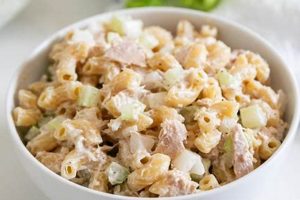
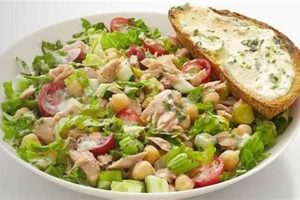
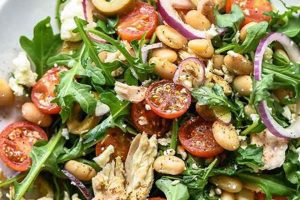
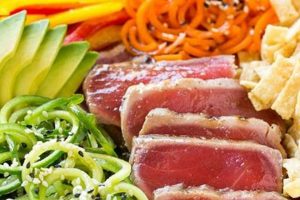
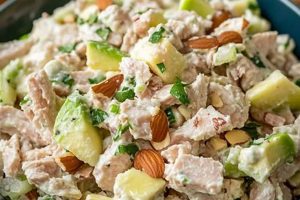
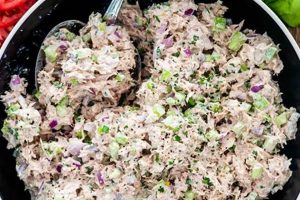
A combination of leafy greens, other vegetables, and canned or fresh tuna forms the foundation of this popular dish. Variations are numerous and incorporate diverse ingredients such as beans, pasta, potatoes, tomatoes, olives, and eggs. Dressings range from simple vinaigrettes to creamy mayonnaise-based sauces. A classic example might feature lettuce, tomatoes, cucumbers, hard-boiled eggs, tuna, and a lemon vinaigrette.
These dishes offer a convenient and nutritious meal option. Tuna provides protein and essential omega-3 fatty acids, while the vegetables contribute vitamins, minerals, and fiber. The adaptability of this type of dish makes it suitable for various dietary needs and preferences. Its relatively quick preparation time contributes to its popularity as a lunch or light dinner choice. Historically, combinations of fish and vegetables have been consumed for centuries in coastal regions, reflecting the availability of fresh ingredients. Canned tuna, introduced in the early 20th century, revolutionized accessibility and contributed to the widespread adoption of tuna-based dishes.
Further exploration will encompass various aspects of preparation, including selecting ingredients, different cooking methods for tuna, and crafting complementary dressings. Nutritional information and variations to accommodate dietary restrictions will also be addressed.
Tips for a Superior Tuna Salad
Optimizing ingredient selection and preparation techniques elevates this simple dish from ordinary to exceptional. Attention to detail ensures a flavorful and satisfying culinary experience.
Tip 1: Quality Tuna Selection: Opting for high-quality tuna packed in water or olive oil contributes significantly to the overall flavor. Consider using solid or chunk light tuna for a firmer texture or albacore for a richer taste.
Tip 2: Freshness of Produce: Crisp, fresh vegetables enhance both the flavor and texture. Thoroughly washing and drying produce before incorporation is essential.
Tip 3: Enhancing Flavor Profiles: Incorporating complementary ingredients such as chopped celery, red onion, or bell peppers adds depth and complexity. Herbs like dill, parsley, or chives provide a refreshing counterpoint.
Tip 4: Dressing Considerations: The dressing should complement, not overpower, the other ingredients. A classic vinaigrette, a light mayonnaise-based dressing, or a simple lemon-herb dressing are excellent choices.
Tip 5: Mindful Ingredient Incorporation: Gentle mixing prevents over-mashing the tuna and preserves the integrity of the vegetables. Adding the dressing just before serving helps maintain the desired texture.
Tip 6: Creative Serving Suggestions: This versatile dish can be served in a variety of ways. Consider using lettuce cups, whole-wheat bread, or crackers for a more complete meal. Serving chilled enhances the flavors.
Tip 7: Storage Practices: Proper storage maintains freshness and quality. Refrigerate leftovers promptly in an airtight container for up to three days.
By following these guidelines, one can consistently create flavorful and satisfying tuna salads. Careful consideration of ingredients and preparation methods leads to a superior culinary outcome.
This exploration of key preparation techniques concludes the practical guidance section. The following section will summarize the benefits of incorporating this versatile dish into one’s diet.
1. High-quality Tuna
Tuna quality significantly impacts the overall sensory experience of a tuna salad. Selecting superior tuna elevates the dish from mediocre to exceptional. The following facets illuminate the critical role of high-quality tuna:
- Species and Grades:
Different tuna species possess varying flavor profiles and textures. Albacore, known for its delicate flavor and firm texture, often commands a premium. Yellowfin and skipjack offer more robust flavors and slightly softer textures. Understanding these distinctions allows for informed choices based on individual preferences. Grades within each species, such as solid or chunk light, further delineate texture and appearance, influencing the final dish’s aesthetic and mouthfeel.
- Packing Medium:
Tuna packed in water offers a cleaner, more neutral flavor profile, allowing the natural taste of the fish to shine. Olive oil-packed tuna provides a richer, more savory flavor, contributing to the salad’s overall complexity. The choice depends on the desired outcome and the other ingredients incorporated into the salad.
- Sourcing and Sustainability:
Sustainably sourced tuna, harvested using responsible fishing practices, ensures the long-term health of fish populations and minimizes environmental impact. Consumers increasingly prioritize sustainable seafood choices, reflecting a growing awareness of ecological responsibility. Supporting sustainable fisheries contributes to the preservation of marine ecosystems.
- Freshness Indicators:
Visual and olfactory cues indicate freshness. High-quality tuna exhibits a vibrant color and a clean, oceanic aroma. Avoid tuna with a dull appearance or strong, fishy odor. Checking the expiration date and ensuring proper storage are crucial for maintaining quality.
By considering these aspects of tuna selection, one can elevate the flavor, texture, and overall quality of a tuna salad. Prioritizing these elements contributes to a more satisfying and enjoyable culinary experience while supporting responsible sourcing practices. The choice of tuna significantly impacts the final dish, highlighting the importance of informed selection.
2. Fresh Vegetables

Fresh vegetables play a crucial role in a tuna salad recipe, contributing significantly to its nutritional value, textural complexity, and overall flavor profile. Their presence elevates the dish beyond a simple protein source, transforming it into a balanced and satisfying meal. The inherent crispness and vibrancy of fresh vegetables contrast with the softness of the tuna, creating a more engaging culinary experience. This textural interplay enhances palatability and promotes enjoyment.
Beyond texture, fresh vegetables introduce a wide array of vitamins, minerals, and dietary fiber. Leafy greens like romaine or spinach contribute vitamin A and folate. Tomatoes provide vitamin C and lycopene, a potent antioxidant. Cucumbers offer hydration and potassium. The inclusion of these nutrient-rich components transforms the dish into a powerhouse of essential nutrients, promoting overall health and well-being. For instance, a tuna salad featuring spinach, bell peppers, and tomatoes provides a significant portion of the recommended daily intake of several essential vitamins.
Furthermore, the variety of available fresh vegetables allows for extensive customization and flavor exploration. The peppery bite of radishes, the sweetness of bell peppers, or the subtle bitterness of arugula can create unique and nuanced flavor profiles. This versatility enables adaptation to individual preferences and dietary needs, increasing the appeal and adaptability of the tuna salad. The strategic selection of vegetables allows for the creation of flavor combinations that complement the inherent taste of the tuna. Understanding the interplay of flavors allows for a more considered and satisfying culinary creation. Ultimately, the inclusion of fresh vegetables significantly enhances the nutritional value, textural complexity, and overall sensory experience of a tuna salad. Their presence transforms a basic protein source into a vibrant and healthful meal option.
3. Complementary Flavors
Flavor balancing plays a crucial role in crafting a successful tuna salad. Careful consideration of complementary ingredients elevates the dish beyond basic sustenance, transforming it into a nuanced and satisfying culinary experience. The inherent savory notes of tuna provide a versatile backdrop for a range of flavor profiles, from bright acidity to subtle earthiness.
- Aromatic Vegetables:
Ingredients like red onion, celery, and bell peppers introduce aromatic complexity. Their distinct flavors, ranging from pungent to sweet, interact with the tuna, creating a more dynamic and engaging flavor profile. Finely diced red onion adds a sharp, piquant note that cuts through the richness of the tuna and mayonnaise, while celery contributes a subtle herbal freshness.
- Fresh Herbs:
Fresh herbs contribute brightness and depth. Dill, parsley, chives, and tarragon offer distinct aromatic notes that enhance the overall sensory experience. Dill, with its slightly anise-like flavor, complements the oceanic notes of tuna, while parsley provides a clean, grassy counterpoint. The judicious use of fresh herbs can significantly elevate the flavor profile of the salad.
- Acidic Elements:
Acidity balances the richness of the tuna and any creamy dressing. Lemon juice, vinegar, or capers introduce a tartness that brightens the palate and prevents the salad from feeling heavy. A squeeze of fresh lemon juice adds a vibrant citrus note, while capers provide a salty, briny accent. The strategic use of acidic elements enhances the overall balance and complexity of the dish.
- Spices and Seasonings:
Ground black pepper, paprika, or a pinch of cayenne pepper introduce subtle warmth and complexity. These additions enhance the savory notes of the tuna and create a more nuanced flavor profile. A touch of Dijon mustard adds a subtle pungency that complements the other ingredients. The careful application of spices and seasonings can significantly elevate the overall taste experience.
The strategic incorporation of these complementary flavors transforms a simple tuna salad into a well-balanced and flavorful dish. Understanding the interplay of these elements allows for a more nuanced and satisfying culinary outcome. A well-crafted tuna salad demonstrates a thoughtful approach to flavor balancing, highlighting the importance of complementary ingredients in creating a truly exceptional dish.
4. Balanced Dressing
Dressing selection significantly impacts the overall flavor profile and textural experience of a tuna salad. A balanced dressing complements the other ingredients without overpowering the delicate flavors of the tuna and vegetables. Careful consideration of flavor profiles, acidity levels, and textural contributions ensures a harmonious and satisfying culinary outcome. A well-chosen dressing elevates the dish, transforming it from a simple combination of ingredients into a cohesive and flavorful meal.
- Acidity:
Acidity plays a crucial role in balancing the richness of the tuna and any mayonnaise present in the salad. A vinaigrette with a base of lemon juice or vinegar provides a bright, refreshing counterpoint to the savory elements. The acidity cuts through the richness, preventing the salad from feeling heavy or overly saturated. For example, a lemon vinaigrette with a touch of Dijon mustard offers a balanced acidity that complements the tuna without overpowering it.
- Creaminess:
While not essential, a creamy element can enhance the textural complexity and overall palatability of the salad. Mayonnaise, Greek yogurt, or avocado-based dressings contribute a smooth, velvety texture that contrasts with the crispness of the vegetables. However, moderation is key. Overly creamy dressings can mask the flavors of the other ingredients and create a heavy, less refreshing salad. A light hand with the mayonnaise or a blend of mayonnaise and Greek yogurt offers a balanced approach.
- Flavor Intensity:
The dressing’s flavor intensity should complement, not overpower, the delicate flavor of the tuna and the freshness of the vegetables. A simple vinaigrette with subtle herbal notes allows the natural flavors of the other ingredients to shine. Alternatively, a dressing with bolder flavors, such as a creamy dill dressing or a spicy sriracha mayonnaise, can create a more complex and assertive flavor profile. The key is to ensure the dressing enhances, rather than masks, the other components of the salad.
- Oil Selection:
The type of oil used in the dressing also influences the final flavor profile. Extra virgin olive oil contributes a fruity, peppery note, while avocado oil offers a milder, buttery flavor. The choice of oil should complement the other ingredients and contribute to the desired overall flavor profile. For example, a lemon vinaigrette with extra virgin olive oil complements Mediterranean-inspired tuna salads, while a lighter oil, like grapeseed, might suit a salad with Asian-inspired flavors.
A balanced dressing elevates the tuna salad, unifying the flavors and textures into a harmonious whole. The careful consideration of acidity, creaminess, flavor intensity, and oil selection ensures that the dressing complements the other ingredients, resulting in a more satisfying and enjoyable culinary experience. By understanding the interplay of these elements, one can create a tuna salad that is both flavorful and well-balanced.
5. Proper Preparation

Proper preparation significantly influences the final quality and enjoyment of a tuna salad. This encompasses ingredient handling, mixing techniques, and timing considerations. Each step, though seemingly minor, contributes to the overall sensory experience. Overlooked details can result in a subpar outcome, ranging from textural inconsistencies to compromised flavor profiles.
Ingredient Handling: Thoroughly draining canned tuna prevents excess liquid from diluting the dressing and creating a watery salad. Properly washing and drying fresh vegetables eliminates potential contaminants and ensures crispness. Chopping vegetables to a uniform size promotes even distribution throughout the salad and enhances aesthetic appeal. For example, unevenly chopped cucumbers can lead to an unbalanced texture, with some bites overly crunchy and others lacking textural contrast. Similarly, failing to remove the core of a tomato can introduce unwanted excess moisture.
Mixing Techniques: Gentle mixing prevents the tuna from becoming mushy and preserves the structural integrity of the vegetables. Overmixing can result in a dense, unappetizing texture. Adding the dressing just before serving maintains the desired texture and prevents the salad from becoming soggy. Consider the delicate nature of leafy greens; overmixing can bruise and wilt the leaves, compromising both their visual appeal and textural contribution.
Timing Considerations: Chilling the prepared salad enhances the flavors and creates a more refreshing experience. However, extended refrigeration can cause certain vegetables, like tomatoes, to lose their optimal texture and flavor. Balancing chilling time with ingredient sensitivity is essential for maximizing enjoyment. For instance, preparing the tuna salad a few hours in advance and adding easily-bruised ingredients like avocado just prior to serving optimizes both flavor and texture.
Proper preparation, though often overlooked, is a cornerstone of a successful tuna salad. Attention to detail in ingredient handling, mixing techniques, and timing ensures a harmonious blend of flavors and textures. The cumulative impact of these seemingly small steps significantly elevates the overall culinary experience, transforming a simple dish into something truly enjoyable.
Frequently Asked Questions
This section addresses common inquiries regarding tuna salad preparation and consumption, providing concise and informative responses to facilitate a deeper understanding.
Question 1: What is the best type of tuna to use?
While personal preferences vary, albacore tuna offers a delicate flavor and firm texture. Solid or chunk light tuna provides a more economical option with a slightly milder taste. Ultimately, the choice depends on individual preferences and budget considerations.
Question 2: How can sogginess be prevented?
Thoroughly draining the canned tuna and adding the dressing just before serving helps prevent excess moisture. Incorporating water-rich vegetables like tomatoes sparingly also contributes to a less watery salad.
Question 3: How long can tuna salad be stored?
Properly stored in an airtight container in the refrigerator, tuna salad typically lasts for up to three days. However, the quality and safety may degrade beyond this timeframe.
Question 4: Can tuna salad be frozen?
Freezing is generally not recommended. Freezing negatively impacts the texture of the tuna and vegetables, resulting in a less palatable dish upon thawing. It’s best consumed fresh or within the recommended refrigeration period.
Question 5: What are healthy alternatives to mayonnaise?
Greek yogurt, mashed avocado, or a combination of the two offer healthier alternatives to traditional mayonnaise. These options reduce overall fat content while maintaining a creamy texture.
Question 6: How can nutritional value be maximized?
Incorporating a variety of nutrient-rich vegetables, such as spinach, bell peppers, and celery, boosts vitamin and mineral content. Choosing whole-grain bread or crackers for serving further enhances nutritional value.
Understanding these key aspects of preparation and storage ensures a safe and enjoyable culinary experience. Proper handling and ingredient selection maximize flavor and freshness.
The next section will offer a variety of recipe variations for exploration.
Conclusion
Exploration of this culinary staple reveals its adaptability and nutritional value. Careful selection of high-quality tuna, fresh vegetables, and complementary ingredients, combined with proper preparation techniques, yields a dish far exceeding basic sustenance. Balancing flavors, textures, and acidity through considered dressing choices elevates the sensory experience. Understanding these fundamental principles allows for endless variations while ensuring a consistently satisfying outcome. Proper storage practices maintain quality and safety, maximizing enjoyment.
This examination underscores the potential of even simple recipes to offer both culinary delight and nutritional benefit. Continued exploration of ingredient combinations and flavor profiles promises further enhancement of this versatile dish, solidifying its place as a practical and enjoyable meal option.