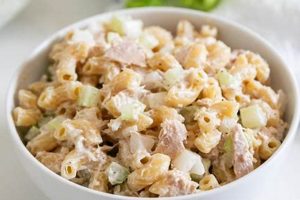
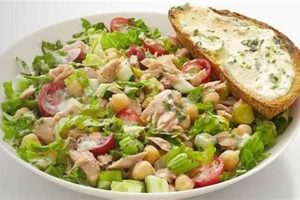
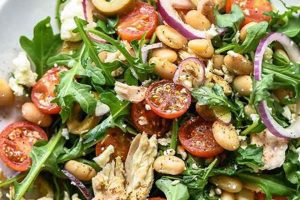
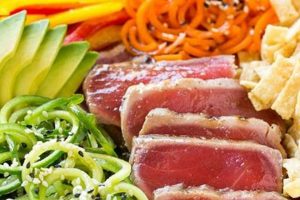
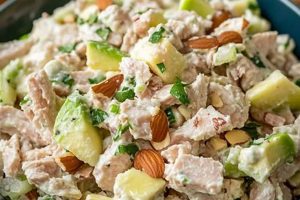
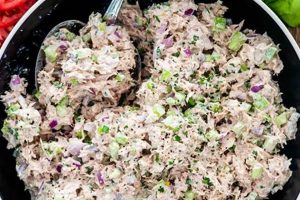
A basic tuna salad typically combines canned tuna with mayonnaise, creating a quick and affordable meal. Common additions include celery, onion, and seasonings like salt and pepper. This fundamental combination can be adapted with various ingredients, such as relish, hard-boiled eggs, or different herbs and spices, offering a wide range of flavor profiles.
The enduring popularity of this dish stems from its convenience, nutritional value (tuna is a good source of protein and omega-3 fatty acids), and adaptability. Its simplicity makes it an ideal option for busy individuals, quick lunches, or light dinners. Historically, readily available canned tuna became a staple ingredient in the mid-20th century, contributing to the rise of tuna salad as a common household dish. This accessibility and ease of preparation cemented its place in culinary history.
Further exploration will delve into specific ingredient variations, nutritional information, creative serving suggestions, and tips for achieving the perfect texture and flavor balance.
Tips for a Superior Tuna Salad
Optimizing a tuna salad involves careful consideration of ingredient quality and preparation techniques. These tips offer guidance for achieving exceptional flavor and texture.
Tip 1: Drain the tuna thoroughly. Excess liquid can dilute the flavor and create a watery consistency. Pressing the tuna gently with a fork removes excess moisture, resulting in a richer, more flavorful salad.
Tip 2: Use high-quality mayonnaise. Mayonnaise forms the base of the flavor profile. Opting for a higher-quality mayonnaise contributes significantly to the overall taste.
Tip 3: Add ingredients in small increments. Seasonings, celery, onion, and other add-ins should be incorporated gradually. This allows for adjustments to taste and prevents over-seasoning or overpowering the flavor of the tuna.
Tip 4: Chill the salad before serving. Chilling allows the flavors to meld and enhances the overall experience. A colder temperature also improves the texture, making the salad firmer and more enjoyable.
Tip 5: Consider texture variations. Finely diced celery and onions create a smoother texture. Conversely, coarser chopping provides a more substantial, chunkier feel. Tailoring the texture to personal preference enhances enjoyment.
Tip 6: Explore different seasonings. Traditional seasonings include salt, pepper, and perhaps a dash of paprika. However, experimenting with dill, chives, or a touch of lemon zest can elevate the flavor profile.
Tip 7: Don’t overmix. Overmixing can break down the tuna, creating a mushy consistency. Gentle folding ensures that ingredients are combined without compromising the texture of the fish.
By following these guidelines, one can consistently create a flavorful and satisfying tuna salad experience.
These practical tips provide a foundation for creating a truly exceptional tuna salad. The following section will offer creative serving suggestions to further elevate this classic dish.
1. Quality Tuna

Tuna quality significantly impacts the overall flavor and texture of a simple, easy tuna salad recipe. Selecting the right tuna can elevate a basic dish to a culinary delight. The following facets explore the importance of tuna quality in this context.
- Tuna Species
Different tuna species offer distinct flavor profiles and textures. Albacore, known for its delicate flavor and firm texture, is often preferred for salads. Skipjack, with its stronger, more assertive flavor, offers a robust alternative. Yellowfin, falling between albacore and skipjack in terms of flavor intensity, provides another option. Choosing the appropriate species allows for customization based on personal preferences.
- Packing Medium
Tuna packed in oil retains moisture and offers a richer flavor. Olive oil-packed tuna adds a subtle fruity note, while vegetable oil provides a neutral base. Water-packed tuna is a leaner option, but can result in a drier salad if not properly drained. The packing medium influences both the flavor and moisture content of the final dish.
- Freshness and Sourcing
Freshly caught and properly processed tuna exhibits optimal flavor and texture. Sourcing tuna from reputable brands known for their sustainable fishing practices ensures both quality and ethical consumption. Freshness directly correlates with the overall enjoyment of the salad.
- Texture and Appearance
High-quality tuna exhibits a firm, consistent texture, free from excessive flaking or mushiness. The appearance should be vibrant and uniform in color. These visual and textural cues indicate proper handling and processing, reflecting the overall quality of the tuna.
Understanding these facets of tuna quality provides a framework for selecting the ideal tuna for a simple, easy tuna salad recipe. Choosing wisely enhances the flavor, texture, and overall enjoyment of this classic dish. Ultimately, the quality of the tuna directly translates to the quality of the final product.
2. Flavorful Mayonnaise
Mayonnaise serves as the foundational binding agent and flavor architect in a simple, easy tuna salad recipe. Its quality and character significantly influence the overall sensory experience. The interplay between mayonnaise and tuna creates a synergistic effect, where the creamy texture of the mayonnaise complements the flaky tuna, while its flavor profile either enhances or masks the inherent taste of the fish.
Standard mayonnaise, composed primarily of oil, egg yolks, and vinegar or lemon juice, provides a neutral backdrop, allowing the flavor of the tuna to take center stage. However, variations in ingredients and production methods yield a spectrum of mayonnaise flavors, each impacting the final tuna salad differently. For example, mayonnaise made with extra virgin olive oil imparts a subtle fruitiness and a peppery finish, while the use of Dijon mustard adds a tangy complexity. Mayonnaises infused with herbs, spices, or roasted garlic introduce additional layers of flavor that can either complement or contrast with the tuna. The choice of mayonnaise, therefore, becomes a crucial decision in crafting a simple, easy tuna salad recipe tailored to specific taste preferences. Aioli, a garlic-infused mayonnaise, creates a bolder, more assertive flavor profile when paired with tuna, while a lemon-dill mayonnaise offers a brighter, more herbaceous counterpoint.
Understanding the nuances of mayonnaise selection empowers culinary experimentation and control over the final flavor profile of the tuna salad. While simplicity remains a core principle in this type of recipe, the careful consideration of mayonnaise allows for a sophisticated and satisfying result without compromising ease of preparation. Challenges may arise in balancing flavor intensity; a strongly flavored mayonnaise may overpower the delicate taste of the tuna. The key lies in thoughtful pairing and moderation, ensuring the mayonnaise complements rather than dominates the other ingredients.
3. Crisp Vegetables
Crisp vegetables contribute essential textural contrast and fresh flavor dimensions to a simple, easy tuna salad recipe. Their inclusion elevates the dish beyond a basic protein-and-mayonnaise combination, adding complexity and enhancing palatability. Understanding the role of specific vegetables and their preparation contributes significantly to the success of the final product.
- Celery
Celery offers a distinct vegetal crunch and subtle, slightly bitter flavor that balances the richness of the mayonnaise and tuna. Its fibrous stalks provide structural integrity, preventing the salad from becoming overly mushy. Precise dicing ensures even distribution and consistent texture throughout the salad.
- Onion
Onion introduces a pungent bite and aromatic complexity. Red onion, with its sharp, slightly sweet flavor, is a popular choice. Alternatively, milder options like white or yellow onions offer a less assertive presence. Finely dicing or mincing the onion prevents overpowering the other flavors, while also ensuring even distribution.
- Bell Peppers
Bell peppers, available in a variety of colors, introduce sweetness and a crisp, juicy texture. Their vibrant hues also enhance the visual appeal of the salad. Dicing the peppers into small, uniform pieces ensures they integrate seamlessly with the other ingredients. Different colored bell peppers offer subtle variations in flavor; red bell peppers tend to be sweeter, while green bell peppers have a slightly more vegetal taste.
- Water Chestnuts
Water chestnuts offer a unique, subtly sweet, and distinctly crunchy texture that contrasts with the softer elements of the tuna salad. Their neutral flavor allows them to blend seamlessly while providing a satisfying textural counterpoint. Slicing the water chestnuts thinly ensures they don’t overwhelm the other ingredients. They add an element of surprise and elevate the overall sensory experience.
The strategic incorporation of crisp vegetables transforms a simple tuna salad into a multifaceted culinary experience. Balancing textures and flavors through the careful selection and preparation of these vegetables elevates the dish from basic to exceptional. The interplay between the creamy mayonnaise, flaky tuna, and the crisp, fresh vegetables creates a harmonious balance, making the salad more appealing and enjoyable. Further experimentation with other crisp vegetables, such as chopped cucumbers or shredded carrots, can offer additional flavor and texture variations.
4. Balanced Seasonings
Balanced seasonings play a crucial role in elevating a simple, easy tuna salad recipe from bland to flavorful. Seasoning is not merely an afterthought; it directly impacts the overall taste experience, influencing the perceived freshness, richness, and complexity of the dish. The delicate flavor of tuna provides a neutral canvas, allowing seasonings to significantly shape the final profile. Over-seasoning can easily mask the subtle taste of the tuna, while under-seasoning results in a lackluster and uninspiring dish. A balanced approach, therefore, is essential. This involves carefully considering the interplay of different seasonings and their combined effect on the other ingredients. For instance, a simple combination of salt and black pepper can enhance the natural flavors of the tuna and mayonnaise, while the addition of a pinch of paprika introduces a subtle smokiness and depth. The quantity of each seasoning must be carefully calibrated to achieve the desired balance.
The type of salt used can also influence the final outcome. Sea salt, with its coarser texture and mineral complexity, offers a different flavor profile compared to standard table salt. Freshly ground black pepper provides a more intense aroma and flavor than pre-ground pepper. Beyond the basics, herbs and spices can further enhance the complexity of the tuna salad. Fresh dill, chives, or parsley add brightness and a fresh herbal note. A dash of lemon zest introduces a citrusy tang, while a pinch of cayenne pepper provides a subtle heat. The choice of seasonings should complement the other ingredients and create a harmonious flavor profile. For example, a Mediterranean-inspired tuna salad might benefit from the addition of oregano, thyme, and a squeeze of lemon juice, while a spicier version could incorporate chili flakes or a dash of hot sauce. Experimentation and careful tasting are essential in achieving a balanced and delicious result.
Mastering the art of balanced seasoning is fundamental to creating a truly satisfying simple, easy tuna salad recipe. It allows for customization and creativity, transforming a basic dish into a culinary expression. The challenge lies in achieving the perfect synergy of flavors, where each seasoning complements the others and enhances the overall taste experience without overpowering the delicate flavor of the tuna. This understanding of balanced seasonings empowers one to create a tuna salad that is not only easy to prepare but also delivers a complex and delightful flavor profile.
5. Proper Chilling
Proper chilling is integral to a simple, easy tuna salad recipe, significantly impacting both food safety and flavor development. Chilling retards bacterial growth, a critical consideration for any dish containing mayonnaise, a perishable ingredient. Lower temperatures also allow the flavors of the various componentstuna, mayonnaise, vegetables, and seasoningsto meld and mature, resulting in a more cohesive and balanced flavor profile. Immediately after preparation, a tuna salad may taste disjointed, with individual ingredient flavors competing rather than complementing each other. Chilling for at least 30 minutes, preferably an hour or more, allows these flavors to harmonize, creating a more unified and enjoyable culinary experience. For instance, the sharpness of raw onion mellows during chilling, blending more seamlessly with the other ingredients. Similarly, the flavors of added herbs and spices become more integrated and less assertive.
Beyond flavor development, chilling improves the structural integrity of the tuna salad. The colder temperature firms the mayonnaise, creating a more stable and less watery consistency. This is particularly important if the salad is intended for sandwiches or wraps, where a firmer texture prevents sogginess and facilitates easier handling. Furthermore, chilling enhances the refreshing quality of the salad, making it particularly appealing in warmer weather. A chilled tuna salad provides a welcome contrast to higher ambient temperatures, contributing to a more satisfying sensory experience. Conversely, serving tuna salad at room temperature can compromise both its flavor and texture, resulting in a less enjoyable and potentially unsafe dish.
In conclusion, proper chilling is not merely a recommended step but a crucial element in a simple, easy tuna salad recipe. It contributes significantly to food safety, flavor development, and textural improvement. Understanding the importance of this step ensures a more enjoyable and safer culinary experience. Neglecting proper chilling can lead to flavor imbalances, textural inconsistencies, and potential health risks, underscoring the practical significance of this often-overlooked aspect of tuna salad preparation.
Frequently Asked Questions
This section addresses common inquiries regarding the preparation and enjoyment of tuna salad.
Question 1: How long can tuna salad be safely stored in the refrigerator?
Tuna salad, properly stored in an airtight container, typically remains safe to consume for three to five days when refrigerated at 40F (4C) or below. Beyond this timeframe, the risk of bacterial growth increases significantly.
Question 2: Can tuna salad be frozen?
Freezing tuna salad is not generally recommended. Freezing alters the texture of the mayonnaise, resulting in a separated and less desirable consistency upon thawing. While safe to consume after freezing, the quality and enjoyment of the salad will be compromised.
Question 3: What are healthy alternatives to mayonnaise in tuna salad?
Plain Greek yogurt, mashed avocado, or hummus offer healthier alternatives to mayonnaise, reducing overall fat content while providing creaminess and flavor. These substitutions can also introduce new flavor dimensions to the salad.
Question 4: How can one prevent tuna salad from becoming too dry?
Adding a small amount of olive oil or plain Greek yogurt can increase moisture content and prevent dryness. Thoroughly draining the tuna before mixing is also essential to avoid excess liquid.
Question 5: What are some creative serving suggestions beyond sandwiches?
Tuna salad can be served in lettuce cups, on crackers, as a filling for tomatoes or avocados, or as a topping for baked potatoes. These options offer variety and cater to different dietary preferences.
Question 6: How can one adjust the flavor profile of tuna salad?
Incorporating different herbs, spices, or other flavoring agents can customize the taste. Examples include lemon zest, Dijon mustard, curry powder, or chopped fresh herbs such as dill or parsley. These additions can introduce diverse flavor profiles.
Careful consideration of these frequently asked questions ensures safe handling, optimal preparation, and enhanced enjoyment of tuna salad.
The following section will provide a collection of easy tuna salad recipes showcasing diverse flavor combinations and creative serving suggestions.
Simple Easy Tuna Salad Recipe
This exploration of the simple easy tuna salad recipe has highlighted the key elements that contribute to its enduring popularity and adaptability. From the selection of high-quality tuna and flavorful mayonnaise to the incorporation of crisp vegetables and balanced seasonings, each component plays a crucial role in the final outcome. Proper chilling techniques further enhance both flavor and food safety. The frequently asked questions section addressed common concerns regarding storage, ingredient substitutions, and creative serving suggestions, demonstrating the versatility of this classic dish.
The simplicity of a tuna salad recipe belies its potential for culinary creativity. By understanding the interplay of ingredients and techniques, one can elevate this staple dish from basic sustenance to a nuanced and satisfying culinary experience. Further experimentation with flavor profiles and presentations offers endless possibilities for customization and enjoyment.