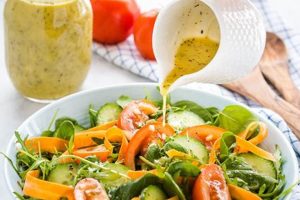
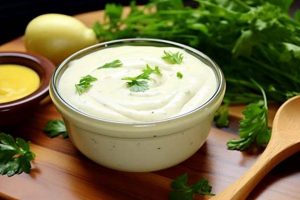
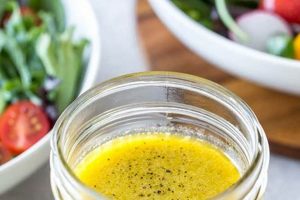
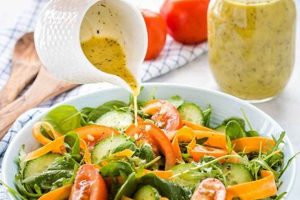
A superior emulsion of oil, vinegar, and seasonings creates a versatile condiment for various salads and vegetables. A classic example combines extra virgin olive oil, red wine vinegar, Dijon mustard, minced garlic, salt, and pepper. Variations can include herbs, spices, sweeteners, or other flavorful additions.
Achieving a harmonious balance of tartness, richness, and aromatic complexity elevates fresh produce, enhancing its natural flavors without overpowering them. This culinary technique has roots in ancient civilizations, evolving over centuries into the diverse range of preparations found today. A well-executed dressing contributes not only to taste but also to texture and visual appeal.
The following sections explore the fundamental principles of creating exceptional dressings, offering guidance on ingredient selection, proportions, emulsification methods, and creative flavor combinations. Further discussion will cover proper storage techniques and potential variations to cater to diverse dietary preferences and culinary goals.
Tips for Crafting Exceptional Vinaigrettes
Creating a memorable vinaigrette involves careful consideration of ingredients and techniques. The following tips offer guidance for achieving optimal flavor and texture.
Tip 1: Use High-Quality Ingredients: The foundation of any superior dressing lies in the quality of its components. Opt for extra virgin olive oil with a robust flavor profile, and select vinegars that offer complementary acidity, such as red wine vinegar, balsamic vinegar, or apple cider vinegar.
Tip 2: Balance Flavors: Strive for a harmonious balance of acidity, sweetness, and savory notes. Achieving this balance may involve adjusting the ratio of oil to vinegar or incorporating ingredients like honey, maple syrup, or Dijon mustard.
Tip 3: Emulsify Thoroughly: A stable emulsion prevents the dressing from separating. Whisk the ingredients vigorously or use a blender or food processor to create a smooth, creamy consistency.
Tip 4: Season to Taste: Seasoning is crucial. Freshly ground black pepper and sea salt are essential, but consider incorporating other spices or herbs to enhance the flavor profile, such as garlic powder, onion powder, or dried oregano.
Tip 5: Experiment with Flavors: Don’t be afraid to experiment with different flavor combinations. Incorporate fresh herbs, minced garlic, shallots, or citrus zest to create unique and exciting dressings.
Tip 6: Taste and Adjust: Before serving, taste the vinaigrette and adjust the seasoning as needed. This step ensures the final product meets desired flavor preferences.
Tip 7: Store Properly: Store leftover vinaigrette in an airtight container in the refrigerator for up to one week. Shake well before serving, as some separation may occur during storage.
By following these guidelines, one can consistently produce dressings that elevate culinary creations, adding depth and complexity to a wide range of dishes.
The concluding section will provide further insights into adapting these principles to specific culinary needs and preferences.
1. Quality Ingredients
The pursuit of a superlative vinaigrette hinges significantly on the selection of premium ingredients. Subpar components will inevitably yield a mediocre result, regardless of technique. The following facets illuminate the crucial role of quality in crafting exceptional dressings.
- Oil Selection
The oil constitutes the foundation of a vinaigrette, influencing both flavor and texture. Extra virgin olive oil, known for its complex flavor profile and health benefits, serves as a versatile base. However, other oils, such as avocado, grapeseed, or walnut oil, can offer unique nuances depending on the desired outcome. Opting for high-quality, cold-pressed oils ensures optimal flavor and nutritional value. For example, a delicate white balsamic vinaigrette might benefit from a lighter oil like grapeseed, while a robust red wine vinaigrette pairs well with a full-bodied extra virgin olive oil.
- Vinegar Choice
Vinegar provides the essential acidic counterpoint to the richness of the oil. Variety abounds, from the sharp tang of red wine vinegar to the mellow sweetness of balsamic. The choice of vinegar should complement the other ingredients and the overall flavor profile being pursued. Champagne vinegar adds a light and delicate touch, while apple cider vinegar introduces a subtle fruitiness. Using high-quality vinegar contributes depth and complexity to the final product.
- Fresh Herbs and Spices
Freshly chopped herbs and high-quality spices significantly elevate a vinaigrette, adding layers of aroma and flavor. Dried herbs can be used, but fresh herbs offer a brighter, more vibrant taste. Consider the interplay of herbs with the other ingredients. For instance, dill pairs well with lemon and seafood, while thyme complements roasted vegetables. Similarly, freshly ground black pepper provides a more nuanced flavor than pre-ground pepper.
- Other Flavor Enhancers
Beyond the core components, additional ingredients can further enhance a vinaigrette’s complexity. A touch of Dijon mustard adds creaminess and depth, while a small amount of honey or maple syrup can balance acidity. Minced garlic, shallots, or grated ginger can introduce pungent notes. High-quality ingredients in these supporting roles contribute significantly to the overall balance and impact of the dressing.
By prioritizing high-quality ingredients in each of these categories, one ensures a vinaigrette that not only tastes exceptional but also offers textural and aromatic complexity. This dedication to quality distinguishes a truly outstanding dressing from a merely adequate one.
2. Balanced Flavor Profile

A balanced flavor profile constitutes a cornerstone of any superlative vinaigrette. The interplay of acidity, sweetness, and savory elements determines the dressing’s overall impact and its ability to complement the ingredients it accompanies. Without this equilibrium, a vinaigrette risks being overly tart, excessively sweet, or blandly one-dimensional. The objective is to create a harmonious blend where each flavor component enhances the others without dominating the palate.
Consider a classic French vinaigrette: the sharpness of red wine vinegar is tempered by the subtle sweetness of Dijon mustard, while the richness of olive oil provides a smooth, unifying base. The addition of salt and pepper further enhances these flavors, creating a complex yet balanced profile. If the vinegar were too dominant, the dressing would be unpleasantly acidic. Conversely, an excess of sweetness would mask the other flavors, resulting in a cloying vinaigrette. This balance extends beyond basic ingredients. For example, incorporating fresh herbs, garlic, or shallots introduces additional flavor dimensions that must be carefully integrated to maintain overall harmony. A lemon-herb vinaigrette, for instance, requires a judicious balance of lemon zest, juice, and herbs to avoid an overly acidic or herbaceous outcome.
Achieving a well-balanced flavor profile requires careful consideration of ingredient proportions and their inherent characteristics. It often involves a process of tasting and adjusting, fine-tuning the vinaigrette until the desired harmony is achieved. This iterative process underscores the dynamic relationship between ingredients and the importance of understanding how they interact. Mastery of this interplay allows one to craft vinaigrettes that not only enhance the flavors of salads and other dishes but also stand on their own as culinary achievements. A well-executed vinaigrette exemplifies the principle that balance, not individual dominance, is the key to creating truly exceptional flavors.
3. Proper Emulsification

Proper emulsification represents a critical stage in crafting a superlative vinaigrette. It determines the dressing’s texture, stability, and ability to coat ingredients effectively. A well-emulsified vinaigrette exhibits a smooth, creamy consistency, with the oil and vinegar thoroughly combined, preventing separation. This cohesive texture is essential for both aesthetic appeal and optimal flavor distribution.
- Temporary vs. Permanent Emulsions
Vinaigrettes typically form temporary emulsions, meaning the oil and vinegar eventually separate upon standing. The goal is to create an emulsion stable enough to last through a meal. Permanent emulsions, like mayonnaise, utilize emulsifying agents like egg yolks to create a lasting bond between oil and water molecules. While vinaigrettes do not require such agents, understanding the principles of emulsification applies to both types. A temporary emulsion requires enough force to disperse the oil into tiny droplets throughout the vinegar, creating a homogenous mixture.
- Techniques for Emulsification
Several techniques achieve effective emulsification. Whisking vigorously by hand creates a temporary emulsion suitable for immediate use. A blender or food processor offers a more efficient method for larger batches or for incorporating ingredients that require more thorough blending, such as herbs or spices. Slow, steady additions of oil to the vinegar while whisking or blending promote a more stable emulsion. These methods rely on the mechanical force to break down the oil into smaller droplets and disperse them evenly within the vinegar.
- Role of Emulsifiers
While not essential for temporary emulsions, certain ingredients contribute to stability. Dijon mustard, honey, or even a small amount of mashed avocado can act as natural emulsifiers, helping to bind the oil and vinegar more effectively. These ingredients contain compounds that attract both oil and water molecules, facilitating a more stable emulsion. Incorporating such ingredients can extend the life of the emulsion, delaying separation and maintaining a desirable texture.
- Impact on Flavor and Texture
Proper emulsification directly impacts both flavor and texture. A well-emulsified vinaigrette coats ingredients evenly, ensuring a consistent flavor experience with every bite. Conversely, a poorly emulsified dressing results in uneven distribution, with some bites tasting primarily of oil and others of vinegar. The smooth, creamy texture of an emulsified vinaigrette also contributes to a more pleasant mouthfeel, enhancing the overall dining experience.
A properly emulsified vinaigrette is essential for a best vinaigrette salad dressing recipe. The stability and texture achieved through effective emulsification ensure optimal flavor distribution and enhance the overall culinary experience. Understanding the principles of emulsification, selecting appropriate techniques, and utilizing stabilizing ingredients contribute significantly to crafting a truly exceptional vinaigrette.
4. Seasoning Adjustments

Seasoning adjustments represent a crucial refinement stage in achieving a best vinaigrette salad dressing recipe. They directly influence the final flavor profile, ensuring balance and complexity. This process extends beyond simply adding salt and pepper; it involves a nuanced understanding of how different seasonings interact with the other ingredients and how they contribute to the overall taste experience. A vinaigrette’s foundation, comprising oil, vinegar, and perhaps an emulsifier, establishes a basic flavor framework. Seasoning adjustments build upon this foundation, enhancing existing flavors, adding new dimensions, and achieving a harmonious balance.
Consider the impact of salt. It not only enhances sweetness and suppresses bitterness but also amplifies other flavors present. In a vinaigrette, salt interacts with the acidity of the vinegar and the richness of the oil, creating a more complex flavor profile. Pepper, on the other hand, introduces a subtle heat and a distinct aroma, adding depth and complexity. Beyond salt and pepper, other seasonings offer a wider range of flavor possibilities. A pinch of sugar or a touch of honey can balance excessive acidity, while herbs and spices introduce aromatic complexity. A classic balsamic vinaigrette, for instance, often benefits from a touch of honey to counterbalance the balsamic’s inherent tartness. Similarly, a lemon-herb vinaigrette might incorporate fresh herbs like dill, parsley, or chives, complementing the citrus notes. The choice of seasonings depends on the desired flavor profile and the other ingredients present.
Successful seasoning adjustments require careful tasting and incremental additions. Start with small amounts of each seasoning, tasting after each addition and assessing its impact on the overall flavor. This iterative process allows for precise control and prevents over-seasoning, which can irrevocably alter the balance of the vinaigrette. The goal is to create a harmonious blend where each flavor component complements the others without dominating the palate. Mastery of seasoning adjustments distinguishes an exceptional vinaigrette from a merely adequate one. It demonstrates an understanding of flavor dynamics and a commitment to achieving culinary excellence. A perfectly seasoned vinaigrette elevates the salad or dish it accompanies, transforming it from a simple combination of ingredients into a harmonious culinary experience.
5. Creative Flavor Combinations

A truly exceptional vinaigrette transcends the basic formula of oil and vinegar, venturing into the realm of creative flavor combinations. This exploration of diverse ingredients and their synergistic interactions distinguishes a memorable dressing from a merely functional one. The pursuit of innovative flavor profiles elevates the vinaigrette from a simple condiment to a culinary statement, adding depth and complexity to any dish it graces. The following facets illuminate the crucial role of creative flavor combinations in achieving a best vinaigrette salad dressing recipe.
- Exploring Global Cuisines
Inspiration for innovative vinaigrettes can be drawn from global culinary traditions. Asian-inspired dressings might incorporate ingredients like soy sauce, ginger, and sesame oil. Mediterranean influences could introduce elements such as olives, capers, and oregano. Drawing upon the diverse flavors of world cuisines expands the possibilities beyond traditional Western approaches, offering a wealth of new flavor profiles. For instance, a miso-ginger vinaigrette offers a unique umami richness, while a cilantro-lime dressing adds a vibrant, zesty dimension.
- Seasonal Adaptations
Seasonal variations provide opportunities for continuous exploration. Springtime vinaigrettes might feature fresh herbs like chives, mint, and tarragon. Summer offerings could incorporate ripe berries or stone fruits. Autumnal dressings may utilize the warmth of spices like cinnamon and nutmeg, while winter creations might benefit from the robust flavors of roasted garlic or caramelized onions. Adapting to seasonal ingredients ensures access to peak flavors and provides a constantly evolving palette.
- Textural Contrasts
Beyond flavor, textural contrasts add another layer of complexity. Toasted nuts or seeds introduce a satisfying crunch, while finely diced fruits or vegetables offer a refreshing counterpoint. Crumbled cheese or crispy fried onions can contribute both flavor and texture. These textural elements create a more engaging and dynamic culinary experience, elevating the vinaigrette beyond a simple sauce.
- Balancing Flavor Profiles
Creative flavor combinations must still adhere to fundamental principles of balance. The interplay of sweet, sour, salty, bitter, and umami elements remains paramount. Introducing new ingredients requires careful consideration of their impact on the overall flavor profile. For instance, a spicy vinaigrette might benefit from a touch of sweetness to temper the heat, while a rich, nutty dressing could require a brighter acidic element to cut through the richness. Maintaining this balance ensures that the vinaigrette complements, rather than overwhelms, the other flavors in the dish.
The pursuit of creative flavor combinations represents a defining characteristic of a best vinaigrette salad dressing recipe. It demonstrates a commitment to culinary innovation and a deep understanding of flavor dynamics. By exploring global cuisines, embracing seasonal variations, incorporating textural contrasts, and maintaining balanced flavor profiles, one can elevate a simple vinaigrette to a culinary masterpiece, enhancing and enriching the dishes it accompanies.
Frequently Asked Questions
This section addresses common inquiries regarding the creation and utilization of exceptional vinaigrettes.
Question 1: What is the ideal ratio of oil to vinegar in a vinaigrette?
A standard ratio is 3:1, but this can be adjusted based on personal preference and the specific types of oil and vinegar used. A milder vinegar may allow for a 2:1 ratio, while a more assertive vinegar might require a 4:1 ratio. Taste and adjust accordingly.
Question 2: How can separation in a vinaigrette be prevented?
While complete prevention is challenging with temporary emulsions, vigorous whisking or blending immediately before serving helps re-emulsify the mixture. Adding a small amount of Dijon mustard, honey, or mashed avocado can also enhance emulsion stability.
Question 3: What are suitable substitutes for olive oil in vinaigrettes?
Avocado, grapeseed, walnut, and sunflower oils offer viable alternatives, each contributing distinct flavor profiles. Selection depends on the desired outcome and compatibility with other ingredients.
Question 4: How long can a prepared vinaigrette be stored?
Stored in an airtight container in the refrigerator, a vinaigrette typically maintains quality for up to one week. Separation may occur, so shaking well before use is recommended.
Question 5: Can vinaigrettes be used for purposes other than salad dressings?
Vinaigrettes offer versatility beyond salads. They serve as excellent marinades for meat, poultry, and fish, adding flavor and tenderizing properties. They can also be used as dipping sauces for vegetables, bread, or grilled proteins.
Question 6: How can one adapt a vinaigrette to accommodate dietary restrictions?
Substitutions can be made to cater to specific dietary needs. Maple syrup or agave nectar can replace honey for vegan diets. Specific oils can be selected to avoid allergens. Careful ingredient selection allows for customization without compromising flavor.
Understanding these aspects of vinaigrette preparation contributes to consistently successful outcomes and allows for creative exploration within the culinary arts.
The following section will provide recipe examples demonstrating practical applications of these principles.
Crafting the Best Vinaigrette Salad Dressing Recipe
Achieving a superlative vinaigrette hinges on a multifaceted approach encompassing ingredient quality, flavor balance, emulsification technique, and judicious seasoning. Prioritizing high-quality oils and vinegars establishes a strong foundation. Balancing acidity, sweetness, and savory notes ensures a harmonious flavor profile, while proper emulsification creates a desirable texture and promotes ingredient cohesion. Seasoning adjustments, beyond basic salt and pepper, further refine the flavor profile, enhancing complexity and achieving overall balance. Exploration of creative flavor combinations through herbs, spices, and other additions allows for personalized and unique vinaigrettes tailored to individual preferences and culinary objectives.
Mastery of these elements allows one to elevate a simple mixture of oil and vinegar to a culinary creation that enhances the dining experience. Continual exploration and refinement of technique promise ongoing discovery within the realm of vinaigrette preparation, offering boundless opportunities for culinary expression. A well-crafted vinaigrette stands as a testament to the transformative power of culinary expertise, demonstrating that even the simplest of preparations can achieve remarkable heights with careful attention to detail and a commitment to quality.