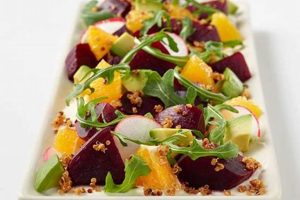
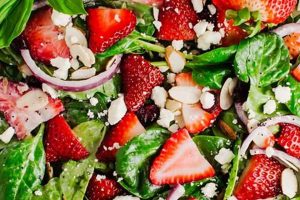
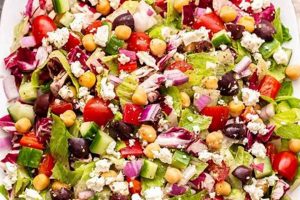
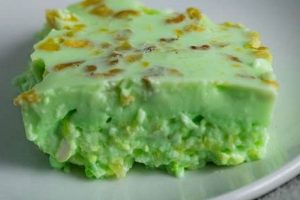
A salad featuring three distinct colors of ingredients offers a visually appealing and nutritionally diverse meal option. Typically, these salads incorporate ingredients from different plant groups, such as leafy greens, red or orange vegetables (like tomatoes, bell peppers, or carrots), and a pale or white element (such as onions, cauliflower, or cheese). This combination provides a broad spectrum of vitamins, minerals, and antioxidants. For example, a salad with spinach, chopped red bell peppers, and mozzarella cheese exemplifies this concept.
Colorful salads are beneficial for several reasons. The variety of colors often signifies a wider range of nutrients consumed. Visually appealing meals can also enhance the dining experience, making healthy eating more enjoyable. Historically, the deliberate combination of different colored foods in a single dish may have arisen from both aesthetic considerations and the practical need to maximize nutritional intake from available resources.
This exploration provides a foundation for understanding the core principles of constructing such visually and nutritionally balanced meals. Further sections will detail specific ingredient combinations, preparation techniques, and potential health benefits associated with consuming a diet rich in diversely colored produce.
Tips for Creating Vibrant Three-Color Salads
Constructing a visually appealing and nutritious salad involves careful selection and preparation of ingredients. The following tips offer guidance for maximizing both the aesthetic and health benefits.
Tip 1: Prioritize Fresh, Seasonal Produce: Selecting in-season ingredients ensures optimal flavor and nutrient content. Farmers’ markets offer excellent sources of fresh, locally grown produce.
Tip 2: Embrace Variety within Color Groups: While aiming for three distinct colors, consider incorporating multiple shades within each group. For example, combine dark leafy greens like spinach with lighter lettuces for textural and visual interest.
Tip 3: Consider Texture and Shape: Combine ingredients with varying textures and shapes. Crunchy elements like bell peppers or radishes complement softer ingredients like tomatoes or cucumbers. Chopping vegetables into different shapes adds visual appeal.
Tip 4: Balance Flavors: A successful salad balances sweet, savory, and acidic flavors. Incorporate ingredients like sweet berries, tangy citrus fruits, or savory cheeses.
Tip 5: Dress Strategically: Choose a dressing that complements the salad’s flavors without overpowering them. Light vinaigrettes or simple lemon juice and olive oil often enhance the natural flavors of fresh produce.
Tip 6: Proper Storage Maintains Freshness: Store prepared ingredients separately and combine them just before serving to prevent wilting and maintain crispness.
Tip 7: Explore Herbs and Spices: Fresh herbs and spices can elevate the flavor profile of a salad. Consider adding mint, basil, or a sprinkle of chili flakes.
By following these guidelines, one can create salads that are both visually appealing and contribute to a healthy, balanced diet. These suggestions serve as a starting point for exploring the endless possibilities of colorful and nutritious salad combinations.
The provided information offers practical strategies for crafting appealing and nutritious salads. The concluding section will summarize the key benefits and encourage further experimentation with diverse ingredients and flavor combinations.
1. Color Variety
Color variety is paramount in a tri-color salad, contributing significantly to its visual appeal and nutritional value. A strategic combination of colors not only makes the salad more attractive but also indicates a broader range of nutrients. This section explores the key facets of color variety within these salads.
- Visual Appeal
The interplay of colors stimulates appetite and enhances the dining experience. A vibrant salad is inherently more inviting than a monotone one. For instance, the contrast between deep green spinach, bright red tomatoes, and crisp white onions creates a visually stimulating presentation. This aesthetic quality encourages consumption, particularly amongst children or those averse to consuming sufficient vegetables.
- Nutritional Diversity
Different colors in produce often correspond to different phytonutrients and vitamins. Including a variety of colors ensures a wider intake of these beneficial compounds. Dark leafy greens offer vitamins A and K, while red vegetables provide lycopene and Vitamin C. This diversity contributes to a more balanced nutritional profile compared to a salad with limited color variation.
- Ingredient Selection
Color variety dictates ingredient choices. Selecting produce from different color groups naturally leads to a more diverse salad. This principle encourages experimentation with ingredients beyond the typical lettuce and tomato combination. For example, purple cabbage, orange carrots, and yellow bell peppers expand the nutritional profile and visual appeal.
- Flavor and Texture Enhancement
Different colored vegetables often possess unique flavors and textures. Combining these variations contributes to a more complex and enjoyable sensory experience. The peppery bite of arugula, the sweetness of roasted red peppers, and the crispness of cucumbers create a multi-dimensional flavor profile. This diversity elevates the salad beyond a simple combination of ingredients.
In conclusion, color variety is integral to the tri-color salad concept. It influences not only the aesthetics but also the nutritional value and overall culinary experience. The deliberate incorporation of diverse colors contributes to a salad that is both visually appealing and beneficial for overall health.
2. Nutrient Density

Nutrient density is a crucial aspect of a tri-color salad recipe. It signifies the concentration of vitamins, minerals, and beneficial phytochemicals relative to caloric content. A nutrient-dense salad maximizes health benefits without excessive caloric intake. This principle underpins the selection of ingredients for a truly nourishing meal. For example, incorporating kale, rich in vitamins A, K, and C, contributes significantly more nutrients than iceberg lettuce, which is primarily water. Prioritizing nutrient-rich ingredients ensures the salad provides substantial health benefits. This approach aligns with dietary guidelines emphasizing whole, unprocessed foods for optimal well-being.
The interplay of colors in a tri-color salad often correlates directly with nutrient density. Deeply colored vegetables, such as dark leafy greens and vibrantly hued red and orange vegetables, tend to possess higher concentrations of vitamins and antioxidants. Red bell peppers, for example, are rich in vitamin C and beta-carotene, while spinach provides folate and iron. Leveraging this color-nutrient connection allows for the creation of salads that are both visually appealing and nutritionally potent. This strategy facilitates increased micronutrient intake without relying on supplements or fortified foods.
Understanding the significance of nutrient density in constructing tri-color salads allows for informed choices regarding ingredient selection. This knowledge empowers individuals to maximize the health benefits derived from each meal. Prioritizing nutrient-dense ingredients contributes to overall dietary quality and supports long-term health goals. Furthermore, this understanding encourages a shift away from empty calories and towards nutrient-rich foods, a crucial step in promoting a healthy lifestyle.
3. Textural Contrast

Textural contrast contributes significantly to the enjoyment and satisfaction derived from a tri-color salad. A combination of textures elevates the sensory experience beyond simple flavor profiles. The interplay of crisp, crunchy, smooth, and tender elements creates a dynamic mouthfeel that enhances the overall appeal. This complexity keeps the palate engaged and prevents monotony. For instance, the juxtaposition of crisp romaine lettuce, crunchy croutons, and juicy tomatoes offers a more stimulating experience than a salad composed solely of soft ingredients. The strategic incorporation of varied textures makes the salad more interesting and encourages thorough enjoyment.
Achieving optimal textural contrast in a tri-color salad requires thoughtful ingredient selection and preparation techniques. Incorporating a variety of leafy greens, raw and cooked vegetables, nuts, seeds, and even fruits provides a wide range of textural possibilities. Consider the contrast between the smooth, creamy texture of avocado and the satisfying crunch of toasted almonds. Furthermore, preparation techniques like slicing, dicing, and shredding vegetables in different ways can further enhance textural diversity. These considerations elevate the salad beyond a simple mix of ingredients into a carefully constructed culinary experience.
Understanding the role of textural contrast allows for the creation of salads that are not only visually appealing and nutritionally balanced but also deeply satisfying. This awareness encourages experimentation with a wider variety of ingredients and preparation methods, resulting in more dynamic and enjoyable salads. The incorporation of textural contrast contributes significantly to the overall dining experience, promoting greater appreciation for the potential of salads as complex and satisfying meals.
4. Flavor Balance
Flavor balance is essential to a successful tri-color salad recipe. It ensures that no single flavor dominates, creating a harmonious and enjoyable culinary experience. A well-balanced salad incorporates a variety of taste profiles, including sweet, sour, salty, bitter, and umami. This complexity elevates the salad beyond a simple combination of ingredients, engaging the palate fully. For example, the sweetness of roasted beets can be balanced by the tanginess of goat cheese and the peppery bite of arugula. This interplay of flavors creates a more nuanced and satisfying experience than any single flavor could achieve in isolation. The careful consideration of flavor balance distinguishes a thoughtfully constructed salad from a mere assortment of ingredients.
Achieving flavor balance involves a strategic approach to ingredient selection and preparation. Incorporating ingredients with contrasting flavor profiles allows for the creation of a dynamic and engaging taste experience. The bitterness of radicchio can be offset by the sweetness of dried cranberries, while the saltiness of olives complements the acidity of a lemon vinaigrette. Furthermore, preparation techniques, such as roasting or grilling vegetables, can enhance their inherent sweetness and add depth of flavor. These methods contribute to a more complex flavor profile, moving beyond the raw flavors of individual components. Understanding these principles allows for the construction of salads that are both flavorful and balanced.
Mastery of flavor balance is crucial for maximizing the enjoyment and appreciation of tri-color salads. This principle enables the creation of salads that are not only visually appealing and nutritionally sound but also offer a complex and satisfying sensory experience. This understanding transforms the perception of salads from simple side dishes to culinary creations worthy of centerpiece status. The careful consideration of flavor balance elevates the tri-color salad from a basic combination of ingredients to a truly sophisticated and enjoyable dish.
5. Fresh Ingredients

Ingredient freshness is paramount in a tri-color salad, directly impacting flavor, texture, nutritional value, and overall appeal. Fresh produce offers superior taste and optimal nutrient content compared to older, stored alternatives. This emphasis on freshness underscores the importance of ingredient quality in creating a truly exceptional salad.
- Enhanced Flavor and Aroma
Fresh ingredients possess vibrant, distinct flavors and aromas often diminished with storage. The crisp, clean taste of freshly harvested lettuce surpasses that of pre-packaged, pre-cut options. Similarly, freshly picked herbs offer a more potent aroma and flavor compared to dried alternatives. This heightened sensory experience contributes significantly to the overall enjoyment of the salad. The difference is readily apparent in the taste comparison between a freshly picked tomato and one purchased out of season.
- Superior Nutritional Value
Nutrient content degrades over time. Freshly harvested produce retains higher levels of vitamins and minerals compared to produce stored for extended periods. Vitamin C, for example, is particularly susceptible to degradation. Consuming produce soon after harvest maximizes nutritional benefits. This is especially relevant for water-soluble vitamins, which are easily lost during storage and processing.
- Optimal Texture and Crispness
Fresh ingredients contribute to desirable textural qualities. Leafy greens retain their crispness, and vegetables maintain their firmness when fresh. This textural integrity enhances the eating experience and adds to the overall appeal of the salad. Wilted lettuce or mushy tomatoes detract significantly from enjoyment. Maintaining freshness ensures the intended textural profile is preserved.
- Visual Appeal and Vibrancy
Fresh ingredients exhibit vibrant colors, enhancing the visual appeal of the salad. The bright hues of fresh produce create an inviting presentation that stimulates appetite. This visual freshness reinforces the perception of quality and contributes to a more enjoyable dining experience. Dull or faded colors often indicate a loss of freshness and diminished quality.
Prioritizing fresh ingredients elevates the tri-color salad from a simple dish to a vibrant and healthful culinary experience. The superior flavor, enhanced nutritional value, optimal texture, and vibrant colors of fresh produce contribute significantly to the overall quality and enjoyment of the salad. This emphasis on freshness reinforces the importance of sourcing high-quality ingredients for optimal culinary results and nutritional benefits.
Frequently Asked Questions
This section addresses common inquiries regarding the creation and consumption of tri-color salads.
Question 1: What are the core components of a tri-color salad?
Tri-color salads emphasize visual appeal and nutritional diversity through the incorporation of ingredients representing three distinct color groups. Common choices include leafy greens (e.g., spinach, romaine), red or orange vegetables (e.g., tomatoes, bell peppers), and a pale or white element (e.g., onions, cucumbers).
Question 2: How does one ensure nutritional balance in a tri-color salad?
Nutritional balance is achieved through the selection of nutrient-dense ingredients. Prioritizing dark leafy greens over iceberg lettuce, incorporating a variety of colored vegetables, and including lean protein sources or healthy fats enhances the nutritional profile.
Question 3: Can dressings enhance or detract from the nutritional value?
Dressings can impact overall nutritional value. While creamy dressings often contain higher levels of saturated fat and calories, light vinaigrettes or simple oil and vinegar options offer healthier alternatives. Portion control remains essential regardless of dressing choice.
Question 4: Are there specific preparation methods that maximize nutrient retention?
Gentle cooking methods, such as steaming or light sauting, generally preserve more nutrients than boiling. Consuming raw vegetables whenever possible maximizes enzyme and vitamin content. Avoiding overcooking is crucial for nutrient retention.
Question 5: How can these salads be adapted for different dietary needs?
Tri-color salads are adaptable to various dietary requirements. Vegan options can utilize tofu or legumes for protein, while gluten-free versions require careful selection of dressings and other additions. Ingredient substitutions can accommodate specific allergies or intolerances.
Question 6: How can one maintain the freshness of a tri-color salad?
Proper storage is key to maintaining freshness. Storing prepared ingredients separately and combining them just before serving prevents wilting and sogginess. Leafy greens should be stored in airtight containers with a paper towel to absorb excess moisture.
Understanding these fundamental principles allows for the creation of tri-color salads that are not only visually appealing but also nutritionally sound and contribute to a balanced diet.
This FAQ section provides a foundation for constructing healthy and delicious tri-color salads. Experimentation with various ingredients and flavor combinations is encouraged to discover personalized preferences.
Tri Color Salad Recipe
Exploration of the tri color salad recipe concept reveals the importance of balancing visual appeal with nutritional value. Careful selection of ingredients based on color, texture, and flavor profile contributes to a satisfying and healthful meal. Prioritizing fresh, seasonal produce maximizes both taste and nutrient density. Strategic preparation methods further enhance the sensory experience and preserve nutritional integrity. Understanding the interplay of these elements allows for the creation of salads that are not only visually appealing but also contribute meaningfully to a balanced diet.
The principles outlined herein provide a foundation for incorporating the tri color salad recipe concept into a diverse and healthful dietary approach. Continued exploration of flavor combinations and ingredient variations offers opportunities for culinary creativity and personalized nutritional optimization. Emphasis on fresh, whole ingredients and mindful preparation techniques ensures that the tri color salad remains a vibrant and beneficial component of a balanced and enjoyable dietary regimen.