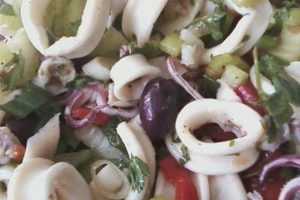
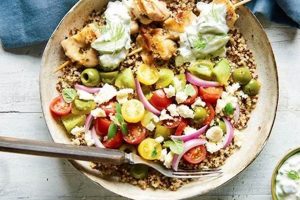
A Mediterranean-style salad typically combines fresh, vibrant ingredients like tomatoes, cucumbers, onions, olives, and feta cheese. Often, leafy greens such as romaine or spinach form the base, while a simple vinaigrette featuring olive oil, lemon juice, and herbs provides a light, flavorful dressing. Variations can include other regional ingredients like artichoke hearts, bell peppers, or chickpeas.
This salad style reflects the healthy dietary traditions of the Mediterranean region, emphasizing fresh produce, healthy fats, and minimal processing. It offers a good source of vitamins, minerals, and antioxidants, contributing to a balanced diet. The emphasis on olive oil aligns with heart-healthy eating patterns. Furthermore, the customizable nature of this salad type allows for seasonal adaptations and caters to diverse palates. Its simplicity also makes it a convenient and appealing meal option.
The following sections will delve into specific ingredient choices, variations on the classic preparation, and tips for creating a delicious and authentic Mediterranean salad experience.
Tips for a Delicious Mediterranean Salad
Creating a truly exceptional Mediterranean salad involves careful consideration of ingredients and preparation techniques. The following tips offer guidance for achieving optimal flavor and texture.
Tip 1: Use High-Quality Olive Oil: The foundation of a good Mediterranean salad dressing is extra virgin olive oil. Opt for a robust, flavorful oil to enhance the overall taste.
Tip 2: Embrace Fresh Herbs: Fresh herbs are essential for authentic Mediterranean flavor. Parsley, oregano, and mint are excellent choices. Add them to both the salad and the dressing.
Tip 3: Don’t Overcrowd the Salad: Avoid using too many ingredients. Focus on a selection of complementary flavors and textures. A crowded salad can become overwhelming.
Tip 4: Properly Prepare the Vegetables: Ensure vegetables are washed and cut into bite-sized pieces for optimal enjoyment and even distribution of flavor throughout the salad.
Tip 5: Add Feta with Care: Feta cheese adds a salty, tangy element. Crumble it over the salad rather than adding large chunks to ensure even distribution of flavor.
Tip 6: Season Appropriately: Seasoning is crucial. Use sea salt and freshly ground black pepper to enhance the natural flavors of the ingredients. Taste and adjust seasonings as needed.
Tip 7: Dress Just Before Serving: To prevent the salad from becoming soggy, add the dressing just before serving. Toss gently to coat the ingredients evenly.
By following these tips, one can elevate a simple Mediterranean salad to a truly satisfying culinary experience. Proper ingredient selection and mindful preparation contribute significantly to the overall enjoyment.
The following section will offer some variations on this classic salad, providing inspiration for creating diverse and exciting meal options.
1. Fresh Ingredients

Fresh ingredients are fundamental to a successful Mediterranean salad. The emphasis on freshness stems from the region’s culinary traditions, which prioritize seasonal produce at its peak flavor. This reliance on high-quality, unprocessed ingredients contributes significantly to the salad’s nutritional value and overall appeal. Using ripe tomatoes bursting with juice, crisp cucumbers, and fragrant herbs elevates the sensory experience, creating a vibrant and refreshing dish. The contrast in textures, from crunchy vegetables to creamy feta (if used), further enhances the enjoyment. Furthermore, the absence of heavy dressings or processed components allows the natural flavors of the fresh ingredients to shine.
Consider the impact of using a freshly picked, in-season tomato versus a bland, out-of-season counterpart. The difference in taste is substantial. Similarly, wilted lettuce or dried herbs diminish the salad’s overall quality. Employing fresh ingredients ensures a flavorful, nutritious, and visually appealing result. A Mediterranean salad composed of peak-season produce offers a superior culinary experience compared to one made with subpar ingredients. This principle extends to the olive oil and any accompanying proteins, like grilled fish or chickpeas; freshness remains paramount.
The importance of fresh ingredients within a Mediterranean salad recipe cannot be overstated. It directly influences the taste, nutritional profile, and overall satisfaction derived from the dish. Prioritizing fresh, seasonal produce ensures an authentic and flavorful culinary experience, aligning with the core principles of Mediterranean cuisine. The practical application of this understanding translates to actively seeking out high-quality ingredients and incorporating them thoughtfully into the salad preparation process. By focusing on freshness, one can elevate a simple salad into a vibrant and healthful culinary masterpiece.
2. Olive Oil

Olive oil is not merely an ingredient in a Mediterranean salad; it is a cornerstone. It provides the foundation of the dressing, contributing significantly to the flavor profile, texture, and nutritional value. Understanding its role is crucial for appreciating the essence of this culinary creation.
- Flavor Profile:
Extra virgin olive oil, the preferred type for Mediterranean salads, offers a complex flavor profile ranging from fruity and peppery to grassy and herbaceous. This complexity complements the fresh vegetables and herbs, enhancing their individual flavors without overpowering them. The quality of the olive oil significantly impacts the overall taste of the salad. A robust, high-quality oil elevates the dish, while a bland or inferior oil can detract from the experience.
- Texture and Mouthfeel:
Olive oil contributes a luxurious mouthfeel to the salad, coating the vegetables and creating a smooth, velvety texture. This contrasts pleasantly with the crispness of the vegetables and the crumbly texture of feta, if used. The oil also helps to bind the ingredients together, ensuring a harmonious blend of flavors and textures in each bite.
- Nutritional Contribution:
Olive oil is a rich source of monounsaturated fats, known for their heart-healthy benefits. It also contains antioxidants and anti-inflammatory compounds, further contributing to the nutritional value of the salad. The choice of olive oil, particularly opting for extra virgin, directly impacts the health benefits derived from consuming the salad.
- Cultural Significance:
Olive oil holds deep cultural significance in the Mediterranean region, representing a staple ingredient in the traditional diet. Its inclusion in the salad reflects this cultural heritage, adding a layer of authenticity to the dish. The use of olive oil signifies more than just a culinary choice; it embodies a connection to the rich history and traditions of the Mediterranean.
The interplay of these facets elevates olive oil from a simple ingredient to a defining characteristic of the Mediterranean salad. Its flavor, texture, nutritional contribution, and cultural significance combine to create an essential component that distinguishes this salad from other culinary creations. Choosing high-quality olive oil and using it judiciously enhances the overall experience, delivering a dish that is both flavorful and healthful, reflecting the essence of Mediterranean cuisine.
3. Mediterranean Herbs

Mediterranean herbs are integral to a true “med salad recipe,” contributing significantly to its distinctive aromatic profile and overall culinary experience. Their presence elevates the salad beyond a simple combination of vegetables, transforming it into a vibrant and flavorful dish. An exploration of key facets reveals the multifaceted role these herbs play.
- Flavor Enhancement:
Mediterranean herbs like oregano, mint, parsley, and dill infuse the salad with a complex tapestry of flavors. Oregano contributes a slightly bitter, earthy note, while mint offers a refreshing coolness. Parsley provides a clean, grassy flavor, and dill adds a subtle anise-like accent. These distinct flavors intermingle, creating a balanced and nuanced taste experience that complements the fresh vegetables and olive oil.
- Aromatic Complexity:
The aromatic properties of Mediterranean herbs are essential to the sensory experience of enjoying the salad. The volatile oils within these herbs release fragrant compounds that stimulate the olfactory senses, enhancing the overall perception of flavor. The combination of these aromas creates a distinctive olfactory signature that is synonymous with Mediterranean cuisine.
- Cultural Significance:
The use of these herbs reflects the rich culinary heritage of the Mediterranean region. They represent a historical connection to the land and its traditional dishes, imbuing the salad with a sense of place and authenticity. Their presence evokes the flavors and aromas characteristic of Mediterranean cuisine, solidifying the salad’s identity within this culinary tradition.
- Nutritional Benefits:
Beyond flavor and aroma, many Mediterranean herbs offer potential health benefits. They are often rich in antioxidants, vitamins, and minerals, contributing to the nutritional value of the salad. For instance, oregano is a good source of vitamin K and antioxidants, while mint is known for its digestive properties. The inclusion of these herbs adds a layer of nutritional complexity to the dish, further enhancing its health benefits.
The interplay of these facets firmly establishes Mediterranean herbs as a crucial element in a “med salad recipe.” They provide not just flavor and aroma, but also cultural context and nutritional value, creating a dish that is both delicious and healthful. Understanding their multifaceted contribution allows for a deeper appreciation of the culinary artistry behind a truly authentic Mediterranean salad.
4. Feta Cheese (Optional)
Feta cheese, while optional, holds a significant position within the context of a Mediterranean salad recipe. Its inclusion contributes a distinct salty, tangy flavor profile and a crumbly texture that complements the other fresh ingredients. Feta’s presence, or absence, impacts the overall sensory experience and nutritional composition. Understanding this interplay provides insight into the nuanced role of this ingredient.
The addition of feta introduces a salty, tangy counterpoint to the sweetness of ripe tomatoes and the refreshing crispness of cucumbers. This contrast elevates the complexity of the salad, moving it beyond a simple combination of vegetables. The crumbly texture of feta provides another layer of sensory interest, contrasting with the smoothness of the olive oil and the crunch of the vegetables. Consider a classic Greek salad, where feta is practically indispensable, providing a defining characteristic. Conversely, a lighter, more vegetable-focused Mediterranean salad might omit feta, prioritizing the fresh flavors of the produce. This illustrates the adaptable nature of the “med salad recipe,” accommodating individual preferences and dietary needs. Feta’s optional status underscores the versatility of this culinary creation.
From a nutritional standpoint, feta contributes calcium and protein, enhancing the dietary value of the salad. However, its relatively high sodium content requires consideration, particularly for individuals monitoring sodium intake. This reinforces the importance of the “optional” designation, allowing for adjustments based on dietary restrictions or personal preferences. Ultimately, the decision to include feta rests on individual considerations. Understanding its impact on flavor, texture, and nutritional composition allows for informed choices that align with specific culinary and dietary goals. The “optional” tag associated with feta underscores the adaptable nature of the Mediterranean salad, allowing for a personalized approach that maintains the essence of the dish while catering to individual needs.
5. Simple Preparation
The “med salad recipe” is characterized by its straightforward preparation, a defining feature that aligns with the broader principles of Mediterranean cuisine. This simplicity emphasizes the inherent flavors of fresh, high-quality ingredients, minimizing the need for complex techniques or elaborate procedures. The focus remains on showcasing the natural tastes and textures of the components, allowing their inherent qualities to shine through. This approach contrasts sharply with culinary traditions that rely on heavy sauces or intricate cooking methods to develop flavor. The direct connection between simple preparation and the emphasis on fresh ingredients reinforces the fundamental philosophy of highlighting natural flavors.
Consider the preparation of a classic Greek salad. Ripe tomatoes, cucumbers, onions, and olives are simply chopped and combined. A sprinkle of oregano and a drizzle of olive oil complete the dish. The absence of complicated steps allows the individual flavors of each ingredient to remain distinct yet harmonious. This approach also preserves the nutritional integrity of the components, maximizing the health benefits associated with consuming fresh produce. The ease of preparation further contributes to the “med salad recipe’s” widespread appeal, making it an accessible and convenient culinary choice for a variety of occasions. This simplicity also allows for adaptability, enabling cooks to incorporate seasonal variations or personal preferences without compromising the essence of the dish.
The inherent simplicity of the “med salad recipe” underscores the importance of ingredient quality. Because the preparation methods are minimal, the flavors of the individual components become paramount. This places a premium on sourcing fresh, ripe produce and high-quality olive oil. The success of the dish hinges on the inherent quality of its components rather than complex culinary techniques. This reinforces the fundamental connection between simple preparation and the emphasis on fresh, flavorful ingredients, a hallmark of Mediterranean cuisine. The practical significance of this understanding empowers individuals to create delicious and healthful salads with minimal effort, highlighting the inherent beauty of simple, fresh food.
6. Health Benefits
The “med salad recipe,” rooted in the traditional dietary patterns of the Mediterranean region, offers a range of potential health benefits. These benefits stem from the emphasis on fresh, minimally processed ingredients, particularly fruits, vegetables, and olive oil. Understanding this connection provides valuable insight into the nutritional advantages associated with incorporating this culinary tradition into one’s diet.
- Antioxidant Richness
Mediterranean salads typically incorporate a variety of colorful vegetables, each contributing a unique array of antioxidants. These compounds help protect cells from oxidative stress, which is implicated in various chronic diseases. Tomatoes, for instance, are rich in lycopene, a potent antioxidant linked to reduced risk of certain cancers and cardiovascular disease. The combined antioxidant power of diverse vegetables in a “med salad recipe” contributes significantly to its potential health-promoting properties.
- Healthy Fats from Olive Oil
Olive oil, a cornerstone of the “med salad recipe,” provides monounsaturated fats, considered a heart-healthy fat source. These fats can help lower LDL cholesterol (often referred to as “bad” cholesterol) and raise HDL cholesterol (“good” cholesterol), contributing to improved cardiovascular health. The emphasis on olive oil as the primary fat source distinguishes the “med salad recipe” from salads that rely on less healthy dressings, such as those high in saturated or trans fats.
- Fiber Content and Digestive Health
The abundance of fresh vegetables in a “med salad recipe” contributes significant dietary fiber. Fiber promotes digestive regularity, supports gut health, and can contribute to feelings of satiety, potentially aiding in weight management. The inclusion of ingredients like cucumbers, onions, and leafy greens provides a diverse range of fibers, each offering unique benefits to the digestive system.
- Vitamin and Mineral Density
The diverse array of vegetables in a “med salad recipe” provides a wide spectrum of vitamins and minerals. Tomatoes offer vitamin C and potassium, while leafy greens contribute vitamin K and folate. These micronutrients play essential roles in various bodily functions, supporting overall health and well-being. The combination of nutrient-rich vegetables in the salad creates a synergistic effect, maximizing the potential health benefits.
The convergence of these factors positions the “med salad recipe” as a nutritionally advantageous culinary choice. Regularly incorporating this type of salad into one’s diet can contribute to a healthier eating pattern aligned with the principles of the Mediterranean diet, which is widely recognized for its potential health-promoting effects. This understanding underscores the value of embracing this culinary tradition as a means of supporting overall well-being.
Frequently Asked Questions
This section addresses common inquiries regarding Mediterranean salad preparation and variations.
Question 1: What type of olive oil is best suited for a Mediterranean salad?
Extra virgin olive oil is generally preferred due to its robust flavor and health benefits. A good quality extra virgin olive oil will enhance the overall taste of the salad.
Question 2: Can other cheeses be substituted for feta?
While feta is traditional, other cheeses like goat cheese, halloumi, or ricotta salata can offer similar salty, tangy notes. Consider flavor profiles when substituting.
Question 3: How can one adapt a Mediterranean salad for different dietary needs?
Adaptations for dietary needs are straightforward. Omit feta for dairy-free versions. For gluten-free diets, ensure any added grains are certified gluten-free. Adjust portion sizes to manage caloric intake.
Question 4: What are some suitable protein additions for a more substantial meal?
Grilled chicken or fish, chickpeas, cannellini beans, or lentils complement Mediterranean salads well. These additions provide protein and enhance the overall nutritional value.
Question 5: How can one prevent a Mediterranean salad from becoming soggy?
Add the dressing just before serving to prevent the salad from becoming soggy. Storing the dressing separately also helps maintain the crispness of the vegetables.
Question 6: Are there regional variations on the classic Mediterranean salad?
Numerous regional variations exist, incorporating local ingredients and traditions. For example, a Greek salad typically includes Kalamata olives and capers, while an Italian version might feature artichoke hearts and roasted red peppers. Explore regional adaptations to discover new flavor combinations.
Careful consideration of these frequently asked questions allows for informed choices regarding ingredient selection, preparation methods, and dietary adaptations. These insights contribute to a deeper understanding and appreciation of the versatile “med salad recipe.”
The next section explores various regional adaptations of the classic Mediterranean salad.
Mediterranean Salad Recipe
This exploration of the Mediterranean salad recipe has highlighted its key components: fresh, high-quality ingredients; the prominent role of olive oil; the aromatic and flavorful contributions of Mediterranean herbs; the optional inclusion of feta cheese; the simplicity of preparation; and the associated health benefits. Each element contributes to a dish that embodies both culinary delight and nutritional value. From the crispness of fresh vegetables to the robust flavor of olive oil and the aromatic complexity of herbs, the Mediterranean salad offers a sensory experience deeply rooted in the culinary traditions of the region.
The Mediterranean salad recipe represents more than just a simple combination of ingredients; it embodies a culinary philosophy that prioritizes freshness, simplicity, and flavor. Further exploration of regional variations and ingredient adaptations can deepen appreciation for this versatile and healthful dish. Its adaptability allows for personalized interpretations while maintaining the core principles of Mediterranean cuisine. Embracing this culinary tradition offers a pathway to experiencing both the pleasures of flavorful food and the potential benefits of a health-conscious dietary approach.