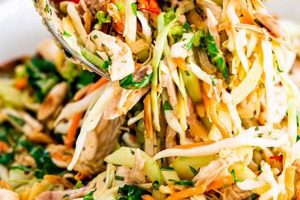
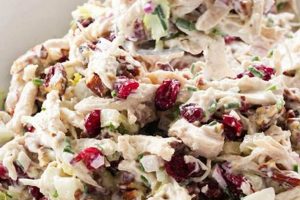
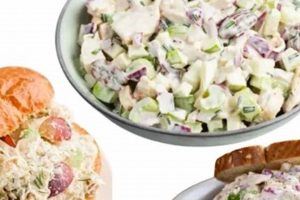
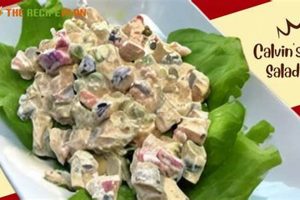
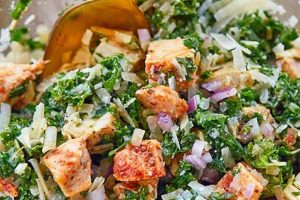
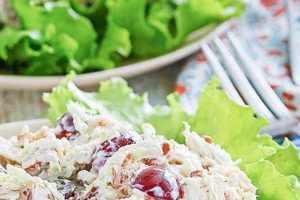
A chilled dish combining cooked macaroni pasta, chicken, and a binding agent, often mayonnaise-based, characterizes this culinary creation. Additional ingredients such as celery, onion, grapes, or nuts can contribute flavor and texture. Variations exist, ranging from simple mixtures to elaborate presentations incorporating diverse herbs, spices, and vegetables.
This type of salad offers a convenient and versatile meal option. Its adaptable nature allows for adjustments in ingredients to suit personal preferences and dietary needs. Historically, chicken salad gained popularity as a luncheon dish, offering a refreshing and relatively light yet satisfying meal. The incorporation of macaroni extends its heartiness, transforming it into a more substantial dish suitable for picnics, potlucks, or a quick family dinner. Its make-ahead nature makes it ideal for meal prepping.
This article will explore various aspects of crafting this popular dish, including selecting appropriate ingredients, mastering different preparation techniques, and exploring creative variations to enhance its flavor profile. Guidance on storage and serving suggestions will also be provided.
Tips for an Exceptional Macaroni Chicken Salad
Achieving a well-balanced and flavorful dish requires attention to detail. These tips offer guidance for creating a superior culinary experience.
Tip 1: Pasta Perfection: Cook pasta al dente for optimal texture. Overcooked pasta becomes mushy and absorbs excess dressing, resulting in a less appealing final product. Rinsing cooked pasta with cold water helps stop the cooking process and maintain firmness.
Tip 2: Chicken Choices: Rotisserie chicken offers a convenient shortcut, while poaching or grilling chicken breasts allows for greater control over seasoning. Ensure chicken is thoroughly cooked and cooled before incorporating it into the salad.
Tip 3: Mayonnaise Matters: High-quality mayonnaise forms the foundation of a creamy, flavorful dressing. Experiment with different brands or consider making homemade mayonnaise for a unique touch.
Tip 4: Flavorful Additions: Freshly chopped celery and onions provide a classic crunch and aromatic complexity. Consider incorporating other vegetables like bell peppers or chopped grapes for added sweetness and texture.
Tip 5: Seasoning Secrets: Freshly ground black pepper, salt, and a touch of paprika enhance the overall flavor profile. Herbs such as dill, parsley, or chives add brightness and freshness.
Tip 6: Balancing Act: Achieving the right balance of ingredients is crucial. Avoid overdoing any single component, allowing each element to contribute harmoniously to the final dish.
Tip 7: Chill Out: Chilling the salad for at least 30 minutes allows the flavors to meld and the dressing to permeate the ingredients. This also enhances the overall refreshing quality of the dish.
By following these tips, one can elevate a simple macaroni chicken salad to a memorable culinary creation, offering a delightful balance of textures and flavors.
The following section will provide variations on this classic dish, demonstrating its adaptability and offering inspiration for culinary exploration.
1. Ingredients

Ingredient selection significantly impacts the final character of a macaroni chicken salad. The interplay of flavors and textures relies heavily on the quality and type of components chosen. For instance, using freshly roasted chicken versus pre-cooked, packaged chicken creates noticeable differences in taste and moisture. Similarly, the type of pasta influences texture; while elbow macaroni is traditional, other shapes like rotini or shells offer variations in mouthfeel and sauce absorption. The mayonnaise serves as a binding agent and flavor base; its quality and any added seasonings contribute significantly to the overall profile. Freshly chopped vegetables such as celery and onion provide crucial textural contrast and aromatic complexity. Other additions, such as grapes, nuts, or dried cranberries, introduce sweetness and further textural layers.
Consider the impact of using farm-fresh, locally sourced ingredients versus commercially produced alternatives. Freshly harvested vegetables often possess a brighter, more pronounced flavor, while higher-quality mayonnaise made with natural ingredients can elevate the creaminess and overall richness of the salad. The choice between light and dark chicken meat also influences the final product, with dark meat offering a richer flavor and higher fat content, impacting both taste and moisture. Spices and herbs play a critical role; freshly ground black pepper provides a sharp bite, while paprika adds a subtle smokiness and vibrant color. The careful balance and thoughtful selection of these components contribute directly to the overall sensory experience.
Understanding the role of each ingredient allows for informed choices that align with desired outcomes. Whether seeking a lighter, brighter salad or a richer, more decadent creation, ingredient selection provides the foundation. Careful consideration of quality, freshness, and complementary flavor profiles ensures a successful and satisfying culinary outcome. This knowledge empowers one to tailor the recipe to individual preferences and dietary needs, maximizing both flavor and enjoyment.
2. Preparation
Preparation is the crucial bridge between ingredients and a delectable macaroni chicken salad. Methodical preparation ensures that individual components contribute harmoniously to the final product. Overlooking this stage can compromise texture, flavor, and overall enjoyment.
- Ingredient Handling
Proper handling dictates the success of the dish. Chicken, whether store-bought rotisserie or home-cooked, requires careful shredding or dicing to achieve a consistent texture. Over-shredding can result in a dry, stringy salad, while large chunks create an uneven distribution of flavor. Vegetables benefit from uniform chopping, ensuring even integration and preventing overpowering flavors from larger pieces. Pasta, cooked al dente and rinsed, maintains its integrity within the salad, avoiding a mushy consistency.
- Dressing Incorporation
The introduction of the dressing is a critical step. Gentle folding ensures even coating without crushing delicate ingredients. Adding the dressing gradually allows for adjustments in consistency and prevents an overly saturated final product. The timing of dressing incorporation also matters. Adding it too early can lead to the pasta absorbing excessive moisture, while adding it too late may result in uneven flavor distribution.
- Flavor Balancing
Preparation provides the opportunity to fine-tune the flavor profile. Initial tasting and adjustments of seasonings, such as salt, pepper, and herbs, are essential. This stage allows for personalized customization based on individual preferences and complements the inherent flavors of the chosen ingredients. Balancing sweetness, acidity, and savory notes ensures a complex and satisfying culinary experience.
- Chilling and Resting
Chilling the prepared salad allows flavors to meld and textures to settle. This crucial step enhances the overall dining experience. A resting period of at least 30 minutes in the refrigerator allows the dressing to permeate the ingredients, resulting in a more cohesive and flavorful salad. Chilling also enhances the refreshing qualities of the dish, particularly beneficial in warmer weather.
Careful preparation elevates macaroni chicken salad from a simple mixture of ingredients to a well-balanced, flavorful dish. Attention to detail in each stage of preparation, from ingredient handling to chilling, contributes significantly to the overall quality and enjoyment of this versatile dish. The time invested in proper preparation directly translates to a superior culinary outcome.
3. Cooking Methods

Cooking methods employed in preparing a macaroni chicken salad significantly influence the final dish’s flavor profile, texture, and overall quality. While the salad itself is served cold, the techniques used to cook the chicken and pasta contribute fundamentally to the ultimate sensory experience. Understanding the nuances of these methods allows for informed choices that align with desired outcomes, whether prioritizing tenderness, maximizing flavor, or achieving specific dietary goals.
- Chicken Preparation
Chicken, a central component, benefits from careful cooking. Poaching yields tender, moist meat ideal for salads, preserving its delicate flavor. Grilling imparts a smoky char and enhances inherent savory notes, while roasting offers a balance of tenderness and richer flavor development. Alternatively, using pre-cooked rotisserie chicken provides convenience, though it may offer less control over seasoning and final texture.
- Pasta Cooking
Properly cooked pasta provides a textural foundation for the salad. Cooking al dente, meaning “to the tooth” in Italian, prevents overcooked, mushy pasta, ensuring a pleasant firmness that holds its shape within the salad. Rinsing the cooked pasta with cold water immediately after draining halts the cooking process and removes excess starch, further enhancing the final texture and preventing clumping.
- Ingredient Incorporation Timing
While not strictly a cooking method, the timing of incorporating ingredients impacts the final result. Adding warm chicken to the pasta can slightly soften it, melding flavors. Conversely, adding chilled chicken maintains distinct textures. Introducing the dressing at the appropriate stageafter the pasta and chicken have cooledprevents the pasta from absorbing excessive moisture and ensures uniform coating.
- Alternative Cooking Approaches
Beyond traditional methods, sous vide cooking offers precise temperature control for incredibly tender chicken. Air frying achieves crispy skin while retaining moisture, offering a textural counterpoint within the salad. These alternative approaches allow for creative variations and customized flavor profiles, expanding the possibilities beyond conventional techniques.
The chosen cooking methods contribute significantly to the overall success of a macaroni chicken salad. Careful consideration of these techniques allows for precise control over the final dish’s characteristics, from the tenderness of the chicken to the firmness of the pasta. Selecting the appropriate methods, therefore, plays a pivotal role in achieving the desired flavor profile, texture, and overall culinary experience.
4. Flavor Profiles

Flavor profiles play a crucial role in defining the character of a macaroni chicken salad. The interplay of sweet, savory, acidic, and spicy notes creates a complex sensory experience. Understanding these elements allows for deliberate crafting of a desired flavor profile, transforming a simple dish into a culinary delight.
- Savory Foundation
The savory foundation typically originates from the chicken, often enhanced by the choice of cooking method. Roasted chicken contributes a deeper, more intense savory note, while poached chicken offers a milder flavor. The mayonnaise, a key component, adds a creamy richness and subtle tang that complements the chicken. Incorporating ingredients like Dijon mustard or aged cheeses further enhances the savory dimension.
- Balancing Acidity
Acidity provides brightness and balances the richness of the mayonnaise and chicken. Ingredients such as lemon juice, vinegar, or pickles introduce a refreshing tartness that cuts through the creamy texture. This acidic counterpoint prevents the salad from feeling heavy and adds a stimulating dimension to the flavor profile. The level of acidity can be adjusted based on personal preference, ranging from a subtle tang to a more pronounced sharpness.
- Sweetness and Texture
Sweetness adds depth and complexity. Incorporating ingredients like grapes, dried cranberries, or chopped apples introduces a subtle sweetness that complements both the savory and acidic elements. These ingredients also contribute textural variety, contrasting with the smoothness of the mayonnaise and the firmness of the pasta and chicken. The balance of sweetness should be carefully considered, avoiding an overly sweet profile that might mask other flavors.
- Aromatic Complexity
Aromatic complexity elevates the overall sensory experience. Fresh herbs, such as dill, parsley, chives, or tarragon, introduce vibrant, fresh notes. Spices like paprika, celery seed, or onion powder contribute depth and warmth. These aromatic elements enhance the other flavor components, creating a more nuanced and layered profile. The choice and quantity of herbs and spices allow for customization based on individual preferences and desired intensity.
The successful execution of a macaroni chicken salad hinges on the careful orchestration of these flavor profiles. A harmonious balance of savory, acidic, sweet, and aromatic notes ensures a complex and satisfying culinary creation. Understanding the interplay of these elements empowers one to craft a dish that caters to specific tastes and elevates this classic recipe beyond the ordinary.
5. Serving Suggestions
Serving suggestions enhance the versatility and enjoyment of macaroni chicken salad, transforming it from a simple dish into a customizable culinary experience. The manner of presentation impacts not only visual appeal but also influences perceived flavors and overall satisfaction. Thoughtful consideration of serving options elevates this classic dish, catering to diverse occasions and individual preferences.
Classic presentations include serving the salad on bread, within lettuce cups, or as a filling for tomatoes or avocados. These options offer textural contrast and portability, making them ideal for picnics or casual lunches. More elaborate approaches involve using the salad as a filling for croissants or puff pastry shells, adding a touch of elegance suitable for brunches or light suppers. Serving the salad alongside a bed of mixed greens elevates the dish further, incorporating a fresh element and adding visual appeal. For larger gatherings, the salad can be presented as a layered dip with crackers or crudits, offering a communal dining experience.
The choice of serving vessel also influences perception. A simple bowl allows for a focus on the salad itself, while a chilled platter enhances the refreshing qualities, particularly beneficial in warmer weather. Garnishing with fresh herbs or a sprinkle of paprika adds visual interest and subtle flavor enhancements. The serving method chosen should align with the occasion and desired level of formality, demonstrating the adaptability of macaroni chicken salad to various settings. Careful consideration of these elements ensures a more satisfying and memorable culinary experience, transforming a simple dish into a versatile and customizable creation.
6. Storage Techniques
Storage techniques are critical for maintaining the quality, safety, and palatability of macaroni chicken salad. Improper storage can lead to bacterial growth, spoilage, and undesirable changes in texture and flavor. This necessitates an understanding of best practices for preserving this dish, maximizing its shelf life while minimizing risks.
Macaroni chicken salad, containing perishable ingredients like chicken and mayonnaise, is particularly susceptible to spoilage if left at room temperature for extended periods. The potential for bacterial proliferation increases significantly above 40F (4C), making prompt refrigeration essential. Storing the salad in an airtight container prevents contamination and helps maintain moisture. Properly stored, macaroni chicken salad typically remains safe to consume for 3-5 days in the refrigerator. Freezing, while possible, is generally not recommended as it can negatively impact the texture of the mayonnaise and other ingredients, leading to a less desirable consistency upon thawing.
Practical application of appropriate storage techniques is paramount. For instance, transporting macaroni chicken salad to a picnic or potluck requires careful attention to temperature control. Using insulated containers with ice packs helps maintain a safe temperature during transit. Leftovers should be promptly refrigerated after serving, and any salad left at room temperature for more than two hours should be discarded. Adhering to these guidelines ensures food safety and maximizes the enjoyment of this dish. Diligence in storage practices demonstrates a commitment to both quality and well-being, preventing foodborne illness and preserving the intended flavors and textures of the macaroni chicken salad.
Frequently Asked Questions
This section addresses common inquiries regarding macaroni chicken salad preparation, storage, and variations, providing concise and informative responses.
Question 1: What is the best way to prevent the pasta from becoming mushy in macaroni chicken salad?
Cooking the pasta al dente, meaning slightly firm to the bite, is crucial. Rinsing the cooked pasta under cold water immediately after draining stops the cooking process and removes excess starch, further preventing a mushy texture.
Question 2: Can macaroni chicken salad be frozen?
While freezing is possible, it’s generally not recommended. Freezing can negatively affect the texture of the mayonnaise, resulting in a less desirable consistency upon thawing. It’s best to consume the salad within 3-5 days of preparation when stored properly in the refrigerator.
Question 3: What type of chicken is best for macaroni chicken salad?
Various chicken options work well. Rotisserie chicken offers convenience, while poached or grilled chicken breasts allow for greater control over seasoning. Leftover baked or roasted chicken can also be utilized effectively.
Question 4: How can one reduce the calorie content of macaroni chicken salad?
Using light mayonnaise, reducing the amount of pasta, and incorporating more vegetables like celery and bell peppers can lower the overall calorie count. Substituting Greek yogurt for a portion of the mayonnaise also offers a healthier alternative.
Question 5: How long can macaroni chicken salad be left at room temperature?
For food safety reasons, macaroni chicken salad should not be left at room temperature for more than two hours. Perishable ingredients like chicken and mayonnaise create an environment conducive to bacterial growth if not kept properly chilled.
Question 6: What are some creative variations on the classic macaroni chicken salad recipe?
Numerous variations exist. Consider adding different fruits like grapes or apples, incorporating nuts such as pecans or walnuts, or using various herbs and spices like curry powder or dill. Substituting different types of pasta, such as rotini or shells, also adds variety.
Addressing these common inquiries provides a comprehensive understanding of macaroni chicken salad preparation and storage, empowering individuals to create and enjoy this dish safely and effectively. Proper technique and attention to detail ensure optimal flavor, texture, and food safety.
The following section offers a collection of diverse macaroni chicken salad recipes, catering to various tastes and preferences.
Macaroni Chicken Salad Recipe
This exploration of macaroni chicken salad recipes has delved into various facets of this versatile dish. From ingredient selection and preparation techniques to cooking methods, flavor profiles, serving suggestions, and storage practices, each aspect contributes significantly to the final outcome. The analysis highlighted the importance of ingredient quality, proper pasta cooking, and the delicate balance of flavors. Furthermore, the adaptability of this dish, demonstrated through creative variations and diverse serving options, underscores its enduring appeal.
Macaroni chicken salad stands as a testament to culinary creativity and resourcefulness. Its adaptable nature allows for personalized interpretations, catering to diverse palates and dietary preferences. A thorough understanding of the principles outlined herein empowers individuals to craft not just a simple salad, but a personalized culinary expression. The potential for continued innovation within this classic recipe ensures its enduring presence in kitchens and on tables for generations to come.