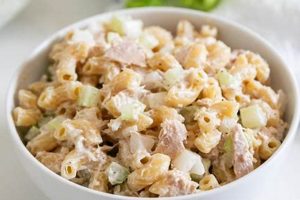
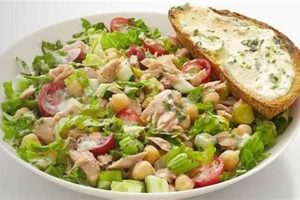
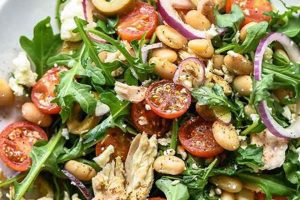
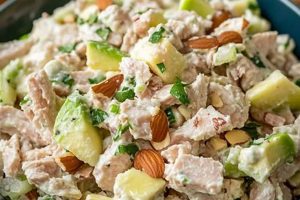
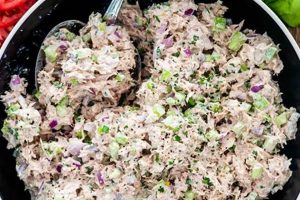
A classic lunchtime staple, this simple dish typically combines canned tuna with mayonnaise, celery, and onion, often seasoned with salt and pepper. Variations may include relish, hard-boiled eggs, lemon juice, or Dijon mustard. It is commonly served chilled between two slices of bread, although crackers, lettuce wraps, or croissants can also be used.
The enduring popularity of this readily adaptable meal stems from its affordability, convenience, and nutritional value. Tuna provides protein and omega-3 fatty acids, while the other ingredients contribute vitamins and fiber. Its relatively quick preparation time and adaptable nature make it a practical choice for busy schedules and varied palates. Furthermore, its historical context as an accessible and nutritious meal, particularly during times of economic hardship, has cemented its place in many cultures’ culinary traditions.
This exploration will delve into variations on the basic formula, offering guidance on ingredient selection, preparation techniques, and creative serving suggestions. Nutritional information and tips for maximizing flavor and freshness will also be provided.
Tips for an Exceptional Tuna Salad Sandwich
Elevating this simple classic can be achieved through careful attention to ingredients and preparation methods. The following suggestions offer guidance for maximizing flavor and texture.
Tip 1: Quality Tuna Selection: Opt for high-quality canned tuna packed in water or oil, depending on preference. Solid or chunk light tuna offers a firmer texture, while flaked tuna provides a smoother consistency.
Tip 2: Mayonnaise Matters: The choice of mayonnaise significantly impacts the overall flavor profile. Experiment with different brands or consider making homemade mayonnaise for a richer, more nuanced taste.
Tip 3: Freshness is Key: Utilize crisp, fresh vegetables. Finely diced celery and red onion offer a satisfying crunch and sharpness that complements the richness of the tuna and mayonnaise.
Tip 4: Seasoning with Purpose: Salt and freshly ground black pepper are essential seasonings. A touch of Dijon mustard or lemon juice can add brightness and complexity.
Tip 5: Texture Enhancement: Incorporating chopped hard-boiled eggs or finely diced pickles introduces textural variety and depth of flavor.
Tip 6: Proper Chilling: Allowing the prepared mixture to chill in the refrigerator for at least 30 minutes allows the flavors to meld and enhances the overall experience.
Tip 7: Bread Selection: While classic white bread is a traditional choice, consider exploring whole-wheat, rye, or sourdough for added flavor and nutritional value.
By following these tips, one can elevate a simple tuna salad sandwich from ordinary to extraordinary. Attention to detail in ingredient selection, preparation, and presentation ensures a satisfying and flavorful culinary experience.
By understanding these nuances, one can truly appreciate the versatility and potential of this timeless classic.
1. High-quality Canned Tuna

The foundation of a truly exceptional traditional tuna salad sandwich rests upon the selection of high-quality canned tuna. This ingredient significantly influences the final flavor, texture, and overall enjoyment of the dish. Understanding the nuances of canned tuna selection is crucial for achieving optimal results.
- Species and Cut:
Different tuna species and cuts offer varying flavor profiles and textures. Albacore tuna, known for its delicate flavor and firm texture, is often considered a premium choice. Yellowfin and skipjack tuna offer more robust flavors and slightly firmer textures compared to chunk light tuna, which is derived from smaller species and offers a milder taste and softer texture. Choosing the appropriate species and cut directly impacts the final character of the salad.
- Packing Medium:
Tuna is typically packed in either water or oil. Water-packed tuna offers a cleaner, lighter flavor profile, allowing the other ingredients in the salad to shine. Oil-packed tuna, on the other hand, adds richness and a subtly different flavor dimension. The choice depends on individual preference and the desired flavor profile of the finished sandwich.
- Sustainability and Sourcing:
Sustainably sourced tuna, caught using responsible fishing practices, minimizes environmental impact. Consumers increasingly prioritize sustainable options, reflecting a growing awareness of ocean health and responsible consumption. Opting for brands committed to sustainable fishing contributes to the long-term health of marine ecosystems.
- Freshness and Quality Indicators:
Examining the canning date and checking for any signs of damage to the can are crucial steps in ensuring product freshness and quality. The appearance and aroma of the tuna upon opening should also be assessed. Fresh, high-quality tuna exhibits a clean, appealing aroma and a firm, consistent texture. These indicators ensure the best possible flavor and safety.
The careful selection of high-quality canned tuna elevates the traditional tuna salad sandwich from a simple meal to a truly satisfying culinary experience. By understanding the nuances of species, packing medium, sustainability, and freshness indicators, one can consistently produce a superior tuna salad that honors the classic recipe.
2. Mayonnaise (as binding agent)

Mayonnaise plays a crucial role as a binding agent in traditional tuna salad sandwich recipes. Its emulsified nature, combining oil and egg yolks, allows it to coat the other ingredients, creating a cohesive mixture. This binding action prevents the salad from becoming dry and crumbly, ensuring a palatable texture. Without mayonnaise, the tuna, celery, onion, and other components would remain separate, resulting in a less desirable sensory experience. The creamy texture provided by mayonnaise also contributes to the overall richness and satisfaction of the sandwich.
The quantity of mayonnaise used influences the final consistency of the tuna salad. A higher mayonnaise-to-tuna ratio results in a creamier, looser salad, while a lower ratio yields a firmer, chunkier texture. This adaptability allows for customization based on individual preferences. For instance, a sandwich served on a croissant might benefit from a creamier tuna salad, whereas a firmer consistency may be preferred for a traditional sandwich on sliced bread. Achieving the desired consistency through careful mayonnaise measurement ensures a balanced and enjoyable eating experience.
Understanding mayonnaise’s function as a binding agent is fundamental to crafting a successful traditional tuna salad sandwich. Its ability to unify the various ingredients and provide a desirable texture contributes significantly to the overall culinary experience. Appropriate mayonnaise selection and measurement allow for customized textures tailored to individual preferences and serving styles, highlighting the practical significance of this ingredient in achieving a satisfying and classic dish.
3. Finely chopped celery
Finely chopped celery constitutes a key component of the traditional tuna salad sandwich recipe, contributing significantly to both texture and flavor. Its crisp, fibrous structure provides a refreshing counterpoint to the softness of the tuna and the richness of the mayonnaise. This textural contrast prevents the sandwich from becoming overly homogenous and adds a satisfying crunch. Furthermore, celery imparts a subtly vegetal, slightly bitter flavor that balances the richness of the other ingredients, preventing the overall profile from becoming overly heavy or monotonous. The small pieces distribute evenly throughout the mixture, ensuring each bite contains a pleasant combination of flavors and textures. Omitting celery would result in a noticeably different, and arguably less satisfying, culinary experience. Recipes for traditional tuna salad often specify “finely chopped” to ensure optimal integration with the other ingredients and to prevent large, fibrous pieces from disrupting the overall texture.
Examples of celery’s importance are evident in various culinary applications beyond the tuna salad sandwich. Consider its role in mirepoix, the foundational aromatic vegetable base used in numerous cuisines. The finely diced celery, along with carrots and onions, forms a flavor base for stocks, soups, and sauces. Similarly, in chicken salad or egg salad, finely diced celery provides the same textural and flavor contrast as in tuna salad. These examples demonstrate celery’s versatility and its consistent role in enhancing both flavor and texture in a wide range of dishes.
Understanding the role of finely chopped celery in a traditional tuna salad sandwich provides practical value for both home cooks and culinary professionals. Accurate knife skills are essential for achieving the desired fine dice, contributing to even distribution and optimal textural integration. Furthermore, selecting fresh, crisp celery stalks ensures the best flavor and texture, enhancing the overall quality of the finished product. Appreciating the seemingly minor details, such as the size and freshness of the celery, ultimately impacts the sensory experience and ensures a successful and enjoyable culinary outcome, preserving the integrity of this classic dish.
4. Diced red onion
Diced red onion represents a crucial element within the traditional tuna salad sandwich recipe, contributing a distinct sharpness and complexity that balances the richness of the tuna and mayonnaise. Its inclusion elevates the sandwich beyond a simple protein delivery system, transforming it into a multi-faceted culinary experience. Understanding the red onion’s contribution requires examination of its flavor profile, textural influence, and overall impact on the final product.
- Flavor Profile:
Red onion offers a pungent, slightly sweet, and sulfurous flavor that contrasts with the other ingredients. This sharpness cuts through the richness of the mayonnaise and complements the savory notes of the tuna, creating a more balanced and nuanced flavor profile. The sharp bite of raw red onion also stimulates the palate, enhancing the overall sensory experience. Alternatives, such as yellow or white onions, possess a different level of pungency and sweetness, potentially altering the overall flavor balance of the traditional recipe.
- Textural Contribution:
The crisp, firm texture of diced red onion introduces a welcome contrast to the softer textures of the tuna and mayonnaise. This textural interplay creates a more dynamic and enjoyable mouthfeel. Dicing the onion finely ensures even distribution throughout the salad, avoiding overpowering bursts of onion flavor and maintaining a pleasant textural balance in each bite. Larger pieces might disrupt the delicate balance and provide an uneven sensory experience.
- Visual Appeal:
The vibrant purplish-red hue of diced red onion adds a visual dimension to the otherwise pale palette of the tuna salad. This pop of color enhances the overall presentation, making the sandwich more appealing. While flavor and texture are paramount, visual appeal plays a significant role in the overall enjoyment of food. The attractive color of red onion contributes to a more satisfying culinary experience.
- Quantity and Balance:
The quantity of diced red onion used impacts the overall flavor profile of the tuna salad. Too much can overpower the other ingredients, while too little might render its contribution imperceptible. A carefully considered amount ensures the onion’s sharpness complements, rather than dominates, the other flavors. Recipes for traditional tuna salad often specify a moderate amount of finely diced red onion to maintain a harmonious balance of flavors.
The inclusion of diced red onion in the traditional tuna salad sandwich recipe demonstrates a nuanced understanding of flavor and texture interplay. Its sharp flavor, crisp texture, and visual appeal elevate the dish beyond basic sustenance, transforming it into a more complex and enjoyable culinary creation. By carefully considering the quantity and quality of the diced red onion, one can fully appreciate its contribution to this classic sandwich.
5. Seasoning (salt and pepper)
Seasoning, specifically with salt and pepper, forms an integral part of the traditional tuna salad sandwich recipe. While seemingly simple, these seasonings play a crucial role in enhancing the overall flavor profile, balancing the other ingredients, and ensuring a satisfying culinary experience. Understanding their function provides valuable insight into the nuances of this classic dish.
- Salt’s Impact on Flavor Enhancement:
Salt amplifies the inherent flavors of the tuna, celery, and onion, bringing them into sharper focus. It interacts with the taste receptors on the tongue, increasing the perceived intensity of the other ingredients. Without salt, the flavors would remain muted and less pronounced. The amount of salt added requires careful consideration; too little results in a bland salad, while too much overpowers the delicate balance of flavors. Proper salting allows the individual components to shine while creating a harmonious overall taste.
- Pepper’s Role in Complexity and Balance:
Black pepper introduces a layer of complexity, providing a subtle heat and a slightly pungent bite that complements the other ingredients. This counterbalances the richness of the mayonnaise and the sharpness of the onion, creating a more well-rounded flavor profile. Freshly ground black pepper offers a more pronounced and vibrant flavor compared to pre-ground pepper, which can lose its potency over time. The type of pepper used, such as black, white, or a blend, can further influence the flavor profile, offering opportunities for customization.
- Balancing Flavors through Synergistic Interaction:
Salt and pepper work synergistically to enhance and balance the overall flavor profile of the tuna salad. Salt amplifies the existing flavors, while pepper adds a contrasting note that prevents the salad from becoming one-dimensional. This interaction ensures a more dynamic and satisfying sensory experience. Careful attention to the ratio of salt to pepper allows for further refinement and customization, creating a flavor profile tailored to individual preferences.
- Historical and Cultural Context:
The use of salt and pepper as primary seasonings reflects historical and cultural practices. Salt, in particular, has played a crucial role in food preservation and flavor enhancement for centuries. Its inclusion in the traditional tuna salad recipe underscores its enduring importance in culinary traditions. Pepper, similarly, has a long history as a spice and seasoning, adding complexity and depth to dishes across various cultures. Their combined presence in this classic recipe speaks to their fundamental role in enhancing flavor and palatability.
The seemingly simple act of seasoning with salt and pepper demonstrates a nuanced understanding of flavor principles. Their combined effect elevates the traditional tuna salad sandwich beyond basic sustenance, creating a more complex and enjoyable culinary experience. Careful attention to the type, quality, and quantity of these seasonings ensures a balanced and flavorful final product that honors the classic nature of this dish. Mastering this seemingly simple step distinguishes an ordinary tuna salad from a truly exceptional one.
Frequently Asked Questions
This section addresses common inquiries regarding the preparation and enjoyment of traditional tuna salad sandwiches.
Question 1: What type of tuna is best suited for traditional tuna salad?
While various canned tuna options exist, albacore tuna is often preferred for its delicate flavor and firm texture. Chunk light tuna, a more economical choice, offers a milder flavor and softer texture. Ultimately, the choice depends on individual preferences.
Question 2: How much mayonnaise should be used?
The amount of mayonnaise affects the final consistency of the salad. A higher mayonnaise-to-tuna ratio results in a creamier salad, while less mayonnaise yields a firmer texture. Recipes typically suggest a starting point, allowing for adjustments based on personal preference.
Question 3: Can other vegetables be added to traditional tuna salad?
While celery and red onion are traditional components, other vegetables can enhance flavor and texture. Finely diced bell peppers, chopped pickles, or shredded carrots offer interesting variations. However, maintaining a balance of flavors and textures is crucial.
Question 4: How long can tuna salad be stored in the refrigerator?
Properly stored in an airtight container, tuna salad typically remains safe to consume for three to five days in the refrigerator. However, quality and flavor may diminish over time. Always assess the salad’s appearance and aroma before consumption.
Question 5: What are healthy alternatives for bread?
While classic white bread is traditional, whole-wheat, rye, or multigrain bread offer increased nutritional value. Lettuce wraps or croissant halves provide gluten-free alternatives. These options add variety and cater to dietary preferences.
Question 6: How can one prevent the bread from becoming soggy?
Lightly toasting the bread slices before spreading the tuna salad creates a barrier, reducing sogginess. Alternatively, layering lettuce between the bread and the tuna salad offers similar protection. These simple steps maintain the desired texture and enhance the overall eating experience.
Understanding these common inquiries empowers individuals to confidently prepare and enjoy traditional tuna salad sandwiches tailored to their preferences. Careful consideration of ingredients and preparation methods ensures a consistently satisfying culinary experience.
Beyond these frequently asked questions, exploring variations and creative interpretations of the traditional tuna salad sandwich recipe can lead to exciting culinary discoveries.
Traditional Tuna Salad Sandwich Recipe
This exploration has examined the components and preparation of the traditional tuna salad sandwich recipe, emphasizing the importance of ingredient selection, balance, and technique. From the quality of canned tuna and the role of mayonnaise as a binding agent to the textural and flavor contributions of celery and red onion, each element contributes to the final product. The subtle yet crucial role of seasoning with salt and pepper underscores the nuanced understanding of flavor principles within this seemingly simple dish. Addressing frequently asked questions further clarifies preparation methods and storage considerations, empowering informed culinary choices.
The enduring popularity of the traditional tuna salad sandwich rests upon its adaptability, affordability, and nutritional value. Understanding the foundational elements presented here allows for both appreciation of the classic recipe and exploration of creative variations. Ultimately, this exploration encourages informed culinary engagement with a timeless dish, highlighting its continued relevance in a diverse and ever-evolving culinary landscape.