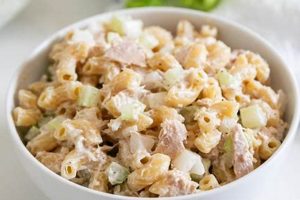
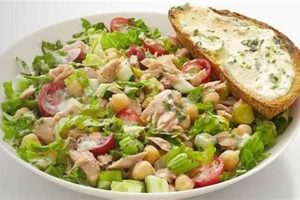
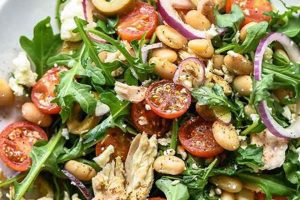
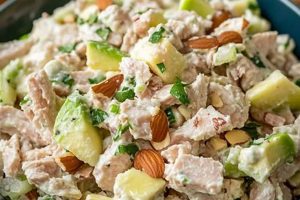
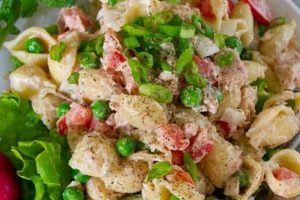
A simple tuna salad typically combines canned tuna with mayonnaise, providing a convenient and affordable protein source. Variations may include celery, onion, relish, seasonings, or other additions for enhanced flavor and texture. This dish can be enjoyed as a sandwich filling, a salad topping, or a standalone snack.
The appeal of this type of dish lies in its speed and simplicity of preparation, often requiring minimal ingredients and time. It offers a versatile and nutritious option for meals or snacks, adaptable to various dietary preferences and budgets. Historically, canned tuna became popular in the early 20th century, leading to the widespread adoption of tuna salad as a readily available and convenient dish.
Further exploration will delve into specific ingredient choices, preparation techniques, and creative serving suggestions to maximize flavor and enjoyment.
Tips for a Superior Tuna Salad
Optimizing a tuna salad recipe involves careful consideration of ingredients and techniques. The following tips offer guidance for achieving a flavorful and satisfying result.
Tip 1: Quality Tuna Selection: Opt for high-quality canned tuna packed in water or oil, depending on preference. Solid or chunk light tuna generally offers the best texture for salad.
Tip 2: Mayonnaise Moderation: Use mayonnaise sparingly to avoid an overly creamy texture. Start with a small amount and add more as needed to achieve desired consistency.
Tip 3: Flavorful Enhancements: Incorporate finely chopped celery, red onion, or sweet pickle relish for added flavor and crunch.
Tip 4: Seasoning Savvy: Classic seasonings such as salt, black pepper, and a touch of Dijon mustard can elevate the flavor profile. Experiment with other spices like paprika or celery seed.
Tip 5: Texture Considerations: For a smoother texture, consider briefly pulsing the tuna in a food processor before mixing with other ingredients. Alternatively, maintain larger tuna chunks for a heartier salad.
Tip 6: Chilling for Optimal Flavor: Allow the prepared tuna salad to chill in the refrigerator for at least 30 minutes before serving. This allows the flavors to meld and enhances the overall experience.
Tip 7: Bread and Serving Suggestions: Tuna salad can be enjoyed on various bread types, including whole wheat, sourdough, or croissants. It also serves as a delightful filling for lettuce wraps or atop crackers.
By employing these tips, one can create a tuna salad that is both simple to prepare and satisfyingly delicious. Attention to detail ensures a balanced flavor profile and desirable texture.
These practical suggestions pave the way for a consistently enjoyable and versatile tuna salad experience.
1. Canned Tuna

Canned tuna plays a pivotal role in the realization of a quick and easy tuna salad recipe. Its pre-cooked and readily available nature eliminates the need for extensive preparation, significantly reducing overall cooking time. The shelf-stable nature of canned tuna further contributes to its convenience, allowing for spontaneous meal preparation without requiring fresh ingredients. This accessibility distinguishes canned tuna as a foundational component of recipes emphasizing speed and simplicity. For instance, a simple lunch can be assembled within minutes by combining canned tuna with mayonnaise and seasonings. This practicality extends to various settings, from busy weeknight dinners to impromptu picnics.
Furthermore, the variety of canned tuna options availablesolid or chunk light, packed in water or oilallows for customization based on individual preferences and dietary needs. This flexibility extends the practicality of canned tuna in recipe adaptation. Using tuna packed in water offers a lower-fat alternative, while tuna packed in oil can contribute a richer flavor profile. The choice between solid and chunk light tuna influences the final texture of the salad. These options empower individuals to tailor the recipe to specific dietary goals or taste preferences. Consider a scenario where a lower sodium intake is desired; opting for tuna packed in water and rinsing it before use addresses this dietary restriction while maintaining the ease of preparation.
In summary, the reliance on canned tuna within quick and easy tuna salad recipes stems from its inherent convenience and adaptability. Its pre-cooked and shelf-stable nature minimizes preparation time, while the available variations accommodate diverse dietary needs and preferences. This understanding allows for efficient meal preparation and contributes to the enduring popularity of tuna salad as a readily available and customizable dish. The accessibility and versatility of canned tuna remain central to its role in facilitating simple and satisfying meals.
2. Mayonnaise
Mayonnaise serves as a crucial binding agent and flavor enhancer in quick and easy tuna salad recipes. Its creamy texture coats the tuna, creating a cohesive mixture that holds its shape. Furthermore, mayonnaise contributes a tangy flavor that complements the savory notes of the tuna. The emulsification of oil and egg yolks within mayonnaise creates a rich mouthfeel, enhancing the overall sensory experience of the dish. This effect is readily apparent when comparing tuna salad made with mayonnaise to versions prepared without it; the latter often exhibit a dry, crumbly texture and lack the characteristic richness. A simple illustration of this principle involves preparing two small batches of tuna salad, one with mayonnaise and one without. The textural and flavor differences become immediately evident upon tasting.
The quantity of mayonnaise used directly impacts the final consistency and richness of the tuna salad. Using too little mayonnaise can result in a dry mixture that lacks the desired creaminess, while an excessive amount can lead to an overly rich and heavy salad. Achieving the desired balance requires careful consideration of personal preference and the intended application of the salad. For example, a tuna salad intended for sandwich filling may benefit from a slightly less creamy consistency to prevent excessive dripping, whereas a salad topping might allow for a richer, more decadent texture. This practical understanding permits adjustments in mayonnaise quantity to suit specific needs. A chef preparing tuna salad sandwiches for a catered event, for instance, might reduce the mayonnaise content to ensure structural integrity during transport and handling.
In conclusion, the role of mayonnaise extends beyond simply binding the ingredients of a quick and easy tuna salad recipe. It contributes significantly to the texture, flavor, and overall palatability of the dish. Understanding the impact of mayonnaise quantity on the final product allows for controlled adjustments based on individual preferences and intended applications. This awareness ensures a consistently satisfying and enjoyable tuna salad experience. Challenges in achieving the desired balance primarily relate to accurately gauging the optimal amount of mayonnaise. Experimentation and careful observation during preparation generally provide the best guidance for achieving mastery in this aspect of tuna salad creation.
3. Simple Seasonings
Simple seasonings play a vital role in elevating the flavor profile of a quick and easy tuna salad recipe without adding complexity to the preparation process. Their judicious use enhances the inherent flavors of the core ingredients, transforming a basic tuna salad into a more nuanced and satisfying culinary experience. This exploration will delve into the key aspects of simple seasoning within the context of quick and easy tuna salad preparation.
- Salt and Pepper:
Salt and freshly ground black pepper serve as foundational seasonings in virtually any culinary application, and tuna salad is no exception. Salt enhances the savory notes of the tuna while pepper adds a subtle bite. The proper balance of these two seasonings is crucial; too much salt can overpower the delicate flavor of the tuna, while insufficient pepper can leave the salad tasting bland. Real-world examples include observing professional chefs carefully seasoning dishes throughout the cooking process, demonstrating the importance of gradual and controlled seasoning. In the context of a quick and easy tuna salad, a pinch of salt and a few grinds of black pepper can significantly elevate the taste.
- Mustard:
A touch of mustard, particularly Dijon or yellow mustard, adds a tangy complexity to tuna salad. The sharp notes of mustard cut through the richness of the mayonnaise, creating a more balanced flavor profile. Consider the widespread use of mustard in classic deli sandwiches; its presence adds a distinct zest that complements the other ingredients. Incorporating a teaspoon or two of mustard into a quick tuna salad recipe provides a depth of flavor without requiring additional preparation time.
- Herbs and Spices:
Dried or fresh herbs, such as dill, parsley, or chives, can introduce subtle aromatic notes to tuna salad. Similarly, a pinch of paprika or celery seed can add warmth and complexity. The use of herbs and spices in various cuisines demonstrates their ability to enhance flavor profiles. Adding a sprinkle of dried dill or a few chopped chives to a quick tuna salad introduces an element of freshness and complexity. However, moderation is key; excessive use of strong herbs or spices can easily overpower the delicate flavor of the tuna.
- Lemon or Lime Juice:
A squeeze of fresh lemon or lime juice introduces a bright, acidic element that balances the richness of the mayonnaise and enhances the flavor of the tuna. This practice is common in many seafood dishes, where citrus is used to brighten the overall taste. In a quick tuna salad, a small amount of lemon or lime juice adds a refreshing zest without requiring additional ingredients or preparation steps.
By strategically employing these simple seasonings, one can transform a basic quick and easy tuna salad recipe into a flavorful and satisfying meal. The key lies in understanding the role of each seasoning and using them in moderation to create a balanced and harmonious flavor profile. This attention to detail, even with simple ingredients, elevates the final product from merely adequate to truly enjoyable. Further experimentation with different combinations of seasonings can lead to personalized variations that cater to individual preferences.
4. Optional Add-ins
Optional add-ins represent a pivotal point of customization within the framework of a quick and easy tuna salad recipe. While not essential to the core composition of tuna, mayonnaise, and seasonings, these additions offer opportunities to enhance texture, flavor, and nutritional value without significantly increasing preparation time. This balance between simplicity and adaptability contributes to the enduring appeal of tuna salad as a versatile meal option. Consider the common practice of adding chopped celery for crunch or diced red onion for a pungent bite; these additions introduce textural and flavor complexities without demanding extra preparation steps. Such modifications demonstrate how optional add-ins transform a basic tuna salad into a personalized culinary experience.
The impact of specific add-ins extends beyond mere flavor and texture. Incorporating chopped vegetables, such as bell peppers or cucumbers, elevates the nutritional value of the salad by introducing vitamins and fiber. Similarly, the addition of chopped hard-boiled eggs adds protein and richness. These additions demonstrate a practical application of nutritional enhancement within a quick and easy recipe format. For instance, a fitness enthusiast might add chopped spinach to boost the iron content, while someone seeking a more substantial meal could incorporate chickpeas for added protein and fiber. These examples underscore the adaptability of tuna salad to diverse dietary needs and preferences.
Successful integration of optional add-ins relies on a balanced approach. Overloading the salad with too many additions can compromise the core flavors and create an unwieldy texture. Understanding ingredient compatibility and maintaining a focus on the desired outcome are crucial for achieving a harmonious result. Challenges may arise in balancing flavor profiles; a strong-flavored add-in, like pickled jalapeos, might overpower the other ingredients if used excessively. Thoughtful consideration of flavor combinations ensures that add-ins complement rather than overwhelm the base recipe. This nuanced understanding facilitates the creation of a tuna salad that is both quick and easy to prepare and deeply satisfying in terms of flavor, texture, and nutritional content.
5. Quick Preparation

Quick preparation is fundamental to the concept of a quick and easy tuna salad recipe. The ability to assemble a satisfying meal within minutes makes tuna salad a practical choice for various situations, from busy weeknights to impromptu lunches. This emphasis on speed and efficiency dictates ingredient selection, preparation techniques, and overall recipe design. The following facets explore the components and implications of quick preparation in this context.
- Minimal Pre-cooked Ingredients:
Reliance on pre-cooked ingredients, primarily canned tuna, significantly reduces active preparation time. Canned tuna requires no cooking, streamlining the process and making it ideal for quick meals. This contrasts with recipes requiring extensive ingredient preparation, such as chopping fresh vegetables or cooking grains, which increase overall time investment. The choice of canned tuna exemplifies the prioritization of convenience in a quick and easy recipe.
- Simple Combining and Mixing:
Tuna salad preparation involves straightforward combining and mixing of ingredients. This simple process requires minimal culinary skill and specialized equipment. The ease of combining ingredients distinguishes tuna salad from dishes requiring complex techniques or precise measurements. For example, creating a sauce from scratch or baking a cake involves multiple steps and precise timing, whereas tuna salad assembly requires only basic mixing. This simplicity contributes significantly to the speed and ease of preparation.
- Limited Cooking or Chilling Time:
Tuna salad requires minimal cooking or chilling time. While brief chilling enhances flavor melding, it’s not essential for immediate consumption. This characteristic differentiates tuna salad from dishes requiring extensive cooking or cooling periods, such as roasted meats or chilled desserts. This immediacy further contributes to its suitability for quick meals. One can prepare and consume a tuna salad sandwich within minutes, unlike a dish requiring hours of simmering or baking.
- Adaptability to Available Ingredients:
Quick and easy tuna salad recipes often allow for substitutions based on available ingredients. This flexibility simplifies the process and reduces reliance on strict adherence to a recipe. For instance, if celery is unavailable, one might substitute chopped bell pepper or omit it entirely. This adaptability contrasts with baking, where precise ingredient ratios are crucial for success. This adaptability simplifies meal planning and contributes to the convenience of quick preparation.
These facets demonstrate how quick preparation forms the core principle of a quick and easy tuna salad recipe. From ingredient selection to assembly and serving, every aspect prioritizes speed and efficiency without compromising flavor or satisfaction. This focus on convenience makes tuna salad a practical and appealing choice for a wide range of meal occasions.
6. Versatile Serving
Versatile serving constitutes a significant advantage of quick and easy tuna salad recipes. This adaptability stems from the salad’s inherent simplicity and malleable texture, lending itself to various applications beyond the traditional sandwich filling. This versatility expands meal options and reduces reliance on elaborate preparation, aligning with the core principles of speed and convenience. Consider the scenario of a quick lunch; tuna salad can be readily scooped onto crackers, nestled within lettuce cups, or incorporated into a simple salad. This adaptability contrasts with dishes requiring specific accompaniments or serving styles, highlighting the inherent flexibility of tuna salad.
The practical implications of versatile serving extend beyond individual meals. Tuna salad functions effectively as a component within larger dishes or as a base for more complex preparations. It can be incorporated into stuffed tomatoes, baked potatoes, or deviled eggs, adding a protein-rich element without demanding extensive additional preparation. This adaptability proves particularly useful in situations requiring efficient meal preparation for larger groups. For example, a catering service might utilize tuna salad as a filling for vol-au-vents or as a topping for crostini, demonstrating its adaptability within a professional culinary context. These examples underscore the versatility of tuna salad as a building block in diverse culinary applications.
In summary, the versatile serving options associated with quick and easy tuna salad recipes contribute significantly to their practicality and appeal. This adaptability extends from simple snacks to more complex dishes, accommodating a range of meal occasions and culinary contexts. The capacity to serve tuna salad in various ways enhances its value as a convenient and adaptable meal component. Challenges primarily relate to maintaining textural integrity in specific applications; a very creamy tuna salad might not hold its shape well within a stuffed tomato, necessitating adjustments in mayonnaise content. Understanding these textural considerations allows for optimized application across diverse serving methods.
7. Affordable Ingredients
Affordability of ingredients plays a crucial role in the widespread appeal of quick and easy tuna salad recipes. Cost-effectiveness influences ingredient selection and contributes to the accessibility of these recipes across diverse budgets. This focus on affordability aligns with the broader objective of providing convenient and accessible meal options.
- Canned Tuna:
Canned tuna represents a cost-effective protein source compared to fresh or frozen fish. Its widespread availability and relatively low price contribute significantly to the affordability of tuna salad. This cost-effectiveness allows individuals and families on various budgets to incorporate protein-rich meals into their diets. Comparatively, purchasing fresh tuna steaks or other seafood options can represent a substantial financial investment, making canned tuna a more accessible alternative. This affordability expands access to nutritious meals.
- Mayonnaise and Condiments:
Mayonnaise, mustard, and other common condiments typically used in tuna salad are relatively inexpensive and shelf-stable, further contributing to the recipe’s affordability. These ingredients are often readily available in most pantries, minimizing the need for additional purchases. Compared to specialty sauces or dressings, which can be significantly more expensive, standard condiments represent a budget-friendly option. This cost-effectiveness allows for frequent preparation of tuna salad without incurring significant expense.
- Common Pantry Staples:
Quick and easy tuna salad recipes often rely on common pantry staples like salt, pepper, and onion powder, minimizing the need for specialized or expensive ingredients. These readily available seasonings contribute to the overall cost-effectiveness of the recipe. Contrast this with recipes requiring less common spices or imported ingredients, which can significantly increase the overall cost. The reliance on pantry staples underscores the affordability aspect of these recipes.
- Optional Add-ins (Flexibility):
While optional add-ins like celery or onion can enhance flavor and texture, their inclusion remains flexible. This flexibility allows individuals to adjust the recipe based on budget constraints. If fresh vegetables are unavailable or too expensive, they can be omitted without compromising the fundamental structure of the tuna salad. This adaptability distinguishes tuna salad from recipes requiring specific and potentially costly ingredients. This adaptability reinforces the accessibility of tuna salad across varying budgetary limitations.
The convergence of these factors establishes affordability as a cornerstone of quick and easy tuna salad recipes. This cost-effectiveness broadens accessibility and reinforces the practicality of these recipes as convenient and budget-friendly meal options. This affordability contributes significantly to the enduring popularity of tuna salad as a readily available and satisfying dish.
Frequently Asked Questions
This section addresses common inquiries regarding quick and easy tuna salad recipes, providing concise and informative responses.
Question 1: What type of canned tuna is best suited for tuna salad?
Solid or chunk light tuna packed in water or oil offers optimal texture and flavor. The choice between water or oil-packed depends on individual preference for richness.
Question 2: How much mayonnaise should be used?
Mayonnaise quantity depends on desired consistency. Start with a small amount and add more as needed, avoiding an overly creamy or dry result. The intended use (sandwich filling, salad topping) may also influence the optimal amount.
Question 3: Can low-fat mayonnaise be used?
Low-fat mayonnaise can be substituted, but it may result in a slightly less creamy texture. Adjustments in quantity or the addition of other ingredients might be necessary to achieve desired consistency.
Question 4: How long can tuna salad be stored in the refrigerator?
Tuna salad should be stored in an airtight container in the refrigerator for up to 3-5 days. Consume promptly for optimal quality and food safety.
Question 5: What are some healthy additions to enhance nutritional value?
Chopped vegetables like celery, bell peppers, or cucumbers add fiber and vitamins. Incorporating chickpeas or hard-boiled eggs increases protein content.
Question 6: Can tuna salad be frozen?
Freezing tuna salad is not recommended. Freezing negatively impacts texture and consistency upon thawing, resulting in a less desirable final product.
Careful consideration of these frequently asked questions facilitates informed decisions regarding ingredient selection, preparation techniques, and storage practices for quick and easy tuna salad recipes.
The subsequent section will offer a collection of diverse recipe variations to further expand culinary possibilities.
Quick and Easy Tuna Salad Recipe
This exploration has examined the multifaceted nature of quick and easy tuna salad recipes, from core ingredients and preparation techniques to versatile serving options and cost considerations. Emphasis has been placed on the balance between simplicity and adaptability, highlighting the recipe’s suitability for diverse culinary needs and preferences. The analysis encompassed ingredient selection, specifically the role of canned tuna and mayonnaise, alongside the impact of simple seasonings and optional add-ins on flavor and texture. Furthermore, the discussion addressed quick preparation methods, versatile serving applications, and the affordability of ingredients as key factors contributing to the recipe’s widespread appeal.
Ultimately, the enduring popularity of quick and easy tuna salad recipes stems from their capacity to deliver a satisfying and nutritious meal with minimal time and effort. The inherent adaptability of these recipes allows for personalized variations, accommodating diverse tastes and dietary requirements. Continued exploration of ingredient combinations and serving methods promises further culinary innovation within this simple yet versatile dish, ensuring its continued presence as a convenient and adaptable meal option for generations to come.