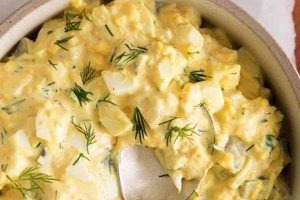
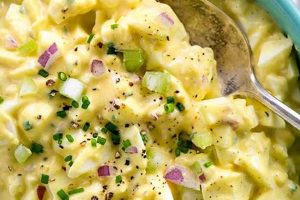
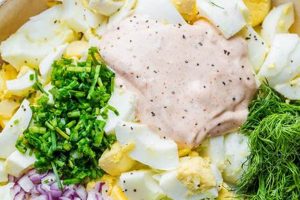
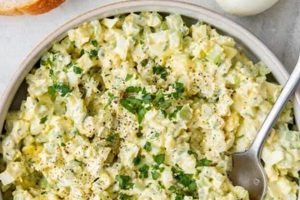
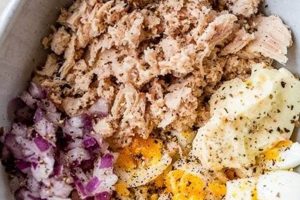
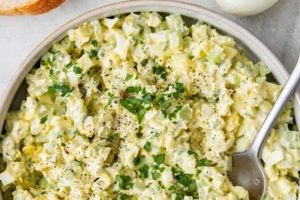
A chilled pasta salad typically features cooked elbow macaroni, hard-boiled eggs, and a creamy dressing, often mayonnaise-based. Common additions include vegetables like celery, onion, and bell pepper, along with seasonings such as mustard, salt, and pepper. Variations can incorporate different cheeses, proteins, or herbs, offering a range of flavors and textures. A classic example combines cooked macaroni, chopped eggs, celery, onion, mayonnaise, mustard, salt, and pepper, creating a simple yet satisfying dish.
This type of dish offers a convenient and versatile option for meals and gatherings. Its make-ahead nature allows for easy preparation and serving, particularly suitable for picnics, potlucks, and barbecues. The combination of carbohydrates, protein, and vegetables provides a relatively balanced nutritional profile, and its adaptability lends itself to customization based on dietary preferences and ingredient availability. Historically, pasta salads gained popularity in the mid-20th century as refrigeration became more commonplace, enabling safe consumption of mayonnaise-based dishes. The dish’s simplicity and adaptability contributed to its widespread adoption as a staple in various cultures.
This exploration will delve into various aspects of creating this culinary staple, including selecting the appropriate pasta, achieving perfectly cooked eggs, crafting a balanced dressing, incorporating complementary ingredients, and offering variations for diverse tastes and dietary needs.
Tips for Exceptional Macaroni Salad with Egg
Achieving a well-balanced and flavorful macaroni salad involves attention to detail in each preparation step. These tips offer guidance for optimal results.
Tip 1: Pasta Perfection: Select elbow macaroni or a similar short pasta shape. Cook al dente, slightly firm to the bite, to prevent a mushy texture in the salad. Rinse cooked pasta under cold water to stop the cooking process and enhance firmness.
Tip 2: Egg-cellent Execution: Achieve perfectly cooked hard-boiled eggs by simmering for 8-10 minutes, followed by an ice bath to halt cooking and facilitate peeling. Chop eggs into uniform pieces for even distribution throughout the salad.
Tip 3: Dressing Dynamics: Employ high-quality mayonnaise as a base for the dressing. Balance the richness with tangy elements such as mustard, vinegar, or lemon juice. Seasoning with salt, pepper, and other spices enhances the overall flavor profile.
Tip 4: Vegetable Vitality: Incorporate finely chopped celery, onion, and bell pepper for added crunch and flavor. Blanching vegetables briefly can reduce their raw edge while maintaining crispness. Consider other vegetables like chopped pickles or olives for added complexity.
Tip 5: Ingredient Integration: Combine all ingredients while the pasta is still slightly warm, allowing the flavors to meld effectively. Gentle mixing prevents breakage of the pasta and other delicate components.
Tip 6: Chill Out: Refrigerate the salad for at least two hours before serving to allow the flavors to fully develop and the salad to chill thoroughly. This enhances the overall taste and texture.
Tip 7: Customized Creations: Explore variations by incorporating ingredients like shredded cheese, chopped ham or chicken, different herbs, or spices. Adapt the recipe to suit individual preferences and dietary requirements.
By following these guidelines, one can create a macaroni salad that is both visually appealing and delicious, offering a satisfying and refreshing culinary experience.
These techniques provide a solid foundation for crafting a successful dish. The following section will offer concluding remarks and further suggestions for recipe customization.
1. Ingredient Quality
Ingredient quality significantly impacts the overall flavor, texture, and enjoyment of macaroni salad with egg. Fresh, high-quality ingredients contribute to a superior culinary experience. Using flavorful, ripe vegetables enhances the salad’s taste and visual appeal. For example, vibrant, crisp celery adds a refreshing crunch, while a sweet, sharp onion provides depth of flavor. Conversely, using limp or aged produce can result in a bland or even unpleasant taste. The mayonnaise chosen also plays a crucial role. A quality mayonnaise, made with real eggs and oil, contributes richness and creaminess, while a lower-quality product might have a less desirable flavor or texture.
Furthermore, the quality of the eggs themselves influences the final product. Fresh, high-quality eggs result in a firmer, more flavorful white and a richer yolk. This contrasts with older eggs, which might have a watery white and a less vibrant yolk. The choice of pasta also contributes to the salad’s success. High-quality pasta holds its shape well during cooking, maintaining a pleasant texture in the finished salad, while lower-quality pasta might become mushy or gummy. Using appropriate, high-quality ingredients not only enhances the taste but also contributes to a more appealing presentation. Fresh, colorful vegetables create a visually appealing dish, while dull, wilted produce detracts from the overall presentation.
In summary, prioritizing ingredient quality elevates macaroni salad with egg from a simple side dish to a memorable culinary creation. Selecting fresh, flavorful ingredients and understanding their individual contributions to the final product is essential for achieving optimal results. The impact of ingredient quality extends beyond taste and texture to encompass presentation and overall enjoyment. Failing to prioritize quality can compromise the flavor, texture, and aesthetic appeal of the dish, ultimately diminishing the dining experience.
2. Proper Cooking

Proper cooking techniques are essential for a successful macaroni salad with egg. They ensure optimal texture and flavor for both the pasta and eggs, contributing significantly to the overall quality of the dish. Overcooked or undercooked components can negatively impact the final product, resulting in a less enjoyable culinary experience.
- Pasta Texture:
Cooking pasta al dente, or “to the tooth,” is crucial. This means the pasta should be firm to the bite yet fully cooked. Overcooked pasta becomes mushy and absorbs too much dressing, leading to a heavy, unappetizing salad. Undercooked pasta, conversely, is too firm and unpleasant to chew. Achieving the perfect al dente texture ensures a pleasant mouthfeel and allows the pasta to hold its shape and maintain its integrity in the salad.
- Egg Consistency:
Properly cooked hard-boiled eggs are essential. Overcooked eggs develop a rubbery texture and a greenish ring around the yolk, while undercooked eggs present a runny yolk that creates an undesirable texture in the salad. The ideal hard-boiled egg has a firm, yet not rubbery, white and a fully cooked, creamy yolk that adds richness and flavor to the dish. Proper timing and cooling techniques are crucial to achieving this desired consistency. An ice bath after boiling helps prevent overcooking and makes the eggs easier to peel.
- Ingredient Integration:
Adding the pasta to the other ingredients while it is still slightly warm allows it to absorb the flavors of the dressing more effectively. This also helps prevent the pasta from sticking together as it cools. Combining the ingredients at the correct temperature ensures a more cohesive and flavorful final product. Incorporating the dressing while the pasta is warm allows the flavors to meld more effectively.
- Food Safety:
Proper cooking temperatures eliminate potential foodborne illness risks associated with eggs. Thoroughly cooking eggs until both the white and yolk are firm ensures the destruction of any harmful bacteria. Adhering to safe cooking practices safeguards against potential health risks and contributes to a safe and enjoyable dining experience. This is particularly important for dishes served cold, as there is no further cooking to eliminate bacteria.
Mastering these cooking techniques enhances the overall quality of the macaroni salad with egg, transforming it from a simple side dish to a more refined and satisfying culinary creation. The proper cooking of each element contributes not only to taste and texture but also to food safety and the overall enjoyment of the dish.
3. Flavor Balance

Flavor balance is paramount in a successful macaroni salad with egg recipe. It distinguishes a bland, forgettable dish from a vibrant, enjoyable one. A harmonious blend of flavors elevates the overall sensory experience. Achieving this balance requires careful consideration of the various taste componentssweet, sour, salty, bitter, and umamiand how they interact within the dish. The interplay of these tastes, along with the textural components, determines the overall complexity and satisfaction derived from each bite.
- Creaminess vs. Tanginess
The creamy richness of mayonnaise, a staple in most macaroni salads, needs a counterpoint. Tangy ingredients like mustard, vinegar, or lemon juice provide this necessary balance. The acidity cuts through the richness of the mayonnaise, preventing the salad from feeling heavy or overly saturated. For example, a Dijon mustard offers a sharp contrast to the creamy base, while a splash of apple cider vinegar introduces a subtle sweetness alongside its tartness. The right balance of these elements prevents the salad from tasting bland or overly rich.
- Saltiness vs. Sweetness
Salt enhances the flavors of the other ingredients and balances any sweetness from ingredients like sweet pickle relish or even the pasta itself. The saltiness shouldn’t overpower but rather complement the other flavors. A touch of sugar or a sweeter onion variety can further round out the flavor profile, creating a more nuanced and complex taste. This interplay between saltiness and sweetness contributes to a more balanced and palatable overall experience.
- Savory Notes vs. Freshness
The savory notes from ingredients like hard-boiled eggs, cheese, or cured meats, if included, benefit from the addition of fresh elements. Chopped celery, bell peppers, and fresh herbs, such as dill or parsley, provide a refreshing contrast to the richer, savory components. This counterpoint prevents the salad from feeling too heavy and adds a layer of complexity to the flavor profile. The freshness brightens the overall taste, contributing to a more dynamic and enjoyable sensory experience.
- Textural Considerations and Flavor
Texture plays a role in perceived flavor balance. The creamy dressing, combined with the firm pasta and the contrasting crunch of vegetables like celery and onion, creates a multi-dimensional eating experience. This textural variety enhances the perception of balanced flavors. A uniformly smooth or crunchy texture would offer a less engaging experience. The interplay of textures amplifies the impact of the individual flavors, creating a more satisfying and complete dish.
A well-balanced macaroni salad with egg avoids extremes in any single flavor direction. The careful orchestration of these contrasting elements creates a harmonious flavor profile that is both refreshing and satisfying. The interplay of creamy, tangy, salty, sweet, savory, and fresh notes, along with textural contrasts, elevates this simple dish into a culinary experience that is more than the sum of its parts. Ignoring these flavor dynamics can result in a dish that is either bland and unmemorable or, conversely, overly assertive in one flavor direction, diminishing the overall enjoyment.
4. Textural Contrast
Textural contrast significantly contributes to the enjoyment of macaroni salad with egg. A successful recipe balances the soft, creamy elements with contrasting textures to create a more dynamic and satisfying sensory experience. This interplay of textures elevates the dish beyond a simple combination of ingredients, adding depth and interest to each bite. Without this contrast, the salad risks becoming monotonous and less appealing.
The primary textural elements in a classic macaroni salad with egg recipe include the creamy dressing (typically mayonnaise-based), the relatively firm, cooked pasta, and the crisp, often raw, vegetables. The creamy dressing provides a smooth, rich mouthfeel that coats the other ingredients. The al dente pasta offers a slight chewiness, contrasting with the smoothness of the dressing. The crisp vegetables, such as celery, onion, and bell pepper, introduce a sharp, contrasting crunch. Additional ingredients, such as chopped pickles or crumbled bacon, can further enhance the textural complexity. Consider a salad with only soft ingredients: mushy pasta, a watery dressing, and soft, cooked vegetables. The resulting texture would be unappealing and lack the dynamism that textural contrast provides. Conversely, a salad composed solely of crunchy elements, such as raw vegetables and heavily toasted nuts, would lack the necessary balance and richness that the creamy dressing and softer pasta contribute.
The interplay of these contrasting textures creates a multi-dimensional eating experience. The smooth creaminess of the dressing is offset by the chewiness of the pasta and punctuated by the crispness of the vegetables. This variety keeps the palate engaged and prevents the dish from becoming one-dimensional. Achieving this balance is crucial for maximizing enjoyment. Chefs and home cooks alike understand the importance of textural contrast, often employing techniques like blanching or quick-pickling vegetables to achieve the desired level of crispness while maintaining a pleasant texture. Understanding the role of textural contrast allows for informed choices regarding ingredient selection, preparation methods, and the overall composition of the dish, resulting in a more satisfying and enjoyable culinary creation.
5. Chilling Time

Chilling time is a crucial element in preparing macaroni salad with egg, significantly impacting the final dish’s flavor and texture. Adequate refrigeration allows the flavors to meld and deepen, resulting in a more cohesive and enjoyable culinary experience. This chilling period also allows the salad components to firm up, enhancing the overall texture and presentation.
- Flavor Development
Chilling allows the diverse flavors from individual ingredientssuch as the tanginess of the dressing, the richness of the eggs, and the savory notes of any added proteinsto meld and harmonize. This fusion creates a more complex and balanced flavor profile than immediately after mixing. The chilling process allows the flavors to mature and deepen, resulting in a more nuanced and enjoyable taste. For instance, the sharpness of the onion mellows, and the flavors of the dressing permeate the pasta and other ingredients more thoroughly.
- Texture Enhancement
Refrigeration firms the pasta, preventing it from becoming mushy. The chilling period also allows the dressing to thicken slightly, contributing to a more desirable consistency. This improved texture enhances the overall eating experience, providing a more pleasant mouthfeel. The colder temperature also makes the salad more refreshing, particularly in warmer weather.
- Food Safety
Maintaining a safe temperature for mayonnaise-based salads is critical. Chilling inhibits bacterial growth, crucial for food safety, especially with ingredients like eggs and mayonnaise, which are susceptible to spoilage. Proper refrigeration ensures the salad remains safe for consumption and minimizes the risk of foodborne illness. Adhering to recommended chilling times is essential for maintaining food safety standards.
- Enhanced Presentation
Chilling allows the colors of the ingredients to become more vibrant. The cooler temperature also improves the salad’s overall appearance, making it more visually appealing. A well-chilled salad holds its shape better, allowing for a more attractive presentation. This visual appeal enhances the dining experience and makes the salad more enticing.
Therefore, sufficient chilling time is not merely a recommendation but a crucial step in creating a high-quality macaroni salad with egg. It directly influences flavor development, texture, food safety, and presentationall essential factors contributing to a satisfying and enjoyable culinary experience. Failing to allow adequate chilling time can result in a subpar dish lacking the desired flavor complexity, textural integrity, and safety assurances that proper refrigeration provides.
6. Presentation
Presentation plays a crucial role in the overall perception and enjoyment of macaroni salad with egg. While flavor and texture are paramount, visual appeal significantly enhances the dining experience. A thoughtfully presented salad is more enticing and appetizing, increasing perceived value and enjoyment. This applies whether served at a casual picnic or a more formal gathering. Consider the impact of a dull, homogenous mixture versus a vibrant, carefully arranged salad. The former may be perceived as less appealing, even if the flavor profile is identical.
Several factors contribute to effective presentation. Using high-quality, colorful ingredients creates visual interest. Fresh, vibrant vegetables like bell peppers, red onion, and parsley not only enhance flavor but also add pops of color. Consider the placement of ingredients: evenly distributing colorful elements throughout the salad creates a more appealing look than concentrating them in one area. The choice of serving dish also contributes to the overall presentation. A clear glass bowl showcases the salad’s colors and textures, while a decorative platter adds a touch of formality. Garnishes, such as a sprinkle of paprika or a sprig of fresh dill, provide finishing touches that elevate the visual appeal. Imagine a salad garnished with fresh herbs versus one without; the former immediately appears more considered and appealing.
Practical applications of these principles are numerous. For large gatherings, arranging the salad on a platter with a scooped serving tool creates a more attractive and hygienic serving solution than a deep bowl. For individual servings, using smaller, more elegant dishes enhances the perceived value of the dish. Even in casual settings, taking a few extra moments to consider presentation can significantly improve the overall dining experience. The understanding and application of presentation principles elevate macaroni salad with egg from a simple side dish to a more thoughtfully prepared and visually appealing culinary offering, regardless of the context in which it is served. Overlooking presentation diminishes the perceived value and potential enjoyment of the dish, highlighting the importance of visual appeal alongside flavor and texture.
Frequently Asked Questions
This section addresses common inquiries regarding macaroni salad with egg preparation, offering concise and informative responses.
Question 1: Can this dish be prepared in advance?
Yes, macaroni salad benefits from chilling, allowing flavors to meld. Prepare up to two days in advance, storing it in a tightly sealed container in the refrigerator.
Question 2: How long can the salad be stored safely?
Refrigerated macaroni salad with egg should be consumed within three to five days for optimal quality and safety.
Question 3: What are suitable egg substitutes?
For those avoiding eggs, substitute chopped avocado or chickpeas for a similar texture and nutritional value, adjusting seasonings as needed.
Question 4: How can one prevent the salad from becoming watery?
Ensure pasta is cooked al dente, not overcooked. Thoroughly drain the pasta and allow it to cool slightly before combining it with other ingredients.
Question 5: What alternatives exist for traditional mayonnaise?
Greek yogurt, plain yogurt mixed with a small amount of olive oil, or a vegan mayonnaise offer healthier or dairy-free alternatives.
Question 6: Can frozen vegetables be used in this recipe?
Fresh vegetables are recommended for optimal texture and flavor. If using frozen vegetables, thaw and thoroughly drain them before incorporating them into the salad to prevent excess moisture.
Addressing these common queries aims to provide a comprehensive understanding of macaroni salad preparation techniques and best practices. Reviewing these points ensures successful and enjoyable results.
The following section provides variations and adaptations of the classic recipe.
Macaroni Salad with Egg Recipe
Exploration of macaroni salad with egg recipes reveals the interplay of seemingly simple ingredients, highlighting the importance of technique and ingredient quality. Proper pasta cooking, achieving ideal egg consistency, creating a balanced dressing, and incorporating textural contrasts contribute significantly to the final product. Chilling time is crucial for flavor development and food safety. Thoughtful presentation elevates the dish, transforming it from a simple side to a visually appealing culinary offering.
Macaroni salad with egg, while seemingly basic, offers a canvas for culinary creativity. Adaptability to diverse ingredients and flavor profiles ensures its enduring appeal. Further exploration of variations and flavor combinations promises continued enjoyment and culinary discovery within this classic dish’s framework.