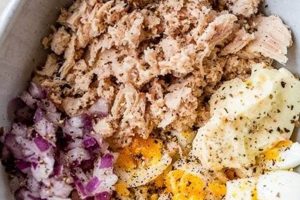
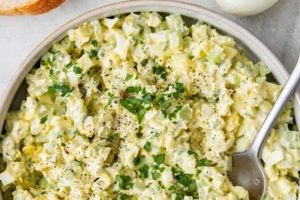
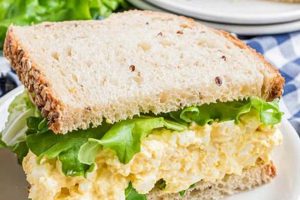
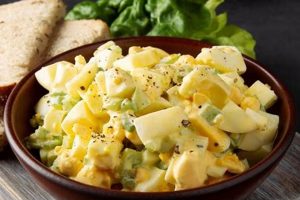
A classic dish typically consists of chopped hard-boiled eggs, mayonnaise, mustard, salt, and pepper. Variations may include celery, onion, paprika, or fresh herbs like dill or chives. It is often served chilled on bread, crackers, or lettuce cups.
This simple yet satisfying combination offers a readily available, protein-rich, and customizable meal or snack. Its adaptable nature makes it suitable for picnics, quick lunches, or potlucks. The affordability and widespread availability of ingredients have contributed to its enduring popularity across cultures and generations.
Further exploration will detail ingredient selection, preparation techniques, variations, and serving suggestions, offering a complete guide to crafting and enjoying this versatile dish.
Tips for Perfect Egg Salad
Achieving optimal flavor and texture requires attention to detail throughout the preparation process. These tips offer guidance for creating a superior egg salad.
Tip 1: Perfect Hard-Boiled Eggs: Achieving properly cooked yolks prevents a dry, crumbly texture. Add eggs to cold water, bring to a rolling boil, then remove from heat and cover for 10-12 minutes. Immediately transfer to an ice bath to stop cooking and facilitate peeling.
Tip 2: Proper Chopping Technique: Uniformly chopped eggs ensure even distribution of flavor and a pleasant mouthfeel. A sharp knife or an egg slicer yields consistent results, preventing overly mashed or uneven pieces.
Tip 3: Mayonnaise Selection: High-quality mayonnaise significantly impacts the overall flavor profile. Experimenting with different brands or making homemade mayonnaise allows for personalized taste preferences.
Tip 4: Seasoning Balance: Mustard, salt, and pepper enhance the flavor profile. Start with small amounts and adjust according to taste, being careful not to overpower the delicate egg flavor.
Tip 5: Ingredient Incorporation: Gentle folding prevents overmixing, which can result in a mushy texture. A light touch ensures the ingredients are combined without compromising the integrity of the eggs.
Tip 6: Chilling Time: Allowing the egg salad to chill for at least 30 minutes enhances flavor development and allows the ingredients to meld. Chilling also firms the mixture, improving its spreadability.
Tip 7: Creative Additions: Fresh herbs, finely diced vegetables, or spices like paprika or curry powder elevate the flavor profile. Experimentation with different add-ins allows for personalized variations.
By following these tips, one can consistently create a flavorful and texturally pleasing egg salad. Attention to detail ensures a satisfying culinary experience.
This detailed guidance prepares the reader for practical application and enjoyment of a well-crafted egg salad.
1. Hard-boiled Eggs

Hard-boiled eggs constitute the foundational ingredient in traditional egg salad. Their presence determines the dish’s overall texture, protein content, and flavor profile. Without properly cooked hard-boiled eggs, the final product risks becoming dry, crumbly, or lacking the characteristic richness expected. The process of hard-boiling eggs, including cooking time and cooling methods, directly influences the final salad’s quality. For instance, overcooked yolks can develop a grayish tinge and a dry texture, negatively impacting the overall palatability. Conversely, undercooked yolks create a runny consistency unsuitable for egg salad. The structural integrity of the cooked egg white also plays a crucial role; it should be firm enough to hold its shape when chopped but not rubbery.
Consider the impact of egg size and freshness. Larger eggs yield more volume, affecting the egg-to-mayonnaise ratio. Fresh eggs, generally, peel more cleanly, simplifying preparation. Furthermore, the method of chopping the eggsdicing, slicing, or mashinginfluences the texture and appearance of the salad. A coarse chop provides a chunkier texture, while a finer chop creates a smoother, more spreadable consistency. The choice depends on individual preference and intended presentation. Practical applications include adjusting the chopping method based on the serving style: a coarser chop for sandwiches and a finer chop for canaps.
Mastery of hard-boiling techniques forms the cornerstone of a successful traditional egg salad. Achieving the correct yolk and white consistency ensures the desired texture and flavor. Understanding the impact of egg size, freshness, and chopping methods allows for controlled adjustments and optimized outcomes. This knowledge enables consistent preparation of high-quality egg salad across various applications, from simple lunches to elegant presentations.
2. Mayonnaise

Mayonnaise serves as a crucial binding agent and flavor enhancer in traditional egg salad. Its creamy texture coats the chopped eggs, creating a cohesive mixture while contributing a rich mouthfeel. The emulsification of oil and egg yolks in mayonnaise provides a smooth, velvety consistency that complements the delicate egg flavor. Quantity significantly impacts the final product; too little results in a dry, crumbly salad, while an excess leads to an overly rich, potentially greasy outcome. Flavor profiles of various mayonnaise brands differ, affecting the overall taste. For instance, a mayonnaise with a pronounced tangy flavor can create a sharper egg salad, while a milder variant allows the egg flavor to predominate. Furthermore, the fat content influences the richness and perceived heaviness of the salad.
Beyond its functional role, mayonnaise contributes significantly to the sensory experience of consuming egg salad. The smooth texture provides a pleasant contrast to the subtle chewiness of the egg whites, while the richness complements the inherent savory notes of the yolks. Consider the interplay of flavors when incorporating additional ingredients. The tanginess of mayonnaise balances the sweetness of chopped onions or relish, while its richness complements the herbaceous notes of fresh dill or chives. Practical applications include adjusting the mayonnaise quantity to achieve the desired consistency, ranging from a dense spread to a lighter, fluffier salad. Choosing a specific mayonnaise brand or typefor instance, olive oil-based mayonnaiseallows for customized flavor profiles, catering to individual preferences or dietary considerations. Homemade mayonnaise, crafted with specific oils and seasonings, offers further control over taste and texture.
Careful consideration of mayonnaise selection and quantity proves essential for achieving a well-balanced and flavorful traditional egg salad. Understanding its multifaceted rolebinding agent, textural enhancer, and flavor contributorallows for informed decisions regarding brand, type, and quantity, ensuring consistent and satisfying results. This knowledge empowers culinary control, enabling the creation of egg salad tailored to specific preferences and dietary needs, ultimately enhancing the dining experience.
3. Mustard

Mustard plays a pivotal role in traditional egg salad, providing a sharp, tangy counterpoint to the richness of mayonnaise and the subtle flavor of eggs. Its presence elevates the overall flavor profile, adding depth and complexity. Understanding the nuances of mustard selection and application is crucial for crafting a well-balanced and flavorful egg salad.
- Flavor Profile:
Mustard varieties exhibit a wide range of flavor profiles, from mild and sweet to intensely pungent. Yellow mustard, a common choice, offers a balanced tang, while Dijon mustard imparts a more robust, complex flavor. The chosen mustard type significantly influences the final taste of the egg salad. For example, using whole grain mustard introduces textural elements and a more assertive flavor compared to smooth, prepared mustard. Selecting the appropriate mustard complements and enhances the overall flavor composition.
- Acidity and Balance:
Mustard’s acidity contributes to the balance of flavors within the egg salad. It cuts through the richness of the mayonnaise, preventing the final product from becoming overly heavy or cloying. This acidity also complements the subtle sweetness of any added ingredients, such as onions or relish. The correct balance of acidity ensures a refreshing and palatable experience.
- Quantity and Incorporation:
The amount of mustard used directly impacts the intensity of its flavor within the egg salad. Starting with a small amount and gradually increasing allows for controlled adjustment and prevents overpowering the other ingredients. Proper incorporation ensures even distribution of flavor and prevents pockets of intense mustard taste. Thoroughly blending the mustard with the mayonnaise before adding the chopped eggs creates a homogenous mixture and a consistent flavor profile.
- Complementary Ingredients:
Mustard’s flavor profile interacts dynamically with other ingredients in traditional egg salad. Its tanginess complements the sweetness of chopped onions or relish, while its sharpness accentuates the savory notes of the eggs. The interplay between mustard and other seasonings, such as paprika or dill, creates a layered and nuanced flavor experience. Understanding these interactions allows for customized flavor combinations and personalized variations of traditional egg salad.
The considered selection and application of mustard elevate traditional egg salad from a simple combination of ingredients to a nuanced and flavorful dish. Its contribution extends beyond mere flavor enhancement, influencing texture, acidity, and the overall balance of the final product. By understanding the multifaceted role of mustard, one can consistently create an egg salad that exemplifies culinary balance and delivers a satisfying sensory experience.
4. Seasoning
Seasoning plays a critical role in traditional egg salad recipes, elevating the dish beyond a simple combination of ingredients. Salt and pepper are fundamental, enhancing the inherent flavors of the eggs and other components. Salt, in particular, amplifies the savory notes of the yolks while balancing the richness of the mayonnaise. Black pepper adds a subtle bite and complexity. The absence of proper seasoning results in a bland, underwhelming salad, regardless of the quality of other ingredients. For instance, an egg salad made with fresh, high-quality eggs and excellent mayonnaise will still taste flat without sufficient salt and pepper. Conversely, even modestly priced ingredients can produce a flavorful outcome with judicious seasoning. This underscores the essential nature of seasoning in achieving a balanced and satisfying flavor profile.
Beyond basic salt and pepper, other seasonings offer opportunities for flavor customization and complexity. Paprika adds a subtle smokiness and vibrant color. Dill, chives, or tarragon introduce fresh, herbaceous notes, while curry powder adds warmth and depth. Garlic powder or onion powder provide savory undertones without the sharp bite of fresh counterparts. The choice of seasonings depends on individual preferences and desired flavor profiles. A classic combination of salt, pepper, and paprika delivers a traditional taste, while incorporating fresh dill or chives adds a brighter, more contemporary touch. Experimentation with different seasoning blends allows for personalized variations, ensuring a unique and enjoyable culinary experience.
Appropriate seasoning is paramount in achieving a well-balanced and flavorful traditional egg salad. The judicious use of salt and pepper is fundamental, while the addition of other spices and herbs offers opportunities for customization and flavor complexity. Understanding the impact of various seasonings allows for informed choices, ensuring the creation of an egg salad that satisfies individual palates and elevates the dish beyond a simple combination of ingredients. This knowledge empowers culinary control, facilitating consistent preparation of flavorful and satisfying egg salad tailored to specific preferences.
5. Optional Additions
While a traditional egg salad recipe centers on a core set of ingredients, optional additions offer opportunities for customization and enhanced flavor profiles. These additions, ranging from textural elements to aromatic herbs and spices, allow for personalized variations while still adhering to the fundamental principles of the dish. Understanding the role and impact of these additions is crucial for creating a tailored and satisfying egg salad experience.
- Textural Enhancements:
Ingredients like finely diced celery, red onion, or water chestnuts introduce textural contrast to the creamy base of traditional egg salad. Celery provides a crisp, refreshing bite, while red onion adds a subtle crunch and sharpness. Water chestnuts offer a unique, delicate crispness. These additions prevent the salad from becoming overly homogenous in texture, creating a more dynamic and enjoyable mouthfeel.
- Aromatic Herbs:
Fresh herbs such as dill, chives, parsley, or tarragon infuse the egg salad with aromatic complexity. Dill imparts a bright, slightly tangy flavor, while chives offer a delicate oniony note. Parsley contributes a clean, fresh taste, and tarragon lends a subtle anise flavor. The choice of herbs can significantly influence the overall flavor profile, allowing for customization based on individual preferences. For instance, dill complements the richness of the mayonnaise, while chives enhance the savory notes of the eggs.
- Spices and Seasonings:
Beyond basic salt and pepper, spices like paprika, smoked paprika, curry powder, or cayenne pepper introduce depth and complexity. Paprika adds a subtle smokiness and vibrant color, while curry powder offers warmth and earthiness. Cayenne pepper introduces a touch of heat. The judicious use of spices can transform the flavor profile of traditional egg salad, creating variations ranging from subtly smoky to boldly spiced.
- Savory Additions:
Ingredients like chopped pickles, olives, capers, or crumbled bacon introduce savory notes and umami richness. Pickles offer a tangy, briny flavor, while olives contribute a salty, slightly bitter complexity. Capers provide a pungent, salty burst, and crumbled bacon adds a smoky, meaty flavor. These additions can significantly enhance the overall savory profile of the egg salad, creating a more robust and satisfying culinary experience. For example, the brininess of chopped pickles complements the creaminess of the mayonnaise, while the smokiness of bacon enhances the savory notes of the eggs.
The thoughtful incorporation of optional additions allows for significant customization of traditional egg salad, enhancing both its flavor profile and textural complexity. These additions, ranging from crisp vegetables to aromatic herbs and spices, offer a wide range of possibilities for creating a personalized and satisfying culinary experience. By understanding the interplay between these optional ingredients and the core components of the egg salad, one can achieve a balance of flavors and textures that elevates the dish beyond a simple staple.
Frequently Asked Questions
This section addresses common inquiries regarding the preparation and enjoyment of traditional egg salad.
Question 1: How long can egg salad be safely stored?
Refrigerated egg salad should be consumed within three to five days. Proper storage in an airtight container is crucial for maintaining freshness and preventing bacterial growth.
Question 2: Can other types of eggs be used in traditional egg salad?
While chicken eggs are standard, duck or quail eggs offer unique flavor profiles. Adjusting cooking times may be necessary due to size differences. Dietary considerations, such as cholesterol content, may also influence egg selection.
Question 3: What are alternatives to mayonnaise in egg salad?
Plain Greek yogurt, mashed avocado, or a combination of the two offer healthier alternatives to mayonnaise while maintaining a creamy consistency. These substitutions impact flavor and texture, offering lighter alternatives.
Question 4: How can one prevent watery egg salad?
Thoroughly draining the cooked eggs and ensuring all ingredients are dry before combining prevents excess moisture. Over-mixing can also contribute to a watery consistency, so gentle folding is recommended.
Question 5: Can egg salad be frozen?
Freezing egg salad is not recommended. The mayonnaise base separates upon thawing, resulting in an undesirable texture and compromised flavor. Fresh preparation is always preferable for optimal quality.
Question 6: How can traditional egg salad be served beyond sandwiches?
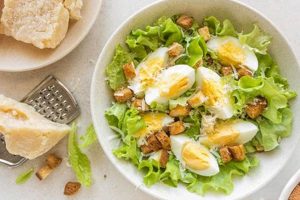
Egg salad offers versatility beyond sandwiches. It can be served as a filling for deviled eggs, a topping for salads, or a dip for crackers or crudits. Stuffed tomatoes or avocados provide elegant presentation options.
Addressing these common questions provides a comprehensive understanding of traditional egg salad preparation and storage, enabling informed culinary choices.
This FAQ section concludes the exploration of traditional egg salad, offering practical guidance for both novice and experienced cooks.
Traditional Egg Salad Recipe
Exploration of the traditional egg salad recipe reveals a dish defined by simplicity and adaptability. From the foundational elements of perfectly cooked eggs and carefully chosen mayonnaise to the nuanced additions of mustard, seasonings, and optional ingredients, each component contributes to the final product’s overall flavor and textural profile. Mastery of hard-boiling techniques, ingredient selection, and balanced seasoning ensures consistent, high-quality results. The versatility of this dish extends beyond its classic presentation, offering a range of serving options and creative interpretations.
The enduring popularity of traditional egg salad underscores its timeless appeal. Continued exploration and experimentation with variations promise ongoing culinary enjoyment and personalized adaptations. An understanding of foundational techniques and ingredient interactions empowers culinary creativity, ensuring this classic dish remains a staple across generations.