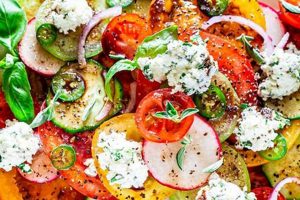
A classic composed salad typically features a base of crisp lettuce topped with an array of ingredients, including sliced or chopped meats like turkey, ham, or roast beef; hard-boiled eggs; cheeses such as cheddar, Swiss, or provolone; and various fresh vegetables like tomatoes, cucumbers, and onions. A simple vinaigrette or creamy dressing often complements the salad.
This type of salad offers a nutritious and satisfying meal option, providing a balance of protein, healthy fats, and essential vitamins and minerals from the varied ingredients. Its customizable nature allows for adaptations to dietary preferences and ingredient availability, making it a versatile choice for lunch or a light dinner. Its roots can be traced back to early 20th-century American cuisine, evolving from simpler salads into the more substantial meal we recognize today.
The following sections will delve deeper into variations, ingredient selection, preparation techniques, and nutritional information related to this culinary staple.
Tips for a Superior Salad
Elevating a basic salad to an exceptional culinary experience involves careful consideration of ingredients, preparation techniques, and presentation. The following tips offer guidance on creating a truly satisfying and flavorful meal.
Tip 1: Ingredient Quality is Paramount: Opt for fresh, high-quality ingredients. Select crisp lettuce, ripe vegetables, and flavorful cheeses and meats. The overall quality directly impacts the final taste.
Tip 2: Knife Skills Matter: Uniformly sized ingredients ensure even dressing distribution and a pleasant textural experience. Consistent chopping and slicing enhance presentation and prevent some ingredients from dominating.
Tip 3: Dressing Selection is Key: Consider the flavor profile of the chosen ingredients when selecting a dressing. A light vinaigrette complements delicate flavors, while a creamy dressing pairs well with bolder components.
Tip 4: Don’t Overdress: Add dressing just before serving to prevent the salad from becoming soggy. Lightly coat the ingredients to maintain their texture and crispness.
Tip 5: Ingredient Arrangement Matters: Consider the placement of ingredients for both visual appeal and balanced flavor distribution. Distribute elements evenly to ensure each bite offers a variety of tastes and textures.
Tip 6: Proper Storage is Crucial: Store prepared components separately and combine them just before serving to maintain freshness and prevent premature wilting or spoilage.
Tip 7: Customize to Preference: Adapt ingredients based on dietary restrictions, preferences, or seasonal availability. This allows for personalized variations that cater to individual needs and tastes.
By adhering to these guidelines, one can create a delightful and balanced salad that is both visually appealing and nutritionally rich. These tips emphasize the importance of fresh ingredients, proper techniques, and thoughtful presentation in elevating a simple salad to a memorable dining experience.
The following section concludes with a summary of key considerations for achieving optimal results.
1. Fresh, Crisp Greens

Fresh, crisp greens constitute the foundation of a traditional chef salad, providing a refreshing counterpoint to the richness of the other ingredients. The choice of greens significantly impacts the overall texture and flavor profile. Crisphead lettuces like iceberg or romaine offer a satisfying crunch and a neutral flavor that allows other components to shine. Alternatively, butter lettuce or green leaf lettuce contribute a softer texture and subtly sweet notes. The freshness of the greens is paramount; wilted or bruised leaves detract from both the aesthetic appeal and the overall enjoyment of the salad.
The structural integrity provided by fresh greens is essential for a successful chef salad. They create a bed for the other ingredients, preventing the salad from becoming a dense, homogenous mixture. This allows the individual flavors and textures of the meats, cheeses, and other vegetables to remain distinct. Imagine a chef salad built on a base of limp lettuce the other ingredients would sink and mingle, resulting in a less appealing and potentially soggy dish. The crispness of the greens offers a textural contrast that elevates the dining experience.
Selecting and preparing the greens correctly is crucial. Thoroughly washing and drying the leaves removes any residual dirt or debris and ensures the dressing adheres evenly. Torn or chopped greens offer more surface area for the dressing to cling to, while whole leaves provide a more substantial bite. Ultimately, the choice of greens and their preparation contributes significantly to the overall success of the traditional chef salad, influencing its texture, flavor, and presentation.
2. Variety of Proteins

Protein diversity plays a crucial role in a traditional chef salad recipe, contributing to nutritional value, flavor complexity, and overall satisfaction. Inclusion of various protein sources ensures a balanced amino acid profile, supporting muscle maintenance, tissue repair, and overall health. Beyond nutritional benefits, diverse protein sources contribute a wider range of flavors and textures, enhancing the salad’s palatability. Common protein choices include sliced turkey breast, lean ham, and roast beef, each offering distinct flavor profiles and textures. Combining these creates a more complex and satisfying sensory experience than relying on a single protein source. For example, the savory richness of roast beef contrasts with the subtle saltiness of ham, while the mildness of turkey breast provides a neutral backdrop that allows the other flavors to shine. This interplay of flavors and textures elevates the salad from a simple dish to a more complex and enjoyable meal.
The quantity and proportion of proteins within the salad should be carefully considered. Overloading the salad with protein can overshadow the other components, such as the fresh vegetables and the dressing. Conversely, insufficient protein can result in a less satisfying meal. Striking a balance ensures that the proteins complement the other ingredients without dominating the flavor profile. Practical examples include using leaner cuts of meat to manage overall fat content and adjusting the proportion of each protein based on individual preferences and dietary needs. Someone seeking a higher protein intake might opt for a larger portion of turkey breast, while someone focusing on flavor variety might include smaller amounts of each protein. This flexibility allows for customization to meet individual nutritional goals and taste preferences.
Careful selection and balance of protein sources are essential for a successful traditional chef salad. Protein diversity contributes not only to the nutritional value but also to the complexity of flavors and textures, making the salad a more complete and satisfying meal. Understanding this interplay of factors allows for informed choices regarding protein selection, portioning, and overall balance within the recipe. This knowledge empowers individuals to create a customized chef salad that meets their specific nutritional and culinary desires while staying true to the fundamental principles of this classic dish.
3. Assortment of Cheeses
The inclusion of an assortment of cheeses in a traditional chef salad recipe contributes significantly to its flavor profile, textural complexity, and overall appeal. Cheese provides a source of calcium, protein, and fat, enhancing the salad’s nutritional value. However, the primary contribution lies in the interplay of flavors and textures that different cheeses bring to the dish. Sharp cheddar, for instance, offers a robust, tangy flavor and a firm texture, while Swiss cheese provides a nutty, mellow taste and a slightly elastic texture. crumbled blue cheese introduces a pungent, creamy element, while provolone contributes a smooth, mild flavor. The combination of these distinct characteristics creates a more dynamic and satisfying sensory experience.
Consider a chef salad with only cheddar cheese. While the cheddar provides a familiar flavor, the overall profile remains one-dimensional. Introducing Swiss cheese adds a contrasting nuttiness, and the inclusion of blue cheese further complicates the flavor profile with its sharp, piquant notes. This interplay of contrasting flavors and textures elevates the salad beyond a simple combination of ingredients, transforming it into a more nuanced and engaging culinary experience. Furthermore, the varying textures of the cheeses, from the crumbly blue cheese to the firm cheddar, add another layer of interest to each bite.
Strategic cheese selection is crucial for achieving a balanced and harmonious chef salad. The chosen cheeses should complement the other ingredients, such as the proteins and vegetables, without overpowering them. The intensity of the cheeses should be balanced to avoid any single flavor dominating the profile. A delicate balance of flavors and textures elevates the traditional chef salad from a basic dish to a sophisticated and satisfying meal. Understanding the role of cheese selection allows for informed decisions that enhance the overall quality and enjoyment of this classic recipe.
4. Chopped Vegetables
Chopped vegetables represent an integral component of a traditional chef salad recipe, contributing crucial textural and flavor dimensions. These elements provide essential vitamins, minerals, and dietary fiber, enhancing the salad’s nutritional value. Beyond nutrition, the strategic inclusion of various chopped vegetables introduces a spectrum of flavors and textures that significantly elevate the overall sensory experience. Consider the crisp, refreshing cucumber, the juicy sweetness of a ripe tomato, or the pungent bite of a red onion. Each vegetable contributes a unique element, transforming a simple salad into a vibrant and complex culinary creation.
The size and uniformity of the chopped vegetables directly influence the salad’s overall balance and enjoyment. Uniformly chopped vegetables ensure even distribution throughout the salad, preventing any single ingredient from dominating. This consistency also promotes a pleasant textural experience, where each bite offers a harmonious blend of flavors and textures. Imagine a chef salad with large chunks of tomato and thinly sliced cucumbers. The uneven distribution would lead to some bites being overly tomato-dominant, while others lack the tomato’s juicy sweetness entirely. The size of the chopped vegetables affects not only the distribution of flavor but also the overall aesthetic appeal of the salad.
Thoughtful selection and preparation of chopped vegetables are crucial for a well-balanced and appealing chef salad. Vegetables should be fresh and crisp, avoiding any wilted or bruised pieces. Chopping vegetables into bite-sized pieces ensures ease of consumption and promotes even distribution of flavors and textures. The choice of vegetables can be tailored to individual preferences and seasonal availability, allowing for personalized variations while adhering to the fundamental principles of the traditional recipe. Ultimately, the careful inclusion of chopped vegetables elevates the traditional chef salad from a basic dish to a vibrant, nutritious, and satisfying meal.
5. Complementary Dressing

Complementary dressing forms an integral part of a traditional chef salad recipe, serving to unify the diverse ingredients and enhance their individual flavors. The dressing’s role extends beyond simply adding moisture; it contributes significantly to the overall taste, texture, and balance of the salad. A well-chosen dressing complements the existing flavors of the proteins, cheeses, and vegetables without masking their individual characteristics. Consider a classic vinaigrette, its tartness cutting through the richness of the meats and cheeses while accentuating the fresh flavors of the vegetables. Alternatively, a creamy dressing, such as a buttermilk ranch, provides a smooth, tangy counterpoint to the crisp vegetables and savory proteins. The interplay between the dressing and the other ingredients creates a synergistic effect, elevating the salad from a simple collection of components to a cohesive and flavorful dish. A mismatch, such as a heavy, sweet dressing paired with delicate greens and lean proteins, can overwhelm the other flavors and create an unbalanced taste experience.
The practical significance of selecting a complementary dressing lies in its ability to transform the overall dining experience. A properly balanced dressing ties the individual elements together, creating a harmonious blend of flavors and textures. For instance, a vinaigrette with a touch of Dijon mustard complements the savory notes of ham and Swiss cheese while enhancing the crispness of the lettuce and vegetables. A creamy dressing, such as a blue cheese dressing, provides a rich counterpoint to the sharpness of cheddar and the peppery bite of red onion. These pairings demonstrate how a complementary dressing can enhance the inherent flavors of the ingredients while creating a cohesive and satisfying overall taste. Furthermore, the dressing’s texture contributes to the sensory experience. A light vinaigrette offers a refreshing contrast to the crisp vegetables and denser proteins, while a creamy dressing adds a smooth, velvety element.
Achieving a well-balanced traditional chef salad hinges on the careful selection of a complementary dressing. The dressing acts as a unifying agent, harmonizing the diverse flavors and textures of the various ingredients. Understanding the interplay between the dressing and the other components allows for informed choices that enhance the overall taste and enjoyment of the salad. Careful consideration of flavor profiles, textures, and the desired balance ensures a successful and satisfying culinary outcome, demonstrating a deep understanding of this classic dish.
Frequently Asked Questions
This section addresses common inquiries regarding traditional chef salad recipes, offering clear and concise information to ensure optimal preparation and enjoyment.
Question 1: What distinguishes a traditional chef salad from other salads?
A traditional chef salad is distinguished by its composition: a base of crisp lettuce topped with an assortment of proteins (typically sliced meats like turkey, ham, or roast beef), cheeses, hard-boiled eggs, and chopped vegetables. This combination differentiates it from simpler green salads or those with a single dominant ingredient.
Question 2: Can the protein selection be modified for dietary restrictions?
Absolutely. While traditional recipes often feature meats, these can be substituted with plant-based proteins like chickpeas, lentils, or tofu for vegetarian or vegan adaptations. This flexibility allows the salad to cater to diverse dietary needs.
Question 3: Is there a recommended cheese combination for optimal flavor?
While classic combinations often include cheddar, Swiss, and provolone, cheese selection can be adjusted based on personal preferences. Balancing sharp and mild cheeses, along with variations in texture, creates a more complex and enjoyable flavor profile.
Question 4: How can sogginess be prevented when preparing the salad in advance?
To prevent sogginess, keep the components separate until just before serving. Store chopped vegetables, proteins, cheeses, and dressings individually and combine only when ready to eat. This preserves the crispness of the ingredients.
Question 5: What dressings pair well with traditional chef salads?
Classic choices include vinaigrettes or creamy dressings like ranch or blue cheese. The dressing should complement the other ingredients without overpowering their individual flavors. A light vinaigrette enhances the freshness of the vegetables, while a creamy dressing balances the richness of the proteins and cheeses.
Question 6: Can the traditional chef salad recipe be adapted for specific dietary needs, such as low-sodium or low-fat diets?
Yes, adaptations are possible. For low-sodium diets, choose low-sodium meats and cheeses and avoid adding salt. For low-fat diets, select lean protein sources, use reduced-fat cheese, and opt for a light vinaigrette dressing.
Understanding these key aspects of traditional chef salad recipes allows for informed choices regarding ingredient selection, preparation methods, and customization based on individual dietary needs and preferences.
The subsequent section will provide a concluding overview of the key takeaways for crafting a perfect chef salad.
Traditional Chef Salad Recipe
Exploration of the traditional chef salad recipe reveals a dish defined by its balanced composition and adaptability. Key elements include a foundation of fresh, crisp greens; a variety of proteins contributing nutritional value and textural complexity; an assortment of cheeses offering nuanced flavors; chopped vegetables providing essential vitamins and textural contrast; and a complementary dressing that unites the diverse components. Understanding the interplay of these elements allows for informed ingredient selection and preparation techniques, ensuring a successful and satisfying culinary outcome. Customization based on dietary preferences and ingredient availability further enhances the recipe’s versatility, highlighting its enduring appeal.
The traditional chef salad recipe represents more than a simple combination of ingredients; it embodies a culinary approach that emphasizes balance, freshness, and adaptability. Its enduring popularity underscores its versatility and capacity to satisfy a wide range of palates and dietary needs. Continued exploration of variations and ingredient combinations ensures this classic dish remains a vibrant and relevant culinary staple.