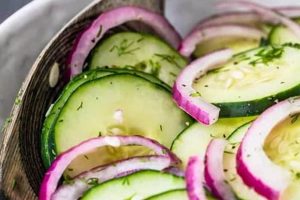
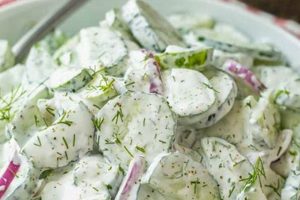
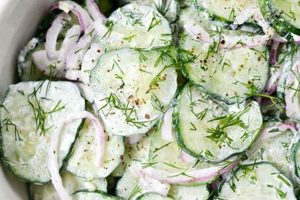
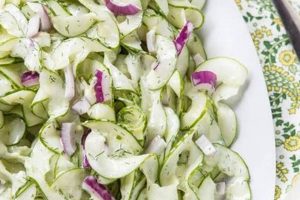
A chilled cucumber salad, often featuring thinly sliced cucumbers, is a staple in Polish cuisine. Variations incorporate ingredients such as sour cream, dill, vinegar, sugar, and sometimes onions or radishes, creating a refreshing and slightly tangy dish. These salads, known as mizeria (meaning “misery” possibly referring to the watery eyes caused by chopping onions historically included in the recipe or to the simplicity of the dish eaten during times of scarcity), are commonly served as a side to heavier meals, providing a light and palate-cleansing counterpoint.
The simplicity of this dish belies its culinary significance. The balance of creamy, acidic, and herbaceous flavors offers a refreshing complement to rich or savory main courses. Furthermore, the quick preparation and readily available ingredients have made it a beloved and economical dish passed down through generations. This historical context, coupled with the adaptable nature of the recipe, allows for regional and familial variations, adding depth to Polish culinary traditions.
This exploration will delve further into the nuances of this quintessential Polish side dish. Topics covered will include common variations in ingredients and preparation methods, regional distinctions, and suggestions for pairings with traditional Polish main courses.
Tips for an Authentic Polish Cucumber Salad
Achieving the perfect balance of flavors and textures in a Polish cucumber salad relies on a few key techniques. These tips offer guidance for preparing an authentic and refreshing mizeria.
Tip 1: Salt and Drain the Cucumbers: Salting thinly sliced cucumbers and allowing them to drain for approximately 15 minutes removes excess moisture, preventing a watery salad and enhancing the cucumber flavor.
Tip 2: Embrace Fresh Dill: Fresh dill is essential for authentic flavor. Dried dill can be used as a substitute if fresh is unavailable, but the flavor profile will differ.
Tip 3: Temper the Sour Cream: Adding a small amount of the cucumber’s liquid to the sour cream before incorporating it into the salad helps prevent curdling and creates a smoother, more cohesive dressing.
Tip 4: Adjust Sweetness and Acidity: Taste and adjust the sugar and vinegar levels to achieve the desired balance. Some prefer a sweeter salad, while others favor a more tart profile.
Tip 5: Consider Thinly Sliced Onions: While not always included, very thinly sliced red or white onions add a subtle sharpness and textural complexity.
Tip 6: Chill Thoroughly: Allowing the salad to chill for at least 30 minutes before serving allows the flavors to meld and enhances the refreshing quality of the dish.
Tip 7: Choose the Right Vinegar: White vinegar or apple cider vinegar are traditional choices. Avoid balsamic or other strongly flavored vinegars which can overpower the delicate cucumber flavor.
By following these tips, one can create a Polish cucumber salad that is both authentic and delicious, offering a refreshing complement to a wide range of dishes.
The following section will provide variations on the classic recipe, exploring regional differences and offering suggestions for customizing this versatile dish.
1. Thinly sliced cucumbers

Thinly sliced cucumbers are fundamental to a proper Polish cucumber salad, known as mizeria. The thinness serves several crucial purposes. It allows the cucumbers to readily absorb the flavors of the dressing, composed of sour cream or yogurt, dill, vinegar, and sugar. This creates a harmonious blend of flavors, where the cucumber’s subtle sweetness and refreshing character intertwine with the tangy and herbaceous elements of the dressing. Thicker slices would limit this flavor exchange, resulting in a less balanced and satisfying dish. Furthermore, thin slices provide a delicate texture that contrasts pleasantly with the creamy dressing, contributing to the overall sensory experience. Imagine a mizeria made with thick cucumber chunks the dressing would cling unevenly, and the textural contrast would be lost.
The method of slicing also influences the final result. Traditional recipes often call for slicing cucumbers using a mandoline or sharp knife to achieve uniform, paper-thin slices. This not only enhances the aesthetic appeal but also ensures even marinating and a consistent texture throughout the salad. Using a dull knife or unevenly slicing the cucumbers can lead to a less appealing presentation and inconsistent flavor distribution. Consider the difference between a salad composed of elegantly thin, almost translucent cucumber ribbons and one with thick, uneven chunks the former exemplifies the refinement and delicacy characteristic of a well-executed mizeria.
In essence, thinly slicing the cucumbers is not merely a procedural step but an integral part of the mizeria’s identity. It directly impacts the flavor, texture, and overall enjoyment of the dish. This attention to detail exemplifies the care and precision often associated with traditional Polish cuisine, elevating a seemingly simple salad to a culinary expression of balance and freshness.
2. Sour Cream or Yogurt

The choice between sour cream and yogurt significantly influences the character of a Polish cucumber salad (mizeria). Sour cream, richer and less tangy, contributes a creamy texture and mellows the acidity of the vinegar. This results in a milder flavor profile, emphasizing the refreshing qualities of the cucumbers and dill. Yogurt, particularly Greek yogurt, offers a tangier, lighter alternative. Its higher acidity complements the vinegar, creating a more pronounced sweet-and-sour contrast. The lower fat content also results in a lighter overall dish. The specific type of yogurt also plays a role; a thicker, strained yogurt will provide a creamier texture closer to sour cream, while a thinner yogurt will yield a more delicate dressing. For instance, using a full-fat sour cream creates a luxurious mizeria, ideal for pairing with heartier dishes, whereas a low-fat yogurt results in a lighter salad, suited to warm summer days. Ultimately, the choice depends on individual preference and the desired balance of richness and tanginess.
The historical context further informs this choice. Traditionally, sour cream was the prevalent ingredient in Polish cuisine, reflecting the agricultural landscape and culinary traditions. Yogurt, while increasingly popular, represents a more modern variation. This shift reflects evolving dietary preferences and greater accessibility to different dairy products. However, regardless of the choice, the dairy element serves a crucial function: it binds the ingredients, balances the flavors, and provides a creamy counterpoint to the crisp cucumbers. Consider a mizeria without any dairy the cucumbers and dill would lack cohesion, and the vinegar’s sharpness would dominate. The dairy component, whether sour cream or yogurt, is thus integral to the dish’s harmony.
Understanding the nuances of sour cream versus yogurt in a mizeria allows for a more informed and personalized approach to this classic dish. It highlights the adaptability of Polish culinary traditions while underscoring the importance of each ingredient’s contribution to the final product. Whether opting for the traditional richness of sour cream or the lighter tang of yogurt, the careful consideration of this element ensures a well-balanced and flavorful mizeria, reflecting both personal preference and an appreciation for the subtleties of Polish cuisine.
3. Fresh Dill

Fresh dill is an indispensable component of authentic Polish cucumber salad (mizeria), contributing significantly to its characteristic flavor profile. Its aromatic presence elevates the simple combination of cucumbers and dairy, creating a refreshing and herbaceous counterpoint to the other ingredients.
- Aromatic Intensity
Fresh dill possesses a bright, slightly tangy aroma with hints of anise and citrus. This distinctive fragrance infuses the mizeria, creating a refreshing olfactory experience that complements the cool, crisp cucumbers. Dried dill, while a viable substitute in some dishes, lacks the vibrant aromatic intensity of fresh dill, resulting in a less nuanced flavor profile. The aromatic oils released by fresh dill when chopped or bruised are crucial for the authentic mizeria experience. Consider the difference between smelling a freshly cut sprig of dill and a pinch of dried dill the former offers a burst of vibrant green fragrance, while the latter presents a muted, less complex aroma.
- Flavor Enhancement
Beyond its aromatic contribution, fresh dill adds a distinct flavor dimension to the salad. Its subtle tanginess and herbaceous notes complement the creamy base and the slight acidity of the vinegar. This interplay of flavors creates a balanced and refreshing taste that distinguishes mizeria from other cucumber salads. Imagine the salad without dill the flavor would be noticeably flatter, lacking the characteristic herbal brightness.
- Visual Appeal
The vibrant green of fresh dill adds a visual element to the mizeria, enhancing its aesthetic appeal. The delicate fronds of dill interspersed among the pale cucumber slices create a visually appealing contrast, making the salad even more inviting. This visual freshness reinforces the sensory experience, linking the bright green color to the anticipated refreshing taste.
- Cultural Significance
Dill holds a significant place in Polish cuisine, frequently appearing in various dishes, including soups, sauces, and salads. Its inclusion in mizeria reflects this broader culinary tradition and contributes to the dish’s cultural authenticity. Using dill in mizeria connects the salad to a wider culinary heritage, reinforcing its place within Polish foodways.
The interplay of these facets establishes fresh dill as more than just an ingredient; it’s a key element that defines the sensory experience and cultural authenticity of Polish cucumber salad. The absence of fresh dill would fundamentally alter the dish, diminishing its characteristic flavor, aroma, and visual appeal. It is the careful consideration of these seemingly simple ingredients that elevates mizeria from a basic cucumber salad to a cherished element of Polish culinary tradition.
4. Vinegar (white or apple cider)

Vinegar, specifically white or apple cider vinegar, plays a crucial role in Polish cucumber salad (mizeria), providing the essential acidic element that balances the richness of the dairy and the sweetness of the cucumbers and any added sugar. The type of vinegar influences the overall flavor profile, contributing to the characteristic tang that defines this dish.
- Balancing Flavors
The primary function of vinegar in mizeria is to balance the other flavors. The acidity cuts through the richness of the sour cream or yogurt, preventing the salad from becoming overly heavy or cloying. It also complements the sweetness of the cucumbers and any added sugar, creating a harmonious sweet-and-sour profile. Without vinegar, the salad would lack the defining tangy element that distinguishes it. Imagine a mizeria made without vinegar – the flavors would be unbalanced, with the dairy and cucumber sweetness dominating.
- Enhancing Flavor Complexity
Beyond balancing sweetness, vinegar adds depth to the overall flavor profile. White vinegar provides a clean, sharp acidity, while apple cider vinegar introduces subtle fruit notes that complement the other ingredients. This nuanced acidity adds complexity to the mizeria, preventing it from being one-dimensional. The subtle apple notes in apple cider vinegar, for example, can complement the herbal notes of fresh dill, creating a more complex flavor profile than white vinegar alone would provide. This subtle complexity elevates the mizeria beyond a simple cucumber salad.
- Preservative Qualities
While not the primary function in a freshly made mizeria, the acidic nature of vinegar contributes to preserving the freshness of the cucumbers. This mild preservative effect helps maintain the salad’s crispness and prevents spoilage, particularly in warmer weather. Historically, before refrigeration, this aspect of vinegar was even more critical in preserving food. While modern refrigeration lessens this need, the vinegar still contributes to the salads longevity.
- Traditional Polish Cuisine
The use of vinegar, particularly white and apple cider vinegar, aligns with broader Polish culinary traditions. These types of vinegar are commonly used in various Polish dishes, reflecting readily available ingredients and established culinary practices. This connection to broader culinary practices positions mizeria within a wider context of Polish foodways, underscoring its authenticity as a traditional dish.
The inclusion of vinegar in mizeria highlights the importance of balance and complexity in Polish cuisine. It demonstrates how seemingly simple ingredients, when combined with care and attention to detail, can create a dish that is both refreshing and flavorful. The specific choice of vinegar, whether white or apple cider, allows for subtle variations in the final product, reflecting individual preferences and regional nuances while maintaining the essential character of this classic Polish salad.
5. Sugar
Sugar plays a subtle yet crucial role in Polish cucumber salad (mizeria), contributing to the balanced flavor profile that defines this dish. Its presence is not about overt sweetness but rather about enhancing and harmonizing the other flavors, creating a more complex and nuanced taste experience. Understanding the function of sugar in mizeria provides insight into the careful balance of flavors characteristic of Polish cuisine.
- Balancing Acidity
The primary function of sugar in mizeria is to temper the acidity of the vinegar. It creates a harmonious sweet-and-sour balance, preventing the salad from being overly tart. The amount of sugar used depends on individual preference and the type of vinegar used; apple cider vinegar, being slightly sweeter than white vinegar, may require less added sugar. This careful calibration of sweet and sour elements is essential for a well-balanced mizeria.
- Enhancing Cucumber Flavor
Sugar subtly enhances the natural sweetness of the cucumbers. It doesn’t make the cucumbers taste overtly sweet but rather brings out their inherent subtle sweetness, creating a more rounded flavor profile. This enhancement allows the cucumber flavor to shine through without being overshadowed by the vinegar’s acidity or the dairy’s richness.
- Flavor Complexity
The addition of sugar contributes to the overall complexity of the mizeria’s flavor profile. It interacts with the other ingredients, creating a nuanced taste that is more than just the sum of its parts. This complexity is a hallmark of well-executed Polish cuisine, demonstrating an understanding of how different flavors interact to create a harmonious whole.
- Regional Variations
The amount of sugar used in mizeria can vary regionally, reflecting different preferences and culinary traditions. Some regions might favor a slightly sweeter salad, while others prefer a more tart profile. These regional variations demonstrate the adaptability of the basic recipe while maintaining its core identity as a refreshing and flavorful cucumber salad. Understanding these regional nuances provides insight into the diversity within Polish cuisine.
The inclusion of sugar in mizeria demonstrates the nuanced approach to flavor that characterizes Polish cuisine. It’s not about creating an overly sweet dish but rather about achieving a harmonious balance of flavors, where sweetness, acidity, and herbaceous notes intertwine to create a refreshing and satisfying culinary experience. This careful attention to detail elevates mizeria from a simple cucumber salad to a dish that reflects a deeper understanding of flavor and balance, showcasing the subtleties of Polish culinary traditions.
6. Salt and Pepper
Salt and pepper, while seemingly simple ingredients, play a vital role in a Polish cucumber salad (mizeria), influencing both flavor and texture. Salt, in particular, performs a crucial function beyond basic seasoning. It draws excess moisture from the thinly sliced cucumbers through osmosis. This process not only prevents a watery salad but also concentrates the cucumber flavor and creates a crisper texture. Furthermore, the salting process allows the cucumbers to absorb the dressing more effectively, resulting in a more flavorful and evenly seasoned salad. Without this initial salting, the mizeria may become diluted, and the cucumbers may retain a less desirable, almost vegetal flavor.
Pepper, typically black pepper, contributes a subtle layer of complexity to the flavor profile. Its mild spiciness counterbalances the creamy richness of the sour cream or yogurt and the tanginess of the vinegar. While not a dominant flavor, pepper adds a depth that elevates the overall taste experience. The quantity of pepper used can be adjusted to personal preference, but even a small amount contributes a noticeable nuance to the salad. Over-peppering, however, can easily overpower the delicate flavors of the cucumbers and dill, so a judicious approach is recommended.
The combined effect of salt and pepper in mizeria highlights the importance of precise seasoning in Polish cuisine. These seemingly basic ingredients are not mere afterthoughts but rather essential components that contribute to the dish’s overall balance and flavor complexity. The proper use of salt enhances both texture and flavor, while pepper adds a subtle layer of spice that complements the other ingredients. This attention to detail, even with the simplest of seasonings, distinguishes a truly authentic and well-executed mizeria.
7. Optional
While cucumbers, sour cream (or yogurt), dill, vinegar, sugar, salt, and pepper constitute the core components of Polish cucumber salad (mizeria), regional and individual variations often incorporate additions such as thinly sliced onions or radishes. These optional ingredients introduce nuances in flavor and texture, further enriching the sensory experience.
- Onions: Pungency and Complexity
Thinly sliced onions, typically red or white, contribute a pungent, slightly sharp flavor that complements the mizeria’s creamy and tangy elements. This sharpness cuts through the richness of the sour cream, adding a layer of complexity to the overall flavor profile. The choice between red and white onions influences the intensity of the sharpness and the color contrast within the salad. Red onions offer a more pronounced sharpness and a vibrant purple hue, while white onions provide a milder onion flavor.
- Radishes: Peppery Bite and Visual Appeal
Radishes offer a peppery bite and a crisp texture that contrasts with the softness of the cucumbers. Their vibrant color, typically red or pink, also enhances the salad’s visual appeal. The peppery notes of the radishes interact with the dill and vinegar, creating a more complex interplay of flavors. Including radishes introduces a textural element, adding a satisfying crunch to the otherwise soft salad.
- Regional Preferences and Variations
The inclusion of onions or radishes often reflects regional preferences and culinary traditions. Some regions of Poland may favor the addition of onions, while others might prefer radishes, or even a combination of both. These variations highlight the adaptability of mizeria while maintaining its core identity. For example, a mizeria from Silesia might include onions for added pungency, while a version from Maopolska may feature radishes for their peppery bite and vibrant color.
- Balancing Flavors and Textures
The key to incorporating these optional ingredients lies in achieving a balanced flavor profile. The quantities of onions and radishes should complement, not overpower, the core flavors of the cucumbers, dill, and sour cream. Adding too much onion can create an overly pungent salad, while an excessive amount of radishes can make it too peppery. A judicious approach ensures that these additions enhance the mizeria without masking its essential character. Consider the delicate balance between the creamy sour cream, the refreshing cucumber, the herbaceous dill, and the subtle sharpness of the onion or the peppery bite of the radish each element contributes to the overall harmony of the dish.
The inclusion of optional ingredients like onions and radishes exemplifies the adaptability and regional diversity within Polish cuisine. These additions, while not essential to the core identity of mizeria, offer opportunities for personalization and culinary exploration, reflecting individual preferences and regional culinary traditions. The careful consideration of these optional elements demonstrates a deeper appreciation for the nuances of flavor and texture, further enriching the experience of this classic Polish salad.
Frequently Asked Questions
This section addresses common inquiries regarding Polish cucumber salad (mizeria), offering clarification and guidance for optimal preparation and enjoyment.
Question 1: Can dried dill be substituted for fresh dill?
While dried dill can be used in the absence of fresh dill, it will result in a noticeably different flavor profile. Fresh dill offers a brighter, more nuanced flavor and aroma crucial for authentic mizeria. Dried dill can be used as a last resort, but using fresh dill is strongly recommended.
Question 2: What type of vinegar is most appropriate?
White vinegar or apple cider vinegar are the traditional choices for mizeria. Avoid balsamic or other strongly flavored vinegars, which can overpower the delicate flavors of the cucumbers and dill.
Question 3: How thinly should the cucumbers be sliced?
Cucumbers should be sliced as thinly as possible, ideally using a mandoline or a very sharp knife. Thin slices ensure optimal flavor absorption and contribute to the desired delicate texture.
Question 4: Should the cucumbers be peeled?
Peeling the cucumbers is a matter of preference. Leaving the peel on adds a bit of texture and color, while peeling results in a more delicate texture. If the cucumbers have a thick or waxy skin, peeling is recommended.
Question 5: How long can the salad be stored?
Mizeria is best served fresh but can be stored in an airtight container in the refrigerator for up to two days. The texture of the cucumbers may soften slightly over time.
Question 6: What are some traditional Polish dishes that pair well with mizeria?
Mizeria complements a wide range of Polish dishes, particularly heartier meat dishes like kotlet schabowy (breaded pork cutlet), gobki (cabbage rolls), or bigos (hunter’s stew). It also pairs well with roasted or grilled meats and fish.
Understanding these common points of inquiry allows for a greater appreciation of the nuances involved in preparing authentic and flavorful Polish cucumber salad. The seemingly simple nature of mizeria belies the careful balance of flavors and textures that contribute to its unique character.
The following section will offer a selection of recipe variations, demonstrating the adaptability of mizeria and providing options for customization.
Cucumber Salad Recipe
This exploration has delved into the multifaceted aspects of Polish cucumber salad, illuminating its significance within Polish culinary traditions. From the essential role of thinly sliced cucumbers and fresh dill to the nuanced balance of sour cream or yogurt, vinegar, and sugar, each component contributes to the dish’s distinctive character. Regional variations, incorporating ingredients like onions or radishes, further demonstrate the adaptability of this seemingly simple salad. The critical step of salting and draining the cucumbers, often overlooked, underscores the importance of technique in achieving optimal flavor and texture.
The enduring popularity of Polish cucumber salad speaks to its refreshing simplicity and its ability to complement a wide array of dishes. More than just a side dish, it represents a tangible connection to Polish culinary heritage, offering a taste of tradition passed down through generations. Further exploration of regional variations and experimentation with personal adaptations promise to deepen appreciation for this culinary cornerstone of Polish cuisine.