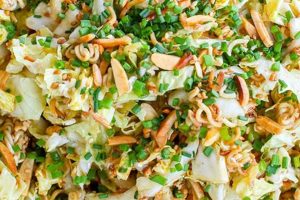
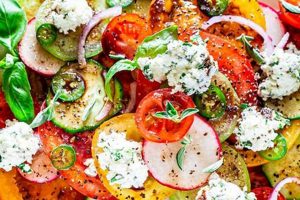
Layered salads assembled in a jar, typically with the dressing at the bottom and progressively lighter ingredients layered upward, offer a convenient and portable meal solution. A typical example might include a vinaigrette base, followed by hearty vegetables like chopped carrots and cucumbers, then grains or pasta, proteins such as chicken or beans, and finally, leafy greens like spinach or lettuce.
This method of preparation keeps salad ingredients fresh and crisp, preventing them from becoming soggy by separating them from the dressing until consumption. This is particularly beneficial for meal prepping, allowing individuals to create multiple salads in advance for the week. The rise in popularity of this approach coincides with increased demand for convenient, healthy lunch options, especially in office settings or for those on the go.
Further exploration will delve into the practical aspects of creating these layered salads, including ingredient selection, layering techniques, and tips for successful storage and transport. Variations and adaptations to suit diverse dietary needs and preferences will also be addressed.
Jar Salad Preparation Tips
Successful jar salads depend on proper ingredient selection and layering techniques to maintain freshness and prevent sogginess. The following tips provide guidance for optimal preparation.
Tip 1: Dressing First: Always start with the dressing at the bottom of the jar. This prevents delicate greens from wilting.
Tip 2: Sturdy Vegetables Next: Layer hard vegetables like carrots, cucumbers, and bell peppers above the dressing. These act as a barrier between the dressing and more delicate ingredients.
Tip 3: Grains and Proteins Follow: Add grains like quinoa or pasta and protein sources such as beans, chicken, or tofu above the hardier vegetables. These absorb excess dressing without becoming mushy.
Tip 4: Leafy Greens on Top: Place leafy greens like spinach, romaine, or arugula at the top of the jar. Their placement furthest from the dressing keeps them crisp and prevents premature wilting.
Tip 5: Airtight Lids Essential: Ensure the jars are sealed with airtight lids to maintain freshness and prevent leakage.
Tip 6: Proper Storage: Store prepared salads in the refrigerator for up to 4 days. For best results, keep them upright to maintain layering.
Tip 7: Shake Before Eating: Invert the jar and shake well before eating to distribute the dressing throughout the salad.
Tip 8: Consider Jar Size: Choose jar sizes appropriate for individual portion needs.
Adhering to these guidelines ensures enjoyable, fresh, and convenient salads throughout the week. Proper layering and storage are key to maximizing the benefits of this meal preparation method.
By understanding these principles, one can easily adapt and create diverse combinations to suit individual preferences and dietary needs. This concludes the practical guidance on jar salad preparation.
1. Fresh Ingredients

Ingredient quality directly impacts the overall success of jar salads. Freshness plays a crucial role in maintaining flavor, texture, and nutritional value, contributing significantly to a satisfying and healthy meal. Utilizing high-quality ingredients elevates the simple jar salad to a flavorful and enjoyable culinary experience.
- Crisp Greens:
Leafy greens form the foundation of most jar salads. Opting for crisp, vibrant greens like romaine, spinach, or kale ensures optimal texture and flavor. Avoid using pre-washed or pre-cut greens, as these tend to deteriorate more quickly. Freshly washed and dried greens maintain their quality longer, contributing to a more appealing final product.
- Ripe Vegetables:
The selection of ripe, seasonal vegetables enhances both the flavor and nutritional profile of jar salads. Choose vegetables that are firm, brightly colored, and free from blemishes. Examples include bell peppers, cucumbers, carrots, and cherry tomatoes. Seasonal vegetables typically offer the best flavor and nutrient density.
- High-Quality Proteins:
Incorporating protein adds substance and nutritional balance to jar salads. Grilled chicken, fish, hard-boiled eggs, beans, lentils, and tofu are excellent options. Ensure proteins are cooked thoroughly and cooled completely before adding them to the jar to prevent bacterial growth and maintain food safety.
- Flavorful Add-ins:
Nuts, seeds, dried fruits, cheeses, and herbs provide additional flavor and texture dimensions to jar salads. Toasted nuts, such as almonds or walnuts, add crunch and healthy fats. Dried cranberries or apricots provide a touch of sweetness. Crumbled feta or goat cheese adds a tangy element. Fresh herbs like parsley, cilantro, or mint enhance the overall flavor profile.
Prioritizing fresh, high-quality ingredients significantly contributes to the overall enjoyment and nutritional benefits of jar salads. The careful selection of each component, from crisp greens to flavorful add-ins, ensures a satisfying and healthy meal. Ultimately, the freshness of ingredients elevates the jar salad from a simple convenience item to a delightful culinary creation.
2. Proper Layering
Proper layering is crucial for maintaining the freshness and integrity of ingredients in jar salads. This technique prevents premature wilting, sogginess, and undesirable flavor mixing. Strategic layering ensures that each component remains distinct and palatable until consumption.
- Dressing at the Bottom
Placing the dressing at the bottom of the jar forms a barrier, preventing it from directly contacting delicate greens and other ingredients prone to wilting. This foundation ensures that other components remain crisp and flavorful until the salad is ready to be eaten. A vinaigrette, for example, would sit at the very bottom.
- Hearty Vegetables as a Base
Hard vegetables, such as chopped carrots, cucumbers, bell peppers, and onions, form a protective layer above the dressing. These vegetables are less susceptible to absorbing dressing and becoming soggy. They also provide a sturdy foundation for more delicate ingredients layered above.
- Grains and Proteins in the Middle
Grains like quinoa, couscous, or pasta, along with protein sources like beans, chicken, or tofu, are layered above the hardier vegetables. This placement allows them to absorb any excess dressing without becoming overly saturated, maintaining their texture and flavor. This layer adds substantial body to the salad.
- Leafy Greens at the Top
Delicate leafy greens, such as spinach, lettuce, or arugula, are placed at the top of the jar, furthest from the dressing. This crucial placement prevents premature wilting and ensures the greens remain crisp and fresh until consumption. This top layer maintains the visual appeal of the salad upon opening.
Proper layering is essential for creating successful jar salads that maintain ingredient integrity and prevent sogginess. Adherence to this technique ensures a pleasant textural and flavorful experience, maximizing the enjoyment and convenience of this meal preparation method. The careful arrangement of ingredients contributes significantly to the overall success of the jar salad.
3. Airtight Containers

Airtight containers are essential for successful jar salad preparation, playing a crucial role in maintaining freshness and preventing leakage. Their proper use directly impacts the quality and longevity of prepared salads, ensuring optimal flavor and texture. Understanding the key aspects of airtight containers is vital for maximizing the benefits of this meal preparation method.
- Preventing Spoilage
Airtight seals prevent exposure to oxygen, which can cause ingredients, particularly leafy greens, to oxidize and spoil prematurely. This preservation of freshness extends the shelf life of the salads, making them suitable for meal prepping. A properly sealed container can keep a salad fresh for up to four days in the refrigerator.
- Maintaining Crispness
The airtight environment within the container helps maintain the crispness of vegetables and prevents them from becoming soggy. This is particularly important for leafy greens, which are prone to wilting when exposed to moisture. The secure seal prevents moisture exchange, preserving the texture and quality of the salad components.
- Leak Prevention
A reliable airtight seal prevents leakage of dressings and other liquids, which is crucial for maintaining the integrity of the layered salad and avoiding messes during transport. Secure lids and quality containers are essential for preventing spills and ensuring convenient portability.
- Material Considerations
While glass jars are a popular choice for their aesthetic appeal and reusability, high-quality plastic containers with airtight lids also provide effective storage. The choice of material depends on individual preferences and practical considerations, such as durability and ease of cleaning. Both glass and plastic options offer adequate protection when properly sealed.
The use of airtight containers is fundamental to the success of jar salad recipes. They preserve freshness, prevent spoilage, maintain crispness, and prevent leaks, ensuring that the prepared salads remain palatable and enjoyable. Proper selection and use of these containers contribute significantly to the convenience and efficacy of this meal preparation method.
4. Convenient Portability

The portability of jar salads is a key factor contributing to their popularity. This feature addresses the increasing demand for convenient, healthy meal options suitable for various on-the-go scenarios, from busy workdays to travel and outdoor activities. The self-contained nature of jar salads eliminates the need for separate containers and utensils, streamlining meal transport and consumption.
- Leak-Proof Design
Properly sealed jars prevent leakage of dressings and other liquids, ensuring mess-free transport. This feature is essential for maintaining the integrity of the layered salad and protecting other items within bags or lunchboxes. The leak-proof design allows for worry-free transport, whether commuting, traveling, or enjoying outdoor activities. This eliminates the need for bulky, separate dressing containers.
- Compact Format
The compact format of jar salads allows for easy storage in bags, backpacks, and refrigerators. Their standardized shape facilitates efficient packing and maximizes space utilization, a significant advantage for individuals with limited carrying capacity. The cylindrical shape of jars often fits better in bags than traditional lunch containers.
- All-in-One Convenience
The all-in-one nature of jar salads eliminates the need for separate containers for dressings, toppings, and utensils. This simplifies meal preparation and transport, streamlining the process for busy individuals. Everything needed for a complete and satisfying meal is contained within a single, portable jar.
- Reduced Waste
Reusable jars offer an environmentally friendly alternative to disposable containers, reducing waste associated with single-use packaging. This sustainable approach aligns with growing environmental consciousness and minimizes the ecological footprint of meal consumption. Choosing reusable jars contributes to a more sustainable lifestyle.
The convenient portability of jar salads significantly contributes to their appeal as a practical and healthy meal option. This feature, combined with the ability to maintain ingredient freshness and customize combinations, positions jar salads as an ideal solution for individuals seeking convenient, nutritious meals on the go. The portability factor enhances the overall practicality and appeal of this meal preparation method.
5. Creative Combinations

The “jar salad” format offers significant potential for creative ingredient combinations, transforming a simple concept into a versatile and customizable meal solution. This flexibility allows for a wide range of flavor profiles and caters to diverse dietary needs and preferences. The ability to personalize jar salads contributes significantly to their sustained appeal and practicality.
One can explore global cuisine influences by creating a Greek-inspired salad with feta cheese, olives, cucumbers, and a lemon-herb vinaigrette. Alternatively, an Asian-inspired salad might feature shredded cabbage, edamame, mandarin oranges, and a sesame-ginger dressing. The layering approach also allows for the incorporation of less conventional ingredients like roasted sweet potatoes, quinoa, or grilled halloumi, further expanding culinary possibilities. This adaptability makes jar salads suitable for various meal occasions, from light lunches to more substantial dinners. For those focusing on specific dietary requirements, jar salads readily accommodate vegan, vegetarian, gluten-free, and ketogenic diets through careful ingredient selection. A vegan option might include roasted chickpeas, avocado, and a tahini dressing, while a ketogenic version might emphasize leafy greens, high-fat cheeses, and a low-carbohydrate vinaigrette.
Successful creative combination within jar salads relies on an understanding of flavor pairings and textural contrasts. Balancing sweet, savory, acidic, and spicy elements enhances the overall sensory experience. Furthermore, incorporating a variety of textures, from crunchy nuts and seeds to creamy avocado and soft-cooked grains, adds complexity and interest. However, consideration should be given to potential ingredient interactions during storage. For instance, highly acidic dressings might not be suitable for all ingredients. Despite these potential challenges, the creative possibilities inherent in jar salad construction significantly contribute to their versatility and appeal as a convenient and customizable meal option. Mastering the art of creative combinations elevates the jar salad from a simple lunch solution to a culinary canvas for exploration and enjoyment.
Frequently Asked Questions about Jar Salads
This section addresses common inquiries regarding jar salad preparation and consumption, providing clarity on key aspects to ensure optimal results and address potential concerns.
Question 1: What is the ideal jar size for a single serving?
A jar with a capacity between 32 and 48 ounces (approximately 1 to 1.5 liters) typically suffices for a single serving. Adjustments may be necessary based on individual appetite and salad composition. Smaller jars can be used for side salads or snacks.
Question 2: How long can jar salads be stored in the refrigerator?
Properly prepared and stored jar salads can maintain freshness for up to four days in the refrigerator. Maintaining a consistent, cool temperature is essential for optimal preservation.
Question 3: Which dressings are best suited for jar salads?
Vinaigrettes are generally preferred for jar salads due to their lower viscosity and reduced risk of causing ingredient sogginess. Thicker, creamier dressings can be used, but careful layering is crucial to prevent premature wilting of delicate greens.
Question 4: Can jar salads be frozen?
Freezing jar salads is not recommended. The freezing process can negatively impact the texture and flavor of ingredients, particularly leafy greens and vegetables. Freezing dressings separately and adding them upon thawing may be considered, but overall freshness and quality are best preserved through refrigeration.
Question 5: What are the best protein sources for jar salads?
Suitable protein choices include grilled chicken or fish, hard-boiled eggs, beans, lentils, and tofu. Ensure proteins are fully cooked and cooled before adding them to the jar.
Question 6: How can sogginess be prevented in jar salads?
Sogginess is primarily prevented through proper layering techniques, specifically keeping the dressing at the bottom of the jar and placing leafy greens at the top, furthest away from the dressing. Choosing hearty vegetables and grains also contributes to maintaining texture and preventing moisture absorption.
Understanding these key aspects of jar salad preparation and storage ensures a positive culinary experience, maximizing freshness, flavor, and convenience.
For further exploration of specific recipes and variations, please continue to the recipe section.
Jar Salad Recipes
Exploration of jar salad recipes reveals a practical and adaptable approach to meal preparation, emphasizing freshness, convenience, and creative customization. Proper layering techniques, ingredient selection, and airtight storage are crucial for maximizing the benefits of this method. Understanding these elements allows for the creation of diverse and flavorful salads tailored to individual dietary needs and preferences. From the foundational dressing to the crowning layer of leafy greens, each component contributes to a successful and satisfying culinary outcome.
Jar salad recipes represent a significant shift towards mindful meal preparation, addressing the increasing demand for convenient, healthy, and portable options. This approach encourages thoughtful ingredient selection and promotes culinary creativity within a structured framework. The potential for continued innovation and adaptation within the jar salad format positions it as a sustainable and evolving element of contemporary culinary practice.