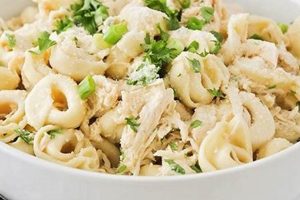
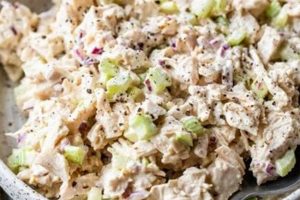
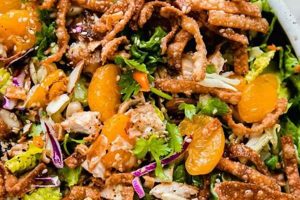
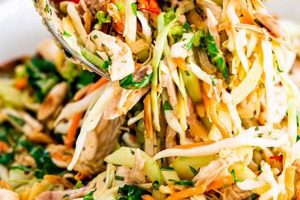
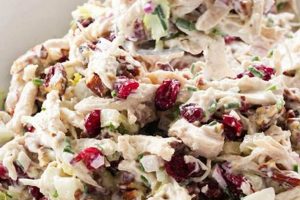
A dish featuring grilled or pan-fried chicken marinated in a sweet and savory teriyaki sauce, combined with fresh or cooked vegetables and often served cold. Variations can include pasta, rice, or other grains, as well as different types of greens and dressings. An example might feature grilled chicken tossed with romaine lettuce, carrots, edamame, and a sesame-ginger dressing.
This type of dish offers a nutritious and flavorful meal option, providing a good source of protein from the chicken and a variety of vitamins and minerals from the added vegetables. The teriyaki marinade adds a distinctive umami flavor, balancing sweet and savory notes. Its adaptable nature allows for customization based on dietary preferences and seasonal ingredients, making it a versatile choice for lunch, dinner, or potlucks. While the specific origins of the dish are unclear, it reflects the increasing global popularity of both Japanese teriyaki flavors and the concept of combining protein and vegetables in a salad format.
The following sections will explore various aspects of creating this dish, including selecting appropriate chicken cuts, preparing the marinade, cooking methods, choosing complementary ingredients, and building a balanced and flavorful salad.
Tips for a Delicious Teriyaki Chicken Salad
Optimizing the preparation of this dish involves attention to several key details, from selecting the right ingredients to achieving the perfect balance of flavors.
Tip 1: Marinate the Chicken Thoroughly: Adequate marination time, ideally at least 30 minutes, allows the chicken to absorb the teriyaki flavors fully. For enhanced flavor penetration, consider scoring the chicken’s surface before marinating.
Tip 2: Control Cooking Temperature: Avoid overcooking the chicken, as this can result in dry, tough meat. Maintain a consistent medium heat whether grilling or pan-frying, and use a meat thermometer to ensure the chicken reaches an internal temperature of 165F (74C).
Tip 3: Balance Sweet and Savory: Adjust the teriyaki marinades sweetness and saltiness according to preference. A touch of acidity, such as rice vinegar or lime juice, can further enhance the flavor profile.
Tip 4: Select Complementary Vegetables: Choose vegetables that complement the teriyaki flavors. Crisp options like romaine lettuce, shredded carrots, bell peppers, snap peas, and edamame provide textural contrast. Consider adding a handful of toasted sesame seeds or chopped cashews for added crunch.
Tip 5: Dress Strategically: The dressing should complement the teriyaki marinade without overpowering it. A light vinaigrette with sesame oil, ginger, and a touch of honey or maple syrup can enhance the overall flavor experience. Avoid heavy, creamy dressings that may clash with the teriyaki profile.
Tip 6: Consider Grain Options: For a more substantial salad, incorporate cooked quinoa, brown rice, or soba noodles. These additions provide complex carbohydrates and contribute to a more complete meal.
Tip 7: Enhance with Fresh Herbs: Freshly chopped cilantro, mint, or green onions can add a burst of freshness and aroma to the salad.
By following these tips, one can elevate this dish from simple to exceptional, creating a satisfying and flavorful culinary experience.
The following section will provide a detailed, step-by-step recipe guide for preparing this dish, incorporating these tips for optimal results.
1. Chicken Preparation

Chicken preparation is foundational to a successful teriyaki chicken salad recipe. Properly preparing the chicken ensures optimal flavor absorption from the marinade and contributes significantly to the final dish’s texture and overall enjoyment. Several facets of chicken preparation influence the outcome.
- Chicken Selection
The choice of chicken cut impacts both flavor and texture. Boneless, skinless chicken breasts offer a lean protein source, while thighs provide richer flavor and greater moisture retention. Alternatively, using a combination of both can offer a balance of leanness and richness. The selected cut influences cooking times and methods.
- Cutting Technique
Consistent sizing ensures even cooking and marinade penetration. Cubing the chicken into bite-sized pieces facilitates even cooking in stir-fries or salads, while thin strips are suitable for grilling or pan-frying. Proper cutting also contributes to a more aesthetically pleasing final presentation.
- Marination
Marinating the chicken in teriyaki sauce is crucial for flavor development. The duration of marination, typically ranging from 30 minutes to several hours, influences the intensity of the teriyaki flavor. Longer marinades often lead to more pronounced flavor profiles within the chicken.
- Cooking Method
The chosen cooking method affects the chicken’s texture and how the teriyaki glaze develops. Grilling imparts a smoky char, while pan-frying creates a seared crust and a flavorful glaze. Baking offers a convenient, hands-off approach. Each method yields distinct textural and flavor nuances.
These aspects of chicken preparation collectively determine the chicken’s tenderness, flavor intensity, and overall contribution to the teriyaki chicken salad. Careful attention to each stage ensures a flavorful and enjoyable culinary experience. Consideration of these elements alongside other recipe components like vegetable selection and dressing choice allows for a customized and well-balanced final dish.
2. Teriyaki Marinade

Teriyaki marinade forms the cornerstone of a teriyaki chicken salad recipe, imbuing the chicken with its characteristic sweet, savory, and umami flavors. The marinade’s composition and application significantly influence the final dish’s overall taste profile and success. Understanding its components and their interaction is crucial for achieving desired results.
- Core Ingredients
The foundation of a teriyaki marinade typically comprises soy sauce, mirin (a sweet rice wine), and sugar. Soy sauce provides saltiness and umami, mirin contributes sweetness and subtle acidity, and sugar enhances the overall sweetness. Variations may incorporate sake, ginger, garlic, and other aromatics to add complexity and depth of flavor. The balance of these ingredients dictates the marinade’s final flavor profile.
- Flavor Balancing
Achieving a harmonious balance between sweet, salty, and umami notes is essential for a well-rounded teriyaki experience. The ratio of soy sauce to mirin and sugar influences the final taste. Adjusting these proportions allows for customization based on individual preferences, ranging from a sweeter marinade to a more savory one. Adding a touch of acidity, such as rice vinegar or citrus juice, can further enhance the flavor complexity.
- Marination Time and Technique
Marination time directly affects the intensity of flavor imparted to the chicken. While 30 minutes can provide a noticeable teriyaki flavor, longer marinades, up to several hours, allow for deeper penetration and a more pronounced taste. Techniques like scoring the chicken’s surface or using a resealable bag for marination can further enhance flavor absorption and ensure even distribution.
- Impact on the Final Dish
The teriyaki marinade not only flavors the chicken but also contributes to the overall salad composition. The marinade’s residual flavors can influence the choice of accompanying vegetables, dressings, and other salad components. A sweeter marinade may pair well with tart or acidic vegetables, while a more savory marinade may complement milder, earthier flavors. Understanding this interplay is critical for creating a balanced and cohesive salad.
The teriyaki marinade’s influence extends beyond simply flavoring the chicken; it acts as a unifying element, tying together the various components of the teriyaki chicken salad. Its careful preparation is essential for creating a dish that is both flavorful and harmonious, where the sweet, savory, and umami notes complement each other and the other salad ingredients.
3. Salad Components

Salad components play a crucial role in a teriyaki chicken salad recipe, contributing texture, flavor, and nutritional value. Beyond the marinated chicken, these elements significantly influence the overall balance and appeal of the dish. Careful selection and preparation of these components elevates the salad from a simple protein-plus-vegetable combination to a complex and satisfying culinary experience. The following facets illustrate the importance of strategic component choices.
- Greens Selection
The choice of greens provides the foundation for the salad, influencing both texture and flavor. Crisp romaine lettuce offers a refreshing crunch, while spinach contributes a slightly earthy undertone. Butter lettuce provides a delicate, soft texture, while a blend of mixed greens offers variety in both flavor and appearance. The selected greens must complement, not overpower, the teriyaki-flavored chicken. For instance, a robust kale might clash with the delicate teriyaki flavors.
- Vegetable Variety
Incorporating a variety of vegetables enhances the salad’s nutritional content and introduces textural and flavor complexity. Carrots, cucumbers, and bell peppers offer crispness and sweetness, while snap peas and edamame contribute a satisfying crunch and vegetal notes. Avocado adds creaminess and healthy fats. The choice of vegetables should consider both complementary flavors and contrasting textures to create a well-balanced and engaging salad. Grilled pineapple or mango can add a tropical twist, while shredded red cabbage introduces a vibrant color and peppery bite.
- Textural Elements
The inclusion of textural elements elevates the sensory experience of the salad. Toasted sesame seeds, chopped nuts (such as almonds, cashews, or peanuts), and crispy wonton strips provide satisfying crunch and contrast to the softer textures of the chicken and vegetables. These elements also contribute additional flavors and visual appeal. For example, toasted macadamia nuts offer a rich, buttery flavor and elegant visual contrast.
- Complementary Additions
Beyond standard vegetables, other additions can enhance the overall composition of the salad. Mandarin orange segments introduce a burst of citrusy sweetness, while dried cranberries provide a chewy texture and tartness. Incorporating cooked quinoa or brown rice adds a source of complex carbohydrates and increases the salad’s satiety value. These additions further broaden the flavor profile and nutritional value of the dish. For example, adding crumbled feta cheese provides a salty, tangy counterpoint to the sweetness of the teriyaki.
The strategic combination of greens, vegetables, textural elements, and complementary additions elevates the teriyaki chicken salad beyond a simple dish. These components work synergistically with the teriyaki-marinated chicken to create a complex, flavorful, and texturally satisfying meal. The interplay of flavors and textures, influenced by the carefully chosen salad components, determines the final dish’s overall appeal and success.
4. Dressing Selection

Dressing selection is paramount in a teriyaki chicken salad recipe, acting as a bridge between the distinct flavors of the marinated chicken and the other salad components. The dressing’s role extends beyond simply adding moisture; it contributes significantly to the overall flavor profile, texture, and balance of the dish. An appropriate dressing harmonizes with the existing teriyaki flavors, enhancing, not masking, the primary taste components. Conversely, an ill-chosen dressing can clash with the teriyaki, resulting in a disjointed and unbalanced salad. For example, a heavy, creamy ranch dressing might overpower the delicate sweet and savory notes of the teriyaki, whereas a light vinaigrette with complementary Asian-inspired flavors can enhance the overall experience. A sesame-ginger vinaigrette, for instance, builds upon the existing umami notes of the teriyaki while adding a bright, acidic counterpoint.
The interplay between the dressing and other salad components necessitates careful consideration. The dressing should complement the chosen vegetables, fruits, nuts, and other additions. If the salad includes ingredients with pronounced flavors, such as mango or red onion, the dressing should provide a balancing element without introducing conflicting tastes. A light rice vinegar-based dressing with a hint of honey, for instance, might complement the sweetness of mango while providing a subtle acidic contrast to the sharpness of red onion. Alternatively, if the salad focuses primarily on fresh, crisp vegetables, a slightly bolder dressing featuring soy sauce, lime juice, and chili flakes could add depth and complexity. Practical applications of this understanding involve tasting the individual components and the overall salad composition before finalizing the dressing choice, allowing for adjustments to achieve optimal balance and harmony.
Effective dressing selection is integral to a successful teriyaki chicken salad. It requires a nuanced understanding of flavor pairings, textural considerations, and the interplay between the various salad components. The dressing’s role is to unify and enhance, not dominate, the existing flavors. By carefully considering the characteristics of the other ingredients and strategically selecting a complementary dressing, one can elevate the teriyaki chicken salad from a simple combination of ingredients to a well-balanced, flavorful, and harmonious culinary creation. Challenges may arise in balancing the sweetness of the teriyaki with other flavors, often requiring careful adjustment of the dressings acidity and savory notes through ingredients like ginger, garlic, or a touch of citrus zest. Ultimately, the ideal dressing choice hinges on achieving a synergistic relationship between all the salad components, where each element contributes to a cohesive and enjoyable whole.
5. Flavor Balance

Flavor balance is crucial in a teriyaki chicken salad recipe. The dish’s success hinges on the harmonious interplay of sweet, savory, salty, and acidic notes. The teriyaki marinade itself presents a foundational flavor profile, typically characterized by the sweetness of mirin and sugar, the saltiness and umami of soy sauce, and often the subtle acidity of ginger or garlic. However, relying solely on the marinade’s flavor profile can result in a one-dimensional dish. Strategic incorporation of other ingredients broadens and balances the overall taste experience. For example, the inherent sweetness of teriyaki can be offset by the addition of acidic elements, such as a rice vinegar-based dressing or a squeeze of lime juice. Incorporating bitter greens like arugula or radicchio can further counterbalance the sweetness and add depth. The saltiness of the soy sauce in the marinade can be complemented by the inclusion of salty, crunchy elements like toasted sesame seeds or peanuts. A practical example of flavor balancing involves using grilled pineapple in the salad. The pineapple’s sweetness and acidity provide a counterpoint to the savory teriyaki, creating a more complex and nuanced flavor profile.
Further enhancing flavor balance involves considering the textural components of the salad. Crunchy elements like shredded carrots, chopped water chestnuts, or crispy wonton strips offer textural contrast and can also contribute subtle flavor nuances. Creamy components, such as avocado or a small amount of crumbled goat cheese, add richness and can temper any excessive sweetness or saltiness. The interplay of textures further contributes to a more satisfying and complete sensory experience. For instance, a salad featuring predominantly soft ingredients, such as grilled chicken and cooked quinoa, benefits from the addition of crunchy vegetables and nuts to provide textural diversity and prevent the dish from feeling monotonous. The practical significance of this understanding allows for informed ingredient selection and adjustments during recipe development. One can anticipate and mitigate potential flavor imbalances, such as excessive sweetness, by strategically incorporating contrasting elements.
Achieving optimal flavor balance in a teriyaki chicken salad requires a holistic approach. It necessitates considering not only the primary flavor components of sweet, savory, salty, and acidic, but also the influence of textural elements and the interplay between different ingredients. Challenges can arise when incorporating ingredients with strong, distinct flavors. Integrating such ingredients requires careful consideration of their potential impact on the overall flavor balance and may necessitate adjustments in other components. For instance, adding strongly flavored herbs like cilantro or mint might require a reduction in the amount of ginger used in the marinade to prevent an overpowering herbal note. Successfully navigating such challenges results in a harmonious and well-rounded dish where each ingredient contributes to a balanced and delightful culinary experience.
6. Presentation
Presentation significantly impacts the perceived quality and enjoyment of a teriyaki chicken salad recipe. While flavor and nutritional value remain paramount, visual appeal enhances the dining experience. Consideration of color, texture, and arrangement elevates the dish from merely palatable to aesthetically pleasing. This connection between presentation and enjoyment stems from the psychological impact of visual stimuli on appetite and perceived value. A well-presented salad appears more appetizing, potentially increasing enjoyment before the first bite. For example, a vibrant salad featuring a variety of colorful vegetables arranged artfully on a bed of fresh greens appears more appealing than the same ingredients tossed haphazardly into a bowl. The deliberate use of contrasting colors, such as the deep green of spinach against the bright orange of carrots and the reddish-brown of grilled chicken, creates visual interest. Similarly, incorporating textural variety through elements like toasted sesame seeds or crispy wonton strips adds visual appeal and foreshadows textural complexity.
Further enhancing presentation involves considering the serving vessel and the surrounding context. Serving the salad in an attractive bowl or on individual plates adds a touch of elegance. Garnishing with fresh herbs, such as chopped cilantro or green onions, provides a final flourish of color and aroma. The context of the meal also influences presentation choices. A casual lunch might warrant a simpler presentation, while a more formal dinner setting might benefit from greater attention to detail. Practical applications of this understanding range from the home kitchen to professional culinary settings. A thoughtfully presented salad enhances a home-cooked meal, making it more enjoyable for family and guests. In restaurants, presentation plays a crucial role in customer satisfaction and perceived value. A visually appealing salad reflects positively on the establishment and contributes to a more positive dining experience.
Effective presentation of teriyaki chicken salad elevates the dish beyond its basic components. It transforms a simple combination of ingredients into a visually appealing and enticing culinary creation. Challenges in presentation can arise from the inherent limitations of the ingredients themselves. Certain components, such as cooked chicken, may not possess inherent visual appeal. Overcoming such challenges requires creativity in arrangement, the strategic use of garnishes, and a focus on maximizing the visual potential of other components. Successfully addressing these challenges underscores the significance of presentation as an integral aspect of the overall culinary experience. It demonstrates that visual appeal, combined with flavor and nutritional value, contributes holistically to a satisfying and memorable meal.
Frequently Asked Questions
This section addresses common inquiries regarding teriyaki chicken salad recipes, providing concise and informative responses to clarify potential uncertainties and enhance understanding of optimal preparation techniques.
Question 1: What type of chicken is best suited for teriyaki chicken salad?
Boneless, skinless chicken breasts and thighs are commonly used. Breasts offer a leaner option, while thighs provide richer flavor and moisture. A combination of both can achieve a balance.
Question 2: How long should the chicken marinate?
A minimum of 30 minutes is recommended for adequate flavor penetration. Marinating for several hours, or even overnight, intensifies the teriyaki flavor.
Question 3: Can the chicken be cooked ahead of time?
Yes, cooked chicken can be stored in the refrigerator for up to 3 days. Allow it to cool completely before adding it to the salad.
Question 4: What type of dressing complements teriyaki chicken salad?
Light vinaigrettes, such as sesame-ginger or a simple rice vinegar dressing, complement teriyaki flavors without overpowering them. Avoid heavy, creamy dressings.
Question 5: What vegetables pair well with teriyaki chicken?
Crisp vegetables like romaine lettuce, carrots, bell peppers, snap peas, and edamame provide textural contrast and complement the teriyaki flavor. Consider adding avocado for creaminess.
Question 6: Can this salad be adapted for different dietary needs?
Yes, the recipe can be adapted for gluten-free diets by using gluten-free teriyaki sauce and tamari. Vegetarian versions can substitute the chicken with grilled tofu or tempeh.
Understanding these key aspects of preparation ensures a successful and satisfying outcome. Careful consideration of marinade times, dressing choices, and complementary ingredients allows for customization and optimization of the teriyaki chicken salad recipe to individual preferences.
The next section will provide a complete recipe with step-by-step instructions for creating a delicious teriyaki chicken salad.
Teriyaki Chicken Salad Recipe
This exploration of teriyaki chicken salad recipes has highlighted the multifaceted nature of this seemingly simple dish. From the careful selection and preparation of the chicken to the nuanced balancing of flavors within the marinade, each step contributes significantly to the final product. The importance of complementary ingredients, both in terms of flavor and texture, has been underscored. The strategic choice of dressing, acting as a unifying element, and the thoughtful presentation, elevating the dining experience, have also been examined. This comprehensive approach demonstrates that creating a truly exceptional teriyaki chicken salad requires attention to detail and a thorough understanding of the interplay between various components.
The adaptability of this dish to individual preferences and dietary needs positions it as a versatile culinary option. Continued exploration of flavor combinations and ingredient variations promises further evolution and refinement of teriyaki chicken salad recipes, ensuring its enduring appeal in the culinary landscape.