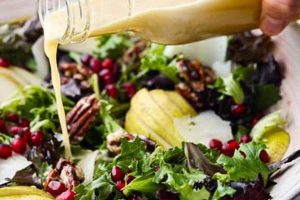
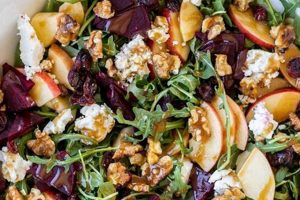
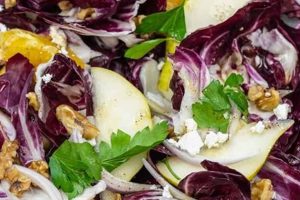
A salad featuring thinly sliced Brussels sprouts as the primary ingredient typically combines complementary components like fruits, nuts, cheeses, and a flavorful dressing. An example might include shredded sprouts, toasted pecans, dried cranberries, crumbled goat cheese, and a lemon-vinaigrette. The thin slicing technique mitigates the sometimes strong, cabbage-like flavor of Brussels sprouts, offering a more delicate, palatable experience.
This preparation offers several advantages. It transforms a potentially polarizing vegetable into an accessible and appealing dish, broadening culinary horizons. The shaved format allows for quicker cooking and more even coating with dressings, enhancing flavor absorption. Furthermore, it introduces textural variety and visual appeal to salads. While the exact origins are unclear, the rise in popularity of this salad style coincides with a broader culinary trend towards highlighting fresh, seasonal ingredients and exploring innovative vegetable preparations.
The following sections will explore variations on this salad, covering ingredient selection, dressing options, preparation techniques, and serving suggestions. Specific recipes will be provided, offering both basic and more advanced approaches to crafting this versatile and nutritious dish.
Tips for a Superior Brussels Sprout Salad
Achieving optimal flavor and texture requires attention to several key details. The following tips provide guidance for creating a truly exceptional salad.
Tip 1: Uniform Slicing is Key: Consistency in sprout thickness ensures even cooking and dressing adherence. A mandoline slicer yields the best results, but a sharp knife can also be effective with careful technique. Aim for slices approximately 1/8 inch thick.
Tip 2: Don’t Overcrowd the Pan: When roasting or sauting, ensure adequate space between sprouts allows for proper browning and prevents steaming. Work in batches if necessary.
Tip 3: Balance Flavors: Consider complementary flavor profiles. Sweet, acidic, salty, and bitter elements should be balanced. Pairing the sprouts with ingredients like dried fruit, nuts, and strong cheeses creates a harmonious flavor profile.
Tip 4: Dress Strategically: Add the dressing just before serving to prevent the sprouts from becoming soggy. Toss gently to coat evenly.
Tip 5: Consider Raw vs. Cooked: While raw, shaved sprouts offer a crisp, fresh element, lightly cooking them, whether by roasting or sauting, can mellow the flavor and enhance sweetness.
Tip 6: Seasoning Matters: Salt and pepper are essential, but consider incorporating additional seasonings like garlic powder, onion powder, or red pepper flakes to elevate the overall flavor profile.
Tip 7: Enhance with Texture: Toasted nuts, seeds, or croutons provide a welcome textural contrast to the sprouts, adding complexity to the salad.
By adhering to these guidelines, one can transform this simple vegetable into a culinary masterpiece. These techniques ensure a flavorful, visually appealing, and texturally satisfying salad.
These tips form the foundation for successful Brussels sprout salad preparation. Experimentation and further exploration of flavor combinations are encouraged.
1. Shaving Method

The shaving method employed significantly influences the final texture and flavor profile of a Brussels sprouts salad. Thinly shaved sprouts offer a delicate texture and increased surface area, allowing for greater interaction with dressings and other ingredients. This enhances flavor absorption and creates a more palatable experience compared to thicker cuts or halved sprouts. Conversely, thicker cuts retain a firmer texture and distinct Brussels sprouts flavor, which may be desirable in certain preparations.
Several methods achieve the desired thinness. A mandoline slicer offers the most uniform and efficient results, producing consistently thin, even slices. Sharp knives can also be effective, although achieving uniformity requires practice and precision. Food processors equipped with slicing attachments offer a faster alternative, but the resulting slices may be less consistent than those produced by a mandoline or knife. The chosen method ultimately depends on desired texture, available equipment, and individual preference. For instance, a finely shaved salad featuring raw Brussels sprouts might benefit from the precision of a mandoline, while a heartier salad with roasted sprouts might tolerate slight variations in thickness achieved with a knife.
Selecting the appropriate shaving method is crucial for optimizing both the culinary and sensory aspects of the salad. Uniformity impacts not only flavor absorption and textural consistency but also the visual appeal of the finished dish. Understanding the nuances of each method enables informed choices that contribute to a more successful and satisfying culinary outcome.
2. Complementary Ingredients
Complementary ingredients are essential for transforming shaved Brussels sprouts into a well-balanced and flavorful salad. These additions provide textural contrast, introduce contrasting or supporting flavors, and enhance the overall nutritional value of the dish. Strategic ingredient selection elevates the salad beyond its basic components, creating a more complex and satisfying culinary experience.
- Fruits and Dried Fruits
Fruits introduce sweetness and acidity, balancing the slightly bitter notes of Brussels sprouts. Dried cranberries, chopped apples, or segments of orange provide contrasting textures and vibrant flavors. The sweetness of dried fruits intensifies when paired with the savory sprouts, while fresh fruits offer a burst of juiciness.
- Nuts and Seeds
Nuts and seeds contribute healthy fats, protein, and satisfying crunch. Toasted pecans, walnuts, or slivered almonds offer richness and depth of flavor, while sunflower or pumpkin seeds provide a lighter, nuttier element. The toasting process enhances their inherent flavors and creates a desirable textural contrast.
- Cheeses
Cheese adds a creamy or crumbly texture and a savory, salty element. Crumbled goat cheese, shaved Parmesan, or cubed feta complement the sprouts’ flavor profile. The sharpness of some cheeses contrasts beautifully with the subtle bitterness of the sprouts, while others offer a milder, supporting flavor.
- Other Vegetables
Incorporating other vegetables adds complexity and nutritional diversity. Thinly sliced red onion provides a pungent bite, while roasted carrots or butternut squash offer sweetness and earthiness. These additions broaden the flavor profile and contribute different textures and colors, enhancing the visual appeal.
The careful selection and combination of complementary ingredients elevates the shaved Brussels sprouts salad from a simple side dish to a sophisticated and flavorful centerpiece. By balancing textures, flavors, and nutritional elements, these additions transform the inherent qualities of the Brussels sprouts, creating a dish that is both satisfying and nutritionally complete.
3. Dressing Choice

Dressing choice significantly impacts the overall flavor profile and enjoyment of a shaved Brussels sprouts salad. The dressing acts as a unifying element, binding the various ingredients and enhancing their individual characteristics. A well-chosen dressing complements the inherent flavors of the Brussels sprouts, balancing their subtle bitterness with acidity, sweetness, or richness. Conversely, an inappropriate dressing can overwhelm the delicate flavors or create an unbalanced taste experience.
The ideal dressing considers the other ingredients in the salad. For example, a light vinaigrette with lemon juice, Dijon mustard, and olive oil complements a salad featuring dried cranberries, toasted nuts, and crumbled goat cheese. The acidity of the lemon cuts through the richness of the nuts and cheese, while the mustard adds a subtle tang. In contrast, a creamy dressing based on mayonnaise or Greek yogurt might overwhelm the delicate flavors of a salad with fresh fruit and herbs. A balsamic vinaigrette, with its rich, sweet, and tangy notes, pairs well with roasted Brussels sprouts, bacon, and Parmesan cheese.
Understanding the interplay between dressing and salad components allows for informed decision-making. Consider the flavor profiles of each ingredient and how they interact with different dressings. Acidity, sweetness, richness, and creaminess should be balanced to create a harmonious and enjoyable salad. Experimentation with various dressings and flavor combinations is encouraged to discover personal preferences and create unique flavor profiles. Careful dressing selection elevates the shaved Brussels sprouts salad, transforming it from a simple dish to a culinary experience.
4. Seasoning Balance

Seasoning balance is paramount in a shaved Brussels sprouts salad recipe. It elevates the inherent flavors of the Brussels sprouts and other ingredients, creating a harmonious and complex flavor profile. Proper seasoning transforms a simple salad into a culinary experience, highlighting the nuanced interplay between sweet, savory, acidic, and bitter notes. A well-seasoned salad engages the palate fully, offering a balanced and satisfying taste experience. Conversely, improper seasoning can result in a bland or one-dimensional dish, failing to showcase the potential of the ingredients.
- Salt
Salt is fundamental, enhancing the natural sweetness of the Brussels sprouts and other ingredients. It acts as a flavor enhancer, bringing out the subtle nuances of each component. However, over-salting can mask delicate flavors and create an unpleasant experience. The amount of salt required depends on other ingredients and the dressing. For example, a salad with salty cheese requires less added salt than one with fresh fruit.
- Black Pepper
Black pepper adds a subtle heat and complexity. Freshly ground black pepper offers a more pronounced aroma and flavor compared to pre-ground pepper. A light dusting complements the Brussels sprouts without overpowering other flavors. The amount used should be adjusted based on personal preference and the desired level of spiciness.
- Acidity
Acidity, often introduced through lemon juice or vinegar in the dressing, balances the richness of other ingredients and brightens the overall flavor profile. It cuts through the potential fattiness of nuts or cheese, creating a more refreshing taste. The level of acidity should complement, not overpower, the other flavors.
- Additional Spices and Herbs
Garlic powder, onion powder, red pepper flakes, or dried herbs can further enhance the complexity of the salad. These additions introduce subtle layers of flavor, creating a more nuanced taste experience. However, restraint is crucial. Overuse of spices can mask the delicate flavors of the Brussels sprouts and other ingredients. Careful selection and measured application of these seasonings contribute to a well-balanced and flavorful salad.
Achieving seasoning balance requires careful consideration of all ingredients and their respective flavor profiles. It involves a nuanced approach, adjusting quantities based on the interplay of sweet, salty, acidic, and savory elements. A well-seasoned shaved Brussels sprouts salad offers a symphony of flavors, showcasing the versatility and potential of this often-underappreciated vegetable.
5. Serving Suggestions
Serving suggestions are integral to the overall enjoyment of a shaved Brussels sprouts salad recipe. Thoughtful presentation enhances the dining experience, transforming a simple salad into an aesthetically pleasing and appetizing dish. Appropriate serving suggestions complement the flavors and textures of the salad, creating a cohesive and satisfying culinary experience. These suggestions consider various factors, including occasion, accompanying dishes, and desired aesthetic.
- Occasion
The occasion dictates the presentation style. A casual weeknight dinner might call for a simple serving in a large bowl, while a more formal gathering might warrant individual portions plated artfully. For a buffet-style setting, a large platter with attractive garnishes is appropriate. The occasion influences not only the plating but also the portion size and accompanying elements.
- Accompanying Dishes
Consideration of accompanying dishes ensures a balanced and complementary meal. A shaved Brussels sprouts salad pairs well with roasted meats, grilled fish, or hearty vegetarian entrees. The salad’s flavors and textures should complement, not clash with, the other dishes. For example, a salad with a light vinaigrette complements rich, savory dishes, while a salad with a creamy dressing might pair better with lighter fare.
- Garnishes and Plating
Garnishes enhance visual appeal and provide additional flavor and textural dimensions. A sprinkle of toasted nuts, a scattering of pomegranate seeds, or a drizzle of balsamic glaze elevates the presentation. Plating techniques, such as arranging the salad components in an aesthetically pleasing manner, further enhance the dining experience. Attention to detail in garnishing and plating transforms a simple salad into a visually appealing culinary creation.
- Temperature
Serving temperature influences the salad’s flavor and texture. While typically served chilled or at room temperature, some variations benefit from being served warm. For example, a salad with roasted Brussels sprouts can be served warm, enhancing the caramelized flavors and providing a comforting element. The desired temperature should complement the other ingredients and the overall flavor profile.
Serving suggestions are the final touch that elevates a shaved Brussels sprouts salad from a basic dish to a complete culinary experience. Careful consideration of occasion, accompanying dishes, garnishes, plating, and temperature ensures a presentation that is both visually appealing and palate-pleasing. These considerations contribute to a more enjoyable and satisfying dining experience, showcasing the versatility and potential of the shaved Brussels sprouts salad.
Frequently Asked Questions
This section addresses common inquiries regarding shaved Brussels sprouts salad recipes, providing clear and concise information to ensure successful preparation and optimal enjoyment.
Question 1: What is the best method for shaving Brussels sprouts?
A mandoline slicer offers the most efficient and uniform results. Sharp knives can also achieve thin slices with practice, while food processors offer a faster, though less precise, alternative.
Question 2: How can bitterness be minimized in raw Brussels sprouts?
Soaking shaved Brussels sprouts in ice water for 15-20 minutes can help reduce bitterness. Additionally, incorporating acidic ingredients like lemon juice or vinegar in the dressing helps balance the flavor profile.
Question 3: Can shaved Brussels sprouts be cooked?
Yes, roasting or sauting shaved Brussels sprouts mellows their flavor and enhances sweetness. Ensure even cooking by avoiding overcrowding the pan.
Question 4: What dressings pair well with shaved Brussels sprouts?
Light vinaigrettes, such as lemon-Dijon or balsamic, complement the sprouts well. Creamy dressings can also be used, but should be applied sparingly to avoid overwhelming the delicate flavors.
Question 5: How long can shaved Brussels sprouts salad be stored?
Ideally, the salad is consumed immediately after preparation. If storage is necessary, store the shaved sprouts and dressing separately and combine just before serving. Refrigerate for up to two days.
Question 6: What are some suitable substitutions for common ingredients?
Pecans can be substituted with walnuts or almonds. Dried cranberries can be replaced with other dried fruits, such as cherries or apricots. Goat cheese can be substituted with feta or Parmesan.
Understanding these key aspects contributes to a successful and enjoyable culinary experience with shaved Brussels sprouts salads.
The following section provides specific recipe examples, offering practical applications of the techniques and information discussed above.
Shaved Brussel Sprouts Salad Recipe
Shaved Brussels sprouts salad recipes offer a versatile and flavorful approach to this nutritious vegetable. From shaving methods influencing texture and flavor absorption to complementary ingredient pairings and dressing selections, each element contributes to the final culinary outcome. Proper seasoning enhances inherent flavors, while thoughtful serving suggestions elevate the dining experience. Understanding these components allows for informed choices, transforming simple ingredients into a sophisticated and satisfying dish.
Exploration of flavor profiles, textures, and presentation styles unlocks the full potential of shaved Brussels sprouts salads. Culinary experimentation with diverse ingredients and techniques expands culinary horizons and promotes appreciation for innovative vegetable preparations. Continued exploration promises further refinement and exciting variations on this adaptable culinary theme.