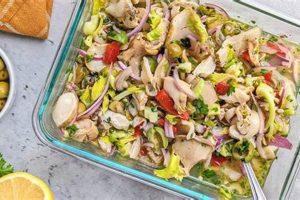
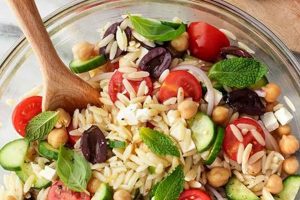
A Mediterranean-inspired dish featuring flaked salmon combined with ingredients characteristic of Greek cuisine, such as Kalamata olives, feta cheese, cucumbers, red onion, and a lemon-herb vinaigrette. Variations may include other vegetables like tomatoes, bell peppers, or artichoke hearts. A typical preparation involves grilling or pan-searing the salmon before flaking it into the salad.
This culinary creation offers a nutritious and flavorful meal option. Rich in omega-3 fatty acids from the salmon, it provides a good source of protein and healthy fats. The fresh vegetables contribute vitamins, minerals, and antioxidants. Furthermore, the vibrant flavors and textures create a satisfying and refreshing dining experience, suitable for a light lunch, a starter, or a component of a larger meal. Its adaptability to seasonal ingredients and individual preferences makes it a versatile choice for home cooks and professional chefs alike.
The following sections will delve into specific variations of this dish, offering detailed instructions for preparation, suggestions for ingredient substitutions, and nutritional information.
Tips for a Superior Salmon Salad
Optimizing ingredient selection and preparation techniques elevates this dish from simple to exceptional. Attention to detail ensures a flavorful and visually appealing result.
Tip 1: Salmon Selection: Opt for high-quality, fresh salmon fillets. Wild-caught salmon generally offers a richer flavor and firmer texture. Farmed salmon can be a suitable alternative if sustainably sourced.
Tip 2: Cooking Method: Grilling or pan-searing imparts a desirable smoky char and enhances the natural flavors of the salmon. Avoid overcooking, as this can result in dry, less flavorful fish. Aim for a moist and flaky texture.
Tip 3: Freshness of Ingredients: Utilize the freshest vegetables available. Ripe, in-season produce contributes optimal flavor and texture to the salad.
Tip 4: Olive Oil Quality: Employ extra virgin olive oil for the vinaigrette. High-quality olive oil provides a robust flavor profile and contributes healthy fats.
Tip 5: Balancing Flavors: The hallmark of Greek cuisine lies in the balance of salty, briny, and acidic elements. Achieve this balance through judicious use of feta cheese, Kalamata olives, and lemon juice in the vinaigrette.
Tip 6: Herb Selection: Fresh dill, oregano, and mint are traditional choices that complement the other flavors. Experimenting with other herbs, such as parsley or chives, can add unique dimensions.
Tip 7: Presentation: Consider the visual appeal of the salad. Arrange the ingredients attractively on a platter or in individual bowls. A sprinkle of fresh herbs as a garnish enhances presentation.
By following these guidelines, one can consistently create a salmon salad that delivers a delightful sensory experience, showcasing the best of Greek-inspired cuisine.
The concluding section will offer variations on this theme, catering to different dietary needs and preferences.
1. Fresh, High-Quality Salmon

Fresh, high-quality salmon forms the foundation of a successful Greek salmon salad. The salmon’s inherent flavor and texture significantly influence the overall dish. Starting with superior salmon ensures a pleasant, nuanced taste that complements the other ingredients, rather than being overpowered by them. For instance, fresh salmon possesses a delicate, buttery flavor that harmonizes with the brininess of Kalamata olives and the tanginess of feta cheese. Conversely, lower-quality salmon might exhibit a fishy odor or taste, detracting from the intended flavor profile.
The texture of the salmon also plays a crucial role. Fresh, properly cooked salmon flakes cleanly and retains moisture. This desirable texture contrasts pleasingly with the crisp vegetables and creamy feta, creating a multi-dimensional sensory experience. Overcooked or lower-quality salmon, on the other hand, can become dry and crumbly, negatively impacting the overall enjoyment of the salad. Consider sourcing salmon from reputable fishmongers or opting for sustainably farmed varieties known for their consistent quality. Such choices prioritize both flavor and responsible sourcing practices.
Ultimately, the quality of the salmon directly correlates with the overall success of the Greek salmon salad. Investing in fresh, high-quality salmon ensures a dish that delivers on both flavor and texture, showcasing the intended harmony of Greek-inspired ingredients. Careful selection of the primary ingredient elevates the final product from satisfactory to exceptional.
2. Authentic Greek Ingredients

Authenticity in a Greek salmon salad hinges on the thoughtful selection of ingredients integral to Greek cuisine. These ingredients contribute not only distinct flavors but also cultural significance, transforming a simple salmon salad into an homage to Mediterranean culinary traditions. Employing genuine Greek products elevates the dish, offering a more nuanced and flavorful experience.
- Kalamata Olives
These dark, intensely flavored olives, originating from the Kalamata region of Greece, provide a crucial briny and slightly bitter counterpoint to the richness of the salmon and the tanginess of the feta. Their robust flavor profile adds depth and complexity to the salad. Substituting standard black olives diminishes the authenticity and the overall taste experience, as they lack the characteristic flavor of Kalamata olives.
- Feta Cheese
Genuine feta, made from sheep’s milk or a blend of sheep and goat’s milk, offers a tangy, salty, and slightly creamy texture. Its distinct flavor complements the other ingredients, providing a quintessential Greek element. Using alternative cheeses compromises the authenticity and can result in a blander or less balanced flavor profile. Authentic feta contributes a unique salinity and crumbly texture absent in substitutes.
- Extra Virgin Olive Oil
High-quality extra virgin olive oil, a cornerstone of Greek cuisine, forms the base of the vinaigrette. Its fruity, peppery notes enhance the flavors of the other ingredients, contributing a healthy fat component. Substituting other oils diminishes the authentic Greek character and may introduce undesirable flavors. The rich flavor and texture of extra virgin olive oil are essential for a truly authentic vinaigrette.
- Fresh Herbs
Fresh herbs like dill, oregano, and mint provide a bright, herbaceous counterpoint to the richness of the salmon and the saltiness of the other ingredients. These fragrant additions contribute to the overall freshness and complexity of the salad. Using dried herbs or omitting them altogether compromises the vibrant flavor profile characteristic of Greek cuisine. Fresh herbs provide a burst of flavor and aroma that dried herbs cannot replicate.
The careful selection of these authentic Greek ingredients elevates the Greek salmon salad from a simple dish to a celebration of Mediterranean flavors. Each element contributes distinct characteristics, resulting in a harmonious and flavorful culinary experience reflective of traditional Greek cuisine. Substituting these key components with generic alternatives diminishes the authenticity and compromises the overall taste and cultural significance of the dish. These ingredients are not merely interchangeable components; they are integral to the identity of a true Greek salmon salad.
3. Balanced Flavor Profile

A balanced flavor profile distinguishes a truly exceptional Greek salmon salad. This balance, achieved through the careful interplay of contrasting yet complementary tastes, elevates the dish beyond a simple combination of ingredients. The hallmark of Greek cuisine lies in this harmonious blend of salty, briny, acidic, and fresh elements. Each component contributes to the overall sensory experience, ensuring no single flavor dominates.
- Saltiness
The saltiness primarily derives from the feta cheese. Authentic Greek feta, made from sheep’s or goat’s milk, provides a distinctive salty tang. This salinity acts as a foundational flavor, anchoring the other components. The quantity of feta must be carefully considered; too much can overpower the dish, while too little renders it bland. Proper balance allows the saltiness to enhance, not overwhelm, the other flavors.
- Brininess
Kalamata olives contribute the briny element, a salty, slightly bitter, and intensely flavorful counterpoint to the feta. Their unique taste, derived from their curing process, adds depth and complexity. The brininess of the olives interacts with the saltiness of the feta, creating a layered flavor experience. The proportion of olives must be balanced to avoid overpowering the other ingredients, allowing their distinct brininess to complement, not dominate.
- Acidity
Acidity comes from the lemon juice in the vinaigrette. The bright, citrusy notes cut through the richness of the salmon and the saltiness of the feta and olives. This acidity provides a refreshing counterpoint, preventing the salad from becoming overly heavy or rich. The amount of lemon juice is crucial; too much can make the salad excessively tart, while too little fails to provide the necessary balance.
- Freshness
Fresh herbs, such as dill, oregano, and mint, and crisp vegetables like cucumbers and red onion, introduce a refreshing element. These ingredients provide a contrasting textural element and a vibrant, herbaceous flavor that brightens the overall palate. The freshness of these components balances the richness of the salmon and the intensity of the feta and olives, creating a harmonious and invigorating flavor profile.
The successful execution of a Greek salmon salad relies on the careful orchestration of these contrasting flavor elements. The interplay of saltiness, brininess, acidity, and freshness creates a dynamic and satisfying culinary experience. Achieving this balance ensures that each ingredient contributes to a cohesive whole, resulting in a dish that is both flavorful and refreshing. Without this careful consideration of balance, the Greek salmon salad risks becoming one-dimensional, lacking the complexity and depth that define authentic Greek cuisine. The final product becomes more than the sum of its partsit becomes a testament to the art of balanced flavors.
4. Proper Salmon Preparation

Proper salmon preparation is crucial for a successful Greek salmon salad. The salmon, as the central protein component, significantly influences the overall dish’s quality. Correct cooking methods ensure optimal flavor, texture, and integration with the other ingredients. Suboptimal salmon preparation can result in a dry, bland, or overly fishy final product, detracting from the intended fresh, vibrant flavors of the salad.
- Cooking Method
Grilling or pan-searing are preferred methods for this salad. Grilling imparts a smoky char, enhancing the salmon’s natural flavors, while pan-searing creates a flavorful crust. These methods allow for controlled cooking, ensuring the salmon remains moist and flaky. Boiling or microwaving, conversely, often result in overcooked, dry salmon, unsuitable for a flavorful salad. The chosen cooking method directly impacts the final texture and taste, influencing how well the salmon complements the other components.
- Doneness
Achieving the correct doneness is essential. Slightly undercooked salmon retains moisture and a delicate texture, while overcooked salmon becomes dry and loses its flavor. The ideal doneness for a salad allows the salmon to flake easily but still retain moisture. Checking for doneness using a meat thermometer or by observing the flesh’s opacity ensures the optimal texture and flavor for the salad. Improperly cooked salmon can negatively impact the overall enjoyment of the dish.
- Seasoning
Seasoning enhances the salmon’s natural flavors without overpowering the delicate balance of the salad. Simple seasonings like salt, pepper, and lemon zest complement the other ingredients without competing with them. Overly complex or strong seasonings can clash with the brininess of the olives and the tanginess of the feta. Careful seasoning elevates the salmon’s inherent flavor while maintaining harmony within the salad.
- Cooling and Flaking
Allowing the cooked salmon to cool slightly before flaking prevents it from breaking down and becoming mushy. Gentle flaking preserves the integrity of the salmon pieces, ensuring a pleasant texture within the salad. Flaking while the salmon is too hot can result in a less appealing, shredded texture. Proper cooling and flaking maintain the visual appeal and textural integrity of the salmon within the finished dish.
Proper salmon preparation is integral to a successful Greek salmon salad. Each step, from cooking method to cooling, influences the final product. Attention to these details ensures the salmon complements the other ingredients, contributing to a balanced, flavorful, and texturally pleasing salad. Overlooking these aspects compromises the overall dish, diminishing the intended fresh, vibrant flavors characteristic of a well-executed Greek salmon salad. The care taken in preparing the salmon directly translates to the overall quality and enjoyment of the final dish.
5. Appealing Presentation
Visual appeal significantly enhances the dining experience of a Greek salmon salad. Presentation elevates the perceived value and enjoyment of the dish, transforming it from a simple meal to a more sophisticated culinary creation. Thoughtful arrangement and attention to detail communicate care and attention, creating a positive first impression and stimulating appetite.
- Color Palette
The vibrant colors of a Greek salmon salad contribute significantly to its appeal. The pink-orange hue of the salmon contrasts beautifully with the deep green of Kalamata olives, the bright white of feta cheese, the vibrant red of red onion, and the verdant green of fresh herbs. This natural color palette creates visual interest and reinforces the perception of freshness. A monotonous or dull presentation diminishes the visual appeal and can make the salad appear less appetizing.
- Arrangement
Strategic arrangement of ingredients enhances the visual appeal. Consider arranging the salmon, vegetables, and feta attractively on a platter or in individual bowls. Avoid simply tossing all ingredients together, which can result in a less appealing, homogenous appearance. Instead, create visual contrast and texture by arranging elements separately, allowing each component to stand out. For example, flaked salmon can be mounded in the center, surrounded by artfully arranged vegetables and crumbled feta. This method showcases the individual ingredients and creates a more elegant presentation.
- Garnishing
A simple garnish elevates the presentation. A sprinkle of fresh herbs, a drizzle of olive oil, or a scattering of lemon zest adds a final touch of visual flair and reinforces the fresh, vibrant flavors of the salad. Garnishes should complement the existing flavors and colors without overpowering the dish. A thoughtfully chosen garnish completes the presentation, signaling attention to detail and enhancing the overall dining experience.
- Servingware
The choice of servingware contributes to the overall presentation. A simple white platter or bowl allows the vibrant colors of the salad to stand out. Alternatively, rustic servingware can create a Mediterranean ambiance, enhancing the thematic experience. The size and shape of the servingware should complement the quantity and arrangement of the salad. Appropriate servingware frames the dish, enhancing its visual appeal and contributing to a more enjoyable dining experience.
Appealing presentation enhances the enjoyment of a Greek salmon salad. Careful attention to color, arrangement, garnishing, and servingware elevates the perceived quality and creates a more satisfying dining experience. Visual appeal stimulates appetite and communicates care in preparation, transforming a simple salad into a visually enticing culinary creation. These elements combine to create a holistic sensory experience that extends beyond taste alone, emphasizing the importance of presentation in maximizing the enjoyment of the dish.
Frequently Asked Questions
This section addresses common inquiries regarding the preparation and enjoyment of this dish. Clarifying these points aims to provide a comprehensive understanding and facilitate a successful culinary experience.
Question 1: Can canned salmon be used?
While canned salmon offers convenience, it typically possesses a stronger, more pronounced fishy flavor and a softer texture compared to fresh salmon. These characteristics can detract from the intended fresh, vibrant flavor profile of the salad. If using canned salmon, opt for high-quality varieties packed in water or olive oil, and drain thoroughly before incorporating to minimize excess liquid and potential off-flavors.
Question 2: What are suitable substitutions for feta cheese?
While authentic feta is preferred, goat cheese can offer a reasonable substitute due to its tangy flavor and similar texture. However, goat cheese often possesses a more assertive, sometimes pungent, flavor, which may alter the overall balance of the salad. Other cheeses, such as ricotta salata or halloumi, can also be considered, though they offer distinct flavor profiles that deviate from traditional Greek flavors.
Question 3: How long can the salad be stored?
Refrigeration in an airtight container is recommended for optimal storage. Consume within two days for best quality. The texture of the salad may change over time as the vegetables release moisture. The dressing can be added just before serving to maintain the crispness of the vegetables.
Question 4: Can the salmon be prepared in advance?
Preparing the salmon a day in advance is acceptable. Store cooked, cooled salmon separately in an airtight container in the refrigerator. Add the flaked salmon to the salad just before serving to maintain its texture and prevent it from becoming overly saturated with the vinaigrette. This approach also facilitates efficient meal preparation.
Question 5: Are there gluten-free considerations?
The salad itself is typically gluten-free, provided gluten-free ingredients are used. Ensure that any additions, such as croutons or specific brands of feta cheese, are certified gluten-free to maintain dietary compliance. Carefully review ingredient labels to avoid unintentional gluten exposure.
Question 6: Can this salad be adapted for different dietary needs?
Adapting the salad for various dietary needs is feasible. For vegetarian or vegan diets, substitute the salmon with chickpeas, cannellini beans, or grilled halloumi. Adjust the vinaigrette accordingly, considering flavor compatibility with the chosen protein alternative. These adaptations allow for broader dietary inclusivity.
Addressing these commonly encountered questions provides a deeper understanding of the nuances of creating and enjoying a successful and authentic Greek salmon salad experience. Careful consideration of these points ensures a delicious and satisfying culinary outcome.
The following section will provide a complete recipe with step-by-step instructions.
Greek Salmon Salad Recipe
Exploration of this Mediterranean-inspired dish reveals the importance of ingredient quality, balanced flavors, and proper preparation techniques. High-quality, fresh salmon, authentic Greek components such as Kalamata olives and feta cheese, and a vibrant lemon-herb vinaigrette contribute to a harmonious and flavorful experience. Proper cooking methods ensure the salmon retains its moisture and delicate texture, while thoughtful presentation elevates the dish from simple fare to a visually appealing culinary creation. Addressing common inquiries regarding ingredient substitutions, storage, and dietary adaptations further enhances understanding and facilitates successful preparation.
This dish represents more than a mere combination of ingredients; it embodies a culinary tradition grounded in fresh, flavorful components and balanced taste profiles. The adaptability of this recipe allows for personal interpretations while maintaining the essence of Greek-inspired cuisine. Further exploration of regional variations and culinary innovations promises to enrich the ongoing evolution of this versatile and satisfying dish.