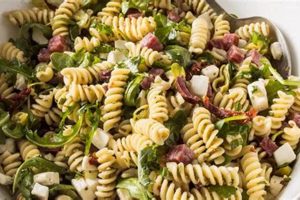
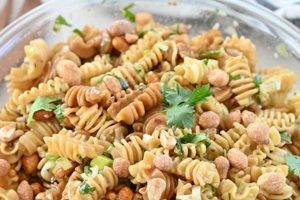
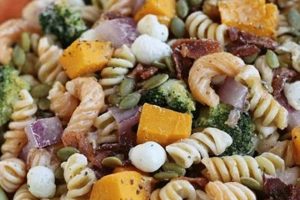
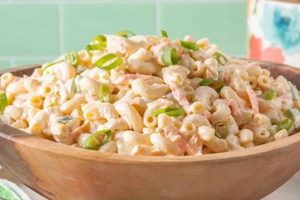
A dish combining cooked pasta, an assortment of fresh or cooked vegetables, and often other ingredients like cheese, herbs, or protein (such as beans, chickpeas, or meat), typically tossed in a vinaigrette or creamy dressing. Examples range from simple combinations like rotini pasta, cherry tomatoes, and cucumbers with a light Italian dressing, to more complex creations incorporating roasted vegetables, feta cheese, and a lemon-herb vinaigrette.
These salads offer a versatile and nutritious meal option. They are a good source of complex carbohydrates from the pasta, vitamins and minerals from the vegetables, and, depending on the added ingredients, protein and healthy fats. The adaptability of such a dish allows for seasonal variations and catering to individual dietary preferences. Historically, cold pasta salads have likely evolved from various culinary traditions, gaining popularity as a convenient and refreshing dish, particularly during warmer months. Their adaptability makes them suitable for potlucks, picnics, and everyday meals.
The following sections will delve into specific variations of this culinary concept, exploring diverse ingredient combinations, dressing options, and tips for preparation and presentation. Nutritional information and suggestions for customizing these salads to meet specific dietary needs will also be provided.
Tips for Creating Exceptional Pasta Vegetable Salads
This section offers practical guidance for achieving optimal results when preparing these versatile dishes.
Tip 1: Cook Pasta Al Dente: Pasta cooked until firm to the bite provides a better texture in salads, preventing a mushy consistency. Rinse cooked pasta under cold water to stop the cooking process and cool it down quickly.
Tip 2: Variety is Key: Incorporate a diverse range of vegetables for both visual appeal and nutritional value. Consider textures and colors when selecting ingredients. Examples include bell peppers, broccoli florets, snap peas, carrots, and red onion.
Tip 3: Balance Flavors: Pair ingredients with complementary flavors. A robust dressing may require milder vegetables, while a lighter vinaigrette can enhance the flavors of stronger-tasting vegetables like artichokes or olives.
Tip 4: Dress Strategically: Add dressing shortly before serving to prevent the salad from becoming soggy. Start with a smaller amount of dressing and add more as needed to coat the ingredients evenly.
Tip 5: Enhance with Herbs and Spices: Fresh herbs like basil, parsley, or dill can elevate the flavor profile. Dried spices, such as oregano or cumin, can also add depth.
Tip 6: Consider Protein and Healthy Fats: Adding ingredients like chickpeas, cannellini beans, cubed cheese, or nuts contributes protein and healthy fats, making the salad a more complete meal.
Tip 7: Proper Storage: Store leftover salad in an airtight container in the refrigerator for up to three days. It is advisable to add the dressing just before serving, even for leftovers, to maintain optimal texture.
By following these tips, one can achieve a well-balanced and flavorful pasta vegetable salad. Proper preparation techniques, ingredient selection, and attention to detail contribute to a more satisfying culinary experience.
The concluding section will summarize key concepts and offer additional resources for further exploration of this versatile dish.
1. Pasta Choice
Pasta selection significantly influences the overall success of a pasta vegetable salad. The pasta’s shape, size, and texture interact with the other ingredients and the dressing, affecting both the flavor experience and the aesthetic presentation. A thoughtful choice elevates the dish from simple to exceptional.
- Shape and Sauce Adherence:
Different pasta shapes offer varying surface areas and crevices, impacting how well they hold the dressing and interact with the vegetables. Small, tubular shapes like ditalini or elbow macaroni are excellent for capturing thin dressings and small, chopped vegetables. Shapes with ridges or twists, such as rotini or fusilli, effectively capture thicker dressings and larger vegetable pieces. Long, thin pasta like spaghetti or linguine can be challenging in salads, often becoming tangled and difficult to eat neatly.
- Texture and Mouthfeel:
Pasta contributes significantly to the salad’s overall texture. Short, sturdy shapes like penne or farfalle offer a satisfying chewiness. Smaller shapes like orzo provide a delicate texture. Fresh pasta, while delicious, may become too soft in a cold salad, making dried pasta a preferred choice for maintaining structural integrity.
- Visual Appeal:
The pasta’s shape and color contribute to the salad’s visual presentation. Tri-color pasta can add a festive touch. Unique shapes like radiatore or campanelle provide visual interest. Consider the size and shape of the vegetables when selecting pasta; smaller vegetables pair well with smaller pasta shapes, while larger vegetables complement larger pasta.
- Gluten-Free Options:
Dietary restrictions necessitate consideration of alternative pasta types. Gluten-free pasta made from rice, corn, or quinoa offers options for those with sensitivities. These alternatives can have different textures and may require adjustments to cooking times to achieve the desired firmness for a salad.
Careful pasta selection enhances the harmony of ingredients within a pasta vegetable salad. Matching the pasta’s characteristics to the other components ensures a cohesive and enjoyable culinary experience. Consideration of these factors elevates the final product, transforming a simple combination of ingredients into a well-balanced and satisfying dish.
2. Vegetable Selection

Vegetable selection significantly impacts the flavor, texture, nutritional value, and aesthetic appeal of a pasta vegetable salad. A thoughtful combination of vegetables elevates the dish from a simple side to a vibrant, satisfying meal. The interplay of colors, textures, and flavors contributes to a more complex and enjoyable sensory experience.
Cruciferous vegetables like broccoli and cauliflower provide nutritional density and textural contrast. Peppers, available in a variety of colors, offer sweetness and crunch. Root vegetables such as carrots and beets contribute earthy notes and visual interest. Leafy greens, like spinach or kale, offer a boost of vitamins and a refreshing element. Tomatoes, bursting with juicy sweetness, are a classic addition. Consider seasonal availability for optimal flavor and cost-effectiveness. Roasting or grilling certain vegetables before adding them to the salad can enhance their inherent sweetness and create depth of flavor.
Balancing textures ensures a dynamic eating experience. Combining crisp vegetables like cucumbers and bell peppers with softer elements like roasted zucchini or cooked green beans prevents monotony. Flavor profiles should be considered; the sweetness of corn can balance the sharpness of red onion, while the bitterness of radicchio can be tempered by the addition of creamy avocado. Proper vegetable preparation, including thorough washing and appropriate chopping or slicing, contributes to both food safety and presentation. Ultimately, strategic vegetable selection enhances the nutritional value, sensory appeal, and overall enjoyment of the pasta salad.
3. Dressing
Dressing is a crucial element in a pasta vegetable salad recipe, acting as a unifying agent that binds the individual components and imparts a cohesive flavor profile. The choice of dressing significantly influences the overall taste, texture, and enjoyment of the dish. A well-chosen dressing complements the pasta and vegetables, enhancing their inherent flavors without overpowering them. It also contributes to the salad’s moisture and mouthfeel.
- Flavor Profile
The dressing’s flavor profile should harmonize with the chosen vegetables and pasta. A light and tangy vinaigrette complements delicate vegetables like spinach and cherry tomatoes. A creamy dressing, such as ranch or Caesar, pairs well with heartier vegetables like broccoli and bell peppers. The intensity of the dressing should be balanced with the flavors of the other ingredients, preventing any single element from dominating the overall taste.
- Texture and Consistency
Dressing consistency impacts both the salad’s texture and how well it coats the ingredients. A thin vinaigrette lightly coats the pasta and vegetables, allowing their individual textures to shine through. A thicker, creamier dressing clings more readily, providing a richer mouthfeel and ensuring even distribution of flavor. The dressing’s texture should complement the overall composition of the salad, enhancing, not detracting from, the eating experience.
- Acidity and Sweetness
The balance of acidity and sweetness within the dressing plays a key role in the final flavor profile. Vinaigrettes often achieve this balance through a combination of vinegar or citrus juice and a touch of sweetness from honey or maple syrup. Creamy dressings may incorporate yogurt or sour cream for tanginess, balanced by the sweetness of added sugar or fruit. This interplay of contrasting flavors adds depth and complexity to the salad.
- Ingredient Compatibility
The dressing’s ingredients should complement the chosen vegetables and pasta. Herb-based dressings enhance the flavors of fresh vegetables. Garlic or onion-based dressings add a savory note that pairs well with roasted vegetables. Dairy-based dressings can clash with strongly flavored vegetables like asparagus or artichoke. Careful consideration of ingredient compatibility ensures a harmonious and balanced flavor profile.
The selection of a dressing represents a critical step in creating a successful pasta vegetable salad. By carefully considering the flavor profile, texture, acidity, and ingredient compatibility, one can create a dressing that enhances the other components, resulting in a cohesive and satisfying culinary experience. The dressing acts as the conductor, orchestrating the flavors of the individual ingredients into a harmonious whole. A well-chosen dressing elevates the dish beyond a simple combination of ingredients, transforming it into a well-balanced and flavorful meal.
4. Flavor Balance
Flavor balance is paramount in a successful pasta vegetable salad recipe. It represents the harmonious interplay of tastessweet, sour, salty, bitter, and umamicreating a cohesive and enjoyable culinary experience. Without proper balance, one element can overpower the others, resulting in a dish that is either too sweet, too acidic, or lacking in complexity. Achieving this balance requires careful consideration of the ingredients and their inherent flavor profiles, as well as the dressing and any additional seasonings.
The interplay of contrasting flavors creates depth and interest. The sweetness of roasted carrots can be balanced by the tanginess of a lemon vinaigrette. The bitterness of kale can be tempered by the addition of dried cranberries or toasted nuts. Salty elements, such as feta cheese or olives, provide a counterpoint to the other flavors. A well-balanced salad engages the palate with a variety of sensations, preventing any single taste from dominating. For example, a pasta salad featuring roasted vegetables, goat cheese, and a balsamic vinaigrette demonstrates flavor balance; the sweetness of the roasted vegetables complements the tanginess of the balsamic vinaigrette, while the creamy, slightly tart goat cheese adds another layer of complexity.
Achieving flavor balance requires both an understanding of individual ingredients and a willingness to experiment. It is an iterative process, often involving adjustments and refinements based on tasting and feedback. Recognizing the inherent flavors of vegetablesthe sweetness of corn, the earthiness of mushrooms, the peppery bite of arugulaallows for strategic pairings and the development of complementary flavor profiles. Attention to flavor balance elevates a pasta vegetable salad from a simple combination of ingredients to a well-rounded, nuanced, and thoroughly satisfying dish.
5. Preparation Method
Preparation methods significantly influence the final quality and enjoyment of a pasta vegetable salad. Proper techniques ensure optimal texture, flavor development, and food safety. These methods encompass several key stages, from ingredient preparation to the final assembly of the salad.
Ingredient Preparation: Pasta should be cooked al dente for optimal texture, then rinsed under cold water to stop the cooking process and maintain firmness. Vegetables require careful washing and appropriate cutting techniques, whether diced, sliced, or chopped, to ensure even cooking and distribution within the salad. Some vegetables benefit from pre-cooking, such as blanching or roasting, to enhance their flavors and textures. For example, blanching broccoli florets preserves their vibrant green color and creates a tender-crisp texture, while roasting root vegetables like sweet potatoes and carrots intensifies their sweetness and adds a caramelized depth.
Dressing Incorporation: The timing of dressing incorporation impacts the salad’s overall quality. Adding the dressing too early can lead to soggy ingredients, particularly if delicate greens are included. Incorporating the dressing shortly before serving maintains the crispness of the vegetables and prevents the pasta from absorbing excessive moisture. Emulsified dressings should be thoroughly whisked before adding to ensure a smooth and evenly distributed coating. Furthermore, the amount of dressing should be carefully considered, as too much can overwhelm the flavors of the other ingredients.
Chilling and Serving: Chilling the salad allows the flavors to meld and enhances the refreshing quality of the dish. However, prolonged chilling can negatively impact certain ingredients, such as tomatoes, which can become mealy. It is generally recommended to chill the salad for a short period, ideally 30 minutes to an hour, before serving. Garnishing with fresh herbs or a sprinkle of cheese adds visual appeal and a final burst of flavor.
Careful attention to preparation methods elevates the pasta vegetable salad from a simple assembly of ingredients to a carefully crafted dish. Proper techniques maximize flavor, optimize texture, and ensure food safety. Understanding and implementing these methods contributes significantly to the overall enjoyment and satisfaction derived from this versatile and nutritious meal.
6. Serving Suggestions

Serving suggestions enhance the presentation and enjoyment of pasta vegetable salads. Consideration of portion size, accompanying dishes, and garnishes elevates the dining experience. These salads can function as a light main course, a substantial side dish, or a component of a larger buffet. Portion size should reflect the salad’s role within the meal. As a main course, a larger portion supplemented by a protein source, such as grilled chicken or fish, creates a complete meal. As a side dish, smaller portions complement grilled meats or other entres. For buffet settings, individual portions in small bowls or cups facilitate serving and maintain the salad’s structural integrity.
Accompanying dishes can complement the salad’s flavors and textures. Crusty bread offers a textural contrast and serves as a vehicle for scooping up stray vegetables and dressing. Grilled or roasted meats provide a protein complement and enhance the salad’s heartiness. Light soups, such as gazpacho or a chilled cucumber soup, create a refreshing contrast, particularly during warmer months. Garnishes provide visual appeal and add bursts of flavor. Fresh herbs, such as chopped parsley, basil, or dill, enhance the salad’s aroma and taste. A sprinkle of grated cheese adds a savory element. Toasted nuts or seeds contribute a satisfying crunch and healthy fats. Lemon wedges offer a final squeeze of acidity to brighten the flavors. For example, a Mediterranean-inspired pasta salad featuring orzo pasta, feta cheese, olives, and a lemon-herb vinaigrette can be served alongside grilled lamb kebabs and crusty bread, garnished with fresh oregano and a sprinkle of toasted pine nuts.
Thoughtful serving suggestions transform a simple pasta vegetable salad into a memorable culinary experience. These considerations demonstrate attention to detail and an understanding of how different elements interact to create a harmonious and satisfying meal. Practical applications range from casual weeknight dinners to more formal gatherings, underscoring the versatility of this dish and the importance of presentation in enhancing enjoyment.
Frequently Asked Questions
This section addresses common inquiries regarding pasta vegetable salad preparation and provides concise, informative responses.
Question 1: What type of pasta is best suited for pasta salad?
Shorter pasta shapes, such as rotini, farfalle, or penne, generally hold their shape well and capture dressing effectively. Avoid long, thin pasta which can become tangled and difficult to manage in a salad.
Question 2: How can sogginess be prevented?
Sogginess can be avoided by cooking pasta al dente, rinsing it under cold water after cooking, and adding the dressing shortly before serving. Avoid overdressing the salad.
Question 3: What vegetables are recommended for inclusion?
A variety of vegetables enhances both flavor and nutritional value. Consider a mix of textures and colors, such as bell peppers, cucumbers, cherry tomatoes, broccoli florets, and red onion. Roasted or grilled vegetables add depth of flavor.
Question 4: How long can pasta salad be stored?
Properly stored in an airtight container in the refrigerator, pasta salad typically lasts for three to five days. Adding the dressing just before serving helps maintain optimal texture.
Question 5: Can pasta salad be frozen?
Freezing pasta salad is generally not recommended. Freezing negatively impacts the texture of both the pasta and vegetables, resulting in a less palatable dish upon thawing.
Question 6: How can nutritional value be maximized?
Maximize nutritional value by incorporating a variety of colorful vegetables, adding protein sources such as beans, chickpeas, or lean meats, and using a healthy dressing, such as a vinaigrette made with olive oil and vinegar.
Understanding these key considerations ensures a successful and enjoyable pasta vegetable salad experience. Careful ingredient selection, proper preparation techniques, and attention to storage guidelines contribute to a delicious and satisfying meal.
The following section offers a collection of curated recipes, showcasing diverse flavor profiles and culinary approaches to pasta vegetable salads.
Conclusion
Exploration of pasta vegetable salad recipes reveals a versatile culinary canvas. Careful consideration of pasta shape, vegetable selection, dressing choice, and flavor balance yields optimal results. Proper preparation techniques, including cooking pasta al dente and incorporating dressing strategically, ensure desirable texture and prevent sogginess. Serving suggestions, such as portioning and accompanying dishes, elevate the dining experience. Addressing common inquiries regarding ingredient selection, storage, and nutritional value empowers culinary exploration.
Pasta vegetable salads offer a platform for creativity and adaptability. Potential for customization to individual preferences and dietary needs positions this dish as a valuable component of a diverse and balanced culinary repertoire. Continued exploration of flavor combinations and ingredient pairings promises further evolution of this adaptable culinary concept.